The Age a Bichon Frise’s Kneecap First Slips
It's incredibly unsettling when you notice your sweet Bichon Frise suddenly skip a step, hold up a tiny paw, or hesitate during a playful run. That fleeting moment of a limping dog can send a wave of worry through any devoted pet parent, making you wonder what just happened to their knee. This guide is here to shed light on exactly when a Bichon Frise's kneecap might first start to slip, what it means, and how you can manage this common condition.
Understanding Patellar Luxation in Bichon Frises
Patellar luxation, or a "slipping kneecap," is a condition many small breed dog owners unfortunately become familiar with. For Bichon Frises, it's a particular concern, often manifesting surprisingly early in their lives. It's not just a minor hiccup; it can impact their mobility and comfort significantly.
When Do Bichon Frise Kneecaps Typically Start Slipping?
You might expect joint issues to be something that crops up in a dog's golden years, but with patellar luxation in Bichon Frises, that's often not the case at all. Many owners first notice signs when their fluffy companions are still puppies, typically between four months and one year of age, though it can sometimes appear a bit later, into young adulthood. It's not uncommon for a breeder to even identify a mild case during a puppy health check before the pup goes to its new home. However, some dogs might have a mild, unobserved luxation that only becomes evident later if it worsens or if secondary issues like arthritis develop.
The onset is often subtle. You might just see what we call "The Skip That Means a Bichon Frise's Knee Has Gone", a quick hitch in their gait as they run, followed by a seemingly normal walk. This intermittent nature can make it really tricky to pinpoint at first. It's not a sudden injury in most cases, but rather a developmental issue where the kneecap (patella) moves out of its normal groove. Because Bichons are so playful and full of energy, these little skips can sometimes be dismissed as just clumsy puppy behavior, but it's crucial not to overlook them.
It's also worth remembering that the condition can affect one or both knees. Sometimes, one knee might show symptoms much earlier or more severely than the other. This makes regular veterinary check-ups vital, especially for a breed prone to these kinds of orthopedic concerns.
What is Patellar Luxation and Why Do Bichons Get It?
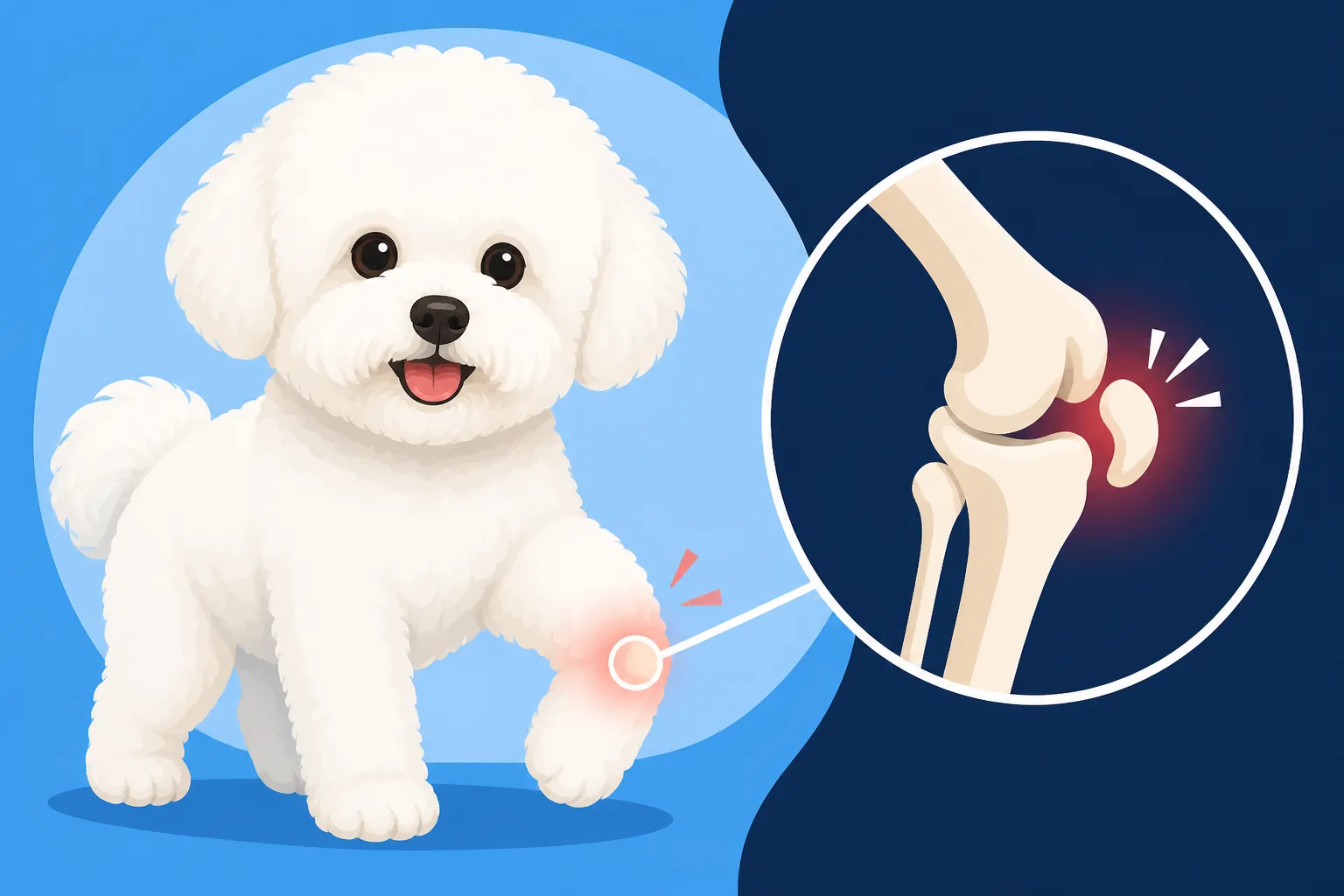
At its heart, patellar luxation is a misalignment of the structures surrounding the knee joint. Normally, the kneecap sits snugly in a groove at the end of the thigh bone (femur). It slides up and down this groove like a train on a track as the leg bends and straightens. In a dog with patellar luxation, this kneecap track is often too shallow, or the ligaments and muscles that hold the kneecap in place are slightly out of alignment. This allows the kneecap to "luxate," or pop out of its groove.
Bichon Frises, like many other small and toy breeds, are predisposed to this condition due to their genetic makeup and conformation. It's largely considered an inherited trait, meaning it's passed down through generations. This is why responsible breeders will often screen their breeding dogs for patellar luxation, alongside other common breed-specific issues like "The Eyes a Bichon Frise Inherits". The specific anatomy of their hind legs – sometimes with slightly bowed legs or an inward rotation of the shin bone – contributes to the kneecap being pulled out of alignment, typically towards the inside (medial luxation), though it can also luxate to the outside (lateral luxation).
When the kneecap slips out, it causes a momentary loss of function in the leg, which is why you see that characteristic skip or lameness. The dog might extend its leg back sharply to try and pop the kneecap back into place. Over time, this repeated luxation can lead to inflammation, cartilage damage, and eventually, the development of arthritis in the affected joint, even in young dogs.
Recognizing the Signs of a Slipping Kneecap
It's natural to panic a little when you see your dog limping, but knowing what specific signs to look for can help you communicate effectively with your vet and get your Bichon the help they need sooner rather than later.
What to Look For When Your Bichon Frise's Kneecap Slips
The most classic and frequently observed sign of patellar luxation in a Bichon Frise is that sudden, brief "skip" or hop. Imagine your little fluffball, let's call her Luna, chasing a toy across the living room carpet. Suddenly, she takes a few steps on three legs, holding one hind leg up, almost as if she's caught on something, before putting it back down and resuming her game as if nothing happened. This intermittent lameness is a hallmark of the condition, especially in its earlier, milder stages.
Beyond the skip, you might notice other subtle indicators. Your Bichon Frise might show reluctance to jump on and off furniture, or they might seem hesitant to use stairs. They might walk with a slightly crouched or bowed-leg stance. Some dogs will try to stretch their hind leg out behind them frequently, a movement that can help the kneecap pop back into its groove. If you gently touch their knee area, they might flinch or show signs of discomfort, though many dogs are quite stoic, especially if the luxation isn't causing severe pain.
It's also important to watch for changes in activity level. A dog who suddenly becomes less enthusiastic about walks or playtime, or seems to tire more quickly, could be experiencing discomfort from a slipping kneecap. While these signs can sometimes point to other issues like "Slipping Kneecaps in a Bichon Frise", they always warrant a veterinary visit to get a proper diagnosis.
Differentiating a Mild Slip from a Bigger Problem
Not all slips are created equal, and the severity of patellar luxation is often categorized into different grades. A mild, occasional skip is certainly concerning, but it’s crucial to understand that even these minor episodes can progress or lead to long-term issues if left unaddressed. It's often the inconsistency of the problem that makes it so frustrating for owners—one day your Bichon is fine, the next they're doing the "skip-and-go" dance.
The key difference between a mild slip and a bigger problem often lies in the frequency, duration, and associated pain. A Grade 1 luxation might only happen occasionally and self-correct quickly, causing minimal discomfort. However, a Grade 2 luxation might luxate more frequently and stay out for longer, potentially requiring the dog to manipulate its leg to get it back in place, causing noticeable lameness. As the condition progresses to Grade 3 or 4, the kneecap might be permanently luxated or pop out with every step, leading to chronic lameness, significant pain, and altered limb structure.
Monitoring your Bichon Frise closely and keeping a detailed record of when you observe a skip, how long it lasts, and if they show any signs of pain (like yelping, licking the joint, or refusing to bear weight) can be incredibly helpful for your vet. Early intervention, even for a mild slip, can sometimes prevent the condition from worsening and delay the onset of debilitating arthritis. Think of it like a small crack in a windshield – it might be minor now, but it has the potential to become a much larger problem down the road.
Diagnosing a Slipping Kneecap
When you suspect your Bichon Frise might have a slipping kneecap, a trip to the vet is in order. They have specific methods to determine the presence and severity of patellar luxation.
How Vets Diagnose a Slipping Kneecap
Your veterinarian will start with a thorough physical examination. This isn't just a quick look; it's a careful palpation of your Bichon's knees and legs. They'll gently manipulate the joint, bending and extending the leg, and applying pressure to the kneecap to see if it can be manually pushed out of its groove. This manipulation often allows them to feel the kneecap luxate and then slide back into place. It’s usually not a painful procedure for the dog, especially if it's a common occurrence for them.
During this examination, your vet will also assess muscle mass, any signs of pain or inflammation, and the overall alignment of the limb. They'll often check both hind legs, as it's common for both knees to be affected to varying degrees. While a physical exam is usually sufficient for a diagnosis, X-rays might be recommended. These images help evaluate the bone structure of the knee, hip, and femur, identify any secondary changes like arthritis that may have already developed, and rule out other orthopedic conditions that could be causing similar symptoms, such as "Legg Calve Perthes in a Bichon Frise" or even hip dysplasia, though less common in Bichons.
Sometimes, if the diagnosis is ambiguous or if surgery is being considered, your vet might recommend a consultation with a veterinary orthopedic specialist. These specialists have advanced training and equipment to provide an even more in-depth assessment.
Grades of Patellar Luxation and What They Mean
Once diagnosed, patellar luxation is typically classified into one of four grades. This grading system helps your vet understand the severity of the condition and guide treatment recommendations. The grades are based on how easily the kneecap luxates, how long it stays out, and how much it impacts the dog's function. Understanding these grades is key to discussions about "Grading a Bichon Frise's Luxating Patella".
Here's a breakdown of the typical grading system:
| Grade | Description | Symptoms | Prognosis (Untreated) |
|---|---|---|---|
| Grade 1 | Kneecap can be manually luxated but returns to normal position spontaneously. | Occasional, mild skip; often asymptomatic. Minimal pain. | Good; may progress over time, minimal arthritis. |
| Grade 2 | Kneecap luxates spontaneously or manually, but remains luxated until manually repositioned or the dog extends its leg. | Frequent skipping or lameness; occasional holding leg up. Intermittent pain. | Fair; often progresses, moderate arthritis likely. |
| Grade 3 | Kneecap is luxated most of the time but can be manually repositioned in the groove. | Persistent lameness; "bow-legged" appearance; significant pain. | Poor; constant discomfort, severe arthritis development. |
| Grade 4 | Kneecap is permanently luxated and cannot be manually repositioned. | Severe, chronic lameness; limb often useless; significant deformity. | Very Poor; crippling condition, severe arthritis. |
A Bichon Frise with a Grade 1 or 2 luxation might go for long stretches without significant issues, while a Grade 3 or 4 will likely experience chronic discomfort and debilitating lameness. This grading helps determine whether conservative management or surgical intervention is the most appropriate path forward.
Managing a Bichon Frise with a Slipping Kneecap
Once your Bichon Frise has been diagnosed with patellar luxation, the next step is to explore management options. This can involve a combination of lifestyle adjustments, medication, and sometimes surgery.
Initial Steps After Diagnosis
After receiving the diagnosis, it's natural to feel overwhelmed, especially if your Bichon is young. The first thing your vet will likely discuss is whether immediate action is needed. For Grade 1 luxation, and sometimes even mild Grade 2, conservative management might be the initial recommendation. This means focusing on things that support joint health and prevent further damage.
One of the most crucial aspects of initial management is weight control. An overweight Bichon Frise places extra strain on all its joints, including the knees, which can worsen luxation and accelerate arthritis. Your vet can help you determine an ideal weight for your dog and recommend a suitable diet plan. Another key step is controlled exercise. While you don't want to prevent your Bichon from playing, avoiding high-impact activities like jumping from furniture or excessive rough play can help minimize the kneecap slipping out. Consider ramps for couches and beds to protect those little joints. We often see owners asking "Whether a Bichon Frise Should Jump Off Furniture" – the answer is generally no, especially if they have patellar luxation.
Additionally, your vet might suggest "Whether Joint Supplements Help a Bichon Frise". Supplements containing glucosamine, chondroitin, and omega-3 fatty acids can support cartilage health and reduce inflammation, offering some relief and protection to the joint. These are not cures, but they can be valuable aids in managing the condition. Always discuss any supplements with your vet before introducing them to your dog's routine.
Long-term Outlook and Preventative Measures
For many Bichon Frises, patellar luxation is a lifelong condition that requires ongoing management. The long-term outlook depends heavily on the grade of luxation and whether intervention is pursued. For higher grades (Grade 2, 3, or 4), or if conservative management isn't sufficient for lower grades, surgery often becomes the most effective treatment. Procedures like trochleoplasty (deepening the kneecap groove) or tibial crest transposition (realigning the attachment point of the patellar ligament) can often correct the anatomical issues, significantly improving the dog's quality of life and reducing pain. If you're considering this, you might be wondering "Whether a Bichon Frise's Kneecap Needs Surgery", which your vet can help you decide.
Even after surgery, or for dogs managed conservatively, consistent care is paramount. Regular check-ups with your veterinarian are essential to monitor the condition, assess for arthritis, and adjust management strategies as needed. Protecting the joints from unnecessary stress remains important. This means continuing with weight management, controlled exercise, and considering supportive measures like non-slip rugs on hard floors, as "Whether Slippery Floors Hurt a Bichon Frise" is a real concern for dogs with joint issues.
Financially, managing a condition like patellar luxation can be a concern. Surgical costs, medication, and ongoing supplements can add up. This is where pet insurance can be a real lifesaver. Many owners find that a comprehensive policy from providers like Healthy Paws can help cover significant portions of diagnostic tests, medications, and even surgery. It certainly helps to alleviate some of the financial stress during what can be an emotional time. Having a plan with Healthy Paws means you can focus more on your Bichon's recovery and less on the immediate strain on your wallet. For comprehensive planning, it's a good idea to research "What Insuring a Bichon Frise Runs Monthly" to understand the potential costs involved. Keeping your Bichon Frise at a healthy weight, providing a safe environment, and being vigilant about any changes in their gait are the best long-term preventative measures you can take, helping them live their "The Fourteen to Fifteen Years a Bichon Frise Lives" as comfortably as possible.
Disclaimer
This article is intended for informational purposes only and does not constitute professional veterinary advice. Always consult with a qualified veterinarian for any health concerns or before making any decisions about your pet's health or treatment.