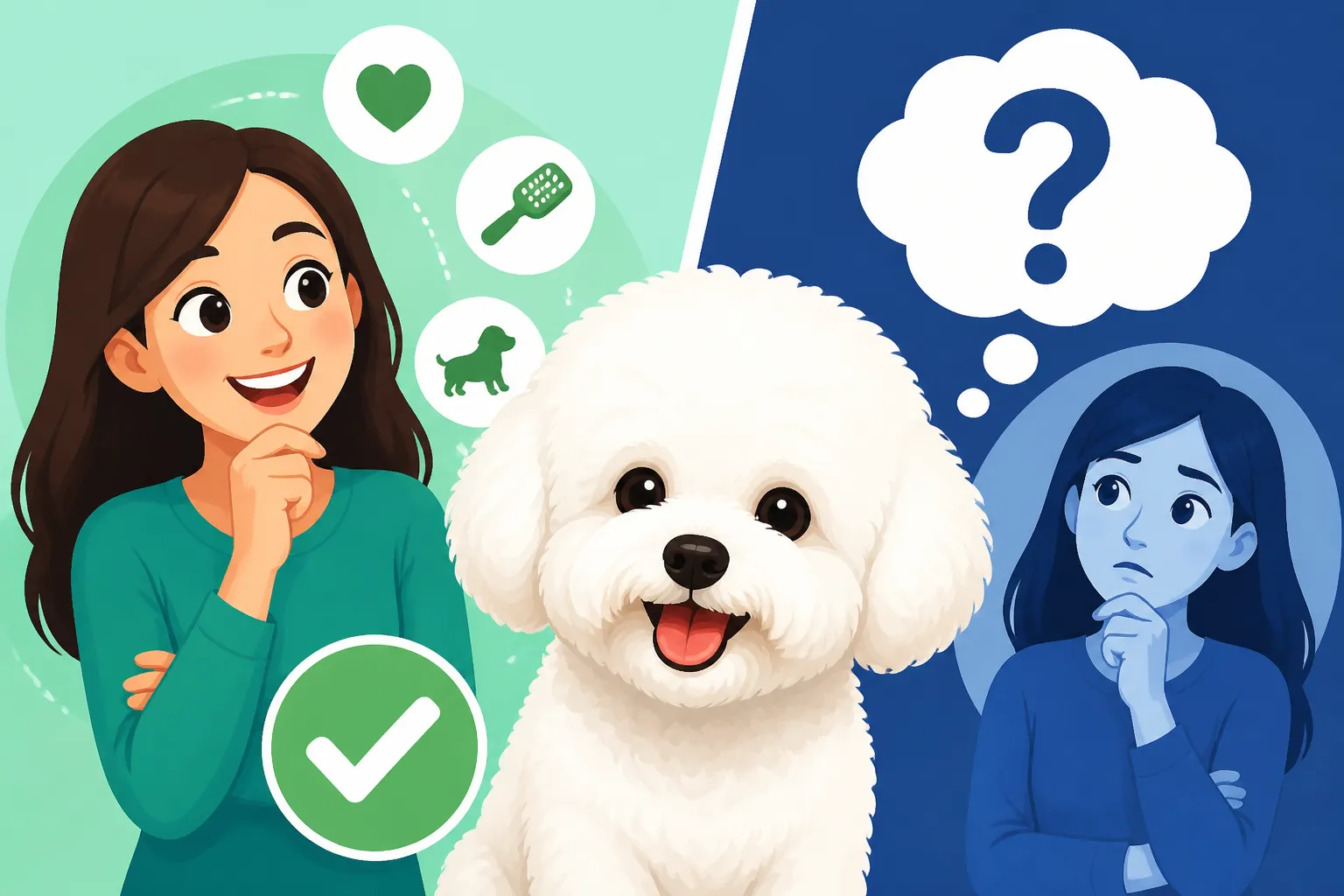
Whether a Bichon Frise Suits a First Time Dog Owner
A Bichon Frise can be a lovely first dog, but its cheerful, fluffy appearance hides some real commitments: regular grooming, patient housetraining, daily companionship, and thoughtful training. If you are deciding whether the breed fits your first-time-owner lifestyle, this guide lays out what day-to-day life may look like, where beginners often struggle, and how to judge your own readiness.
Is a Bichon Frise a good first dog?
Often, yes. Bichons are small, affectionate, playful dogs that can adapt well to many homes. They generally enjoy being part of family life and learning alongside their people. A first-time owner who is patient, consistent, and comfortable asking for help can do very well with one.
The harder question is whether you want the everyday work that comes with the breed. Bichons need more than a quick walk and an occasional brush. Their coat, toilet training, and need for company all require steady attention. That commitment can feel manageable when planned for—and surprisingly tiring when it is not.
What beginners often enjoy about Bichons
A Bichon’s friendly nature can make early dog ownership feel rewarding. Many are interested in people, enjoy games, and respond well to positive training. Their small size can also make everyday logistics easier: they may be simpler to transport, handle, or accommodate in a compact home than a large, energetic dog.
Small does not mean fragile or inactive, though. Bichons still need walks, play, sniffing time, and chances to learn. A short training game in the kitchen or a relaxed neighborhood walk can help meet those needs. If you are looking for a companion rather than a dog who is content to be decorative, that lively involvement can be a real plus.
It is also worth looking past the charming photos and considering the practical side. New owners often wish they had understood the grooming schedule and training demands before bringing a dog home. What Bichon Frise Owners Wish They Had Known is useful context when you are weighing the breed’s appeal against its routine responsibilities.
The traits that can challenge a first-time owner
Bichons can be slow to housetrain. That does not mean they cannot learn, or that a puppy is being stubborn on purpose. It means owners may need a dependable routine, frequent outdoor trips, close supervision, and calm responses to accidents for longer than they expected. If you work long stretches away from home or cannot arrange midday care, this part deserves special attention.
The breed can also become very attached to its people. Some Bichons struggle when left alone, especially if they have not gradually learned that departures are safe and temporary. A dog that follows you from room to room may be delightful company, but it is sensible to teach brief, relaxed periods of independence early on.
Finally, grooming is a regular commitment rather than an occasional makeover. The coat can mat if it is not brushed and combed thoroughly, especially where friction occurs, such as behind the ears, under the legs, and around a harness. For a closer look at the care involved, see Whether a Bichon Frise Is More Work Than It Looks.
What daily life with a Bichon Frise asks of you
The best way to assess fit is to picture an ordinary Tuesday, not just the first weekend with a puppy. There will be toilet breaks, meals, exercise, play, brushing, and time spent helping the dog settle while you do other things. The routine can be enjoyable, but it needs to fit your actual schedule.
| Responsibility | What it may look like in practice | A good fit if you |
|---|---|---|
| Housetraining | Frequent, predictable toilet trips and supervision | Can stay consistent and respond calmly to setbacks |
| Grooming | Brushing and combing between professional appointments | Will make coat care part of the routine |
| Companionship | Interaction, play, and gradual alone-time practice | Can provide company or plan suitable care |
| Exercise and enrichment | Walks, sniffing, games, and short training sessions | Enjoy engaging with a dog every day |
| Training | Repeated practice using rewards and clear boundaries | Can be patient while skills develop |
Grooming is a household routine
A Bichon’s coat needs regular attention to prevent tangles from tightening into mats. A quick pass over the top of the coat may not reach the hair close to the skin, so owners need to learn how to check through the coat carefully. If a knot is painful or close to the skin, do not tug at it; ask a groomer or veterinary professional for advice.
Professional grooming is part of many Bichon households, but the interval and style depend on the coat, haircut, and home maintenance. Before choosing the breed, think about whether you can keep appointments and brush between them. If you are comparing brushes, combs, or other supplies, Chewy is one place owners may look at product options, but a groomer can help identify tools that suit your dog’s coat and your handling skills.
A puppy also needs to learn that brushing, feet handling, face care, and grooming visits are ordinary parts of life. Keep early practice gentle and brief. Reward calm cooperation, pause when the puppy is overwhelmed, and build duration gradually. Making grooming familiar early can prevent a routine task from becoming a stressful wrestling match later.
Housetraining needs patience, not punishment
A predictable toilet schedule gives a puppy more chances to succeed. Take the dog out after waking, eating, drinking, playing, and naps, and praise promptly when it toilets in the right place. Watch closely indoors when the puppy is not confined safely; sniffing, circling, or suddenly wandering away can be signs that it needs a break.
Accidents are part of the learning process. Clean the area thoroughly with an appropriate cleaner, then adjust supervision or timing so the same situation is less likely to repeat. Punishing a dog after an accident can make it anxious around toileting without teaching where you want it to go. A written routine can be especially helpful when several household members share care.
If your schedule makes frequent trips difficult, consider how you would manage before you bring a puppy home. A trusted helper, family member, or suitable dog-care arrangement may bridge work hours, but availability and the dog’s comfort matter. Why a Bichon Frise Is Famously Hard to Housetrain explains why owners may need to plan for more than a few days of close supervision.
Companionship and independence both matter
Bichons often want to be near their people. That is part of their appeal, but it can create a problem if the dog has never practiced being alone. Begin with brief, low-key separations while the dog is settled, and increase the time gradually. Avoid making departures and returns emotionally intense; a predictable, calm routine is easier for a dog to understand.
A full-time work schedule does not automatically rule out the breed, but leaving a young puppy alone for an entire workday is not a realistic plan. Puppies need toilet breaks, meals, supervision, and social learning. Adults also need a plan for exercise and companionship. If you work away from home, think through who can visit, how often, and whether the arrangement is reliable. Whether a Bichon Frise Suits a Full Time Worker can help you examine that specific question.
A second dog is not a substitute for human care or training. Some Bichons enjoy canine company; others prefer being the only dog or need time to adjust. Do not assume that another pet will prevent separation-related distress. Consider the household’s time, space, and ability to meet each dog’s needs independently. For more on that decision, see Whether a Bichon Frise Needs a Second Dog.
Training, home life, and common first-time worries
Bichons are bright, but learning still takes repetition. A dog may understand a cue in the kitchen and fail to respond in a busy park, simply because the surroundings are more distracting. Keep early lessons short, reward the behavior you want, and practice in different places once the dog has a basic understanding.
Use rewards and keep lessons manageable
Food rewards, play, and enthusiastic praise can help a Bichon understand what earns a good outcome. Choose a quiet space at first, use a simple cue, and reward promptly. If the dog stops responding, the task may be too difficult, the session may be too long, or distractions may be too high. Make the next attempt easier rather than repeating the cue louder and louder.
Daily life offers useful training moments. Ask for a calm sit before opening the door, reward coming when called in the house, or practice settling on a mat while you prepare dinner. These small repetitions are often easier to maintain than one long session. Beginners who want a fuller picture of how the breed learns can read Whether a Bichon Frise Is Easy to Train.
Puppy classes or a qualified trainer can also help you build skills and avoid feeling that you must solve every problem alone. Look for kind, reward-based instruction and a pace that suits your dog. Training is not a one-time project; it is how you and your dog learn to understand each other in different situations.
Consider your home without assuming you need a yard
A Bichon can live in an apartment if the household provides regular walks, toilet opportunities, play, and enrichment. A yard may be convenient, but it does not replace interaction or training. Conversely, a home with a yard is not automatically a good fit if the dog is left outside or rarely engaged with.
Think about practical access. Are there stairs, busy shared hallways, or long stretches between suitable toilet areas? Can you safely take the dog out in bad weather? Does your building have rules about pets? Planning for those details can prevent everyday frustrations. Whether a Bichon Frise Suits an Apartment explores how the breed’s needs translate to smaller homes.
Household members should agree on basic rules before the dog arrives. Decide where the dog will sleep, who handles early toilet trips, what furniture is allowed, and how you will respond to barking or begging. Consistent expectations are easier for a dog to learn than rules that change depending on who is home.
Prepare for the first year rather than expecting instant ease
The puppy stage can bring interrupted sleep, chewing, accidents, and the need for careful socialization. A new dog may also take time to feel secure in an unfamiliar home. Plan for gradual introductions to everyday experiences—different people, surfaces, sounds, handling, and calm outings—without overwhelming the puppy.
If you are considering adoption, ask what is known about the dog’s previous routine, behavior when left alone, grooming tolerance, and health. A rescue adult may already have useful skills, but may also need time to settle and learn your household’s habits. With a puppy, ask the breeder what health screening and early handling have been done, and make a veterinary appointment after bringing the dog home.
The first year is rarely a straight line from puppy to perfectly behaved companion. There may be weeks when one skill improves and another seems to slide backward. A realistic plan, gentle consistency, and support from a veterinarian, groomer, or trainer can make that period less overwhelming. The First Year With a Bichon Frise Puppy offers a more detailed look at what that transition can involve.
How to decide whether the breed fits your life
Before committing, be honest about the parts that are least appealing to you. If you dislike brushing, cannot arrange care during long absences, or feel overwhelmed by slow progress with toilet training, those are not minor details to hope will disappear. They are signals to research further or consider a dog with different needs.
Run through a practical readiness check
Ask yourself whether you can maintain a daily routine even when work is busy, the weather is unpleasant, or you are tired. Can you make time for walks and interaction, and can you handle grooming at home between professional visits? Do you have a plan for holidays, illness, and unexpected schedule changes?
Think about patience as well as time. A dog may bark, have an accident, resist brushing, or need repeated help learning to settle. A first-time owner does not need to know everything already, but does need to be willing to learn without expecting perfect behavior immediately. It is reasonable to budget time and money for grooming, training, food, routine veterinary care, and unexpected needs without assuming that any dog will be inexpensive to maintain.
If you are still unsure, spend time with adult Bichons and speak with owners, groomers, veterinarians, and reputable breed-focused rescues or breeders. Ask what is hardest during an ordinary week, not only what they love about the breed. Their answers can help you picture the routine more clearly than a list of breed traits.
Make supplies and care plans part of the decision
Before bringing a Bichon home, gather basic supplies and make a plan for food, safe transport, grooming, veterinary care, and training. If you shop for everyday supplies through retailers such as Chewy, treat product listings as a starting point rather than a substitute for professional guidance. For food or any diet recommended for a medical reason, confirm the appropriate choice with your veterinarian rather than switching based on convenience or an online review.
The same approach applies to grooming products. A brush that works for one coat or owner may not be comfortable or effective for another. Ask a groomer to demonstrate a simple brushing routine, and check the skin as you work so you can spot irritation, mats, or areas your dog dislikes. Chewy may be one option for comparing grooming supplies, but the right tool is the one you can use gently and consistently.
First-time owners do not have to do everything alone. A good veterinary relationship, a patient groomer, and a reward-based trainer can answer questions before small problems grow into major frustrations. The goal is not to buy every product or perfect every skill before the dog arrives; it is to have a realistic plan and a willingness to adapt.
A Bichon Frise can suit a first-time owner who wants an affectionate, interactive companion and is prepared for ongoing coat care, patient housetraining, and a close relationship. It is less suitable for someone seeking a low-maintenance dog that can routinely be left alone for long periods. Match the breed to your habits and capacity—not just to the appealing face—and you will make a clearer, kinder decision for both of you.
Disclaimer
This article is for general informational purposes only and does not constitute professional advice. Laws, prices and regulations vary by location and change over time. Consult a qualified professional for guidance on your specific situation.