Bichon Frise or Cockapoo for a First Dog
Choosing between a Bichon Frise and a Cockapoo for your first dog can feel like choosing between two cheerful, fluffy companions with very different care demands. Both can be affectionate and trainable, but neither is automatically low-maintenance. This guide compares their grooming, exercise, training, health considerations, and everyday needs so you can picture which dog fits your real routine.
Bichon Frise or Cockapoo at a glance
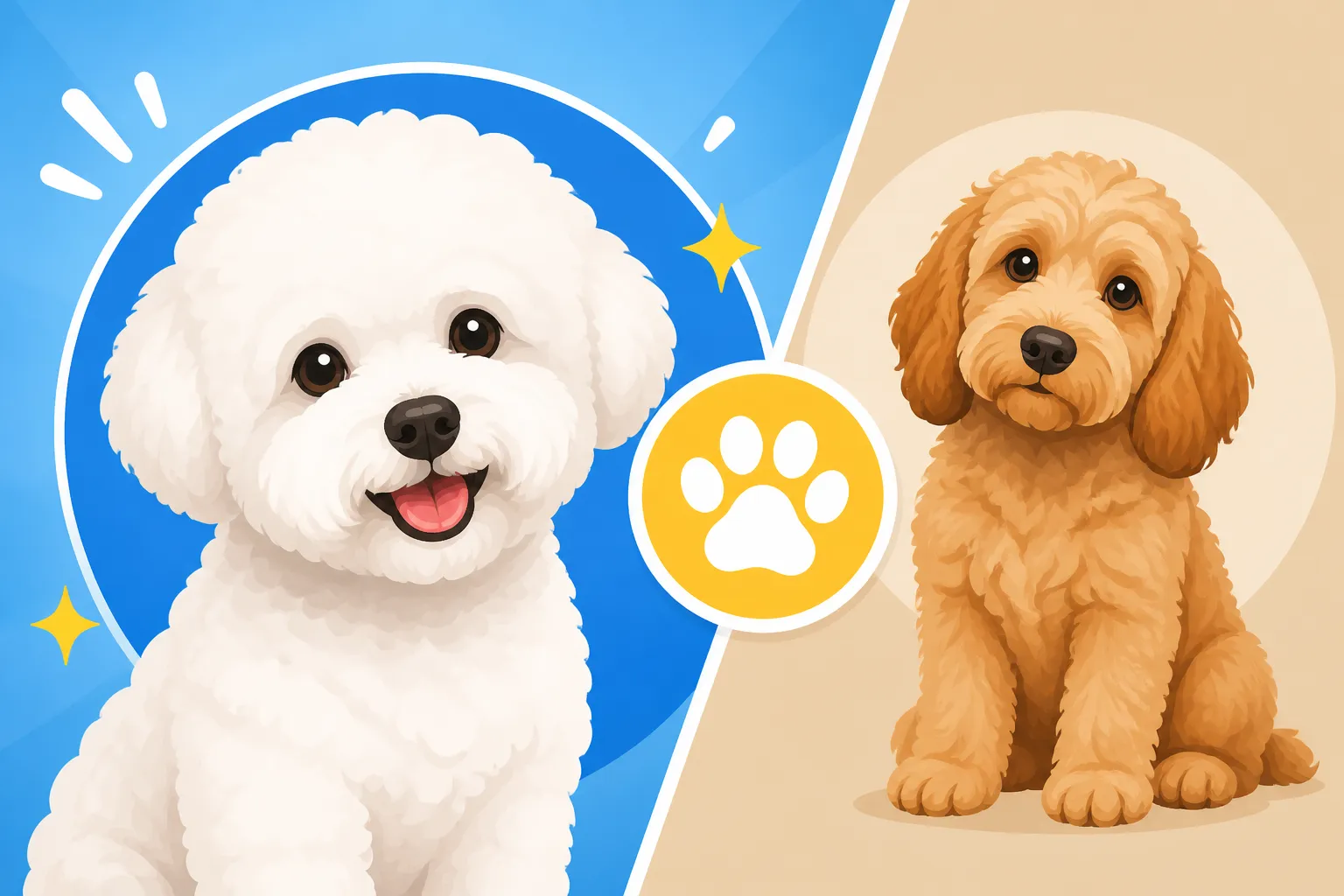
A Bichon Frise is a recognized breed with a more predictable general appearance and temperament. A Cockapoo is a cross between a Cocker Spaniel and a Poodle, and can vary considerably depending on the individual dog and the traits inherited from its parents. That difference matters: with a Bichon, you have a clearer idea of the breed’s typical needs; with a Cockapoo, you may need to ask more questions about the puppy’s parents and watch how its personality and coat develop.
Neither choice is universally better for a first-time owner. The better fit is the dog whose daily needs you can meet consistently, including on rainy mornings, busy workdays, and weeks when grooming or training feels less fun than cuddling on the sofa.
Temperament and companionship
Bichons are generally sociable, people-oriented dogs. Many enjoy being part of household activity and can be playful well into adulthood. Their small size makes them practical for many homes, but it does not mean they are content to be ignored for long stretches. A Bichon that is regularly left alone without preparation may become distressed, vocal, or unsettled.
Cockapoos can also be affectionate and social. Their personalities may reflect either Cocker Spaniel or Poodle traits, or a mixture, so one Cockapoo may be calm and cuddly while another is more energetic and alert. A puppy’s parents and early experiences can offer useful clues, but they cannot guarantee exactly how the adult dog will behave.
For either dog, ask yourself what you want from companionship. If you picture a dog who follows you around the home, both may appeal. If you need a dog who can routinely spend a full workday alone, neither should be chosen on the assumption that small, friendly dogs naturally manage solitude. Consider a gradual alone-time plan, dog walker, or other care arrangement before bringing a puppy home.
Coat care and grooming
Both dogs need regular coat care, but the work can look different. The Bichon’s coat grows continuously and can mat when loose hair becomes trapped in it. Keeping the coat comfortable usually means frequent brushing, combing down to the skin, and regular professional grooming. A fluffy appearance is not maintenance-free simply because the dog sheds less visibly around the house.
Cockapoos may have curly, wavy, or straighter coats. Their coat can be just as demanding as a Bichon’s, especially if it is dense or curly, but the amount and type of brushing needed vary from dog to dog. A Cockapoo puppy’s coat may also change as it matures, so what looks easy to manage at first may not stay that way.
Before deciding, ask a groomer what upkeep is realistic for the coat you are considering. Look at the coat behind the ears, under the legs, around the collar, and in the armpits: those are places mats can hide. If you are researching Bichon upkeep, The Six Week Bichon Frise Groom That Never Stops offers a closer look at the recurring commitment.
Exercise and daily rhythm
Both dogs need walks, play, training, and attention, but an individual Cockapoo may need more activity than an individual Bichon. The Cocker Spaniel and Poodle backgrounds can contribute to an energetic, curious dog who enjoys sniffing, fetching, or learning games. A Bichon also needs daily activity and mental stimulation, but many owners find that a mix of walks, play, and short training sessions suits the breed well.
Think beyond the idealized schedule. Can you provide walks before and after work? Will the dog have a safe way to toilet during the day? Can you offer a little play or training when the weather is poor? A yard can be convenient, but it does not replace walks, companionship, or learning. For a closer look at home suitability, see Whether a Bichon Frise Needs a Yard and Whether a Bichon Frise Suits an Apartment.
| Consideration | Bichon Frise | Cockapoo |
|---|---|---|
| Predictability | Recognized breed with more consistent breed characteristics | Traits can vary with parentage and individual inheritance |
| Coat | Ongoing brushing and professional grooming are usually needed | Coat type varies; brushing and grooming can still be substantial |
| Activity | Daily walks, play, and interaction are important | Needs vary, but some individuals are notably energetic |
| Training | Often responsive to kind, reward-based training; toilet training can take patience | Often bright and eager to learn, but energy and distraction can vary |
| Time alone | May struggle if left alone for long periods without preparation | May also struggle; social nature does not guarantee comfort alone |
| Best next step | Meet adult Bichons and discuss care with a responsible breeder or rescue | Ask about both parents, the puppy’s background, and coat-care expectations |
Training and settling into first-time ownership
The first dog can be a steep learning curve, even when the dog is friendly and clever. You are learning how to read body language, establish routines, prevent unwanted habits, and handle everyday care. A dog that appears easygoing at a breeder’s home may still need weeks of patient adjustment after moving into yours.
Housetraining and consistency
Housetraining deserves serious consideration with both options. Small dogs have small bladders, and puppies need frequent opportunities to toilet. A predictable routine helps: take the puppy out after waking, eating, drinking, playing, and naps, then reward toileting in the right place. Accidents are information, not a reason to scold. Cleaning thoroughly and adjusting the schedule are more useful than punishment.
Bichon owners often report that housetraining takes patience. That does not mean the breed cannot learn; it means the household needs to be consistent and realistic about how long a young puppy can wait. The guide Why a Bichon Frise Is Famously Hard to Housetrain explains why accidents can happen and how to build a routine that gives the dog a better chance to succeed.
A Cockapoo puppy also needs frequent breaks and supervision. Do not assume that Poodle ancestry makes toilet training effortless, or that a puppy will understand the household rules without repetition. If you work away from home, plan who will provide daytime toilet breaks before choosing either dog. A reliable schedule is kinder to the puppy and far less stressful for you.
Training style and mental stimulation
Both dogs are likely to benefit from short, upbeat training sessions. Use rewards the dog values, such as a small treat, a toy, or enthusiastic praise. Practice a few minutes at a time, then stop while the dog is still engaged. Basic skills such as coming when called, settling on a mat, walking politely on leash, and accepting handling make daily life easier.
A Cockapoo may be quick to learn, but intelligence is not the same thing as automatic obedience. A clever, active dog can become inventive when bored, and distractions outdoors may make early training feel slow. A Bichon can also be lively, easily distracted, or more interested in a game than repeating a cue. In both cases, patience and repetition matter more than trying to be strict.
First-time owners should also plan for grooming cooperation. Touch paws gently, reward calm handling, and introduce brushing in brief, positive sessions. Make the comb and brush part of normal life before tangles become uncomfortable. Chewy can be one place to look for basic grooming supplies, but ask your groomer which tools suit your dog’s coat rather than buying a large kit you may not use.
Alone time and social needs
A dog who loves people can still learn to relax alone, but that skill needs to be taught gradually. Start with very short absences and return before the dog becomes distressed. Provide a safe resting area and an appropriate activity, and build up slowly. A sudden jump from constant company to several hours alone can be difficult for a puppy of either type.
Plan for practical support if your household is busy. A neighbor, trusted sitter, dog walker, or family member may help with toilet breaks and company. Chewy may also offer useful everyday items such as food puzzles or enrichment toys, but a toy is not a substitute for social contact or a long stretch without a bathroom break.
If your schedule regularly keeps you away for much of the day, consider an adult dog whose needs and temperament are already more apparent. You can also explore whether Whether a Bichon Frise Suits a Full Time Worker matches your situation. The right decision may be to wait until your routine can support a puppy, rather than expecting a young dog to adapt to a schedule that leaves little room for care.
Health, costs, and choosing responsibly
A first-time owner does not need to predict every future health issue, but should be ready to budget for routine care and ask good questions before choosing a dog. Grooming, veterinary visits, training, food, and time away from work all contribute to ownership. The puppy’s initial cost is only one part of the picture.
Health questions to ask
Bichons and Cockapoos can both need ongoing veterinary care, and individual risks vary. A Cockapoo’s health profile may reflect its Cocker Spaniel and Poodle ancestry, so ask about health history and screening for both sides of the family. With a Bichon, ask what health screening has been done and whether the breeder can discuss health patterns in the line.
A responsible breeder should welcome thoughtful questions and be willing to explain health records, the puppy’s early care, and what support is provided after the puppy goes home. Be cautious if you are rushed into a decision, discouraged from seeing documentation, or offered vague assurances instead of clear answers. A rescue organization may also be able to share the dog’s known history, behavior, and veterinary records.
No screening can guarantee a dog will never develop a health problem. What you can do is choose carefully, keep up with preventive veterinary care, and ask for help when something changes. If you are considering a Bichon, The Health Tests Both Bichon Frise Parents Should Have is a useful starting point for understanding the questions to raise.
The real cost of care
Both dogs need more than food and an annual checkup. Set aside room in your budget for routine veterinary care, preventive treatments recommended by your veterinarian, grooming, training, supplies, and unexpected illness or injury. Grooming is especially easy to underestimate: a coat that mats may require extra work, and skipping appointments can make the next visit more complicated.
The cost of grooming depends on coat condition, the service needed, and local providers. Ask potential groomers how often they recommend appointments and what brushing routine you will need at home. Then compare that commitment with your actual time and budget. If you are interested in the broader upkeep of a Bichon, What Bichon Frise Owners Wish They Had Known covers practical realities that can be overlooked when you are focused on the puppy’s sweet face.
It is also sensible to consider pet insurance or another plan for unexpected veterinary expenses before a problem arises. Read any policy carefully, especially its treatment of pre-existing conditions, exclusions, deductibles, and reimbursement rules. Do not choose a dog based solely on assumptions that one type will be cheaper to care for; individual health, coat needs, and your local options can make a substantial difference.
Meeting the dog and making your decision
If possible, meet adult dogs as well as puppies. An adult Bichon can give you a better sense of the breed’s everyday energy and social style. For a Cockapoo, meeting the puppy’s parents can offer clues about size, coat, and temperament, while still leaving room for individual variation. Ask how the puppy responds to handling, new sounds, and brief separation from its littermates.
Notice how the breeder or rescue talks about challenges. Honest discussion of housetraining, grooming, barking, and alone-time needs is a good sign. Ask what the dog eats, what routines are already established, and how the organization supports owners after adoption. If you are leaning toward a Bichon, Whether a Bichon Frise Suits a First Time Dog Owner can help you think through the breed’s fit with your experience and lifestyle.
A Bichon may suit you if you want a more predictable breed profile and are prepared for frequent coat care, patient housetraining, and close companionship. A Cockapoo may suit you if you are comfortable with variation and can adapt to the individual dog’s energy, coat, and temperament. Either can become a wonderful first dog with preparation, consistent care, and realistic expectations. Choose the individual dog and its needs, not just the label or the look.
Disclaimer
This article is for general informational purposes only and does not constitute professional advice. Laws, prices and regulations vary by location and change over time. Consult a qualified professional for guidance on your specific situation.