Whether the Bichon Frise Was Ever a Working Dog
The Bichon Frise has a lively, trainable nature, so it’s easy to picture one working alongside people. Historically, though, the breed was developed mainly for companionship, not for herding, hunting, guarding, or hauling. This guide explains what “working dog” means, what roles Bichons actually had, and why their history can sound more occupational than it was.
What counts as a working dog
Working dog can mean different things
People use “working dog” in two ways. In a broad, everyday sense, it can mean any dog that did something useful for people, whether that was keeping someone company on a voyage or performing tricks for an audience. In a narrower sense, it describes dogs bred and trained for practical jobs such as guarding property, herding livestock, pulling loads, or finding game.
That distinction matters for the Bichon Frise. A Bichon might have been a sailor’s companion, a performer, or a cherished household dog. Those roles involved human contact and could have been part of everyday life, but they do not make the breed a traditional working breed in the same sense as a sheepdog or a livestock guardian.
The phrase “companion dog” does not mean a dog had no purpose. Companionship was the purpose. A small, sociable dog could offer company, entertainment, and a comforting presence without needing to work livestock or protect a farm. That was a meaningful role, even if it wasn’t a task-based occupation.
Bichons were not bred for a specific practical job
A breed’s history often reflects the tasks people needed it to perform. A herding dog’s body, instincts, and training may suit moving livestock; a hunting dog may be selected for scenting, pointing, or retrieving. The Bichon Frise is better understood as a small companion breed. Its social nature and manageable size fit life around people, rather than a specialized outdoor job.
That doesn’t mean an individual Bichon could never learn to guard a home, chase a pest, or accompany someone on a journey. Dogs vary, and owners may put them to work in informal ways. But an individual dog’s activities are not the same as a breed being developed over generations for that work.
The breed’s background belongs within the broader history of small Mediterranean companion dogs. For context on those connections, see The Barbichon Family the Bichon Frise Belongs To and Where the Bichon Type Dogs Came From. Those historical relationships help explain the breed’s family tree, but they do not establish that Bichons were bred as working dogs.
The roles Bichon Frises had in history
Companions aboard ships and along trade routes
Stories about Bichons and sailors are part of the breed’s history. Small dogs could travel more easily than large ones, and a friendly companion might be welcome aboard a ship or in a port town. People often connect the breed’s early history with Mediterranean travel and trade, though the details of how particular dogs moved between regions are not always easy to pin down.
A dog traveling with sailors could have provided company and amusement. It might also have been exchanged or given to someone in a port. Those possibilities can make the dog sound like a working animal, but there’s a useful distinction: traveling with people is not, by itself, evidence that the dog was bred to perform a specialized job aboard ship.
The history of travel is explored in How Sailors Carried the Bichon Frise Around the Mediterranean and Whether the Bichon Frise Started as a Sailor's Dog. These accounts help place the breed in a mobile, people-centered world. They are best read as part of the story of how small dogs circulated, rather than proof that the Bichon was a ship’s working dog.
| Possible historical role | How it could help people | Does it make the breed a traditional working dog |
|---|---|---|
| Companion on a ship or journey | Offered company and entertainment | No, not without a specialized job |
| Household companion | Provided affection and social connection | No, companionship was the breed’s main role |
| Performer | Entertained people with learned tricks | A form of informal work, but not a traditional working-breed function |
| Guard or pest chaser | Could alert or respond to activity | An individual dog might do this, but it was not the breed’s defining purpose |
Companions in wealthy households
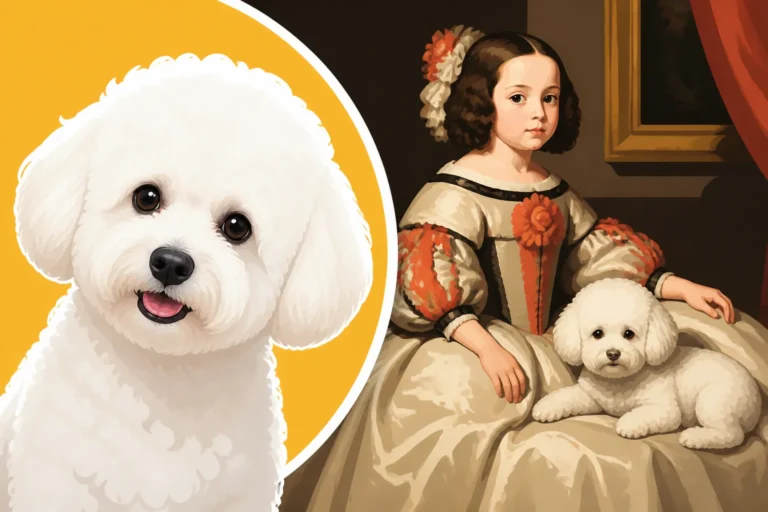
Bichon-type dogs became associated with households that valued small, appealing companion animals. A dog could be a favorite member of the home, a social companion, or a visible sign of taste and status. These roles were especially different from the jobs performed by dogs expected to manage livestock, protect property, or assist with hunting.
The breed’s connection to European courts and fashionable households is part of the reason its history can be mistaken for a working one. A dog that traveled, appeared in portraits, or lived close to influential people was certainly present in human life. But being prominent in a household does not mean it was working in the practical, task-focused sense.
For more background on that period, see The French Court That Made the Bichon Frise Fashionable and The Household a Bichon Frise Was Bred For. The household role is the key: people valued the dog for company and charm, not because it was expected to perform a farm or trade job.
Were Bichon Frises performers or street dogs
Performing was a real role, but not the breed’s original job
Some Bichons and related small dogs were associated with performers, including entertainers who worked in public spaces. A clever, responsive dog could learn tricks that drew attention and delighted an audience. In that setting, the dog was doing something for a person, and it is reasonable to call the activity a kind of work.
Still, performing should not be confused with the breed’s original purpose. A dog’s ability to learn tricks does not show that generations of Bichons were bred specifically for circus or street performance. It suggests that people found the breed adaptable and entertaining. Many companion dogs can learn performance skills without being a performance breed.
There is also a difference between a dog being trained to perform and a dog being used in a particular historical setting. A Bichon might have appeared with an entertainer, but that does not mean every Bichon lived that way or that performance defined the breed. The background is explored in The Bichon Frise Street Performing Years After the Revolution, Whether Bichon Frises Worked With Organ Grinders, and Whether Bichon Frises Performed in Circuses.
Why the performer story can be confusing
The phrase “working dog” can make a performer’s dog sound like a formal breed category. In practice, it describes what a particular dog did with its handler. A dog that performed tricks may have contributed to someone’s livelihood, but that is different from a breed standardized for a specific, repeatable task such as retrieving game or guarding a flock.
It’s also worth separating survival from specialization. As social and economic conditions changed, dogs and their owners may have found new ways to get by. A small dog that was charming and trainable could attract attention in a public setting. That kind of flexibility speaks to the dog’s temperament, but it doesn’t turn the Bichon into a traditional working breed.
So the fairest answer is nuanced: some Bichons or related dogs may have worked informally as performers or companions to people who made their living in public. The breed as a whole, however, is not historically defined by that work. Its central identity remained that of a companion.
What the Bichon Frise’s history means today
A companion breed can still enjoy having a job
A Bichon Frise does not need a traditional working role to benefit from activity and training. Many enjoy short training sessions, food puzzles, scent games, gentle agility exercises, or learning entertaining cues. These activities give a dog something engaging to do and can strengthen the bond with its person.
For example, a Bichon who gets excited when visitors arrive might enjoy practicing a “go to your mat” cue. Another might enjoy finding a toy hidden in a room. Those are modern enrichment activities, not evidence that the breed has a working-dog instinct that must be fulfilled. Keep sessions positive and appropriate to the dog’s age, health, and confidence.
A companion dog’s work can also be simple: walking politely, waiting calmly while a person speaks with a neighbor, or learning to tolerate grooming. Because Bichons have a coat that needs regular attention, patient handling practice can be especially useful. The breed’s history as a close companion makes everyday cooperation a natural focus.
A realistic answer to the question
Was the Bichon Frise ever a working dog? In the broadest sense, individual dogs may have had useful roles: traveling with people, entertaining audiences, or adapting to the circumstances of their owners. In the traditional breed-history sense, however, the Bichon Frise was not developed as a herding, hunting, guarding, or hauling dog. It was primarily a companion breed.
That answer recognizes both sides of the story. It avoids dismissing the contributions of dogs that performed or traveled with people, while also avoiding the claim that the breed had a formal working purpose that the historical record does not support. The Bichon’s greatest “job” was often simply being a sociable, engaging presence in someone’s life.
Understanding that history can also help set expectations for a Bichon today. The dog may be eager to learn and happy to join family activities, but it does not need a demanding work assignment to thrive. Consistent companionship, kind training, appropriate exercise, and thoughtful grooming are much closer to the role the breed has long been known for.
Disclaimer
This article is for general informational purposes only and does not constitute professional advice. Laws, prices and regulations vary by location and change over time. Consult a qualified professional for guidance on your specific situation.