Whether a Bichon Frise Is Bigger Than a Maltese
A Bichon Frise can look deceptively compact beneath its rounded coat, while a Maltese’s long, flowing hair can make it seem larger than its frame. If you’re comparing the two breeds, the practical difference is usually clear: a Bichon is typically taller and heavier, with a sturdier build. This guide explains how their size compares and what that means for everyday life.
Is a Bichon Frise bigger than a Maltese
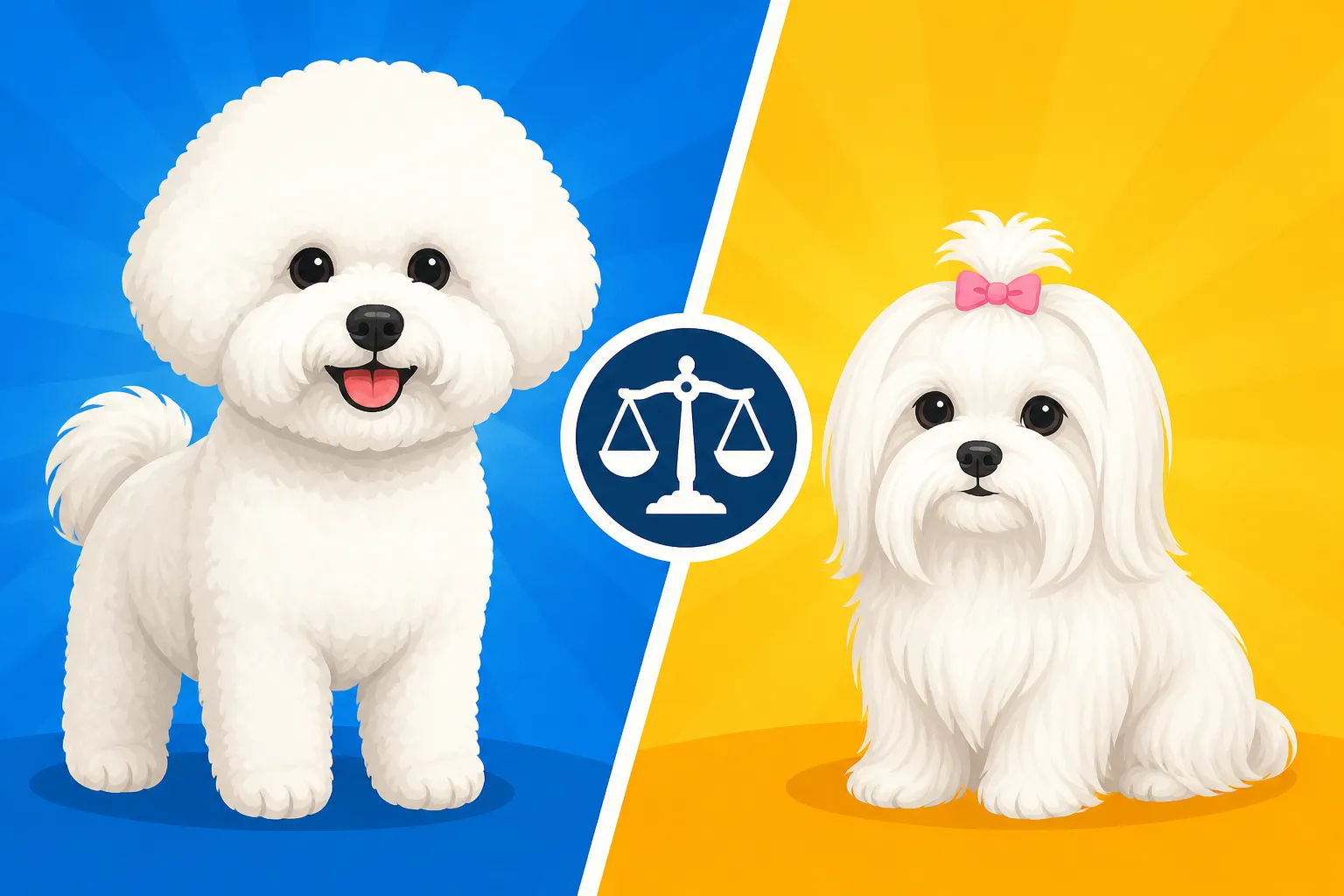
Yes. A Bichon Frise is generally bigger than a Maltese in both height and weight. Breed standards describe Bichons as a small but solid dog, while Maltese are notably more petite. Individual dogs can fall outside typical ranges, but the comparison gives you a useful starting point.
| Size feature | Bichon Frise | Maltese |
|---|---|---|
| Typical height at the shoulder | About 9.5 to 11.5 inches | About 7 to 9 inches |
| Typical weight | About 12 to 18 pounds | Usually under 7 pounds, with 4 to 6 pounds preferred in the breed standard |
| General build | Compact, sturdy, and well-balanced | Fine-boned and delicate-looking |
| What the coat can do to appearance | The dense, curly coat can make the dog look rounder or larger | Long coat can make the dog look longer or more substantial |
Those figures describe breed-standard expectations, not a promise about every individual dog. A small Bichon may overlap in weight with a larger Maltese, and dogs vary with sex, family line, age, and body condition. Still, when you compare two healthy adults side by side, the Bichon will often have more height and substance.
For a fuller comparison of their temperaments, coats, and everyday care, see The Bichon Frise Against the Maltese. If you’re trying to picture a Bichon’s usual proportions, How Big a Bichon Frise Gets and What a Bichon Frise Actually Weighs offer related details.
Why the Bichon usually weighs more
The difference isn’t just extra fluff. A Bichon Frise tends to have a more substantial body, with more bone and muscle than the fine-framed Maltese. That solid build helps explain why a Bichon can weigh considerably more even when the two dogs don’t look dramatically different in height.
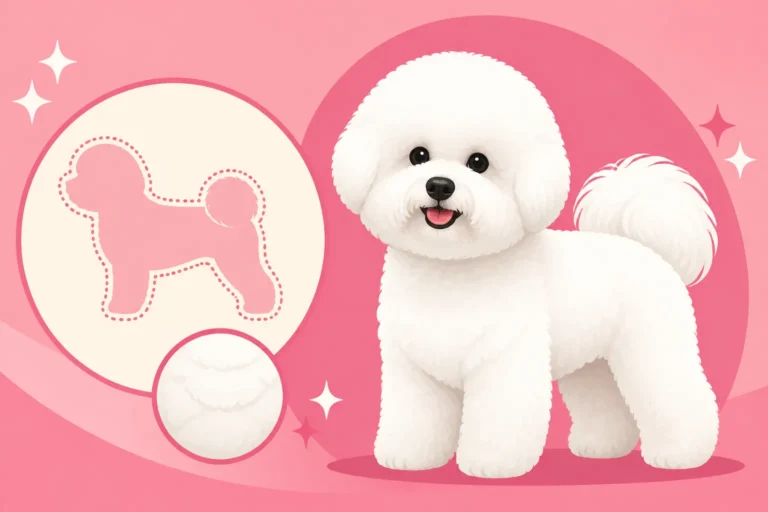
A Bichon’s coat can make the comparison confusing. Its dense curls puff outward, especially after grooming, so the dog may look rounder than its actual body shape. A Maltese with a long, well-kept coat can look larger than its weight suggests, too. Coat volume and coat length change the silhouette; they don’t tell you how much the dog weighs.
It’s also worth separating “bigger” from “overweight.” A healthy Bichon should have a visible waist from above and a slight abdominal tuck when viewed from the side. Ribs should be easy to feel beneath a light layer of tissue, though they shouldn’t be sharply visible. If you’re unsure whether your dog’s size is appropriate, ask your veterinarian to assess body condition rather than relying on the number on the scale alone.
Why a Maltese can seem bigger than it is
The Maltese’s long, straight coat can create a flowing outline that extends past the body, particularly when the hair is kept long. That can make a Maltese seem larger in a photo or across a room than its frame really is. A Bichon’s coat creates a different illusion: instead of flowing down, it tends to add width and roundness.
For a fair comparison, look at the dogs’ shoulders and legs, not just their coats. You can also compare their weights and measure their height at the shoulder. A groomed Bichon may look smaller than a Bichon in a full, fluffy trim, but the body underneath has not changed. Likewise, trimming a Maltese’s coat may make the dog look more compact without changing its actual size.
How to compare their size accurately
A quick glance can be misleading, especially when one dog is freshly groomed and the other isn’t. Measuring and weighing are more reliable ways to understand the difference. They’re also useful if you’re choosing a carrier, harness, bed, or other equipment.
Measure height and weight, not coat volume
To measure height, have the dog stand naturally on a level surface. Measure from the floor to the highest point of the shoulder blades, called the withers. Don’t include the head, ears, or top of the hairstyle. If your dog won’t stand still for a tape measure, your veterinary clinic can help get a more dependable measurement.
Weight is easier to track at home if your dog will sit calmly on a household scale. For a small dog, weigh yourself first, then weigh yourself holding the dog, and subtract the first number from the second. The result won’t be as precise as a veterinary scale, but it can help you notice a trend. Weigh under similar conditions each time, rather than comparing a morning reading with one taken after a meal.
A single measurement doesn’t tell the whole story. If a dog is growing, changing shape, or losing weight unexpectedly, talk with a veterinarian. For a Bichon, the scale number is most useful when it’s considered alongside body condition and the dog’s normal growth pattern. What an Adult Bichon Frise Weighs can help put the breed’s typical weight range in context.
Consider age, sex, and family line
Puppies are still growing, so adult size ranges aren’t a useful way to judge them too early. A young Bichon may look lanky during one stage and more solid later. A puppy’s paws can hint at growth, but they can’t reliably predict exactly how big the adult dog will be.
Adult males and females may differ somewhat, but sex alone doesn’t determine size. Family line matters too. Some Bichons are naturally smaller or larger than others while remaining healthy, and Maltese also vary within the breed’s expected range. If you’re choosing a puppy and adult size is important, ask about the sizes of close relatives, while remembering that parent size is only one clue. See Whether Parent Weights Predict a Bichon Frise's Size for more on what those family measurements can and can’t tell you.
A dog that is unusually small isn’t automatically healthier or easier to care for. Very small size can come with fragility, and a puppy described as “miniature” or “teacup” deserves careful questions about health and breeding practices. Whether the Smallest Bichon Frises Are Healthy is useful reading if a seller is emphasizing tiny adult size as a special advantage.
What the size difference means at home
The Bichon is still a small companion dog, but it generally feels more solid in your arms and underfoot than a Maltese. That difference can matter in small, practical ways: how you lift the dog, what size carrier fits, and how carefully children need to handle a pet.
Handling, children, and sturdiness
A Bichon’s sturdier frame may make it feel less delicate than a Maltese, but neither breed should be treated as rough-and-tumble furniture. Small dogs can be injured by falls, being stepped on, or being dropped. A child should learn to sit down while holding a dog and to let an adult help with lifting, especially with a Maltese.
Bichons often suit households that want a small dog with a little more substance. That doesn’t mean every Bichon is comfortable with being picked up, or that a Bichon can safely handle rough play. Temperament, training, supervision, and the way a dog is handled matter more than a few pounds of difference.
A dog’s proportions can also affect how sturdy it feels. Bichons are known for their compact build, but their appearance can be misleading when a thick coat hides body shape. Whether a Bichon Frise Is Sturdier Than It Looks explores that distinction in more detail.
Choosing a carrier, harness, or bed
Don’t buy equipment based only on a breed label. A Bichon and a Maltese can both be called “small,” but the same small-size harness may fit one dog and pinch or slip on the other. Measure the dog’s chest and neck, then compare those measurements with the manufacturer’s size chart. For carriers, check the interior dimensions and confirm that the dog can turn around and rest comfortably.
When browsing equipment at a retailer such as Chewy, use the product’s measurements rather than assuming that a listing for small dogs will fit your particular dog. A Bichon may need more room across the chest than a Maltese, even if both fit the same general weight category. If you’re between sizes, check the item’s fit guidance and consider whether adjustable straps can be secured safely without restricting movement.
Beds can be chosen by the dog’s sleeping posture as much as by breed. A Bichon that stretches out may need a longer bed than its curled-up shape suggests. A Maltese may enjoy a smaller, more enclosed bed, but its preferred sleeping position is the best guide. If you’re comparing options on Chewy, check the bed’s usable sleeping area, not only the advertised outer dimensions.
Which breed’s size suits your household
Size can help narrow your choice, but it shouldn’t decide it by itself. A smaller dog is not automatically lower-maintenance, and a slightly larger small dog isn’t necessarily difficult to manage. Grooming needs, activity, training, health, and how the dog fits your daily routine are just as important.
When a Bichon’s larger frame may feel like a better fit
Some households prefer the Bichon’s more substantial feel. It may be easier for an adult to handle than a very delicate toy-sized dog, though it still needs careful supervision around children and larger pets. Its compact size can work in many homes, including apartments, provided it gets walks, play, and companionship.
That small-dog label can obscure the day-to-day commitment. A Bichon needs regular grooming, training, and veterinary care, just like other breeds. If apartment living is part of your decision, consider noise, exercise, toileting, and time alone alongside the dog’s measurements. Whether a Bichon Frise Suits an Apartment looks at those practical factors.
When a Maltese’s smaller frame may appeal
A Maltese may suit someone looking for a very small companion that is easier to carry in a compact travel setup. But “easy to carry” doesn’t mean it should be carried all day, and tiny dogs still need walks, play, social experiences, and a safe way to move around the home.
The smaller frame also calls for care around furniture and stairs. A jump down from a sofa can be a bigger concern for a small dog than it looks, and a Maltese should have safe access rather than being encouraged to leap from high surfaces. The same caution applies to a Bichon, even if its frame feels more robust.
For either breed, compare the actual dog you’re considering with the life you can provide. Meet adult dogs where possible, ask about their health and temperament, and think through grooming, exercise, and time alone. Size is a useful distinction between Bichons and Maltese, but it’s only one part of a good match.
Disclaimer
This article is for general informational purposes only and does not constitute professional advice. Laws, prices and regulations vary by location and change over time. Consult a qualified professional for guidance on your specific situation.