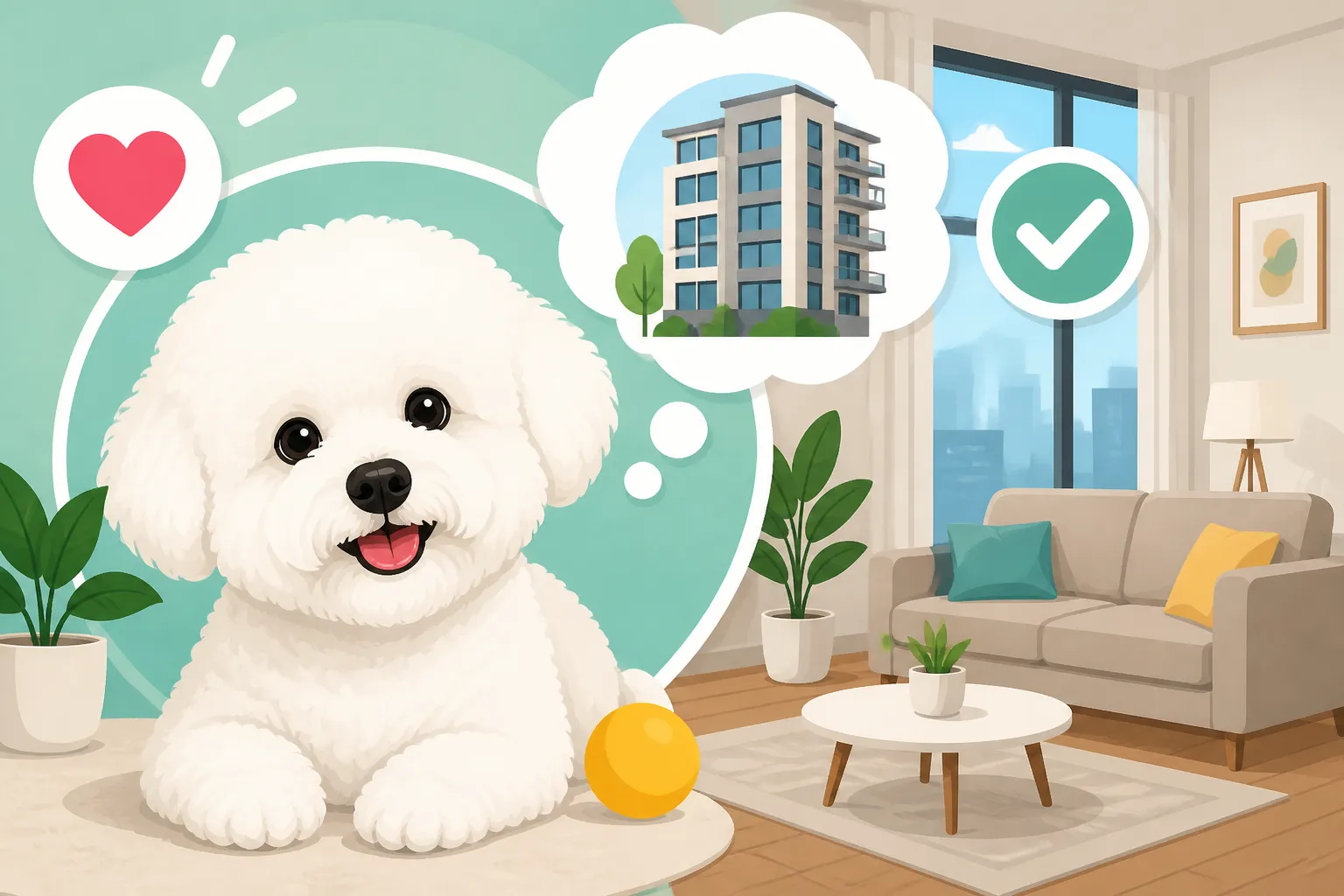
Whether a Bichon Frise Suits an Apartment
A Bichon Frise can thrive in an apartment, but small size does not automatically make a dog easy to keep in close quarters. Daily walks, toilet breaks, grooming, and barking all matter. This guide explains what apartment life is really like with a Bichon, what to plan for before bringing one home, and how to make a smaller living space comfortable for both of you.
What apartment life is like for a Bichon Frise
Small body, real exercise needs
Bichons are compact companion dogs, so they generally need less room to move around indoors than a large, high-energy breed. But they still need daily activity. A few short walks, sniffing time, and play sessions can help meet those needs without a yard. Living in an apartment does not mean a dog has to spend the day indoors; it means walks and play need to be part of the routine.
Think about your actual building and neighborhood. Is there a safe place to walk nearby? Can you get outside quickly for a toilet break? Are there stairs, busy streets, or elevators that make outings slower? A Bichon may be perfectly content playing in a living room, but that does not replace opportunities to explore outdoors, move around, and take care of bathroom needs.
A useful daily pattern might include a walk in the morning, a shorter outing later in the day, and a little indoor play or training. The right amount varies with the individual dog’s age, health, and temperament. Puppies and older dogs may need more frequent breaks, while a healthy adult may settle between outings if their routine includes enough activity and company.
A yard can be convenient, but it is not a requirement for every Bichon. What matters is whether you can reliably meet the dog’s needs where you live. For a closer look at that trade-off, see Whether a Bichon Frise Needs a Yard.
A companion dog in a shared building
Bichons are often sociable and people-focused. That can make them affectionate apartment companions, especially for someone who enjoys having a dog nearby during the day. It can also mean they notice when their person leaves. A dog that is comfortable in a quiet home may become unsettled if left alone for long stretches without preparation.
Apartment buildings also bring sounds and activity close to the front door: neighbors in the hallway, delivery workers, elevators, and dogs passing outside. Some Bichons may bark when they hear these things. The close proximity of neighbors can make even ordinary alert barking feel stressful, especially if sound carries through walls or doors.
It helps to plan for noise before it becomes a conflict. Notice what sets off barking, such as hallway footsteps or a view through a ground-floor window. Closing curtains, moving a dog bed away from the entrance, and rewarding calm behavior can help. A fan or gentle background sound may soften some household noises, though it will not resolve anxiety or replace training. For more detail about the breed’s vocal tendencies, read Whether a Bichon Frise Is a Yappy Breed.
Apartment suitability is less about the square footage alone and more about the dog’s daily life. A thoughtful routine, a comfortable place to rest, and patient training can matter more than having a large room.
The practical challenges to plan for
Toilet training and access outside
Toilet training can take patience with any dog, and apartment living adds a few extra steps. A puppy may need to be carried or walked through a hallway, taken down an elevator, and brought to an outdoor spot before it can relieve itself. If the puppy cannot hold it long enough for that trip, accidents may happen even when you are trying hard to be consistent.
Before bringing a dog home, work out the route and timing. Choose a regular toilet area, keep a leash and waste bags near the door, and build in extra time during the early weeks. After waking, meals, play, and naps are common moments to offer a toilet break. Praise the dog when it goes in the right place, and clean indoor accidents thoroughly without punishment.
Indoor pads or grass patches can be useful in some situations, such as for a very young puppy, a dog with mobility needs, or a household with difficult outdoor access. They can also create a second toilet option that needs to be managed consistently. Decide whether your long-term plan is outdoor toileting, an indoor surface, or a combination, and train toward that plan as clearly as possible.
If a Bichon that was previously reliable suddenly starts having accidents, do not assume it is being stubborn or forgetting its training. Changes in urgency, discomfort, or urine habits may need veterinary attention. The breed’s house-training challenges are explored in Bichon Frises Really Are Hard to Housetrain.
Barking, neighbors, and time alone
A Bichon’s response to apartment sounds depends on the individual dog, its early experiences, and how it has learned to cope. Some will glance toward a noise and settle; others may bark repeatedly or become distressed when they hear people outside. It is easier to teach calm habits early than to wait until a neighbor has already complained.
Practice short periods of settling while you are home. Reward your dog for relaxing on a bed or mat, and gradually get it used to ordinary household sounds. If barking happens, look for the cause rather than relying on shouting, which can sound like you are joining in. For a dog who is distressed when left alone, gradual alone-time training is more appropriate than simply leaving it to “get used to it.”
Your work schedule matters. A dog left alone for a full workday may need a midday visit, a dog walker, or another arrangement, particularly while young or still learning to be comfortable alone. Consider the practical details too: Can a walker enter your building? Is there a secure place for handoffs? Are you able to plan for days when your schedule changes?
A second dog is not automatically a solution to loneliness or barking. Dogs do not necessarily comfort one another, and adding another pet brings its own needs and adjustment period. If you are weighing that choice, Whether a Bichon Frise Needs a Second Dog can help you think it through. For households with long workdays, Whether a Bichon Frise Suits a Full Time Worker and Whether a Bichon Frise Needs a Dog Walker are also relevant considerations.
| Apartment factor | What to consider | Helpful preparation |
|---|---|---|
| Exercise | Nearby walking routes and time for daily outings | Plan regular walks and indoor play |
| Toilet access | Distance to a safe outdoor area, stairs, or elevator | Set a consistent schedule and keep supplies by the door |
| Noise | Hallway sounds, thin walls, and nearby dogs | Reward calm behavior and reduce avoidable triggers |
| Time alone | How long the dog will be without company | Arrange gradual training and visits when needed |
| Coat care | Time for brushing and regular grooming | Make grooming part of the weekly routine |
| Building rules | Pet policies, shared spaces, and noise expectations | Confirm rules before bringing a dog home |
Setting up a Bichon-friendly apartment
Make a small home workable
A Bichon does not need an elaborate setup, but a few predictable spaces can help it settle. Choose a bed or resting area away from the busiest doorway, and keep food and water somewhere the dog can reach without being in the middle of foot traffic. A crate or pen can provide a safe resting place if introduced gradually and positively; it should not be used as a place to leave the dog for excessive periods.
Keep cords, cleaning products, medications, and small objects out of reach. In a compact apartment, everyday items can end up close to a curious dog simply because there is less space to put them elsewhere. A gate can help separate the dog from a kitchen or entryway when needed, while a washable mat by the door can make wet-paw cleanup easier after rainy walks.
Indoor enrichment is useful when weather, work, or building logistics make outdoor time harder. Use short training games, food puzzles, and gentle play to give your dog something to do. Rotate toys rather than leaving every option out all the time; a familiar toy can feel more interesting again after a break. If you shop for practical supplies, Chewy is one place owners may browse for items such as food puzzles or washable mats, but choose products suited to your dog and your space rather than buying a large collection.
The goal is not to keep a Bichon constantly entertained. It is to make it easy for the dog to rest, play, and move through the home safely. A calm routine and a comfortable resting spot can be just as important as toys.
Grooming and cleaning in close quarters
Bichons have a coat that needs regular care, and apartment living does not reduce that responsibility. Brushing helps prevent tangles and mats, particularly in areas that rub against harnesses or collect debris. Professional grooming is also commonly part of keeping the coat manageable. If you are deciding what kind of coat care fits your schedule, see Whether a Bichon Frise Coat Is Curly or Wavy.
A small home can make grooming mess more noticeable. Loose hair, damp paws, and a dog that has just come in from a wet walk may all be easier to spot when there is little separation between the entryway and living area. Keep a towel and brush in a consistent place, and use a washable surface for quick cleanup. If the dog gets wet, dry it thoroughly rather than letting it stay damp for a long time.
Be realistic about the time involved. A Bichon’s coat can mat if brushing is skipped, and a dog that becomes uncomfortable during grooming may start resisting the routine. Short, positive handling sessions at home can help the dog become comfortable with brushing, touching its feet, and having its face handled. Chewy may be one convenient retailer to browse for basic grooming tools, but ask your groomer or veterinarian for advice if you are unsure which tools are appropriate for your dog’s coat or skin.
Grooming is also a budgeting and scheduling consideration. If your building has limited space for bathing or drying a dog, you may prefer to rely on a professional groomer for some tasks and keep up with brushing and light cleanup at home. A pet-friendly home is not necessarily a spotless one; having a plan makes the ordinary mess easier to manage.
How to decide whether an apartment is the right fit
Match the dog to your routine, not just your floor plan
Before choosing a Bichon, picture a regular weekday rather than an ideal weekend. When will the dog go out in the morning? Who will handle a midday break? How will you respond if the dog barks at a hallway sound while you are working? Where will grooming supplies go, and how will you manage wet-weather walks?
A simple comparison can help clarify the decision:
| Your situation | Apartment fit may be easier when | Think carefully if |
|---|---|---|
| Workday schedule | Someone can provide breaks or you can arrange visits | The dog would routinely be alone for long periods |
| Outdoor access | A safe toilet and walking area is close by | Reaching outside takes a long time or is difficult |
| Noise tolerance | You can train calmly and respond to triggers | Building rules are strict and sound travels easily |
| Grooming routine | You can brush regularly and plan professional care | Coat maintenance is likely to be postponed |
| Activity level | You enjoy daily walks and short play sessions | You expect a small dog to need little activity |
Be honest about what you can sustain. If you already have a long commute, unpredictable hours, or limited access to outdoor space, that does not automatically rule out a Bichon, but it does mean you need a workable support plan. A trusted walker, neighbor, or family member may help with breaks. Chewy might be useful as a place to browse for routine supplies, but supplies cannot replace time, training, or companionship.
It is also worth checking your lease and building rules before adopting or purchasing a dog. Confirm pet permission, any restrictions on size or number of animals, expectations for shared areas, and how noise concerns are handled. Policies can differ even between buildings in the same neighborhood, so do not rely on a casual assumption that small dogs are always allowed.
Questions to ask yourself before bringing one home
Ask whether you can provide consistent walks, toilet breaks, training, and grooming—not just whether the dog fits physically into your apartment. Consider whether you can be patient through puppy accidents, noisy adjustment periods, and the time it may take for a dog to learn to relax alone. If you are considering an adult dog, ask about its previous home environment, comfort with being alone, toilet habits, and response to city sounds.
Think about your building’s day-to-day environment too. A quiet upper-floor apartment with a reliable elevator is different from a busy ground-floor unit beside a shared entrance. Neither is automatically unsuitable, but each creates different challenges. A dog that reacts to people passing the window may need a different setup than one whose main difficulty is getting outside quickly.
The strongest sign that an apartment can work is a realistic plan for the dog’s whole day. If you can provide companionship, appropriate activity, regular bathroom opportunities, and coat care, a Bichon may be a comfortable companion in a modest home. If those needs are hard to fit around your schedule, it is kinder to address that before making a commitment rather than hoping the dog will simply adapt.
Disclaimer
This article is for general informational purposes only and does not constitute professional advice. Laws, prices and regulations vary by location and change over time. Consult a qualified professional for guidance on your specific situation.