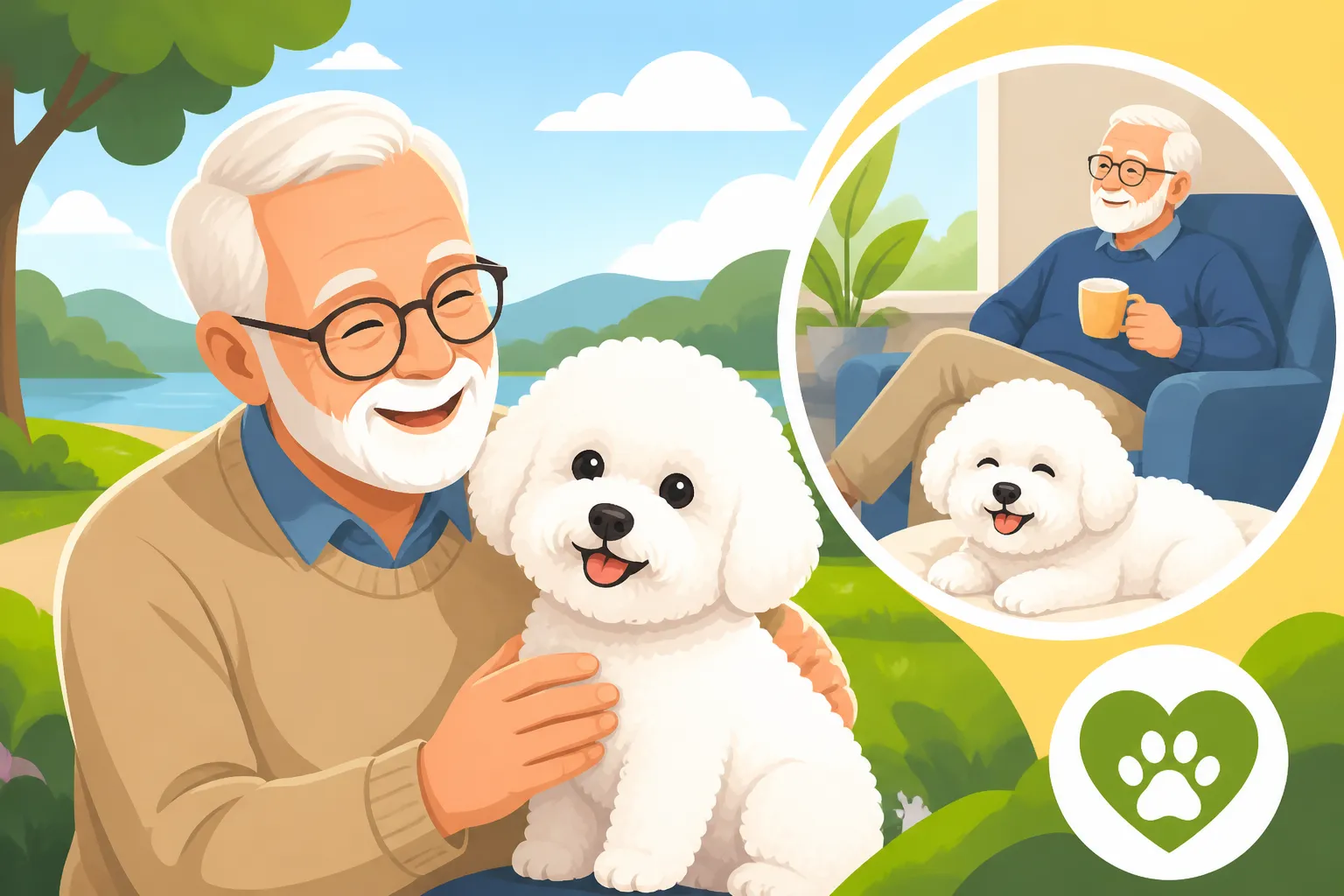
Whether a Bichon Frise Suits a Retired Owner
A Bichon Frise can be a lovely companion for a retired owner: affectionate, small enough to manage in many homes, and generally happy to share the day. But retirement does not automatically mean an easy fit. Daily company, regular grooming, toilet breaks, exercise, and veterinary care all matter. This guide helps you weigh the breed’s needs against your routine, health, and plans.
Why a Bichon Frise can suit a retired owner
A companion who enjoys being part of the day
Bichons are people-oriented dogs. Many like staying close to their family, whether that means settling beside you while you read, following you around the kitchen, or joining you for a short walk. For someone who enjoys a steady companion at home, that closeness can be a real pleasure rather than an inconvenience.
A dog’s companionship can also add gentle structure to the day. A morning outing, a meal routine, and a few short play or training sessions give the day a rhythm. You do not need to be an athlete or plan strenuous adventures; most Bichons benefit from regular walks and indoor play that suit their age and fitness.
Still, closeness has a flip side. A Bichon may find long stretches alone difficult, especially if it has grown used to having someone around. If you expect frequent trips, overnight visits, or long days away, think through who could care for the dog and how it might cope. Retirement can bring more time at home, but it can also bring travel and changing routines.
If companionship is a central reason you are considering a dog, ask whether you want an affectionate dog that seeks interaction, not merely one that is content to nap nearby all day. For more on the breed’s typical household fit, see The Household a Bichon Frise Was Bred For.
A small dog that can adapt to different homes
A Bichon does not need a large yard to have a good life. Regular outdoor toilet breaks and walks, play, and attention matter more than having a big garden. A comfortable apartment or smaller home can work well if you can provide those things consistently. A yard may make quick toilet trips easier, but it does not replace walks, company, or supervision.
Think about the practical details of your own home. Are there stairs you use often? Is the flooring slippery? Can the dog reach a secure outdoor area safely? If you live in a condo or apartment, are there nearby places for walks, and are there building rules about pets? Those everyday questions are often more useful than simply asking whether the breed is “good for apartments.” You may also find Whether a Bichon Frise Suits an Apartment and Whether a Bichon Frise Needs a Yard helpful.
The dog’s size can make handling easier than with a large breed, but a small dog is not automatically effortless. You still need to lift or help it when necessary, keep it safe around larger dogs, and take care around furniture and stairs. If arthritis, balance issues, or limited hand strength affect you, consider how you would manage grooming, carriers, leads, and veterinary visits before bringing a dog home.
What everyday care really asks of you
Grooming is a recurring commitment
The Bichon’s soft, dense coat needs regular attention. Brushing at home helps prevent tangles from tightening into mats, particularly behind the ears, under the legs, around the collar, and where a harness rubs. Many owners also arrange regular professional grooming. This is not a one-time puppy expense or a task that disappears once the coat looks tidy; it is an ongoing part of caring for the breed.
Consider the physical side of grooming as well as the calendar. Brushing a lively dog on the floor can be uncomfortable for an owner with back or hand problems. A grooming table can help, but the dog must be comfortable and safely supervised on it. Some owners find it easier to break brushing into short sessions rather than trying to finish a full coat in one sitting.
Before choosing a Bichon, talk to local groomers about their experience with the breed and how you would get the dog there. Ask a family member or trusted neighbor whether they could help if you were temporarily unwell. Planning for grooming is especially important if bending, standing, or driving becomes difficult. For a fuller look at the commitment, read The Six Week Bichon Frise Groom That Never Stops.
Toilet breaks, exercise, and training still need consistency
Even a settled adult dog needs routine. A Bichon needs regular chances to toilet, and a young puppy usually needs more frequent trips than an adult. Some older dogs also need to go out more often. A dog that has an accident indoors may not be misbehaving; it could be confused, inadequately housetrained, or dealing with a health problem.
Short, regular walks are often more manageable than one long outing. They provide exercise and sniffing time while giving you flexibility to adjust the route to the weather and your energy. On days when a walk is difficult, gentle indoor play and simple training can help keep the dog occupied, but they do not always replace outdoor toileting.
If your health or mobility varies from day to day, build a backup plan before you need one. That could mean a reliable dog walker, a neighbor who can help with a quick toilet break, or a family member who can step in. A routine that depends on you feeling well every day may become stressful for both of you. If your schedule includes long periods away, compare the breed’s needs with Whether a Bichon Frise Suits a Full Time Worker.
The less obvious parts of the decision
Health, age, and your ability to plan ahead
Bichons can live for many years, so adopting one is a long-term commitment. A puppy may be with you through several changes in your own life, including changes in health, housing, or travel habits. An adult or senior dog may have a more established temperament, but could need extra help with mobility, medication, or frequent toilet trips.
No breed can guarantee a particular health outcome. A dog may need routine preventive care as well as treatment for unexpected problems. It is wise to consider not only the cost of food and grooming, but also veterinary visits, dental care, medication, and help with transportation if driving becomes difficult. For a practical overview, see What a Bichon Frise Costs a Year to Keep and The Age a Bichon Frise Counts as Senior.
When choosing a dog, ask about its known health and behavior history, and arrange a veterinary check after adoption. If you are considering a puppy from a breeder, ask what health screening has been done and request clear records. If you are adopting an adult dog, find out about its experience being left alone, grooming tolerance, and toilet habits. The goal is not to find a dog with a perfect history; it is to choose one whose needs you understand and can realistically meet.
Travel, support, and plans for the unexpected
Retirement can mean more freedom to travel, but a dog changes how trips work. Some Bichons enjoy traveling with their people, while others are happier staying in a familiar home with a trusted sitter. Before making plans, consider whether the dog can handle car rides, unfamiliar places, or time apart from you. Also think about who could care for it if you were admitted to hospital or temporarily unable to provide its usual routine.
A practical support network matters. Identify a groomer, veterinarian, and backup caregiver before an urgent situation arises. If you have nearby family, make sure they are genuinely comfortable with the dog’s routine rather than assuming they will be available. If you use a dog walker or sitter, arrange introductions gradually so the dog is not meeting a new caregiver for the first time during a crisis.
You may want a second dog for company, but that is not always the answer to a Bichon’s need for human attention. Another dog adds its own care, expense, and potential health needs. Learn more at Whether a Bichon Frise Needs a Second Dog. If you are still comparing the breed’s day-to-day demands with your expectations, What Bichon Frise Owners Wish They Had Known can help you think through the less glamorous realities.
A practical fit check before you decide
Use the questions below to test the match against ordinary life, not just the appealing moments. Picture a rainy morning, a week when your energy is low, and a day when an appointment keeps you out longer than expected. If you can make a workable plan for those situations, you are thinking about the decision realistically.
| Question to ask yourself | A promising answer | A reason to pause |
|---|---|---|
| Can I provide company most days? | I enjoy having a dog close and can arrange help when I am away. | I expect the dog to be alone for long periods without support. |
| Can I manage grooming? | I can brush regularly and arrange professional grooming or assistance. | Brushing, transport, or grooming costs would be difficult to sustain. |
| Can I provide daily toilet breaks and walks? | I can manage short outings or have reliable help when needed. | My mobility is unpredictable and I have no backup. |
| Have I planned for veterinary care? | I have a realistic way to cover routine and unexpected care. | A sudden bill or a trip to the clinic would be unmanageable. |
| What happens if my circumstances change? | I have a trusted person or care plan in mind. | No one could step in if I became ill or needed to travel. |
Choosing a puppy, an adult dog, or a senior
A puppy can be rewarding, but it is often the most demanding option. House training takes patience, and puppies need frequent supervision, socialization, and gentle practice with grooming. If you have limited energy or would rather avoid a busy training period, a well-matched adult may be a better choice.
An adult Bichon may already have useful skills, and its personality is easier to observe. Ask how it responds to being alone, whether it is comfortable being brushed, and how it behaves around visitors and other dogs. A rescue organization or foster caregiver may be able to describe the dog’s routine in a home setting, although adjustment after adoption can still take time.
A senior dog may suit someone who prefers a calmer companion and is prepared for age-related care. It is important to be realistic about possible medication, mobility changes, and more frequent toilet breaks. The right choice is not necessarily the youngest or healthiest-looking dog; it is the dog whose needs match your life and whose care you can continue to provide.
Making daily care easier without cutting corners
Small systems can make Bichon care feel more manageable. Keep grooming tools together, set reminders for routine appointments, and store the dog’s records in one place. If ordering supplies online is convenient, a retailer such as Chewy may help you keep familiar food or basic care items on hand. For a dog on a veterinary-prescribed diet, confirm any food choice with your veterinarian rather than switching based only on availability.
It can also help to establish a simple schedule for meals, walks, brushing, and rest. The schedule does not need to be rigid. Its purpose is to make care predictable for both you and the dog, and to help another person step in when needed. If you use Chewy for recurring household supplies, keep an eye on what is running low and avoid assuming that a particular item will always be suitable for your dog.
Be especially careful not to treat convenience as a substitute for professional advice. A change in appetite, drinking, mobility, toileting, or behavior may be a sign that something needs attention. Chewy can be a practical source for ordinary pet supplies, but health concerns and diet changes belong in a conversation with your veterinarian.
A Bichon Frise may suit a retired owner very well when companionship, grooming, daily routine, and future support all fit comfortably into the person’s life. The best decision comes from looking beyond the sweet face and asking how care will work on both good days and difficult ones. If those plans are realistic, a Bichon can become a cheerful and deeply loved part of retirement.
Disclaimer
This article is for general informational purposes only and does not constitute professional advice. Laws, prices and regulations vary by location and change over time. Consult a qualified professional for guidance on your specific situation.