Whether a Bichon Frise Suits a Family With Young Children
A Bichon Frise can be a cheerful, affectionate family dog, but a small dog and a young child need thoughtful supervision—not just good intentions. The fit depends on the child’s age and behavior, the adults’ ability to manage daily care, and whether the dog gets a calm place to retreat. This guide explains how to judge that fit and make home life safer for everyone.
Is a Bichon Frise a good dog for a family with young children
The appealing side of the match
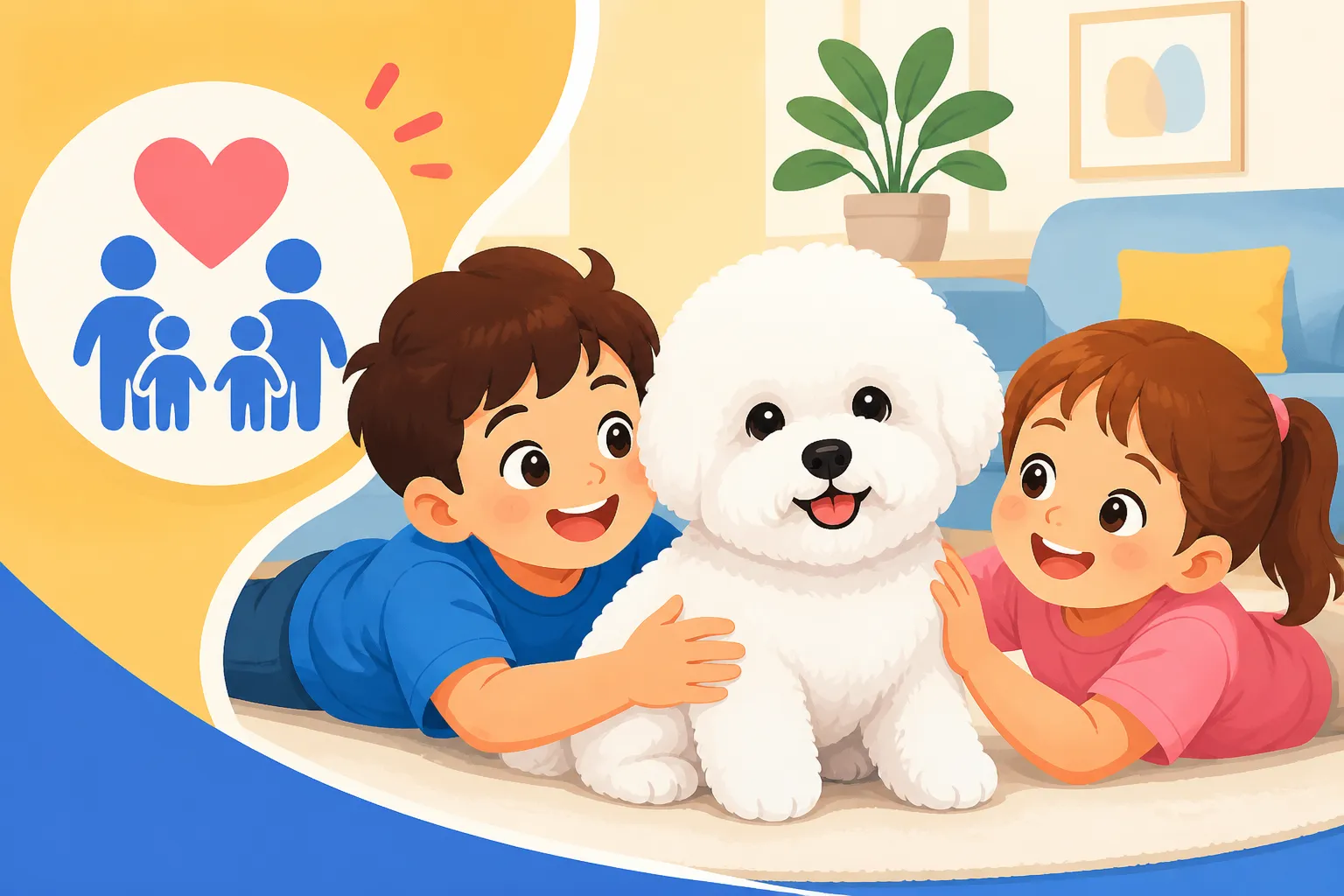
Bichons are often playful, people-oriented dogs who enjoy being part of household activity. Many like games, short walks, and time near their family, so they can be a lovely companion for children who are learning to interact gently with a pet. Their small size can also make them easier to accommodate in a home without a large yard.
That said, a dog’s breed is only part of the picture. Individual temperament, early experiences, health, and training all matter. One Bichon may happily join a calm game on the living-room floor; another may prefer to watch from a dog bed. A child-friendly household makes room for both possibilities instead of expecting the dog to tolerate every kind of attention.
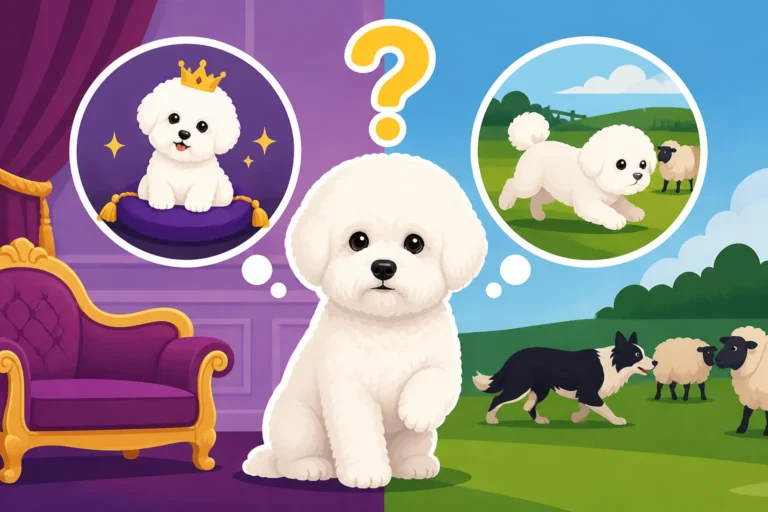
Bichons were developed as companion dogs, but that does not mean they are automatically suited to every family routine. The history and typical household role can offer useful context, while still leaving plenty of room for individual differences. See The Household a Bichon Frise Was Bred For for more about the breed’s companion-dog background.
The challenges parents should take seriously
A Bichon is small enough to be injured by an accidental fall, a tight hug, or a child tripping over the dog. Even a friendly dog may feel frightened or sore if someone grabs its legs, corners it, or disturbs it while sleeping. A frightened dog might growl, snap, or bite—not because it is “bad,” but because it is trying to create distance.
Young children are still learning impulse control. They may squeal, run, reach suddenly, or forget a rule they followed five minutes earlier. Parents understandably want children and pets to bond, but expecting a toddler to reliably read a dog’s signals is not realistic. The adult must manage the interaction every time.
It is also worth thinking beyond temperament. Bichon coats need regular brushing and professional grooming, and the breed can be slow to housetrain. Those responsibilities usually land on the adults, not the children. A dog that looks like a low-maintenance cuddly companion can still need a steady schedule for grooming, exercise, toilet breaks, and training. Whether a Bichon Frise Is More Work Than It Looks covers some of those less obvious commitments.
| Household situation | Likely fit | What adults should plan for |
|---|---|---|
| Calm school-age child who follows rules | Often a workable match | Supervised play, gentle handling, and dog-care routines led by adults |
| Toddler who grabs, chases, or falls | Higher-risk match | Physical separation unless an adult is actively managing the interaction |
| Busy home with little adult time for grooming and training | Difficult fit | Arrange regular coat care and consistent routines before bringing a dog home |
| Family willing to teach boundaries and provide a quiet dog-only space | Better conditions for success | Use gates, a bed or pen, and predictable rules for children and visitors |
How a Bichon’s size and temperament affect child safety
Small does not mean delicate in every way
Bichons are sturdier than some very tiny dogs, but they are still small dogs. Their size can make it easy for a child to pick one up or carry it around, which is exactly why clear rules matter. A dog should not be lifted by a child unless an adult has specifically taught and is supervising safe handling—and in many families, the simplest rule is that children do not pick the dog up at all.
A child may also injure a Bichon without meaning to. A dog underfoot can be stepped on, shut in a door, or knocked off furniture. The risk is greater when the dog is excited, the room is crowded, or adults are distracted by cooking, visitors, or a phone call. Whether a Child Can Injure a Bichon Frise explains why small-dog safety deserves attention even in affectionate homes.
Consider a common scene: a preschooler wants to hug the dog while the dog is asleep on the sofa. The child may see a cuddle; the dog may experience a sudden loss of space. An adult can prevent that mismatch by teaching the child to call the dog over rather than approaching it, and by making the dog’s resting area off-limits to children.
Toddlers need more management than older children
Toddlers cannot consistently follow instructions such as “leave the dog alone when it walks away.” Even a child who is gentle most of the time may grab a handful of coat, stumble onto the dog, or put a face close to its muzzle. That is not a character flaw; it is part of being very young. The responsibility for preventing unsafe contact belongs to the adults.
For families with toddlers, use barriers as part of everyday life. A baby gate can create a dog-only room or a child-safe play area, while a pen can give the dog a comfortable place to rest. The dog should be able to retreat without being followed. If you are gathering supplies, you can compare options at a local pet store or Chewy, but choose equipment that fits your home and can be used consistently.
A Bichon may suit some homes with toddlers if the adults are committed to close supervision and separation when they cannot actively watch. It may be a poor fit if the plan depends on the dog patiently accepting rough handling or on a toddler reliably remembering rules. For a closer look at the extra considerations, read Whether a Bichon Frise Is Safe With Toddlers and Whether a Bichon Frise Is Fragile Around Children.
How to help children and a Bichon Frise live together safely
Set family rules before the dog arrives
Keep the rules simple enough for a young child to remember. For example: pet gently on the shoulder or side, do not hug or climb on the dog, leave food bowls alone, and never disturb the dog in its bed or crate. Adults should model these rules rather than relying on a child to infer what gentle handling looks like.
Teach children to invite contact instead of demanding it. They can sit quietly and let the dog approach, then pet briefly while an adult watches. If the dog turns away, moves behind furniture, stiffens, yawns repeatedly, or tries to leave, end the interaction. A growl is a warning that the dog is uncomfortable; scolding the dog for growling can suppress a useful signal without resolving the discomfort.
Make the dog’s retreat space genuinely protected. A bed, crate, or gated room should never become a child’s play area. The dog must be able to rest there without being pulled out for a game or approached by visitors. Adults can also manage busy moments—such as birthday parties or playdates—by giving the dog a quiet break before it becomes overwhelmed.
Supervise interactions instead of assuming they are safe
“Supervision” means an adult is close enough and paying attention enough to intervene immediately. Watching from another room, or glancing up while doing chores, is not enough when a toddler and a small dog are interacting. If the adult cannot supervise, use a gate or another safe separation method.
Keep play low-key and predictable. Fetch with a soft toy, practicing a simple cue, or calmly tossing a treat can be safer than chasing, wrestling, or tugging at the dog’s coat. Children can help with age-appropriate tasks, such as asking the dog to sit before an adult serves its meal, but feeding, medication, grooming, and toilet routines remain adult responsibilities.
A family can make supplies easier to manage by keeping a dedicated dog-care area with a brush, treats, leash, and cleaning products stored safely out of children’s reach. Chewy or a nearby pet shop may be convenient for comparing everyday supplies, but the main point is to make care routines predictable. If a child wants to participate, an adult can guide a short, gentle activity rather than handing over responsibility for the dog.
Choosing the right Bichon and deciding if the timing is right
Look for a dog whose needs match your family
When considering a puppy, ask about the parents’ temperaments, the puppy’s early handling, and how the breeder introduces household sounds and people. A responsible source should welcome thoughtful questions and help you consider whether a particular puppy’s energy and confidence suit your home. Avoid choosing based only on the puppy that seems cuddliest during a short visit; behavior in that moment does not guarantee how the dog will respond to children later.
An adult Bichon may be a sensible option for some families because its personality and comfort around children may be easier to assess. Ask the rescue or previous caregiver how the dog behaves around children, whether it guards food or toys, and how it responds to handling. Be honest about your children’s ages and activity level. A dog with an unknown history or a strong fear response may need a quieter household, even if it is affectionate with adults.
If you are a first-time dog owner, factor in the learning curve as well as the child-dog relationship. You will be managing training, coat care, health appointments, and household routines at the same time. Whether a Bichon Frise Suits a First Time Owner can help you think through the responsibilities that come with the breed.
Use a practical readiness check
Before bringing a Bichon home, talk through these questions with every adult in the household:
- Can an adult supervise every interaction between the dog and a toddler?
- Is there a place where the dog can rest without children entering?
- Who will handle daily toilet breaks, training, brushing, and appointments?
- Can the family keep the dog separate during playdates, meals, and hectic moments?
- Are the children willing and developmentally ready to follow basic safety rules?
- Is the household prepared for the possibility that the dog may prefer space over cuddling?
If several answers are uncertain, waiting can be a caring choice. You might first visit a friend’s calm, child-accustomed dog with close adult supervision, or ask a reputable rescue whether it offers structured introductions. A family does not have to bring home a dog immediately to help children learn respectful behavior around animals.
A Bichon Frise can be a rewarding family companion when adults set the tone: children learn gentle boundaries, the dog has a reliable retreat, and care remains an adult commitment. The breed is not an automatic match for every household with young children, and no dog should be expected to tolerate rough or constant handling. For a broader sense of practical ownership realities, see What Bichon Frise Owners Wish They Had Known.
Disclaimer
This article is for general informational purposes only and does not constitute professional advice. Laws, prices and regulations vary by location and change over time. Consult a qualified professional for guidance on your specific situation.