Whether a Bichon Frise Is Fragile Around Children
It's a common worry for many Bichon Frise owners, especially those with little ones running around: just how delicate is my fluffy companion? You look at that sweet, cloud-like dog, and then you see a whirlwind of child-like energy, and a knot forms in your stomach. This guide aims to ease those anxieties by exploring the realities of Bichon Frise fragility around children and offering practical strategies to ensure a safe, happy co-existence for everyone.
Understanding the Bichon Frise Physique: More Than Just Fluff
Bichon Frises are undeniably small dogs, often described as "toy breed" or "small companion" dogs. Their size and fluffy appearance can lead people to believe they are extremely fragile, almost like porcelain dolls. While they are indeed smaller and less robust than, say, a Labrador, understanding their physical makeup will help you gauge their true resilience and identify areas where caution is warranted. They might look like cotton balls, but there's a living, breathing, sometimes surprisingly sturdy little dog under all that white coat.
Their Small Stature and Delicate Bone Structure
Let's be honest, a Bichon Frise is not built like a tank. They typically weigh between 12 to 18 pounds and stand less than a foot tall at the shoulder. This small stature naturally means their bones are finer and more susceptible to injury compared to a larger, heavier boned breed. A misplaced step, a clumsy fall, or an accidental bump can have more severe consequences for a Bichon than it would for a dog twice their size. It’s not just about direct impact; the leverage created by a child leaning or falling on them can put undue stress on joints and bones.
Think about a small child themselves. Their bones are still developing, and they are inherently more prone to certain injuries. The same principle applies to our smaller canine friends. Their lightweight frame means they absorb less impact, but it also means they can be more easily jostled or accidentally stepped on. This isn't to say they'll shatter, but it does mean a certain level of awareness and gentleness is always necessary when children are in their space.
It’s about proportional impact. What feels like a gentle nudge from a child to an adult dog could be a significant force for a small Bichon. Their rib cages are delicate, their spines are smaller, and their joint structures, while strong for their size, aren't designed to withstand external pressures from larger beings. This physical reality underpins many of the safety precautions we'll discuss later.
Vulnerable Areas: What to Protect
Beyond just their general bone structure, there are specific areas on a Bichon Frise that warrant extra protection and vigilance, especially when children are present. The head, neck, and joints, particularly the knees, are prime candidates for accidental injury. A child might innocently grab a dog's head or pull on an ear, not realizing the potential for harm. Their eyes are also exposed, and a poke or scratch can quickly become a serious veterinary emergency.
Joints, especially those in the hind legs, can be a concern. Bichons are predisposed to conditions like patellar luxation, or "slipping kneecaps." An accidental twist or awkward landing, potentially induced by a child's interaction, could exacerbate this underlying issue or cause an injury. Owners often learn to recognize The Skip That Means a Bichon Frise's Knee Has Gone, and avoiding rough play can help prevent such incidents. Even a gentle fall can be problematic if it puts undue stress on these vulnerable points.
Their small size also means they can be easily picked up, often improperly. A child might instinctively try to lift a Bichon by its front legs or under its armpits, which puts immense strain on the spine and shoulder joints. Always teach children the correct way to handle a dog – supporting their weight fully, like a baby, if lifting is even allowed. Prevention is key here, as injuries to these areas can be painful, costly, and in some cases, lead to long-term issues.
Growth and Development: When Are They Most Vulnerable?
Just like human children, Bichon Frise puppies are significantly more fragile than their adult counterparts. Their bones are still soft, growth plates are open, and their coordination isn't fully developed. This means they are not only more prone to injury from external forces but also from their own clumsy movements. A puppy tumbling down a couple of stairs or jumping off a low couch can easily sprain a limb or cause a growth plate injury.
The period from eight weeks to about six months is particularly critical. During this time, a Bichon Frise puppy is exploring the world with boundless energy but without the full physical maturity to navigate it safely, especially around active children. Their joints are still forming, and excessive jumping or roughhousing can set the stage for orthopedic problems later in life, even if an acute injury isn't immediately apparent. The First Year With a Bichon Frise Puppy is full of learning for both pup and family, including how to handle their delicate stage.
As they mature into adults, their bones harden, and their coordination improves, making them generally more resilient. However, the foundational care and protection given during their puppyhood are crucial. Establishing good habits early on, both for the dog and the children, can significantly reduce the risk of injury throughout their lives. It's about building a strong foundation for a healthy, happy future together.
The Bichon Frise Temperament Around Children: A Balancing Act
Beyond physical considerations, a dog's temperament is equally, if not more, important when discussing their interactions with children. Bichon Frises are renowned for their cheerful, outgoing personalities. They are often described as "merry" and generally love people, making them seem like ideal family pets. However, even the sweetest dog has limits, and a Bichon's sensitivity combined with their small size means that careful management of interactions with children is paramount.
The Merry and Playful Nature
Bichons are indeed famous for their joyful disposition. They typically possess The Merry Temperament the Bichon Frise Standard Demands, characterized by a playful, affectionate, and outgoing attitude. Many Bichons adore children, seeing them as exciting playmates and sources of attention. They love to be involved in family activities and can be quite entertaining with their "Bichon Blitz" (zoomies) and clownish antics. This inherent friendliness is a huge plus when integrating them into a family with kids.
This playful nature means they are often willing participants in games, fetching toys, and enjoying a good romp. They thrive on interaction and can form strong bonds with children who treat them kindly. Their zest for life can make them wonderful companions, bringing laughter and joy to a household. This natural inclination towards fun and companionship is why many families find a Bichon Frise to be such a delightful addition.
However, it's vital to remember that a Bichon's play style might not always align with a child's more boisterous energy. A game that seems fun to a child might be overwhelming or even painful for a small dog if not managed correctly. While they are resilient in spirit, their physical limits mean that 'merry' play needs to be supervised and gentle. It’s about channeling that joyful energy into safe and appropriate interactions.
Their Sensitive Side: Overstimulation and Fear
Despite their happy-go-lucky image, Bichon Frises are also quite sensitive animals. They can be easily startled by loud noises, sudden movements, or rough handling. This sensitivity, combined with their small size, can quickly turn a playful encounter into a fearful one if a child is too boisterous or doesn't respect the dog's boundaries. A frightened Bichon might try to escape, or if cornered, could nip out of fear, even if they've never shown aggression before.
Overstimulation is a real concern. Imagine a small dog being constantly chased, poked, or picked up without a break. Even the most tolerant Bichon will eventually reach a breaking point. Signs of stress can include lip licking, yawning, turning their head away, trying to hide, or even a low growl. It's crucial for both adults and children to learn to read these subtle cues to prevent an escalation of anxiety or a reactive response.
A sensitive dog needs a safe retreat. Having a designated "dog-only" space where the Bichon can go to escape the hustle and bustle of family life is essential. This could be a crate, a dog bed in a quiet room, or an elevated spot where children are taught not to disturb them. Providing this sanctuary helps manage their stress levels and ensures they feel secure and safe within the home.
Possibility of Reactivity: Nipping Out of Fear
While Bichon Frises are generally not known for aggression, any dog can snap or nip if they are frightened, in pain, or feel threatened and have no other escape. Because of their small size, children might not recognize a Bichon's warning signs as easily as they might with a larger dog. A child's natural instinct to grab or hug a cute, fluffy dog can be misconstrued by the Bichon as a threat, particularly if they are feeling vulnerable or trapped.
A Bichon Frise might develop reactivity towards children if they consistently have negative experiences. If a child repeatedly frightens, hurts, or overstimulates the dog, the Bichon may start to associate children with unpleasantness, leading to fear-based aggression. This isn't because the dog is "bad" but because it's learned to protect itself. This is why supervision and teaching proper interaction are so critical.
The key to preventing this kind of reactivity is proactive management and education. Never leave a Bichon Frise unsupervised with young children. Teach children how to interact gently, and teach the dog that children mean good things (treats, gentle pets, quiet time). Understanding that fear is a powerful motivator for a small dog is crucial. A small dog has fewer options than a large one when it feels threatened, so flight or fight responses can emerge more quickly.
Setting Up a Safe Environment for Bichons and Kids
Creating a harmonious home where both your Bichon Frise and your children can thrive requires thoughtful planning and proactive measures. It's not enough to just hope for the best; you need to actively engineer an environment that promotes safety, respect, and positive interactions. This involves physical barriers, designated safe spaces, and careful management of daily routines.
Designated Safe Spaces for Your Bichon
Every dog, especially a small one in a bustling family home, needs a sanctuary – a place where they can retreat and feel completely safe and undisturbed. This space should be off-limits to children, a rule that must be enforced consistently. For a Bichon, this could be a cozy crate, a comfortable dog bed in a quiet corner, or even an elevated perch they can jump onto. The important thing is that it's their haven.
This designated safe space is vital for preventing overstimulation and giving your Bichon a break from constant attention or activity. Children need to understand that when the dog is in its space, they are not to bother it. This teaches respect for boundaries and allows the dog to recharge without feeling overwhelmed. You can even use a baby gate to create a dog-only zone in a specific room.
For instance, if your Bichon has a favorite dog bed in the living room, place a soft blanket over it to create a den-like feel. When your Bichon enters this space, it’s a signal to everyone that they need quiet time. This helps reduce stress and prevents potential nips born from a dog feeling trapped or bothered when they just want to rest. Think of it as their personal decompression chamber in a busy household.
Using Gates and Playpens to Manage Interactions
Physical barriers are your best friends when managing interactions between small dogs and children, especially toddlers or very young kids who don't yet understand gentle handling. Baby gates can be invaluable for separating areas of the house. You can gate off the living room, for example, to create a child-free zone for your Bichon, or vice-versa, depending on who needs the protected space at any given moment. This is where brands like Amazon offer a wide array of sturdy and affordable options, from pressure-mounted gates to extra-wide models.
A playpen is another fantastic tool, particularly for puppies or when you need to contain a Bichon for short periods. This allows the dog to be near the family but safely separated from grabby hands or stomping feet. It creates a controlled environment where the dog can observe the family without being directly involved in the chaos. This is especially useful during meal times or when children are engaged in boisterous play that might overwhelm a small dog.
Consider using these barriers strategically. For instance, when children are playing rambunctiously, you might put your Bichon in a playpen in the same room so they can still feel part of the family but are physically protected. Or, if your Bichon is eating or chewing on a special toy, a gate can ensure they are not interrupted. These tools provide a crucial layer of safety and allow you to gradually introduce and manage interactions under controlled conditions.
Childproofing Your Home from a Bichon's Perspective
While we often focus on childproofing for kids, it's equally important to consider childproofing from your Bichon's perspective. This means identifying potential hazards that curious children might unintentionally create for your small dog. Small toys with detachable parts, choking hazards, or even foods left within reach can be dangerous for a Bichon. Children's toys, in particular, can be tempting for a dog to chew on, leading to ingestion of foreign objects.
Ensure that children's play areas are picked up regularly to remove small items that could be ingested. Supervise meal times carefully to prevent children from dropping food that could be toxic or lead to digestive upset for your Bichon (especially important if your Bichon is on a special diet, like The Diet a Bichon Frise Stays On for Life). Even something as innocent as a dropped crayon can be a tempting chew toy that could lead to an emergency vet visit.
Educating children about what's safe for the dog to play with and eat is part of this process. Keep dog toys and child toys separate where possible. By thinking about what a child might accidentally leave accessible, and how that could impact a small dog, you can proactively prevent many avoidable accidents. This dual approach to childproofing ensures a safer home for all two-legged and four-legged family members.
Teaching Children How to Interact with a Bichon
The most effective way to ensure a safe and loving relationship between your Bichon Frise and your children is through consistent education and supervision. Children, by nature, are curious and sometimes clumsy, and they need to be taught how to interact respectfully and gently with a small dog. This isn't about blaming the child but empowering them with the knowledge and skills to be a responsible and kind companion.
Gentle Handling and Petting Rules
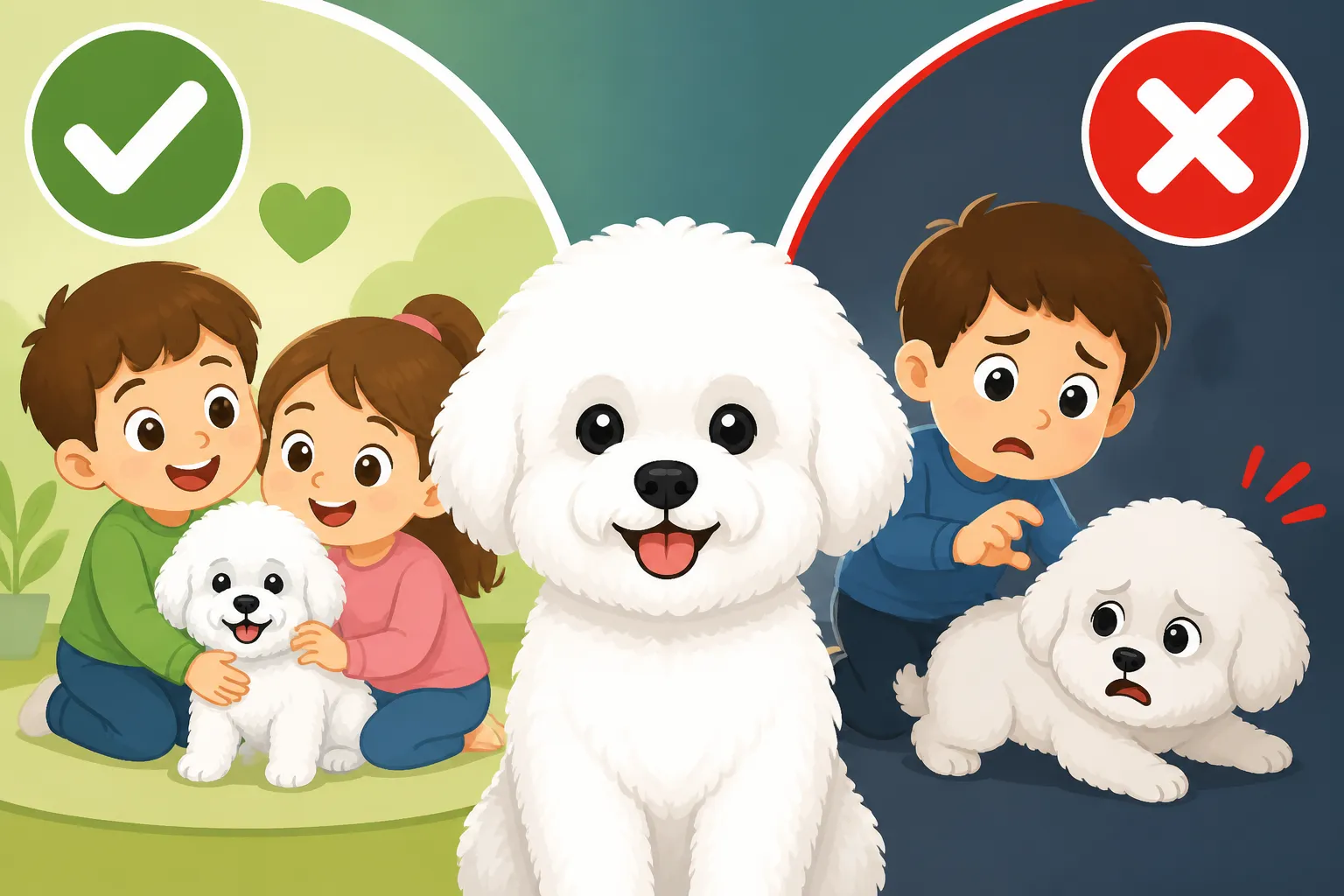
One of the first and most critical lessons is teaching children how to pet and handle a Bichon Frise gently. Small dogs can be easily injured by rough play or improper handling. Show children how to pet using flat hands, stroking gently along the back or chest, rather than patting forcefully on the head or grabbing at fur. Emphasize that dogs are not toys to be squeezed, pulled, or picked up without permission.
A great way to teach this is through demonstration and role-playing. Sit with your child and show them exactly how to approach and pet your Bichon. Use phrases like "gentle hands" and "soft touches." For very young children, always supervise every interaction. If your Bichon seems uncomfortable, redirect the child or remove the dog to its safe space. It’s a continuous learning process for both child and dog.
Crucially, teach children to always let the dog approach them first. Never allow children to chase or corner the Bichon. Teach them to sit down quietly and offer a hand for the dog to sniff, allowing the dog to decide if it wants interaction. This gives the Bichon a sense of control and makes interactions more positive, reducing the likelihood of fear-based reactions.
Respecting Boundaries and Resting Time
Just like humans, dogs need their downtime. It's essential to teach children to respect a Bichon's boundaries, especially when the dog is sleeping, eating, or in its designated safe space. Explain that when the dog is resting, it needs to be left alone. Interrupting a sleeping dog can startle them and potentially lead to a defensive snap.
Establishing a "no-go" rule for the dog's crate or bed is vital. This teaches children that this is the dog's personal sanctuary and they are not allowed to bother the dog there. If your Bichon is chewing on a toy or eating, children should be taught to give them space. Resource guarding, while sometimes a deeper behavioral issue, can also be exacerbated by children constantly trying to take things from a dog.
You can make this concept concrete for children by comparing it to their own need for privacy. "How would you feel if someone woke you up when you were sleeping soundly?" or "Would you like someone to grab your favorite toy right out of your hands?" This empathetic approach can help children understand the dog's perspective and foster a more respectful relationship.
Knowing When to Leave the Dog Alone
Learning to read a dog's body language is a life skill that benefits both children and dogs. Teach your children to recognize when your Bichon Frise is uncomfortable and needs space. Signs like yawning, lip licking, turning away, tensing up, having a stiff tail, or a low growl are all indicators that the dog is stressed or feeling threatened. Even a soft growl should be taken seriously as a warning.
Explain to children that if the dog shows these signs, it's time to back off and give the dog space. It’s not about the dog being "mean" but about the dog communicating its needs. Empower children by giving them a simple action: "If Fluffy turns her head away, that means she needs quiet time. Walk away calmly." This allows children to be part of the solution rather than just being told "no."
Supervision remains key, especially with younger children, as they may not consistently read or respond to these cues. As the adult, you are responsible for monitoring interactions and intervening before a situation escalates. Never leave young children unsupervised with any dog, regardless of how friendly the dog seems. This commitment to active supervision is the bedrock of a safe environment for both your Whether a Bichon Frise Suits a Family With Young Children and your furry friend.
Training Your Bichon for a Child-Friendly Home
While teaching children how to interact with your Bichon Frise is crucial, it's equally important to ensure your Bichon is well-trained and socialized to cope with the unique dynamics of a household with children. A well-mannered Bichon is less likely to become anxious or reactive, contributing significantly to a harmonious home environment.
Early Socialization with Children
The foundation of a dog that is comfortable and confident around children begins with early and positive socialization. If you're bringing a Bichon puppy into a home with children, or plan to have children in the future, expose your puppy to a variety of children of different ages, temperaments, and energy levels from a young age. These interactions should always be carefully supervised, positive, and short.
The goal isn't to force interactions but to create positive associations. Have children gently offer treats, play calm games, or simply be present in the same room while the puppy is engaged in a positive activity. Never allow children to overwhelm the puppy. The more positive experiences a puppy has with children during its critical socialization period (up to about 16 weeks), the more likely it is to grow into an adult dog that views children as a normal and non-threatening part of its world. This is where programs like BAXTER & Bella’s online puppy training can be invaluable, as they guide owners through structured socialization exercises.
Even with an older Bichon, gradual and controlled exposure can help. If your adult Bichon isn't used to children, start with very brief, calm interactions. Acknowledge that this is a process and patience is key. The aim is to build confidence and positive associations, one gentle interaction at a time, making children a source of good things, not fear.
Basic Obedience: Crucial Cues for Safety
Basic obedience training is not just about manners; it's a vital safety net, especially in a home with children. Cues like "sit," "stay," "come," and "leave it" can prevent countless potentially dangerous situations. Imagine your child drops a piece of food that's unsafe for your Bichon; a reliable "leave it" command could be a lifesaver. Or if your dog gets overstimulated, a "come" or "place" command can help you redirect them to their safe space.
Teach your Bichon to walk calmly on a leash, especially if children are holding it (under adult supervision). A small dog can easily get tangled or trip a child if they are pulling. Incorporate real-life distractions, including children, into training sessions to ensure your Bichon can respond reliably even in a busy environment. Consistency is key, and short, fun training sessions daily will yield the best results.
Consider enroll in a positive reinforcement training class or utilize online resources. A well-trained Bichon who understands and responds to cues is a safer and happier dog, and makes for a more relaxed home environment for everyone. A good trainer can also offer guidance specific to managing dog-child interactions.
Desensitization to Child-Related Stimuli
Children come with a lot of unique stimuli: sudden loud noises, quick movements, dropped toys, and even unusual smells. It’s helpful to desensitize your Bichon to these common child-related occurrences in a controlled and positive way. This isn't about exposing them to overwhelming situations, but gradually introducing these stimuli so your Bichon learns they are not threats.
You can play recordings of children laughing, crying, or shouting at a low volume while giving your Bichon treats or engaging in a favorite game. Gradually increase the volume as your dog remains calm. Practice having family members move quickly or drop soft toys near the dog (but not on them) and reward calm reactions. This helps build resilience and reduces the likelihood of your Bichon being startled by typical child behavior.
This desensitization process helps your Bichon develop a higher tolerance for the unpredictable nature of children. It teaches them that these stimuli are normal parts of the home environment and don't necessarily signal danger. Over time, your Bichon will become more relaxed and confident, knowing what to expect and that they are safe, even amidst the joyful chaos children can bring.
Recognizing Stress Signals in Your Bichon
Being able to interpret your Bichon Frise's body language is one of the most important skills any owner, especially one with children, can develop. Dogs communicate constantly, but their signals can be subtle. Missing these cues can lead to misunderstandings, stress for your dog, and potentially unwanted behaviors like nipping. Learning to "speak dog" will create a safer, more empathetic environment for your fluffy friend.
Subtle Signs of Discomfort or Anxiety
Bichons, like many dogs, will display a range of subtle signals before resorting to more overt warnings like growling or snapping. These are often called "calming signals" or "stress signals." Recognizing them early allows you to intervene and remove your Bichon from a stressful situation before they feel the need to escalate their communication.
Look for signs such as:
- Lip licking: A quick flick of the tongue over the lips, often when no food is present.
- Yawning: Not due to tiredness, but often a sign of stress or attempting to self-soothe.
- Turning head or body away: An attempt to disengage or signal they don't want to interact.
- Whale eye: Showing the whites of their eyes when their head is turned, indicating tension.
- Tucked tail: A classic sign of fear or anxiety.
- Low body posture: Cowering or making themselves smaller.
- Flattened ears: Ears pinned back against the head.
- Panting: When not hot or after exercise, can indicate stress.
These subtle cues are your Bichon's way of saying, "I'm not comfortable right now." It's crucial that both adults and older children learn to identify these signals. If you see them, it's time to create space for your dog.
When to Intervene and Create Space
The moment you notice any of those subtle signs of discomfort, it's your cue to intervene. This doesn't mean punishing the child or the dog, but rather managing the situation to prevent escalation. Your intervention could be as simple as gently calling your Bichon to you, luring them with a treat, or guiding them to their safe space. The key is to act calmly and quickly.
For example, if a child is playing a bit too boisterously near your Bichon and you see your dog lip-licking and turning its head away, gently step in. Say, "Okay, Fluffy needs a break now," and calmly lead your dog to its crate or another quiet area. This teaches both your Bichon that you are their protector and teaches your child about respecting boundaries.
Never force an interaction if your Bichon is showing signs of fear or stress. Pushing them to "just deal with it" will only increase their anxiety and erode their trust in you. Your role is to be a consistent advocate for your dog's well-being, ensuring they feel secure enough to express their discomfort without fear of negative consequences.
Understanding Growls and Snaps as Communication
While growls and snaps are certainly undesirable behaviors, it's important to understand them as forms of communication, not just "bad" behavior. A growl is a dog's loud warning: "I'm very uncomfortable, and if this continues, I might have to defend myself." A snap, especially one that doesn't make contact, is usually a final warning before a bite. Punishing a growl can be counterproductive, as it teaches the dog not to warn you, potentially leading to a bite without warning in the future.
If your Bichon growls or snaps, it means you've missed the earlier, more subtle signs, or the situation escalated too quickly for them to give gentler warnings. Instead of reprimanding, assess the situation immediately. What triggered the reaction? Was the dog cornered? Was a child too rough? Was the dog in pain? Understanding the cause is crucial for preventing future incidents.
Following a growl or snap, calmly separate the dog and child. Ensure both are safe and then reflect on what went wrong. This is a clear signal that the existing management or training isn't enough. It's a call to action to increase supervision, refine boundaries, or seek professional help from a qualified positive reinforcement dog trainer who specializes in fear-based behaviors. Your Bichon is telling you they are past their limit, and it's your job to listen.
Preventing Accidents and Injuries: Proactive Measures
The goal, of course, is to prevent any accidents or injuries from happening in the first place. This requires a proactive, consistent approach from all adults in the household. It’s about building a culture of safety and respect for both your children and your precious Bichon Frise.
Constant Adult Supervision: The Golden Rule
This cannot be stressed enough: never leave a Bichon Frise unsupervised with young children, toddlers, or infants. Even the most well-behaved dog can react unpredictably if startled, hurt, or overwhelmed. A small child's innocent actions can quickly turn dangerous for a small dog, and conversely, a dog's defensive reaction can harm a child.
Constant, active supervision means you are not just in the same room, but you are actively watching and ready to intervene at a moment's notice. It means being able to anticipate potential issues before they arise. This is especially true when children are very young and lack impulse control or understanding of a dog's vulnerabilities. You need to be the responsible mediator, ensuring that interactions are positive and respectful for both parties.
As children grow older and demonstrate more responsible behavior around the dog, the level of supervision might adapt, but it should never be completely removed. Even older children can get carried away in play, or accidentally trip over a small dog. This golden rule is the most effective single strategy for preventing nearly all dog-related injuries in the home.
Teaching "Hands Off" Rules for Young Children
For very young children, "hands off" is often the safest and most realistic approach. Instead of expecting them to pet gently (which they might not be capable of consistently), teach them to admire the Bichon from a slight distance. They can "pet" with their eyes, or blow kisses, or throw a soft toy from a distance. This reduces the risk of accidental grabbing, poking, or rough handling that could injure your Bichon.
You can make "hands off" engaging by teaching children to participate in other ways. They can help you give a treat (by placing it on the floor, not in the dog's mouth), play gentle fetch with a soft ball, or help brush the dog (under strict supervision, with you guiding their hand). These activities allow for positive interaction without direct physical contact that might stress the dog or lead to injury.
Reinforce these rules with consistency and positive language. Instead of just saying "No!", try "Hands off, please, remember to be gentle with Fluffy" or "Let's throw the ball for Fluffy instead." This helps children understand the reason behind the rule and offers an alternative, positive way to interact.
Regular Vet Checks and Health Monitoring
A healthy Bichon Frise is a happier, more tolerant Bichon Frise. Dogs who are in pain or feeling unwell are much more likely to be irritable, withdrawn, or even reactive when approached, especially by children. Regular veterinary check-ups are essential to ensure your Bichon is in good health and not suffering from any underlying conditions that could affect their temperament or make them more vulnerable to injury.
Conditions like Dental Disease in a Bichon Frise or arthritis, which are common as dogs age, can cause chronic pain. An otherwise sweet Bichon might snap if a child inadvertently touches a sore spot. Early detection and management of health issues can make a significant difference in your dog's comfort and behavior. Be particularly vigilant if your Bichon suddenly starts acting differently around children; this can often be a sign of pain or illness.
Discuss any behavioral changes or concerns with your veterinarian. They can rule out medical causes and provide guidance on managing pain or discomfort, which in turn will reduce the risk of your Bichon reacting negatively to children. Proactive health care is an integral part of maintaining a safe and loving home environment for everyone.
Example Table: Bichon Frise Vulnerabilities vs. Child Interaction Risks
To help visualize the potential overlaps between your Bichon's physical and temperamental traits and common child behaviors, here's a quick guide:
| Bichon Frise Trait | Potential Vulnerability / Concern | Common Child Behavior | Risk Level | Prevention Strategy |
|---|---|---|---|---|
| Small Stature, Fine Bones | Fractures, sprains, internal injury | Falling on dog, picking up improperly | High | Constant supervision, teach gentle lifting (if allowed) |
| Patellar Luxation (Knee Issues) | Exacerbation of existing condition, pain | Twisting leg, rough play, accidental kick | Moderate to High | Avoid rough play, ensure soft landings |
| Sensitive Hearing | Startle response, anxiety | Loud screams, sudden noises | Moderate | Desensitize, provide quiet retreat |
| Sensitive to Touch/Overstimulation | Fear-based nip, withdrawal, stress | Poking, tail pulling, constant petting | Moderate | Teach gentle hands, respect boundaries, safe space |
| Exposed Eyes | Scratches, pokes | Uncontrolled gestures, curious fingers | Moderate | Teach "look, don't touch" for face areas |
| Grooming Needs (e.g., ear plucking) | Pain from sensitive ears | Grabbing ears, pulling fur | Moderate | Teach "ears are delicate," don't touch |
Conclusion: A Harmonious Home is Possible
Owning a Bichon Frise when you have children is a truly rewarding experience, but it's one that comes with real responsibilities. While they might appear delicate, a Bichon's primary "fragility" around children often stems more from their small size making them vulnerable to accidental injury and their sensitive nature leading to fear if their boundaries aren't respected. They are not inherently fragile in spirit, but they rely on us, their human guardians, to ensure their physical and emotional safety.
By actively supervising interactions, teaching children respectful ways to engage, providing your Bichon with safe spaces, and ensuring they are well-trained and healthy, you can create a harmonious environment where both your fluffy companion and your beloved children can thrive together. It's a journey of continuous learning and patience, but the deep bonds formed are absolutely priceless. Remember, a happy, secure Bichon makes for a wonderful family member, and a well-educated child learns invaluable lessons in empathy and kindness.
Disclaimer
This article is for general informational purposes only and does not constitute professional advice. Laws, prices and regulations vary by location and change over time. Consult a qualified professional for guidance on your specific situation.