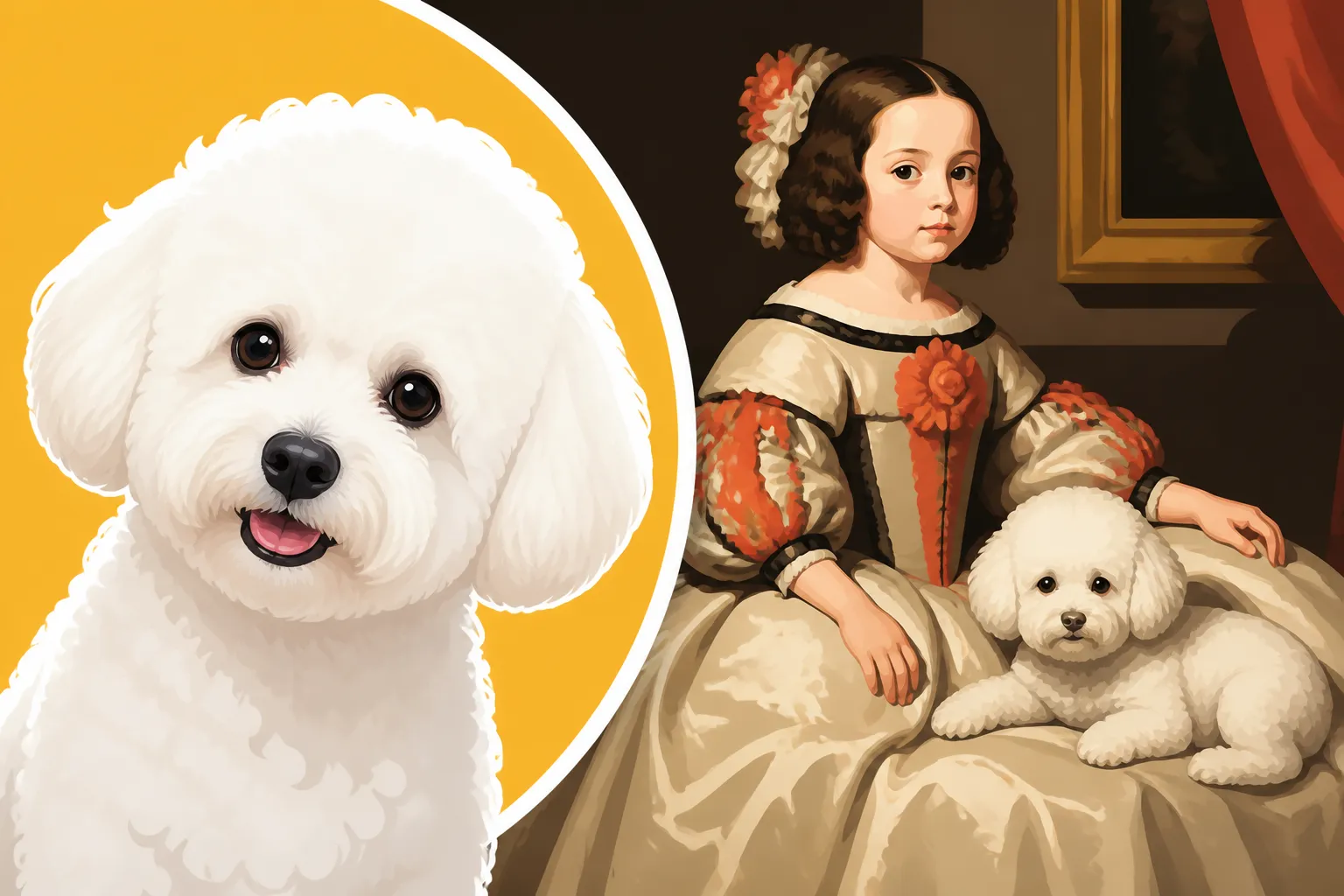
Whether the Bichon Frise Was in Spanish Paintings
The charming, cloud-like Bichon Frise we know and adore today has a rich, fascinating history that often sparks curiosity. Owners frequently wonder about their lineage, picturing them gracing the laps of royalty or cavorting through historical events. One common question that pops up is whether the distinctive little white dog made an appearance in the art of the past, particularly in the works of renowned Spanish painters. While it’s tempting to imagine our fluffy companions peering out from centuries-old canvases, understanding their artistic presence requires a dive into history, breed evolution, and the subtle nuances of art itself. This guide will explore the historical journey of Bichon-type dogs and examine the evidence for their depiction in Spanish art.
The Winding Path of the Bichon's Ancestors Across Europe
To truly appreciate the potential presence of Bichon Frise types in Spanish paintings, we first need to trace the breed's origins and its spread throughout Europe. These aren't just modern-day companions; their story stretches back centuries, intertwined with trade routes, nobility, and cultural shifts.
From Mediterranean Seafaring to Royal Chambers
The ancestors of the modern Bichon Frise were not always the pampered lapdogs we envision. Their journey began much more humbly, often as companions to sailors traversing the Mediterranean Sea. These small, sturdy white dogs, known broadly as "Barbichon" types, were adaptable and charming, making them ideal travel companions on long voyages. They were robust enough to handle ship life, and their cheerful dispositions likely provided comfort to lonely sailors. It's believed that these dogs originated from the Canary Islands, particularly Tenerife, giving rise to their earlier name, the "Tenerife dog."
As trade flourished between the Mediterranean ports, these dogs began to spread. They moved from the docks and ships to the bustling marketplaces and eventually caught the eye of the wealthy. Historians suggest that these small dogs started gaining popularity in the 14th century, making their way into the courts of Italy and later France. Which Century the Bichon Frise Appeared In is a topic that delves deeper into this early emergence. The very idea that a dog could be a constant companion, rather than solely a working animal, was a growing trend among the elite. These were not just pets; they were symbols of status and luxury, often adorned with ribbons and treated with immense affection, a far cry from their seafaring roots. It’s a remarkable transformation, showcasing the enduring appeal of these little canines.
The Era of Lapdogs: Popularity in Italy and France
Once these Bichon-type dogs arrived in Italy, they quickly became favorites among the nobility and wealthy merchant classes. Italian nobles, always keen on displaying their affluence and sophistication, found these engaging, affectionate little dogs to be perfect accessories. They were often depicted in portraits of the era, though perhaps not always with the exact "Bichon Frise" appearance we recognize today. The demand for these charming companions meant that breeders began to focus on their aesthetic qualities, emphasizing their soft, curly white coats and bright, intelligent eyes. Whether Italian Nobles Kept Bichon Frises explores this fascinating period of the breed's history.
From Italy, it was a short, albeit influential, leap to the French court, where the Bichon Frise truly cemented its aristocratic status. King Henry III of France, in particular, was famously enamored with his Bichons, carrying them in special baskets wherever he went. This royal endorsement led to an explosion in their popularity among the French aristocracy during the 16th century. The French Court That Made the Bichon Frise Fashionable highlights how these dogs became deeply ingrained in the culture and fashion of the time. Their playful nature and manageable size made them perfect for palace life, offering companionship and a touch of whimsical elegance to their owners. This period of widespread European popularity meant that similar small, white, fluffy dogs were likely present in various European countries, including Spain, through trade, diplomatic gifts, and inter-marriages among royal families.
Unraveling the Presence of Bichon Frise Types in Spanish Art
Given their widespread popularity across European courts, it's a natural leap to wonder if these charming dogs found their way into the opulent and often stark realism of Spanish painting. Spanish artists, especially during the Golden Age, were masterful at capturing details of court life, making their canvases a potential window into the canine companions of the era.
The Grandeur of the Spanish Court and Its Canine Companions
The Spanish Royal Court, much like its French and Italian counterparts, had a deep appreciation for dogs. However, the dogs depicted in Spanish art often reflected different cultural values and hunting traditions. While small companion dogs certainly had a place, many famous Spanish paintings feature larger, more imposing breeds such as mastiffs, greyhounds, or hunting dogs, often symbolizing power, loyalty, or the aristocratic pastime of the hunt. These were working animals or symbols of status that conveyed a different message than the delicate lapdogs.
That's not to say small dogs were absent. Court dwarves, children, and ladies-in-waiting were sometimes painted with their small canine companions. The challenge arises in definitively identifying these dogs as "Bichon Frise" given the loose breed definitions of the time. Artists were more focused on capturing the essence of the dog as a companion or a symbolic element within the portrait, rather than adhering to a strict breed standard. The context of the painting, the social status of the subject, and the artist's personal style all played a role in how dogs were depicted. Spanish painters, with their characteristic realism, provided a snapshot of their world, and small white dogs were certainly part of that world, even if their specific lineage wasn't always clear to us today.
Scrutinizing the Canvases: Goya and Beyond
When we specifically look for Bichon-like dogs in Spanish paintings, the name of Francisco Goya often comes up. Goya, a monumental figure in Spanish art, captured a wide range of subjects, from royal portraits to scenes of daily life and war. Indeed, there's a particular painting, "The Dog" (El Perro), which famously depicts a dog's head peering over a dark, sandy incline. However, this dog, while soulful, bears little resemblance to a Bichon Frise; it's a much larger, less fluffy breed, often interpreted as a hunting dog.
However, Goya did paint other works featuring small, white, fluffy dogs that bear a striking resemblance to Bichon types. One notable example is his "Portrait of the Duchess of Alba and her Maid," where a small white dog with curly hair is nestled in the Duchess's lap or at her feet. While not definitively identified as a Bichon Frise (as the breed name wasn't formally established as such until much later), its appearance, size, and role as a companion dog strongly align with the Barbichon types popular at the time. Whether Goya Painted a Bichon Frise offers a more focused look at this particular artist's depictions. Other artists of the Spanish Golden Age, like Velázquez, also included small dogs in their portraits, particularly within scenes featuring children or ladies of the court. These dogs, with their often curly or fluffy white coats, certainly belong to the general lineage from which the Bichon Frise later emerged. While we can’t go back in time to confirm the exact breed, the visual evidence suggests that dogs very similar to our beloved Bichons were indeed present and cherished within the Spanish aristocracy.
The Challenge of Breed Identification in Historical Depictions
The further back in history we go, the trickier it becomes to definitively identify specific dog breeds from artistic depictions. What we see on canvas might resemble a modern Bichon Frise, but breed standards and names have evolved considerably over centuries.
The "Barbichon" Family: More Than Just One Breed
The term "Barbichon" refers to a family of small, white, curly-coated dogs that were prevalent across Europe, particularly the Mediterranean, for centuries. This family includes the ancestors of not only the Bichon Frise but also the Maltese, Bolognese, and Havanese, among others. These dogs shared many common traits: small size, a predominantly white coat, and a lively, companionable temperament. They were bred for companionship, not for specific working roles that might have necessitated distinct physical characteristics or strict breeding lines early on.
This shared ancestry makes it incredibly challenging to point to a dog in a 17th-century Spanish painting and declare, "That's definitely a Bichon Frise!" It's more accurate to say, "That's a small, white, curly-coated companion dog belonging to the Barbichon family, a direct ancestor of what would eventually become the Bichon Frise." The Barbichon Family the Bichon Frise Belongs To delves into this fascinating lineage. The process of formalizing breeds with strict standards and official names is a relatively modern phenomenon, largely occurring in the 19th and 20th centuries. Before that, dogs were often described by their general type, origin, or function. So, while the spirit and appearance of the Bichon Frise were undoubtedly present, the specific label was not. This is why when we look at old master paintings, we appreciate the dogs for their artistry and historical context, rather than for their precise breed identification.
Interpreting Artistic License and Stylization
Beyond the lack of formal breed standards, another factor making identification difficult is artistic license and stylization. Artists throughout history had their own unique styles and often interpreted their subjects in ways that served the overall composition or symbolic meaning of the painting. A dog might be rendered with softer lines, exaggerated features, or simplified details, making it less of a precise anatomical study and more of an idealized representation. The texture of a fluffy coat, for instance, might be depicted in a way that emphasizes its luxuriousness rather than its exact curl pattern.
Consider also the condition of historical paintings. Colors can fade, details can become obscured over time, and the lighting in a museum might differ vastly from the original setting where the artwork was viewed. All these elements can influence our perception of the dog depicted. Therefore, while we can find many charming examples of small, white, curly-coated dogs in Spanish art, especially from the periods when they were popular companions across European courts, a definitive, one-to-one match with the modern Bichon Frise standard is often elusive. What remains clear, however, is the enduring appeal of these delightful canines throughout history, regardless of their precise breed classification. Today, owners are fortunate to have resources like Chewy, where they can find a wealth of information and products tailored to their Bichon Frise's specific needs, something historical owners could only dream of!
Let's look at some characteristics often associated with small white dogs in historical European art, and how they compare to the modern Bichon Frise:
| Characteristic | Small White Dogs in Historical Art (e.g., Spanish) | Modern Bichon Frise (Standard) |
|---|---|---|
| Coat Type | Often depicted as fluffy, curly, or somewhat woolly; color typically white. | Distinctive double coat, soft and curly, resembling a powder puff; pure white. |
| Size | Generally small, lapdog size, suitable for indoor companionship. | Small toy breed, typically weighing between 12-18 pounds (5-8 kg). |
| Build | Often appears delicate but can be sturdy; proportions vary by artistic rendering. | Sturdy, well-balanced build, slightly longer than tall. |
| Temperament (Implied) | Companionable, often seen on laps or at feet of owners, suggesting affection. | Merry, playful, intelligent, and charming; known for its companionable nature. |
| Role in Painting | Symbol of wealth, companionship, loyalty, or simply a beloved pet. | A purebred companion dog with a specific breed standard. |
| Breed Name | Referred to by general type (e.g., "Tenerife dog," "Barbichon") or simply "dog." | Formally recognized as "Bichon Frise" with specific lineage and characteristics. |
While the historical dogs in Spanish paintings might not carry the "Bichon Frise" label, their visual characteristics and role as cherished companions clearly link them to the proud lineage of small, white, curly-coated dogs that eventually gave rise to our modern breed. Just as they were adored by Spanish nobles and artists, today's Bichon Frises continue to bring immense joy to their families, with modern owners able to provide them with the best care, from specialized food to cozy beds, easily accessible through platforms like Chewy.
Conclusion
The question of whether the Bichon Frise appeared in Spanish paintings is a delightful one that takes us on a journey through history, art, and the evolution of canine breeds. While it's difficult to definitively declare, "Yes, that's a Bichon Frise!" in every old canvas, the evidence strongly suggests that dogs very much like the Bichon Frise—members of the broader Barbichon family—were certainly present and celebrated within Spanish society, especially among the aristocracy. Their charming, companionable nature and distinctive white, fluffy coats made them appealing subjects for artists capturing the daily life and grandeur of their patrons.
These dogs, whether depicted by Goya or other Spanish masters, serve as a testament to the enduring human-animal bond and the timeless appeal of small, affectionate canines. They were part of a lineage that eventually, through careful breeding and formal recognition, became the Bichon Frise we cherish today. So, next time you gaze upon a painting from Spain's Golden Age and spot a small, white, curly-haired dog nestled in a noble's lap, you can appreciate it as a historical echo of your own beloved Bichon Frise, a connection reaching back through centuries.
Disclaimer
This article is for general informational purposes only and does not constitute professional advice. Laws, prices and regulations vary by location and change over time. Consult a qualified professional for guidance on your specific situation.