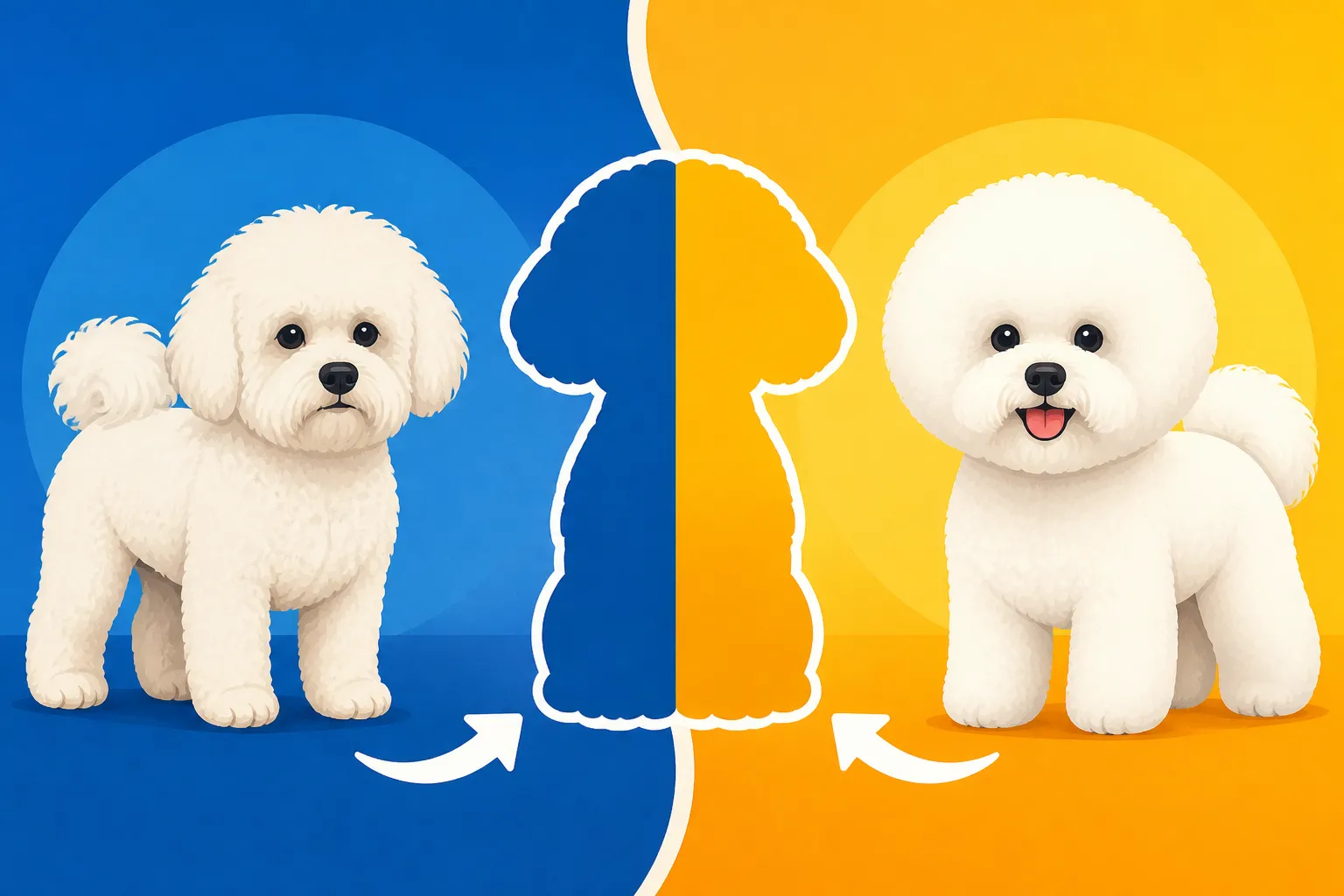
Whether the Bichon Frise Outline Has Changed Over Time
A Bichon Frise in an old painting may look fluffier, longer in the body, or less perfectly round than the show dogs pictured today. That can make it hard to tell whether the breed’s outline has genuinely changed or whether grooming, artistic style, and formal standards explain the difference. Here’s how to read those clues without mistaking a trim for a new kind of dog.
The Bichon Frise outline has changed less than its presentation
What people mean by the breed’s outline
A dog’s outline is its overall shape when viewed from the side and from above. For a Bichon Frise, that includes the balance between the head and body, the topline, the tail carried over the back, and the impression created by the coat. The fluffy, rounded look is memorable, but it is not the whole structure. A good trim can emphasize the outline; it cannot change the dog’s actual proportions.
This distinction matters when comparing photographs with historical paintings. An artist might soften the dog’s shape, enlarge its head, or simplify its coat to suit the composition. A groomer, meanwhile, can create a rounder head and a fuller-looking body with careful scissoring. Neither image necessarily tells you what the dog’s skeleton looked like beneath the coat.
The modern breed presentation is often associated with a rounded, powder-puff silhouette. That recognizable profile is described in The Powder Puff Outline the Bichon Frise Standard Describes. Yet the outline is not meant to make every Bichon look like an identical plush toy. Coat texture, body condition, posture, age, and grooming all affect what you see.
The features that have stayed recognizable
Some visual traits have remained central to the Bichon Frise’s identity: a compact, balanced small dog; a plumed tail carried over the back; and a soft, abundant coat that can be shaped into a rounded appearance. A dog may look more or less spherical depending on its haircut, but its underlying structure should still appear balanced rather than exaggerated.
The coat is especially important because it changes the visible silhouette so dramatically. A long, carefully brushed coat can make the dog look wider and softer; a shorter pet trim can reveal more of the body and make the head seem less prominent. If you are comparing a show dog with a family pet, remember that these may be the same breed presented in very different coats. Whether Show Bichon Frises Look Like Pet Ones explores why the difference can be striking.
It also helps to compare like with like. Look at several dogs standing naturally, not just one posed show photograph against one centuries-old painting. A dog with its head lowered, tail relaxed, or coat damp after a bath can look like a different shape from the same dog standing alert after a professional groom.
How written standards shaped the modern look
From a familiar type to a defined standard
Before a written standard set down specific points for breeders and judges, dogs were identified more through their shared type and use than through a single detailed description of ideal proportions. Historical pictures can show small, curly-coated companion dogs, but they do not function like precise breed-standard diagrams. They offer clues about appearance, not a reliable measurement of every feature.
As breed organizations developed formal descriptions, they gave people a shared vocabulary for evaluating size, proportions, coat, head, and carriage. That did not mean someone suddenly invented a completely new Bichon Frise. Rather, a written standard helped make the existing type more consistent and easier to distinguish from related dogs. For the formal timeline, see The Year the Bichon Frise Standard Was Written.
The standard can influence what becomes familiar to the public. If judges consistently reward a balanced outline and a well-shaped coat, breeders and exhibitors may work toward those qualities, while groomers learn to present them clearly. Over time, the show-ring image becomes the image many people think of first, even though pet Bichons may be clipped shorter or kept in less sculpted trims.
Why regional standards and show presentation can differ
Breed descriptions are not always identical across countries. Organizations may use different wording, emphasize particular details, or apply their own judging traditions. Those differences do not automatically mean that one country has a wholly different Bichon Frise. Often, the same broad breed type is being described through slightly different systems. Whether the Bichon Frise Standard Differs in Europe offers more context on those distinctions.
Grooming can add another layer to the comparison. A show coat may be shaped to make the dog’s balance and expression easy to assess, while an everyday trim may be chosen for comfort and easier home maintenance. A trim that looks fuller around the head, for example, can make the dog seem more round-headed without changing the skull beneath the coat. Whether European Bichon Frises Are Trimmed Differently is useful when comparing photographs from different show traditions.
For readers tracing the breed’s formal recognition, Whether the Bichon Frise Was Recognized in France First puts the outline discussion into its historical setting. Recognition and standardization are related, but they are not the same thing as a sudden physical transformation. A written standard records and refines a breed ideal; it does not prove that every earlier dog looked unlike today’s Bichons.
| What you are comparing | What may look different | What to check before assuming the breed changed |
|---|---|---|
| Historical painting and modern photo | Coat fullness, head shape, body length | Artistic style, pose, and grooming |
| Show dog and family pet | Rounded silhouette and coat volume | Trim, brushing, and coat length |
| Dogs shown in different countries | Presentation and interpretation of details | The applicable breed standard and local grooming tradition |
| Puppy and adult dog | Body balance, coat texture, and maturity | Age and stage of coat development |
Why old images and modern photos can mislead
Art is not a photographic record
Paintings and early illustrations were made to communicate a scene, status, or personality. Artists could exaggerate a dog’s head, simplify its legs, or turn a coat into a soft cloud of brushstrokes. Even a carefully observed portrait is not a neutral record: the artist chooses the angle, posture, lighting, and details to include.
That is why a dog in an old portrait may appear longer-bodied or less round than a modern show Bichon. The difference could reflect artistic convention, the dog’s pose, or a less sculpted coat—not a major shift in the breed’s structure. A single image is a particularly shaky basis for deciding that the outline has changed across generations.
Modern photography has its own distortions. A close camera angle can make the head seem larger; a dog standing on a grooming table may hold itself differently from one lounging at home. Show photography also tends to capture dogs freshly groomed and deliberately posed. For a more grounded comparison, look for multiple images and note whether the dogs are standing in similar positions.
Grooming creates much of the “before and after”
Bichon Frise hair can be shaped around the head and body, making coat care a major part of the breed’s familiar appearance. Brushing, drying, and scissoring affect how the curls sit and how much volume the silhouette seems to have. A damp or tangled coat may look flatter or uneven; a freshly dried and shaped coat may look dramatically rounder.
If you are trying to understand the difference between a classic outline and a practical pet trim, it helps to focus on what is being shaped. Grooming can soften transitions between the head and neck or make the body look fuller, but it does not alter the dog’s actual length, bone, or tail set. Whether a Bichon Frise Is Judged on Its Outline explains why judges assess the whole picture rather than coat volume alone.
At home, the goal does not need to be recreating a show finish. Regular brushing and a trim suited to your dog’s coat and lifestyle may be more realistic. Owners looking for basic grooming tools may find brushes and combs through retailers such as Chewy, but the right choice depends on coat condition and the dog’s comfort. Chewy can be one place to compare grooming supplies; a professional groomer can help identify what will work for a particular coat. If matting is already close to the skin, avoid pulling hard or trying to force a polished shape—ask a groomer or veterinarian for guidance instead.
What has changed over time and what has not
A more consistent ideal, not a completely new dog
The most reasonable conclusion is that the Bichon Frise’s outline has become more standardized and more familiar through formal descriptions, selective breeding, show judging, and grooming conventions. The modern powder-puff presentation is easy to recognize, but it is partly a way of displaying the dog, not evidence that the breed’s underlying shape was entirely different in the past.
The modern ideal also gives breeders and judges a clearer target than old portraits can provide. That can affect which traits are emphasized, and show dogs may look more polished or uniform than dogs seen in everyday life. But differences among individual dogs remain normal. Coat density, body proportions, posture, and grooming can all change the visible outline without indicating a separate type.
When evaluating an individual Bichon Frise, look beyond the haircut. Consider whether the dog appears balanced and comfortable, whether it moves freely, and whether the coat is healthy and manageable. The breed’s broader history and relationships to similar companion dogs are covered in The Bichon Frise Against the Maltese and the Havanese, which can help explain why old descriptions and images sometimes seem difficult to classify.
How to compare outlines more fairly
If you are comparing a historical image with a modern Bichon, start by separating structure from presentation. Ask whether you can see the dog’s legs, back, tail, and body proportions clearly. Then consider whether the coat is long, clipped, brushed, or sculpted. If those details are hidden, the picture may tell you more about style than anatomy.
Next, compare multiple examples rather than choosing the most dramatic pair of images. Look at dogs from different eras, and, where possible, compare them in similar poses. Keep in mind that a show photo is usually designed to present the dog at its best, while a casual family snapshot may show a coat between grooms. If you are looking at a particular dog rather than breed history, a veterinarian or experienced breed groomer can help distinguish coat presentation from structural concerns.
Finally, remember that “more like the old dogs” is not automatically better, and “rounder” is not automatically more correct. The useful question is whether the dog fits the recognized breed type and is healthy, comfortable, and well cared for. A tidy, shorter trim can still belong to a Bichon Frise; so can a fuller show presentation. The outline has been refined and made more recognizable over time, but coat styling is a big part of why today’s Bichon Frise may look so distinctive.
Disclaimer
This article is for general informational purposes only and does not constitute professional advice. Laws, prices and regulations vary by location and change over time. Consult a qualified professional for guidance on your specific situation.