The Year the Bichon Frise Got Its Modern Name
Have you ever looked at your fluffy, white Bichon Frise and wondered about the story behind their rather elegant-sounding name? It's easy to assume such a specific name has always been around, but like many beloved breeds, the Bichon Frise has a fascinating, winding history that led to its modern designation. This guide will take you through the captivating journey of how these cheerful little dogs finally got the name we know and love today, clearing up any confusion about their historical identity.
The Winding Road to the Modern Bichon Frise Name
Our delightful Bichons have quite the rich, globe-trotting history, and with that history comes a series of names, each reflecting a different chapter in their story. Before settling on "Bichon Frise," these charming dogs were known by various monikers, often linked to their origins, their jobs, or their perceived appearance. It's a testament to their enduring appeal that people kept finding new ways to describe them, even if it meant a bit of historical head-scratching for us later on!
It’s completely understandable why their naming history might seem a bit convoluted. Imagine trying to keep track of a family member who has moved countries, changed careers, and adopted a new nickname at every turn! The journey of the Bichon Frise’s name reflects their adaptability and their deep connection to human history, from grand European courts to bustling street corners. This evolution speaks volumes about how deeply intertwined they've always been with people's lives.
From Tenerife to "Barbichon": Early Naming Conventions
The story of the Bichon Frise really begins, as many believe, on the sunny Canary Islands. Specifically, the island of Tenerife is often cited as the place where these dogs first truly flourished, becoming known as the "Tenerife dog" or "Bichon Tenerife." This early name wasn't just a geographical marker; it reflected their status as beloved companions on the islands, often traveling with Spanish sailors who would later introduce them to other parts of the world. It was a simple, straightforward name that highlighted their perceived point of origin.
Beyond the specific island connection, our little white wonders also belonged to a larger family of dogs, often referred to as the "Barbichon" type. This group included several small, long-haired dogs that share a similar lineage and appearance, such as the Maltese, Bolognese, and Havanese. The term "Barbichon" itself is believed to come from the French word "barbiche," referring to a small beard, or perhaps a corruption of "barbet," a larger water dog from which these smaller breeds are thought to have descended. This broader classification shows that while they were distinct, they were also part of a larger trend of charming, curly-coated companions.
The shared ancestry and similar appearances of the Barbichon family members often led to interchangeable names or a general vagueness in description. For centuries, people weren't as meticulous about breed standards as we are today. A fluffy white dog was a fluffy white dog, and its specific name might vary from village to village or ship to ship. Understanding this historical fluidity helps us appreciate the later efforts to give the Bichon Frise a truly distinct and universally recognized identity. If you're curious about their wider family, you might enjoy learning about The Barbichon Family the Bichon Frise Belongs To.
The French Court and Street Performer Eras: Nicknames and Confusion
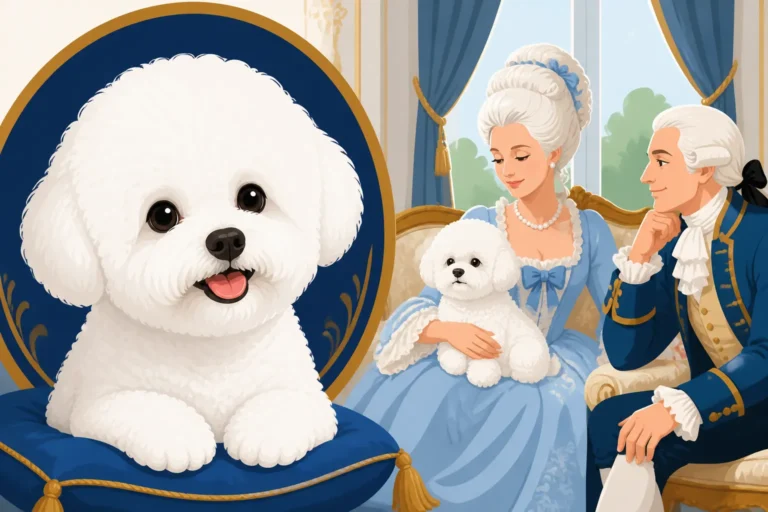
As these charming dogs made their way from the Canary Islands to mainland Europe, particularly to Italy and then to France, their popularity soared among the nobility. During the Renaissance, Italian sailors reputedly brought these delightful dogs back, where they quickly became favorites of the Italian aristocracy. Soon after, they caught the eye of the French court, reaching the peak of their aristocratic fame under kings like Henry III, who supposedly carried his little white companion in a basket wherever he went. This era saw them adorned with silken bows and treated like royalty themselves, a far cry from their seafaring origins.
In these opulent settings, they were often simply referred to as "Bichons," a term of endearment that roughly translates to "pampered dog" or "lap dog." It was a fitting description for dogs that lived lives of luxury, their primary role being to charm and entertain their noble owners. This period cemented their reputation as intelligent, affectionate companions, though their formal name was still in flux. Their presence in the French court is a truly fascinating part of their story, so much so that it has its own detailed history in The French Court That Made the Bichon Frise Fashionable.
However, as revolutions swept through Europe and fortunes changed, the Bichon's status took a dramatic turn. Many found themselves out of the lavish homes of the aristocracy and onto the streets, where their intelligence and playful nature made them perfect street performers. They learned tricks, charmed crowds, and continued to captivate hearts, often working alongside organ grinders and circus performers. During this era, they acquired more informal, descriptive names, perhaps even "circus dogs" or "performing poodles," reflecting their new roles. This transitional period, from pampered pet to street entertainer, really highlights their resilience and adaptability, and it's a phase that's explored in more detail in The Bichon Frise Street Performing Years After the Revolution.
The Crucial Year: Solidifying the Breed's Identity
The 20th century brought significant changes, not just for people but for dog breeds too. After the devastation of the two World Wars, many breeds faced the threat of extinction, and dedicated fanciers rallied to preserve them. For our beloved Bichon Frise, this period was crucial, marking the point where their diverse historical names were finally streamlined into the single, recognizable name we use today.
It was a time when dog enthusiasts realized the importance of not just preserving individual dogs, but also of formalizing breed standards and identities. Without a clear, consistent name and description, it would be impossible to breed responsibly, track lineage, or gain official recognition from kennel clubs. The drive to solidify the breed's identity was born out of love and a keen understanding that these charming dogs deserved a lasting place in canine history.
Post-War Efforts to Re-establish the Breed Standard
Following the turmoil of World War I, several European countries, particularly France and Belgium, saw dedicated breeders begin the arduous work of identifying and standardizing the various "Bichon" type dogs that had survived. These passionate individuals sought out dogs that embodied the characteristics they believed were essential to the breed: the cheerful temperament, the distinct white, curly coat, and the compact, lively build. It wasn't just about finding dogs; it was about defining what a "Bichon" truly was.
These efforts were critical because, without formal standards, the dogs were often crossbred indiscriminately or simply categorized loosely. The goal was to establish a consistent type that breeders could work towards, ensuring that future generations would possess the desirable traits that had made the Bichon so beloved throughout history. This period involved careful selection, meticulous record-keeping, and spirited debates among fanciers about the ideal physical characteristics and temperament. It was a true labor of love, driven by a desire to give the breed a secure future.
The journey was far from simple. Imagine trying to gather disparate dogs from various regions, each with slightly different local names and appearances, and then agreeing on a single, unifying vision. It required immense dedication and collaboration. This push for standardization wasn't unique to the Bichon Frise; many breeds went through similar processes in the early 20th century as dog shows and kennel clubs grew in prominence, bringing a new level of formality to canine breeding and recognition. This foundational work laid the groundwork for the breed's modern recognition.
The Official Adoption of "Bichon à Poil Frisé": 1933 and Beyond
It was amidst these dedicated post-war efforts that the pivotal year arrived: 1933. In this year, the official French kennel club, the Société Centrale Canine, recognized the breed and formally adopted the name "Bichon à Poil Frisé." This wasn't just a casual renaming; it was a significant moment of formal acknowledgment, giving the breed a standardized identity that could be universally applied and recognized. The name itself perfectly encapsulated the dog's primary characteristics, making it both descriptive and enduring.
The adoption of this name marked the true beginning of the modern Bichon Frise as a recognized and defined breed. This French name, literally meaning "Bichon with the curly coat," effectively distinguished it from its Barbichon relatives and celebrated its most iconic physical feature. Although it might seem like a small detail to us today, this official designation provided stability and clarity, allowing breeders to work with a clear goal in mind. It also facilitated its recognition by other international kennel clubs, including the American Kennel Club (AKC) much later. For a deeper dive into its initial recognition, you can explore Whether the Bichon Frise Was Recognized in France First.
From 1933 onwards, this name began to propagate, though it often got shortened in common usage, especially in English-speaking countries. "Bichon Frise" became the popular and practical shorthand for "Bichon à Poil Frisé." This simplification made the name easier to pronounce and remember while still retaining the essence of its official designation. This year truly changed everything for the breed, giving it a stable foundation upon which its global popularity could grow.
What "Bichon Frise" Actually Means
So, what exactly does "Bichon Frise" mean, and how does it so perfectly capture the essence of our beloved curly companions? Breaking down the name helps us appreciate the historical thoughtfulness behind its selection, moving beyond just a pretty sound to a descriptor rich with meaning. It's not just a collection of syllables; it's a mini-biography of the dog itself, hidden in plain sight.
For many new Bichon owners, the name itself can be a bit of a tongue-twister, and its meaning isn't immediately obvious if you don't speak French. But once you understand the components, it paints a vivid picture of the cheerful, fluffy dog gazing up at you. It's a reminder that even the simplest things, like a dog's name, can hold layers of history and descriptive beauty.
"Bichon": A Term of Affection and Breed Family
The first part of the name, "Bichon," is quite fascinating because it carries a dual meaning, reflecting both the dog's historical categorization and its affectionate nature. As we discussed, "Bichon" refers to the family of small, fluffy dogs that share a common ancestry with our Bichon Frise, including the Maltese, Bolognese, and Havanese. It's like saying "Terrier" or "Retriever"—it places them within a recognizable group.
Beyond this classification, "Bichon" also has a delightful etymological root suggesting "small, pampered dog" or "lap dog." Some theories suggest it's a diminutive of "barbichon," a small barbet. Others believe it's derived from an Old French word "bichonner," meaning "to pamper" or "to adorn." This latter meaning truly captures the essence of the breed's historical role as a companion to nobility, a dog meant to be loved, admired, and yes, pampered! It's a sweet nod to their charming, attention-loving personality, a trait many of us adore about them today. If you're pondering what this term means in a broader sense, you might find more insights in What Bichon Frise Means in French.
This affectionate connotation of "Bichon" has stuck with the breed throughout the centuries. Even when they were performing tricks on the streets, their inherent charm and ability to win hearts ensured they were still seen as beloved companions, not mere tools. This part of their name is a beautiful tribute to their enduring connection with humans, always finding a way to be cherished.
"Frisé": The Signature Curly Coat
Now, for the second, equally crucial part of their modern name: "Frisé." This is where the visual magic happens! "Frisé" is a French word that translates directly to "curly" or "frizzled." And if there's one thing that immediately comes to mind when you picture a Bichon Frise, it's that glorious, soft, powder-puff coat, isn't it? This descriptor is spot-on, perfectly capturing their most distinctive physical characteristic.
The curly coat of the Bichon Frise is not just for looks; it serves several practical purposes. Its unique texture means that shed hair gets caught within the curls rather than falling out, making them a popular choice for people with allergies, as they are considered "hypoallergenic." It's also part of their signature "powder puff" appearance, which requires specific grooming techniques to maintain. Without this curly texture, they wouldn't be the same recognizable, charming dogs we know. The Powder Puff Outline the Bichon Frise Standard Describes delves into this distinctive appearance.
So, when you put it all together—"Bichon à Poil Frisé"—you get "pampered, curly-coated dog." It's a name that is both historically resonant and perfectly descriptive, a testament to the meticulous efforts made by breeders to define and preserve this wonderful breed. It’s a beautifully concise summary of what makes them so unique and lovable, right down to their beautiful white coats, which you can often keep pristine with quality shampoos available at places like Chewy.
Why This Historical Context Matters for Today's Owners
Understanding the history behind your Bichon Frise's name isn't just a fun fact to share at the dog park; it genuinely enriches your relationship with your pet and deepens your appreciation for the breed. Knowing the journey their name took, from ancient maritime companions to French court favorites and finally to a globally recognized breed, connects you to a long lineage of Bichon Frise lovers.
It helps explain certain breed traits, from their lively "Bichon Blitz" zoomies to their famously sweet and outgoing personalities. Many of these characteristics were honed and appreciated throughout their history, contributing to the very identity that their modern name now encompasses. This historical perspective allows us to see our individual dogs as part of a much larger, captivating narrative.
Appreciating the Breed's Rich Heritage
When you cuddle your Bichon Frise, you're not just holding a pet; you're holding a piece of living history. Knowing that dogs just like yours charmed kings and queens, entertained crowds, and traveled the seas gives your connection a deeper resonance. It helps you appreciate their merry temperament and their often surprisingly resilient nature, knowing they've adapted and thrived through various societal changes. Their playful spirit, for instance, isn't just random energy; it's a trait that delighted audiences and companions for centuries.
This heritage also reminds us of the dedicated individuals who ensured the breed's survival and formal recognition. Without their efforts, spurred on by a genuine love for these dogs, the Bichon Frise as we know it might not exist today. This appreciation for their past can inspire us to be equally dedicated owners, providing the best care, training, and love, ensuring their legacy continues to thrive. Whether it's finding the right grooming tools on Chewy or researching their health predispositions, this historical context adds meaning to every interaction.
Thinking about their journey can also give you a fresh perspective on their common health concerns or behavioral quirks. For example, their potential for certain bladder stone issues might seem less random when you understand their long history and the specific breeding lines that were established. Every aspect of their modern existence is, in some way, influenced by the path they've walked to get here.
Understanding Breed Standards and Identity
The official naming of the Bichon Frise in 1933 was a foundational step towards establishing clear breed standards. These standards—detailed descriptions of the ideal physical appearance, temperament, and movement of a purebred dog—are vital for responsible breeding and preservation. Without a clear name and a unified standard, breeders wouldn't have a blueprint to work from, and the breed could easily fragment or disappear.
For owners, understanding these standards, even if your dog isn't a show dog, helps you recognize and appreciate the traits that make your Bichon unique. It explains why they have that particular curly coat, why their tail ideally curves over their back, and why a truly "Bichon-like" temperament is so highly valued. This formal identity allows for health screening programs, ensuring breeders can work towards reducing hereditary issues within the breed. The official breed name is the cornerstone of this entire structure.
It also helps to distinguish the Bichon Frise from similar-looking breeds or mixed breeds. While all dogs are wonderful, the specific characteristics associated with the name "Bichon Frise" define a distinct set of expectations for appearance, health, and temperament. This clarity is crucial for anyone looking to bring a purebred Bichon Frise into their home, as it helps ensure they are getting a dog that genuinely embodies the traits they expect. You can often find comprehensive breed guides and information about these standards, sometimes even from reputable pet retailers like Chewy, which can be invaluable for understanding your dog’s unique identity.
Table: Bichon Frise Naming Milestones
| Era/Event | Common Names/Terms | Significance |
|---|---|---|
| Ancient Origins (Canary Islands) | Tenerife Dog, Bichon Tenerife | Geographical origin, early companion status. |
| Renaissance (Italy & France) | Bichon, Lap Dog, French Poodle (sometimes loosely) | Popularity with nobility, pampered companions, term of endearment. |
| Post-Revolution (France) | Street Performer, Circus Dog, Barbichon | Adaptability, intelligence showcased in public performances. Part of a larger dog family. |
| Early 20th Century (Post-WW1) | "Bichon" type dogs, efforts to standardize | Renewed interest in breed preservation, desire for formal recognition. |
| 1933 | Bichon à Poil Frisé | Official recognition by French kennel club, modern name formally adopted. |
| Modern Usage | Bichon Frise | Shortened, universally recognized name in English-speaking countries, representing the "curly-coated Bichon." |
Disclaimer
This article is for general informational purposes only and does not constitute professional advice. Laws, prices and regulations vary by location and change over time. Consult a qualified professional for guidance on your specific situation.