Whether a Bichon Frise Is Easier Than a Shih Tzu
Choosing between a Bichon Frise and a Shih Tzu can feel confusing because both are small, affectionate companion dogs with coats that need regular attention. Neither is automatically the easier pet: the answer depends on whether you find grooming, training, exercise, or health care most demanding. This guide compares the everyday realities so you can decide which breed better fits your home and routine.
Is a Bichon Frise easier than a Shih Tzu overall
The answer depends on what you find difficult
A Bichon Frise may feel easier if you want a cheerful, lively dog who enjoys play and walks and you are comfortable keeping up with regular coat care. A Shih Tzu may feel easier if you prefer a more relaxed companion and plan to keep the coat in a practical short trim. Neither breed is a low-maintenance choice in every respect.
It helps to separate “easy” into the parts of dog ownership you will handle every day. One owner may be happy to brush a dog but struggle with house-training. Another may enjoy short walks yet find frequent grooming appointments difficult to fit around work. Your lifestyle matters more than a broad claim that one breed is easier.
Both breeds are people-oriented and can make affectionate household companions. Both need training, enrichment, grooming, preventive veterinary care, and company. If you are choosing your first dog, consider the full routine rather than focusing only on size or temperament. Whether a Bichon Frise Suits a First Time Dog Owner
Quick comparison of daily demands
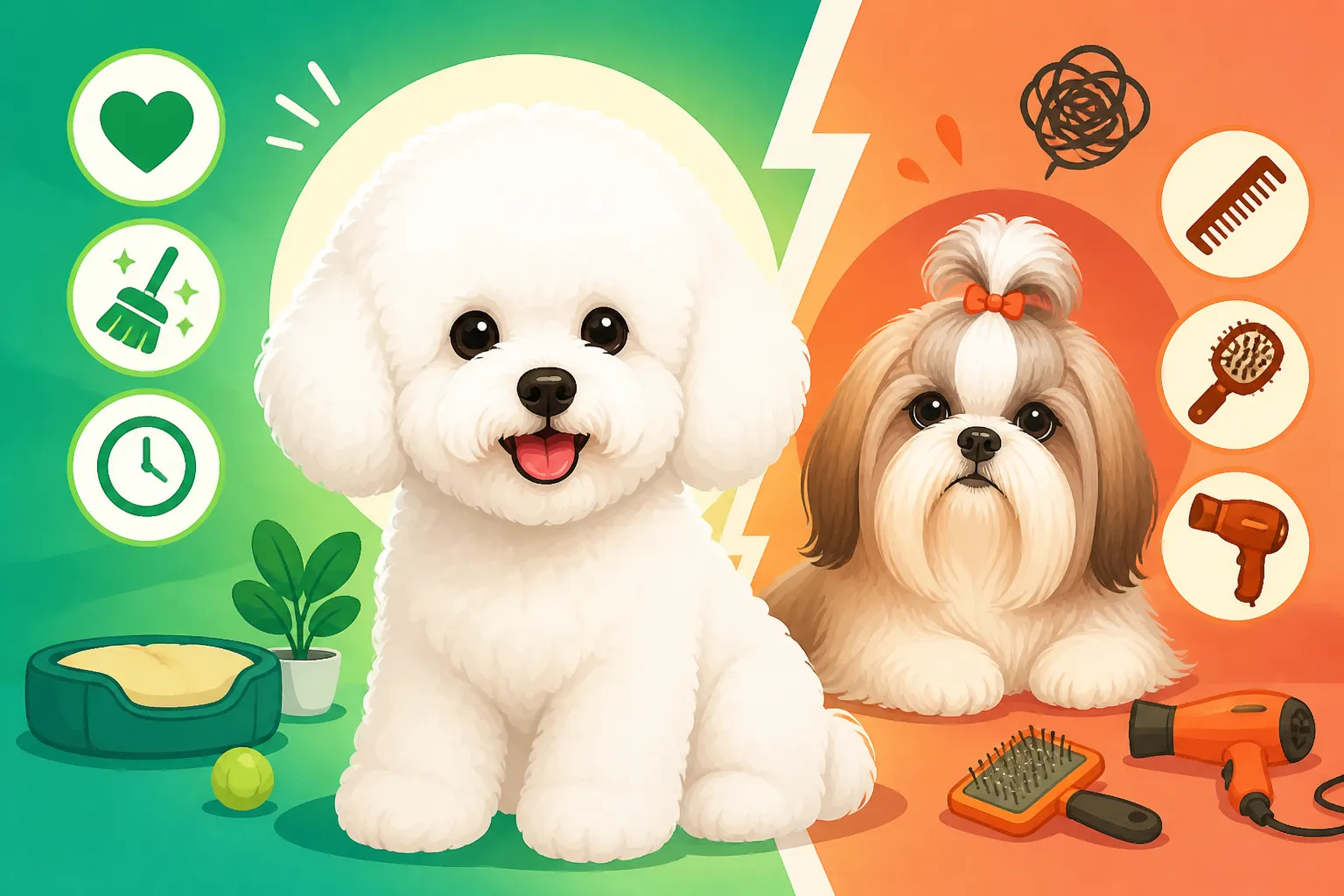
| Area | Bichon Frise | Shih Tzu | What may make the difference |
|---|---|---|---|
| Coat care | Curly coat needs regular brushing and professional grooming | Long coat needs frequent brushing; a short pet trim can simplify home care | Your preferred coat length and willingness to brush |
| Exercise | Usually enjoys regular walks and active play | Often content with shorter walks and indoor companionship | Your activity level and available time |
| Training | Intelligent and responsive, but consistency matters | Can be affectionate and clever, but may be independent | Patience, routine, and reward-based training |
| Face care | Light coat can show tear staining; eyes and muzzle need attention | Short muzzle and facial hair can need regular cleaning | Whether daily face wiping feels manageable |
| Heat and breathing | Not a flat-faced breed, though normal heat precautions still apply | Flat-faced structure can make heat and strenuous exercise more concerning | Climate, activity plans, and veterinary advice |
| Grooming flexibility | Needs coat maintenance even in a shorter trim | Coat can be kept short, reducing tangling and brushing demands | Whether you are willing to maintain a salon schedule |
This table is a starting point, not a guarantee about an individual dog. Coat texture, age, health, previous training, and the quality of early socialization can all change the day-to-day experience. A relaxed Bichon or energetic Shih Tzu may not match the breed stereotype.
Think about the hard parts you can consistently manage
If you work long hours, the key question may be how much time your dog can comfortably spend alone, not which breed is easier to walk. Both breeds generally value companionship and may struggle if left without suitable company and gradual independence training. Consider your work schedule, backup care, and plans for days when you cannot get home at the usual time.
If brushing is the part you dread, compare realistic coat styles with a groomer before deciding. A shorter trim can make home care more manageable, but it does not eliminate bathing, coat checks, nail care, or professional grooming. For a broader look at ownership demands, see Whether a Bichon Frise Is More Work Than It Looks and What Nobody Warns a Bichon Frise Buyer About.
Grooming and home care
Neither breed is a wash-and-go dog
A Bichon’s coat grows continuously and can trap loose hair rather than shedding it freely around the home. That does not mean the coat takes care of itself. Without regular brushing that reaches through the coat, tangles can tighten into mats, particularly behind the ears, under the legs, and around areas where a harness rubs.
A Shih Tzu’s coat can be kept long or clipped into a shorter pet trim. Long hair needs thorough, frequent brushing to prevent tangles and keep the face and body clean. A shorter trim usually reduces the amount of brushing at home, though it still requires regular grooming and coat checks. The practical comparison is often not “which coat is easier?” but “which haircut and routine will I actually maintain?”
For either breed, brushing only the visible surface can give a false sense of security. Use a suitable brush carefully, then check with a comb in areas that mat easily. If the comb catches, work gently rather than tugging at the skin. A groomer can show you how to maintain the coat between appointments. More on the Bichon’s coat routine is covered in The Grooming Puts People Off a Bichon Frise—the exact concern many prospective owners have when they see a freshly groomed dog.
Face cleaning and coat color make a difference
A white Bichon can show brown or reddish tear stains clearly, and food or moisture around the muzzle can also become noticeable. Shih Tzus may need regular attention around the eyes and facial hair as well. In both breeds, gentle daily checks can help you notice discharge, redness, odor, or irritation before it becomes a bigger problem.
Do not assume that stains are merely a cosmetic issue. Persistent tearing, squinting, rubbing, or changes in the appearance of the eye deserve veterinary attention. Wiping the face gently with a clean, damp cloth may be part of normal care, but it is not a substitute for investigating symptoms. Avoid putting human eye products or unapproved stain treatments near your dog’s eyes.
Keep grooming supplies simple and appropriate for pets. Some owners order brushes, combs, wipes, or food through retailers such as Chewy, but the right item depends on your dog’s coat and needs. Ask a groomer or veterinarian before using a medicated product or a supplement, especially if the skin or eyes are irritated.
The grooming routine you can stick with
Before bringing either breed home, price out and schedule grooming locally, then ask what a maintenance appointment includes. Grooming needs and costs vary with coat condition, haircut, location, and the individual dog. A dog whose coat is brushed consistently may be easier to maintain than one who arrives with tight mats, regardless of breed.
Set up a small home routine: check the coat, brush likely trouble spots, look at the ears and eyes, and handle the paws calmly. Short, comfortable sessions are often more successful than waiting until the coat is tangled and trying to do everything at once. If you are buying brushes or combs, Chewy is one option for finding pet-care supplies; compare product details and choose tools that suit your dog’s coat rather than buying a large kit by default.
For a Bichon-focused look at the ongoing work, Whether the Grooming Puts People Off a Bichon Frise is a useful related read. If you are weighing coat care against another breed, Whether a Bichon Frise Is Easier to Groom Than a Maltese also helps put the Bichon’s coat needs into perspective, though the Shih Tzu comparison still depends greatly on coat length.
Training, exercise, and household fit
Training is about consistency, not cleverness alone
Both breeds can learn household manners and useful cues, but a dog’s response depends on motivation, practice, and the home environment. Use short, positive sessions and reward the behaviors you want. A Bichon may enjoy games and interaction; a Shih Tzu may sometimes seem more interested in its own agenda. Those tendencies are not a substitute for getting to know the individual dog.
House-training deserves particular attention with either small companion breed. Take a puppy out predictably after waking, eating, drinking, and playing, and reward outdoor toileting promptly. Accidents are information: the schedule may be too loose, the puppy may not understand the routine yet, or a medical issue could be involved. Punishment can make a dog hide when it needs to go rather than teaching the desired habit.
If a previously reliable dog suddenly begins urinating indoors, do not assume it is stubbornness or poor training. A change in frequency, straining, discomfort, or blood in the urine calls for veterinary advice. Bichon owners can learn more about the breed’s common training frustration in Why a Bichon Frise Is Famously Hard to Housetrain. The same patience and practical routine are valuable with a Shih Tzu, too.
Exercise and companionship needs vary by dog
Bichons are often playful and enjoy daily walks, games, and interaction. Shih Tzus also benefit from gentle activity, but their short muzzles can make heat and strenuous exercise more concerning. In warm weather, keep walks modest, offer shade and water, and avoid pushing a dog that is panting heavily or slowing down. Ask your veterinarian what activity is appropriate for your dog’s health and age.
Neither breed needs a large yard as a requirement for a good life, but both need regular opportunities to move, explore, and spend time with their people. Indoor play can help on poor-weather days, yet it should not become the only source of activity. A predictable daily rhythm—walks, play, rest, and training—can make life easier for both dog and owner.
Think honestly about companionship. If your household is empty for much of the day, plan for a dog walker, trusted visitor, or other suitable care arrangement where needed. A second pet is not an automatic fix for loneliness, and it brings its own costs and adjustment period. Whether a Bichon Frise Suits an Apartment can help you think about space, but home size does not replace attention and routine.
Health considerations can shape what feels easy
No breed is free of health concerns, and an individual dog’s medical history matters. Bichons can be affected by issues such as dental disease, kneecap problems, skin allergies, and urinary stones. Shih Tzus can also have dental and eye concerns, and their short-faced structure makes heat management and breathing worth discussing with a veterinarian.
This does not mean every dog will develop these problems. It does mean that responsible ownership includes routine veterinary visits, dental care, attention to changes in movement or appetite, and a plan for unexpected health needs. Ask breeders or rescue organizations what health information is available, and review records with your veterinarian after adoption.
A dog’s everyday ease also depends on how care fits your budget and schedule. Food, grooming, preventive care, dental cleaning, and treatment for illness can all require planning. If you shop for food or basic supplies through Chewy or another retailer, confirm that the product is appropriate for your dog; a veterinarian should guide prescription diets and medical nutrition decisions.
How to choose between a Bichon Frise and a Shih Tzu
Match the breed to your ordinary week
Picture a regular Tuesday, not an ideal holiday. Who will take the dog outside in the morning? When will you brush the coat? Can you keep grooming appointments, even during busy months? How much time can you spend on training and play after work? These practical details often reveal a better fit than a list of breed traits.
A Bichon may suit you if you enjoy an upbeat, interactive companion and are prepared for ongoing coat care and consistent training. A Shih Tzu may suit you if you want a devoted companion and prefer the option of a short trim, while you are also prepared to manage face care and take extra care in hot conditions. Either dog can be affectionate, lively, stubborn, calm, or sensitive depending on its personality and experiences.
If possible, spend time with adult dogs of both breeds and talk with owners about the parts of care they find most tiring. A puppy’s behavior is not a reliable preview of its adult temperament, and a well-groomed dog at a meeting does not show the daily work behind that appearance. Ask about grooming habits, alone-time tolerance, training history, and medical needs.
Use a practical decision checklist
Before choosing, consider these questions:
- How much brushing will I reliably do? Choose a realistic coat style and routine rather than assuming you will suddenly have more free time.
- Am I comfortable arranging professional grooming? Both breeds need coat maintenance, even when kept in shorter trims.
- What kind of exercise suits my household? A Bichon may enjoy more active play, while a Shih Tzu’s activity should be adapted to its breathing, fitness, and the weather.
- Can I commit to patient house-training? Small dogs still need a consistent schedule and positive reinforcement.
- Can I plan for routine and unexpected care? Include grooming, veterinary care, food, and supplies in your ownership plan.
- Have I met the individual dog? Temperament and history can matter more than breed averages.
There is no universal winner. If your main concern is brushing, a short-coated Shih Tzu trim may feel more manageable than maintaining a Bichon’s fuller coat, but both still require grooming. If your concern is heat-sensitive exercise or breathing, a Bichon may be a more comfortable match, subject to the health and temperament of the particular dog. For many people, the easiest choice is the dog whose care routine they can sustain kindly and consistently.
Chewy and other pet retailers can help you source ordinary supplies, but purchases cannot replace time, training, grooming, or veterinary guidance. Make your choice around the routine you are genuinely prepared to provide, and ask a veterinarian or reputable groomer for advice tailored to the dog you are considering.
Disclaimer
This article is for general informational purposes only and does not constitute professional advice. Laws, prices and regulations vary by location and change over time. Consult a qualified professional for guidance on your specific situation.