Whether a Bichon Frise Is Less Work Than a Toy Poodle
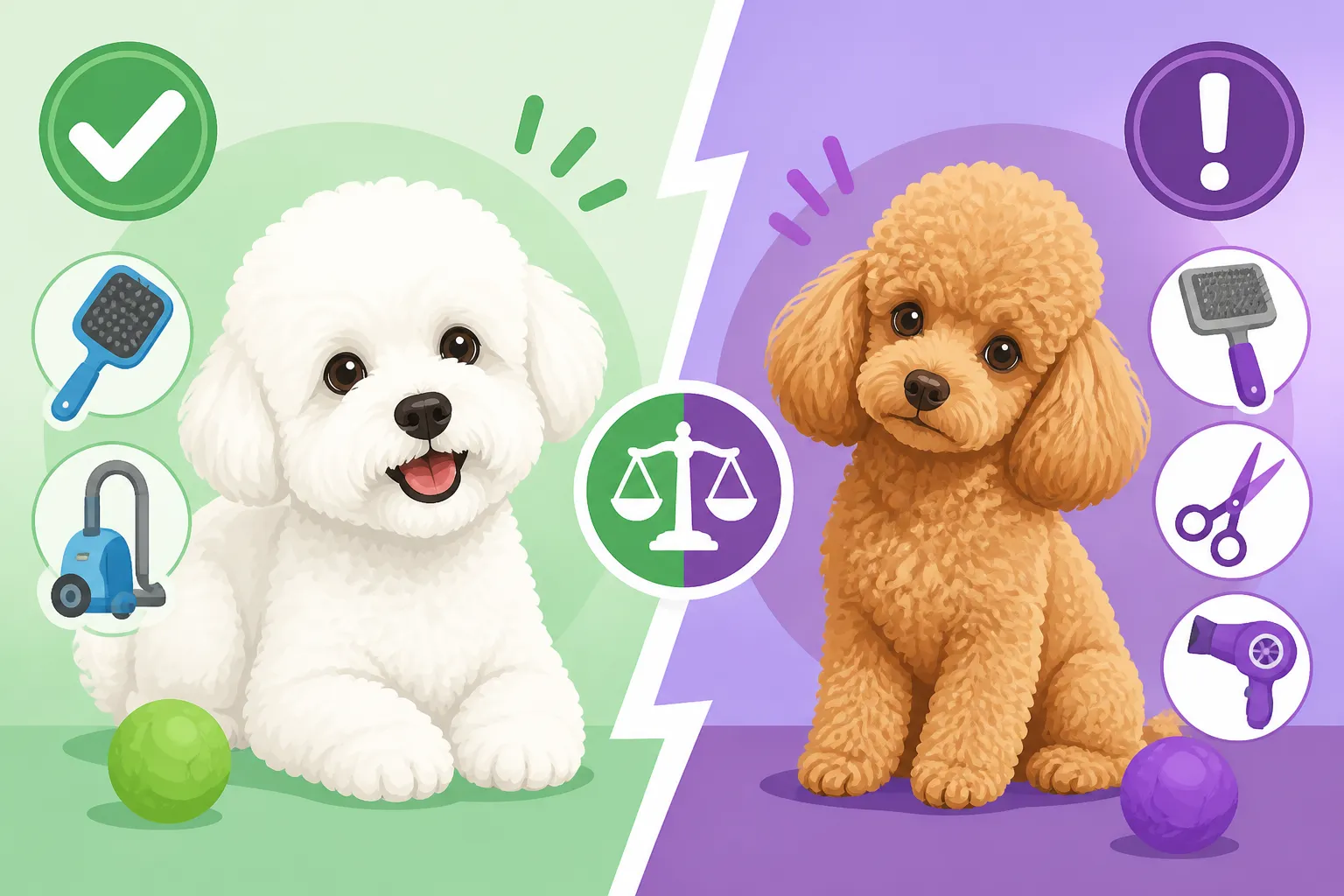
A Bichon Frise may look like a low-maintenance little companion, while a Toy Poodle’s reputation for intelligence can make it sound like the busier choice. In reality, both need regular grooming, training, exercise, and company. The better question is which kind of care fits your daily routine: coat upkeep, mental engagement, house-training patience, or time spent together.
Is a Bichon Frise less work than a Toy Poodle overall
There isn’t a reliable winner for every household. Both breeds can be affectionate, lively small dogs, and neither is a “wash, walk, and forget” pet. The workload feels different, though: coat care is a major commitment for both, while Toy Poodles may ask for more structured mental activity and Bichons can require extra patience with house-training and separation.
Grooming is a commitment with either breed
Bichon Frise and Toy Poodle coats keep growing and can mat when loose hair, moisture, and tangles collect close to the skin. A Bichon’s dense, curly coat is often shaped into a rounded outline. A Toy Poodle’s coat can be kept in a range of pet-friendly clips, but a shorter haircut doesn’t remove the need for brushing or professional grooming. In both cases, neglect can turn a few small tangles into tight mats that are uncomfortable to remove.
At home, expect to check and brush the coat regularly, especially in friction-prone places such as behind the ears, under the collar or harness, around the legs, and where the limbs meet the body. A quick brush over the top may make a dog look tidy without reaching the coat near the skin, where mats often start. A comb-through after brushing helps you notice tangles you might otherwise miss.
Professional grooming is also part of owning either breed. How often a dog needs an appointment depends on coat length, brushing habits, the groomer’s approach, and how quickly that individual’s hair grows. A shorter pet trim can make home care more manageable, but it does not make the coat maintenance-free. If you want a better sense of the Bichon’s routine, see How Often a Bichon Frise Needs a Full Groom and Why a Bichon Frise Coat Grows Forever.
| Care task | Bichon Frise | Toy Poodle |
|---|---|---|
| Brushing at home | Regular brushing and comb checks help prevent mats in the dense coat | Regular brushing and comb checks are important, especially if the coat is left longer |
| Professional grooming | Coat shaping and routine trims are common parts of care | Clipping and coat shaping are common; style affects the work involved |
| Training and enrichment | Benefits from play, short training sessions, and company | Often enjoys learning and may need purposeful mental activities |
| House-training | Some dogs take patience and consistency to train | Individual progress varies; a predictable routine still matters |
| Best fit | A person who enjoys companionship and can maintain coat care | A person who can combine coat care with regular training and engagement |
The table is a starting point, not a promise about an individual dog. A Bichon with a short trim and a cooperative grooming routine may take less time to maintain than a Toy Poodle in a longer style. A Toy Poodle that is comfortable with brushing and enjoys training may be easier for one owner than a Bichon that resists handling or struggles with being left alone.
Toy Poodle intelligence can mean more training, not less
Toy Poodles are often quick to notice patterns and learn cues. That can make training enjoyable, but it doesn’t mean they automatically behave well without practice. A clever dog may also figure out how to get attention, access a favorite spot, or turn a routine into a game. Providing brief, positive training sessions and appropriate activities can help keep that quick mind engaged.
Bichons also benefit from training and enrichment. They are often playful and people-oriented, and a short session can be as useful for building good habits as it is for teaching a trick. The difference is not that one breed needs training and the other does not; it is that a Toy Poodle owner may especially enjoy giving a dog frequent learning opportunities, while a Bichon owner may find social interaction and shared play especially important.
Neither breed should be expected to entertain itself all day. If your schedule involves long stretches away from home, think through how the dog will get exercise, toilet breaks, companionship, and mental stimulation. A second dog is not a guaranteed fix for loneliness, and a busy toy or a large yard is not a substitute for interaction. For more on the breed’s learning style, see Whether a Bichon Frise Is Easy to Train.
House-training and companionship can shape the workload
House-training can feel like a larger chore than expected with a small dog, especially when the household schedule is inconsistent or bad weather makes outdoor trips less appealing. Bichon Frises can be frustrating for owners who expect a puppy to understand the routine quickly. Use a predictable schedule, take the dog to the same toilet area, reward success promptly, and clean indoor accidents thoroughly rather than scolding. If accidents begin suddenly after a dog was reliably clean, consider a veterinary check rather than assuming the dog is being stubborn.
A Toy Poodle also needs a consistent toilet routine. Small size does not eliminate the need for frequent opportunities, particularly for a puppy. Whether the dog is a Bichon or a Poodle, waiting too long between breaks and changing the routine from day to day can make progress harder. Owners who work away from home may need to plan for a dog walker, a reliable midday visit, or another suitable arrangement.
Both breeds can form close attachments to their people. That can be lovely when you want a companion who follows you from room to room, but it may be challenging if you expect the dog to be comfortable alone for long periods without gradual practice. When you compare their overall workload, include the time needed to teach calm independent behavior—not just walks, meals, and grooming. Why a Bichon Frise Is Famously Hard to Housetrain explores one common source of frustration in more depth.
Which breed is easier to groom and care for at home
If grooming is the main thing you want to simplify, focus less on the breed label and more on the coat length and the habits you can realistically keep. Both breeds need hands-on care. A short, practical trim and calm handling can make the routine easier; inconsistent brushing can make either dog harder to maintain.
A shorter haircut helps, but it is not a no-grooming shortcut
A short pet trim reduces the amount of coat you need to work through, and it may suit an owner who prefers a tidy, practical look over a fuller outline. But even a clipped Bichon or Toy Poodle needs regular brushing, bathing as appropriate, drying, nail care, and checks for tangles. Hair left damp after a bath can knot more easily, particularly in areas that already rub against a harness or bedding.
A longer coat usually asks for more time and attention between appointments. If you are drawn to the Bichon’s powder-puff appearance or a Poodle style with more length, be honest about whether you enjoy combing and coat care. It is easy to imagine brushing a fluffy dog while it sits peacefully beside you; it is less charming when you are already late and discover a mat behind one ear.
It helps to choose a groomer before bringing a puppy home and talk through the look you want, the maintenance it requires, and how the dog will be introduced to grooming. Gentle, short handling practice at home can make future appointments less stressful. Helpful related reads include The Powder Puff Outline a Bichon Frise Is Scissored Into and Whether a Bichon Frise Is Easier to Groom Than a Maltese.
Coat care is partly about routine and tools
A workable home setup does not need to be elaborate, but the tools should suit the coat and be used gently. Owners commonly need a brush, a comb for checking through the coat, dog shampoo, towels, and a safe way to keep the dog comfortable while being handled. A retailer such as Chewy can be one place owners look for basic grooming supplies; the important step is choosing tools that are appropriate for your dog and asking a groomer or veterinarian if you are unsure what to use.
Do not pull through a mat with force. That can hurt and may teach a dog to dread brushing. If a tangle is close to the skin, tight, or widespread, ask a professional groomer for advice rather than repeatedly tugging at it. Dogs who have had painful grooming experiences may need patient, gradual practice with being touched on the feet, face, ears, and body.
For owners who prefer to shop online, Chewy may also be a convenient place to compare routine supplies such as combs or grooming wipes. Keep the focus on the item’s suitability, not on buying a long list of products. A gentle technique and a consistent routine matter more than a drawer full of tools.
Decide how much professional grooming fits your life
Before choosing either breed, contact local groomers and ask what they recommend for coat length, brushing between visits, and introducing a puppy to the salon. Grooming availability and fees vary, so check directly with providers in your area. You might find that one local groomer is comfortable with a particular Bichon outline while another has more experience with Poodle clips—or vice versa.
Think about logistics as well as the grooming itself. Can you get to appointments easily? Is your dog comfortable being handled by someone else? Will you have time to brush at home between visits? If the answer to the last question is usually no, a shorter trim and a realistic grooming plan are likely more helpful than aiming for a high-maintenance look.
Chewy can be useful as a place to locate everyday supplies, but online shopping cannot tell you which grooming routine your individual dog will tolerate best. Ask a groomer to demonstrate how to check the coat with a comb, and ask your veterinarian if you notice skin irritation, persistent scratching, or painful areas under the coat.
How to choose between a Bichon Frise and a Toy Poodle
The right comparison is not simply “which one is easier?” It is “which dog’s needs match the parts of pet care I can reliably provide?” Consider your preferences for training, grooming, companionship, and daily routines before deciding.
Choose around the work you actually enjoy
A Bichon may suit someone who wants an affectionate, playful companion and is prepared for regular coat care and consistent house-training practice. A Toy Poodle may suit someone who enjoys teaching cues, offering varied enrichment, and keeping up with grooming. These are tendencies and practical considerations, not guarantees about every dog. Temperament, health, early experiences, and the individual’s comfort with handling all matter.
Ask yourself what feels easier to sustain on an ordinary week—not during the first month when enthusiasm is high. Do you enjoy a few minutes of brushing most days? Would you rather spend that time on training games? Are you home often enough to provide company and toilet breaks? If your preferred answer depends on having far more free time than you usually do, plan for that honestly.
Also consider the dog’s whole life, not only the puppy stage. A puppy needs supervision, socialization, and frequent opportunities to go outside. An adult dog may already have useful habits, but still needs exercise, companionship, grooming, and veterinary care. What Bichon Frise Owners Wish They Had Known can help you think about the everyday realities of living with the breed.
Look beyond grooming when comparing workload
A haircut is visible, so it is easy to make grooming the whole comparison. But a dog’s workload also includes veterinary visits, dental care, nail trimming, exercise, training, and care when you travel or work late. Both breeds are small, yet small size does not mean no daily needs. Both need a suitable diet, a safe home environment, and an owner who notices changes in behavior or health.
Consider your living situation, too. A small home can work for either breed if the dog receives appropriate activity and companionship. A yard can be convenient, but it does not replace walks, training, or time with people. If you are comparing how these dogs fit into apartment life, Whether a Bichon Frise Suits an Apartment offers another useful perspective.
If you are choosing a puppy, ask about the parents’ temperaments, health screening, grooming exposure, and the breeder’s approach to early socialization. Meet the puppy and observe how it responds to handling and new experiences where possible. A responsible decision is not about finding a breed that asks nothing of you; it is about choosing a dog whose needs you can meet consistently.
A practical way to make your decision
Try writing down the routine you can genuinely manage. Include grooming, toilet breaks, walks or play, short training sessions, and time alone. Then compare that list with what you learn from breeders, rescue organizations, groomers, and your veterinarian. If possible, spend time with adult Bichons and Toy Poodles rather than relying only on puppy photos or breed stereotypes.
It can also help to estimate the shape of ongoing care without assuming a precise bill. Ask local groomers about appointment frequency and the range of services involved, and ask a veterinarian what routine care is appropriate for the dog you are considering. If you need supplies, Chewy is one possible retailer to check, but compare products carefully and prioritize advice from qualified professionals when a dog has a medical or skin concern.
Ultimately, a Bichon Frise is not automatically less work than a Toy Poodle, and a Toy Poodle is not automatically more demanding because it is clever. Either can be a wonderful companion for the right household. The more manageable choice is the one whose coat routine, training needs, and need for company fit the life you can offer—not the one that looks easiest from across the room.
Disclaimer
This article is for general informational purposes only and does not constitute professional advice. Laws, prices and regulations vary by location and change over time. Consult a qualified professional for guidance on your specific situation.