Whether Blood in a Bichon Frise’s Urine Means Stones
Catching sight of blood in your precious Bichon Frise's urine can send a jolt of panic through any devoted dog parent. It's a truly alarming discovery, often leading to immediate worry about serious underlying health issues. This comprehensive guide is here to help you understand what blood in your Bichon's urine might signify, with a particular focus on whether it points to the dreaded bladder stones, and what crucial steps you need to take next.
The Alarming Sight of Hematuria in Your Bichon Frise
When you spot a reddish tint in your Bichon Frise's pee, it's natural for your heart to pound. This medical term for blood in the urine, "hematuria," is never something to ignore. It can range from a very faint pink hue, almost like dilute rosé wine, to a more obvious bright red, or even a brownish-red, depending on the amount of blood and how long it's been present. The sight itself is distressing, instantly signalling that something is amiss in your beloved companion's body.
Why Blood in Urine Isn't Always Visible
It's a common misconception that if you don't see red, there's no blood. However, sometimes the amount of blood is so small that it's only detectable under a microscope. This is known as microscopic hematuria, and it's why regular veterinary check-ups, which often include a routine urinalysis, are so incredibly important. Your vet might discover microscopic blood during a routine test, even if your Bichon isn't showing any outward signs of illness. This early detection can be a real game-changer, allowing for intervention before a condition becomes more severe or symptomatic.
Beyond the visible or microscopic blood, you might notice other subtle changes in your Bichon’s behavior that could indicate a problem before the urine itself looks off. They might start licking their genital area more frequently, or perhaps they seem a little more withdrawn or reluctant to play. These small shifts in routine can be the first clues that something deeper is going on, even if the urine appears clear to the naked eye. Trust your instincts; if your Bichon is acting unusual, it's worth a call to the vet.
Other Obvious Signs of Urinary Distress
Visible blood in the urine is often just one piece of a larger puzzle of urinary distress. When you’re dealing with a potential urinary issue in your Bichon Frise, you might also notice a host of other symptoms that collectively paint a clearer picture for your veterinarian. One of the most common and distressing signs is straining to urinate, known as stranguria. You might see your Bichon squatting repeatedly, pushing hard, but only producing a few drops, or perhaps nothing at all. This isn't just uncomfortable for them; it can be incredibly painful and indicates a significant blockage or severe inflammation.
Another common complaint is frequent urination, or pollakiuria. Your Bichon might suddenly need to go outside much more often than usual, or they might start having accidents indoors, even if they are perfectly housetrained. These accidents often involve small puddles rather than full bladder empties. Sometimes, owners mistake these accidents for behavioral issues, but it’s crucial to remember that a sudden change in toilet habits nearly always has a medical cause. If you notice your dog excessively licking their genitals, becoming restless, or even vocalizing when attempting to urinate, these are all strong indicators of discomfort and a need for immediate veterinary attention. Remember, Whether a Straining Bichon Frise Is an Emergency is a critical question, and the answer is almost always yes.
Connecting Blood in Urine to Bladder Stones in Bichons
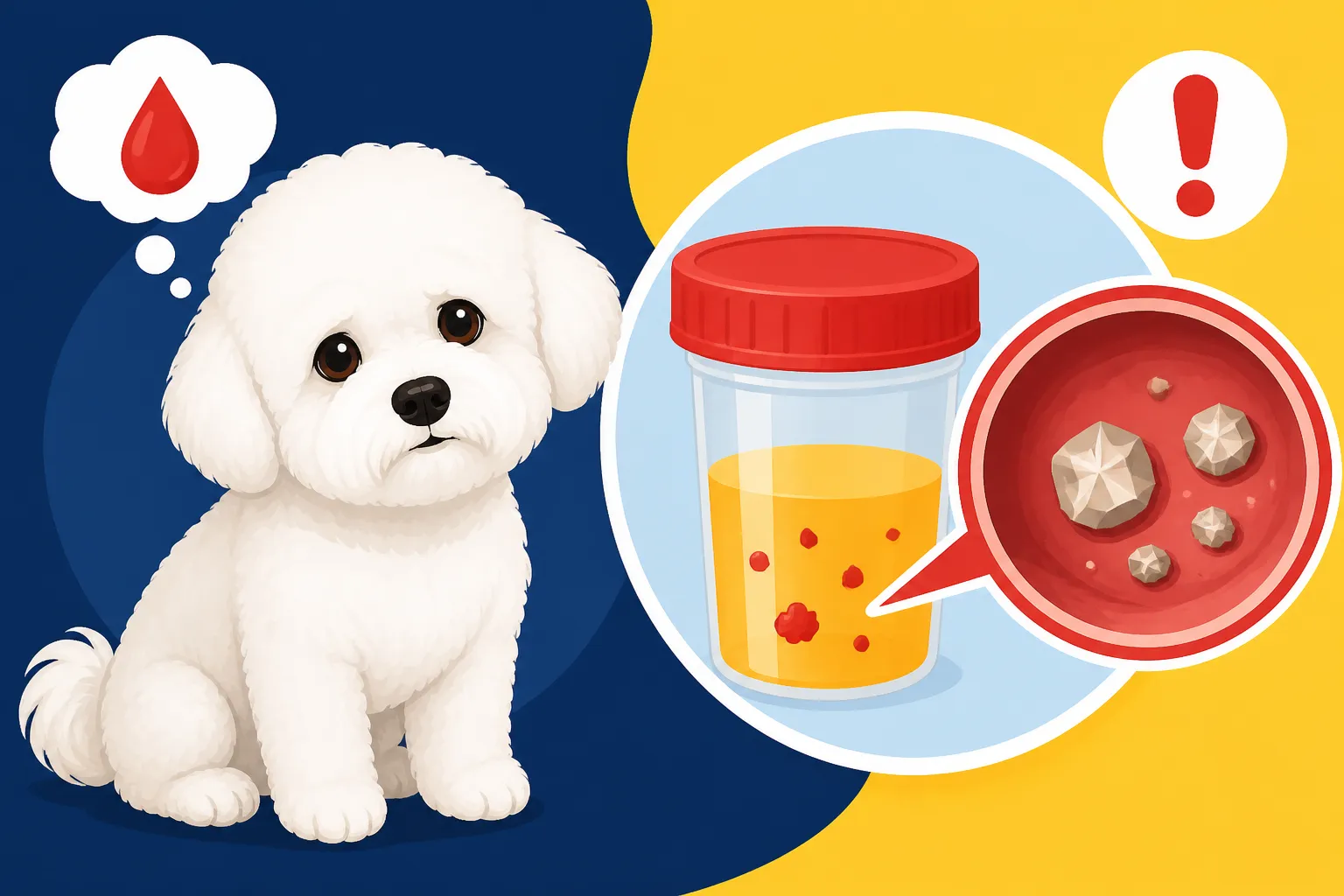
Now, let's get to the heart of the matter for many Bichon Frise owners: does blood in the urine automatically mean bladder stones? The short answer is no, not always, but it's certainly a very strong indicator, especially for a breed like the Bichon. Bladder stones, also known as uroliths, are solid mineral formations that can develop in the urinary bladder. When these stones rub against the delicate lining of the bladder, they cause irritation, inflammation, and tiny abrasions, all of which lead to bleeding. This bleeding is then passed out in the urine, making it appear reddish.
For Bichon Frises, specifically, this connection is even more pertinent because they are genetically predisposed to forming certain types of bladder stones, particularly calcium oxalate stones. If your Bichon has visible blood in their urine, bladder stones should be high on your vet's list of suspects, right alongside urinary tract infections. Understanding What a Calcium Oxalate Stone Is in a Bichon Frise can provide more context here.
How Stones Cause Bleeding and Other Symptoms
Imagine a small, rough pebble constantly moving around inside a very sensitive, soft balloon. That's essentially what happens when bladder stones form. These stones, whether they are tiny "gravel" or larger, singular formations, rub against the delicate mucous membrane that lines the bladder. This constant friction causes irritation and inflammation, similar to how a repetitive rub on your skin can cause a blister or sore. The inflamed tissue becomes fragile and easily bleeds, leading to hematuria.
Beyond the visible blood, this irritation can also trigger a cascade of other uncomfortable symptoms. The bladder attempts to expel the foreign objects, leading to increased urgency and frequency of urination. Your Bichon might feel like they constantly need to go, even if their bladder isn't full. This constant urge can lead to those frustrating indoor accidents, which, as we discussed, are often mistaken for behavioral issues. The inflammation also causes discomfort and pain, sometimes leading to straining. In severe cases, a stone can block the urethra, the tube that carries urine out of the body, which is a life-threatening emergency.
The Bichon Frise's Unique Predisposition
It’s an unfortunate reality that Bichon Frises have a significantly higher risk of developing bladder stones compared to many other breeds. They consistently top the list for breeds prone to calcium oxalate urolithiasis, a specific type of stone. This isn't just bad luck; it's often due to a combination of genetic factors and metabolic peculiarities unique to the breed. Some studies suggest a hereditary component, meaning that if your Bichon's parents or ancestors had stones, your dog's risk could be higher. It's truly baffling and frustrating for owners, seeing their lively companions struck by this common, recurring issue.
This breed-specific predisposition means that when a Bichon Frise presents with blood in their urine, veterinarians are often quick to consider stones as a primary suspect. Their bodies tend to produce urine with a composition that is more conducive to the formation of calcium oxalate crystals, which then clump together to form stones. Factors like urine pH, concentration of calcium and oxalate, and even certain dietary components can play a role, but the underlying genetic propensity is a major driving force. It’s why understanding Why a Bichon Frise Forms Stones Twenty Times as Often is so important for proactive care, and why a pet insurance plan like Healthy Paws, which covers recurring conditions, can be a huge comfort to owners facing these challenges. You might also want to explore Whether a Bichon Frise's Stone Risk Is Inherited for more in-depth information on the genetic links.
Other Causes of Blood in a Bichon Frise's Urine
While bladder stones are a significant concern for Bichon Frises, it's crucial to remember that blood in the urine isn't a one-and-done diagnosis. Many other conditions can cause hematuria, and some of them can mimic the symptoms of stones. Rushing to conclusions can delay the correct diagnosis and treatment, potentially worsening your dog's condition. That's why a thorough veterinary investigation is always the right first step.
Urinary Tract Infections UTIs
Urinary Tract Infections (UTIs) are incredibly common in dogs and are arguably the most frequent cause of hematuria, even more so than bladder stones in the general canine population (though stones are very common in Bichons!). A UTI occurs when bacteria ascend the urethra and colonize the bladder, causing inflammation and irritation. This bacterial invasion leads to a host of uncomfortable symptoms, including the tell-tale presence of blood in the urine.
The irritation from a UTI makes the bladder lining more fragile and prone to bleeding. You might see urine that is cloudy, has a strong odor, or is tinged pink or red. Just like with stones, a dog with a UTI will often strain to urinate, go more frequently, and may have accidents indoors. The pain and discomfort can be significant. It's also important to note that UTIs can sometimes be a secondary problem caused by bladder stones, as stones can provide a rough surface for bacteria to cling to, making it harder for the body to clear an infection. In other cases, a UTI might even predispose a dog to developing certain types of stones. A urine culture is essential to identify the specific bacteria and prescribe the correct antibiotic for effective treatment.
Other Potential Culprits
Beyond stones and UTIs, a variety of other issues can lead to blood in your Bichon Frise's urine. It’s a symptom that can point to problems anywhere along the urinary tract or even wider systemic conditions.
- Bladder Polyps or Tumors: While less common, especially in younger dogs, abnormal growths within the bladder can cause bleeding. These can be benign polyps or, more seriously, cancerous tumors. Bleeding from these growths can be intermittent or constant, and may worsen as the growth irritates the bladder wall. These tend to be more prevalent in older dogs.
- Kidney Issues: The kidneys are responsible for filtering waste and producing urine. Problems higher up in the urinary tract, such as kidney infections (pyelonephritis), kidney stones, or kidney disease, can also result in blood being passed into the urine. These conditions might also come with other signs like lethargy, increased thirst, or vomiting.
- Prostate Problems (in unneutered male Bichons): Male Bichon Frises, particularly those who are not neutered, can develop prostate issues such as an enlarged prostate (benign prostatic hyperplasia) or a prostate infection (prostatitis). Both conditions can lead to blood in the urine, as the inflamed or enlarged prostate can press on the urethra or bleed directly into it. Neutering often resolves benign prostatic hyperplasia.
- Systemic Conditions: Sometimes, blood in the urine isn't strictly a urinary problem. Conditions that affect blood clotting, such as certain autoimmune diseases, exposure to toxins (like rat poison), or even some medications (like NSAIDs), can lead to bleeding from various bodily systems, including the urinary tract. Trauma, such as being hit by a car, can also cause internal bleeding that manifests in the urine.
- Vaginitis (in female Bichons): In female Bichons, inflammation or infection of the vagina (vaginitis) can sometimes cause blood to appear at the vulva, which might be mistaken for blood in the urine. A thorough physical exam can usually differentiate between these issues.
Each of these possibilities requires specific diagnostic tests to confirm, which is why your vet will need to conduct a thorough investigation to pinpoint the exact cause of your Bichon's hematuria.
What to Do When You See Blood in Your Bichon's Urine
Discovering blood in your Bichon Frise's urine can be frightening, but it's crucial to remain calm and act quickly. This is not a symptom that will simply disappear on its own, and delaying veterinary care could lead to more serious complications for your beloved pet. The best course of action is always an immediate call to your veterinarian. They can guide you on the urgency of the visit and what information they will need.
Gathering Information for Your Vet
When you call your vet or head to the clinic, being prepared with key information can significantly help them narrow down the possibilities and plan the most effective diagnostic approach. Think of yourself as a detective, observing and recording every detail you can.
First, note the color and consistency of the blood. Is it bright red, pink, dark red, or brownish? Is it uniform throughout the urine, or are there clots? When do you see it – at the beginning of urination, throughout, or at the end?
Next, consider the frequency and urgency of urination. Has your Bichon been going more often, trying to urinate with little success, or having accidents indoors? Does he seem to be straining? Observe if they are licking their genital area more than usual, as this often indicates discomfort.
Think about recent changes in their routine: Have you changed their food or treats? Have they been on any new medications? Have they had any potential access to toxins or suffered any falls or trauma? Even subtle shifts in their appetite, energy levels, or overall demeanor are important clues.
If possible and safe to do so, try to collect a fresh urine sample. The best way is to catch some mid-stream in a clean, disposable container. Your vet will need this for urinalysis, which is a cornerstone of diagnosis. If you have pet insurance like Healthy Paws, remember to keep detailed records of all symptoms and vet visits, as this will be helpful for any claims.
Diagnostic Steps Your Vet Will Take
Once you're at the vet, they'll embark on a systematic process to diagnose the cause of the hematuria. This isn't just a guessing game; it's a carefully considered series of tests designed to rule out conditions and pinpoint the exact problem.
It will always start with a thorough physical examination. Your vet will palpate your Bichon's abdomen to feel for any abnormalities in the bladder or kidneys and check for any discomfort. They'll also examine the external genitalia for signs of inflammation or discharge.
Next, a urinalysis is performed on that fresh urine sample you hopefully collected. This test provides a wealth of information, revealing the pH of the urine, its concentration (specific gravity), and the presence of blood cells, white blood cells (indicating infection), protein, and crystals. If crystals are present, it's a strong indicator that bladder stones might be forming.
A urine culture and sensitivity test is crucial, especially if a UTI is suspected. This test identifies the specific type of bacteria present and determines which antibiotics will be most effective in treating the infection. Skipping this step can lead to ineffective treatment and recurrent UTIs.
To definitively diagnose bladder stones, or rule out other structural abnormalities, diagnostic imaging is indispensable. X-rays are often the first line of defense for detecting stones, as many types, including calcium oxalate stones common in Bichons, are radio-opaque, meaning they show up clearly on radiographs. However, not all stones are visible on X-rays. For those that aren't, or to get a more detailed view of the bladder wall and other organs, an ultrasound is performed. An ultrasound can identify even very small stones, visualize the bladder lining for polyps or tumors, and assess the kidneys and prostate. This is especially useful for ruling out things like polyps or less common stone types. For comprehensive care, many owners find peace of mind knowing that their pet insurance, like Healthy Paws, can help with the costs associated with these advanced diagnostic procedures.
| Symptom | Common Causes | Diagnostic Tests Required |
|---|---|---|
| Visible Blood | Stones, UTI, Polyps, Trauma | Urinalysis, Culture, X-ray, Ultrasound |
| Straining | Stones, UTI, Blockage, Prostate issue | Urinalysis, Culture, X-ray, Ultrasound, Manual exam (prostate) |
| Frequent Urination | UTI, Stones, Cushing's, Diabetes | Urinalysis, Culture, Bloodwork (for systemic issues) |
| Licking Genitals | UTI, Allergies, Vaginitis, Pain | Urinalysis, Culture, Physical exam |
| Accidents Indoors | UTI, Stones, Behavioral, Age-related incontinence | Urinalysis, Culture, Physical exam, Behavioral assessment |
| Strong Urine Odor | UTI, Dehydration | Urinalysis, Culture |
This systematic approach allows your vet to accurately diagnose the problem and initiate the appropriate treatment plan for your Bichon Frise.
Managing and Preventing Recurrence
Once the cause of the blood in your Bichon's urine has been diagnosed and treated, the journey isn't over, especially if stones were the culprit. Managing and preventing recurrence is paramount to your Bichon Frise's long-term health and comfort. This often involves a multi-faceted approach, with diet and consistent veterinary oversight being key pillars.
Long-Term Management if Stones Are Confirmed
If bladder stones, particularly calcium oxalate stones, are confirmed in your Bichon Frise, long-term management will primarily revolve around diet and regular monitoring. These aren't just temporary fixes; they're often a lifelong commitment to prevent these painful formations from coming back.
The cornerstone of prevention is a specialized prescription diet. These diets are carefully formulated to create an unfavorable environment for stone formation. For calcium oxalate stones, this typically means a diet that promotes a more alkaline urine pH, has controlled levels of calcium, magnesium, and phosphorus, and is often lower in protein. Brands like Royal Canin, Hill's, and Purina all offer specific urinary care diets designed for this purpose. It can be a challenge to transition your Bichon to a new food, especially if they are a picky eater, but consistency is vital. Remember, The Diet a Bichon Frise Stays On for Life is not just a suggestion; it’s usually a medical necessity.
Beyond diet, increasing your Bichon's water intake is critical. Diluting the urine makes it harder for minerals to crystallize and form stones. Encourage drinking by always providing fresh water, using water fountains, adding water to their kibble, or feeding wet food. Frequent urination also helps flush out crystals before they can aggregate. Regular walks and potty breaks become even more important.
Finally, regular monitoring through your vet is non-negotiable. This might involve periodic urinalyses to check urine pH and look for crystals, and potentially even routine X-rays or ultrasounds every 6-12 months. This proactive surveillance allows for early detection of any new stone formation, often before they become large enough to cause severe symptoms or require surgical intervention. This approach is essential to keep your Bichon healthy and comfortable in the long run.
The Role of Consistent Veterinary Care
Consistent, ongoing veterinary care is the backbone of managing any chronic condition in your Bichon Frise, especially if they’ve had urinary issues like bladder stones or recurrent UTIs. It's not enough to just treat the immediate problem and then forget about it; these conditions often require vigilant monitoring and proactive adjustments to their care plan.
Think of your veterinarian as your long-term partner in your Bichon’s health. Regular check-ups, even when your dog seems perfectly fine, allow your vet to catch subtle changes that you might miss. This could include checking urine samples for microscopic crystals or slight shifts in pH, or performing imaging studies like X-rays or ultrasounds to scan for new stone development. Early detection of potential recurrence can mean the difference between a minor dietary adjustment and another costly, invasive surgery. Whether a Bichon Frise Should Be Urine Tested Yearly is a question worth discussing with your vet, especially if your dog has a history of stones.
Furthermore, your vet is your best resource for navigating dietary changes, understanding prescription medications, and answering any questions about your Bichon’s health. They can help you troubleshoot challenges, like a finicky eater refusing their special diet, or suggest strategies to increase water intake. Building a strong, trusting relationship with your veterinary team ensures that your Bichon Frise receives the most informed, up-to-date care possible, minimizing stress for both of you. This is where a reliable pet insurance plan, such as Healthy Paws, really shines, by making consistent access to comprehensive veterinary care more financially manageable, allowing you to prioritize your Bichon's long-term well-being without constant worry about unexpected costs.
Disclaimer
The information provided in this guide is intended for educational purposes only and should not be considered a substitute for professional veterinary advice. Always consult with a qualified veterinarian for any health concerns or before making any decisions about your pet's medical care.