Whether a Straining Bichon Frise Is an Emergency
It's incredibly distressing to see your fluffy Bichon Frise struggling, especially when they're trying to relieve themselves and just can't. That persistent squatting, grunting, or frantic pacing, followed by little or no output, is a common and terrifying concern for many dog parents. This comprehensive guide will walk you through what straining means for your beloved Bichon, why it's almost always an emergency, and what immediate steps you need to take to protect their health.
Understanding Straining in Your Bichon Frise
When your Bichon Frise starts straining, it's their way of telling you something is seriously wrong. It's not just a minor inconvenience; it can be a sign of critical underlying issues that need immediate attention. As their loving owner, recognizing the subtle (and not-so-subtle) signs is the first step in getting them the help they desperately need.
What Does Straining Look Like?
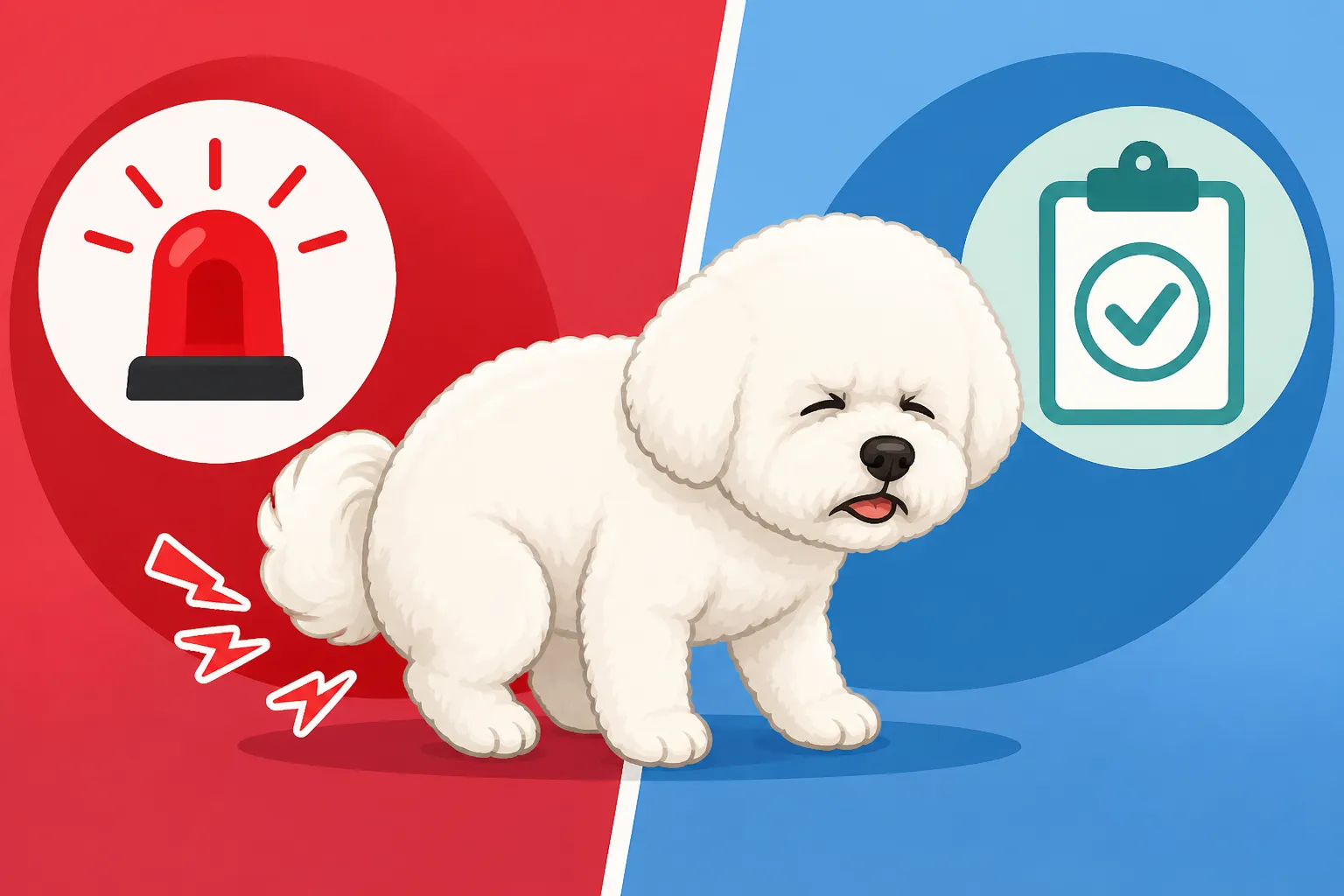
Straining, whether it's related to urination (dysuria) or defecation (tenesmus), often looks quite similar to a casual observer, which can make it even more confusing and scary. With urinary straining, you'll see your Bichon repeatedly squatting or lifting their leg, often for longer periods than usual, but producing only a dribble, a few drops, or nothing at all. They might seem uncomfortable, restless, or even cry out in pain during these attempts. You might notice them licking their genital area excessively, or even find that they're having accidents inside the house, which is highly unusual for a housetrained dog. Sometimes, the urine itself might look cloudy, dark, or contain visible blood, which can be alarming.
Fecal straining, on the other hand, involves similar persistent posturing, but your Bichon will be trying to pass stool. They might hunch their back, grunt, or push with visible effort. The stool, if any is passed, might be very hard and dry, or it could be soft and mucoid with flecks of blood, indicating inflammation or irritation in the colon. Sometimes, they might even seem to be trying to pass stool but nothing comes out, which can be particularly frustrating for them. Differentiating between urinary and fecal straining is crucial because while both are serious, a urinary blockage is often far more life-threatening and demands even more immediate action. Take a moment to observe closely, even if it feels horrible to watch them suffer, as this information will be vital for your veterinarian.
The Immediate Concerns with Straining
The immediate concern when you see your Bichon Frise straining boils down to one critical question: Is it a blockage? While not all straining indicates a complete blockage, the possibility, especially with urinary issues, elevates this symptom to an emergency status. A dog, particularly a male Bichon Frise, can become completely blocked from urinating. This isn't just uncomfortable; it's a medical catastrophe. The bladder continues to fill, but the urine has nowhere to go. Toxins that would normally be filtered by the kidneys and excreted in the urine start building up in their bloodstream, leading to severe illness, kidney damage, and potentially bladder rupture, which is fatal.
With fecal straining, while less immediately life-threatening than a full urinary blockage, it can still indicate severe constipation, an obstruction, or painful anal gland issues. Severe constipation can lead to impaction, making it impossible for your dog to pass stool, causing extreme discomfort and potentially leading to other health complications if left untreated. Anal gland problems, such as impaction or abscesses, are incredibly painful and can significantly impact your dog's quality of life. In both scenarios, the pain and distress your Bichon is experiencing are significant, and timely veterinary intervention is absolutely necessary to alleviate their suffering and address the underlying cause.
Common Causes of Straining in Bichon Frises
Straining isn't a disease in itself; it's a symptom that something deeper is amiss. Given the Bichon Frise's genetic predispositions, certain conditions are unfortunately quite common. Understanding these can help you communicate more effectively with your vet and advocate for your furry friend.
Urinary Tract Issues
When a Bichon Frise strains to urinate, the first thought that often comes to a vet's mind is bladder stones. Bichons are notoriously prone to developing bladder stones, specifically calcium oxalate stones. In fact, you might be familiar with the concern of Whether Every Bichon Frise Gets Bladder Stones. These tiny, rough crystals or larger stones can irritate the bladder lining, causing inflammation and pain, leading to frequent, unsuccessful attempts to urinate. If a stone moves into the urethra, it can create a partial or complete blockage, turning a painful condition into a life-threatening emergency. The First Signs a Bichon Frise Has Stones often include straining, frequent urination with little output, and crying during urination.
Another common culprit is a urinary tract infection (UTI). Bacteria can ascend into the bladder, causing inflammation and making urination painful and urgent. While UTIs are generally less immediately dangerous than a blockage, they can be incredibly uncomfortable and, if left untreated, can lead to kidney infections. Sometimes, blood might be visible in the urine, leading you to wonder Whether Blood in a Bichon Frise's Urine Means Stones or if it's just a UTI. It's essential to remember that even minor irritation can cause significant straining, and the actual cause needs veterinary diagnosis. Rarely, tumors in the bladder or urethra, though less common, can also cause similar straining symptoms, making a thorough investigation crucial.
Gastrointestinal Issues
If your Bichon is straining to defecate, it often points to issues within their gastrointestinal tract. Constipation is a frequent cause, especially in dogs whose diets might lack sufficient fiber, or those that might have ingested something indigestible like hair, cloth, or bone fragments. Dehydration can also make stools hard and difficult to pass. Imagine how uncomfortable that must be for your little one! Another common issue, particularly in small breeds like Bichons, is anal gland problems. These two small glands, located just inside the rectum, can become impacted, infected, or even abscessed. When they're causing trouble, dogs will often strain, scoot their bottoms, or try to lick the area excessively in an attempt to relieve the pressure, making defecation painful and difficult.
Less commonly, dietary indiscretion – eating something they shouldn't have – can lead to stomach upset, inflammation in the colon (colitis), and straining to pass diarrhea or very soft, urgent stools. Intestinal parasites, though less frequently a cause of severe straining in adult dogs with regular deworming, can also contribute to gastrointestinal discomfort and changes in bowel habits. In rare, more serious cases, a foreign body obstruction in the intestines or even a mass or tumor could be impeding the passage of stool. All these scenarios require veterinary attention, though the urgency might differ from that of a complete urinary blockage.
Other Medical Conditions
While urinary and gastrointestinal issues are the most common causes of straining in Bichon Frises, other medical conditions can also contribute. For male Bichons, an enlarged prostate gland (benign prostatic hyperplasia) or prostate infection can press on the colon, making defecation difficult and painful. This is more common in intact (unneutered) older males. Sometimes, orthopedic pain, especially in the hips or back, can make it difficult for a dog to comfortably posture to urinate or defecate, leading them to strain. If your Bichon has arthritis, for instance, the act of squatting might be painful, causing them to hold it in and then strain when they finally try to go.
Neurological issues affecting the nerves that control bladder or bowel function can also manifest as straining, though this is less common. Furthermore, general systemic illnesses that cause weakness or abdominal pain can make a dog reluctant to posture properly, leading to perceived straining. For example, a dog with severe abdominal pain might tense up, mimicking straining behavior. It's a complex picture, and only a veterinarian can properly diagnose the root cause of your Bichon's discomfort. This is why immediate veterinary consultation is paramount when you observe any form of straining.
Why Straining is Often an Emergency
It cannot be stressed enough: if your Bichon Frise is straining, especially to urinate, it's very likely an emergency. Waiting to see if it resolves on its own can have dire, even fatal, consequences. Unlike humans who can communicate their pain, our dogs rely on us to interpret their distress and act swiftly.
The Danger of Urinary Blockages
The absolute gravest concern when a Bichon is straining to urinate is a complete urethral obstruction. This happens most commonly when bladder stones – which are highly prevalent in Bichons – or thick urinary sludge, or even a tumor, blocks the urethra. When the urethra is blocked, urine cannot exit the body. The bladder continues to produce urine, and it quickly overfills. This is incredibly painful, and your dog will become increasingly distressed. More importantly, the kidneys, which filter waste products from the blood into urine, can no longer function properly. This leads to a rapid buildup of toxins in the bloodstream, a condition known as uremia.
Within a short period, sometimes just 24-48 hours, these toxins can cause acute kidney injury, electrolyte imbalances (especially potassium, which can become dangerously high and affect heart function), and severe systemic illness. Left untreated, a complete urinary blockage will lead to kidney failure, heart arrhythmias, and ultimately, death. In extreme cases, the bladder can even rupture due to the immense pressure, spilling toxic urine into the abdominal cavity, which is an immediate, catastrophic emergency. This is why the question Whether a Blocked Bichon Frise Can Die has a resounding and tragic 'yes' if not addressed promptly. Time is truly of the essence in these situations.
Rapid Deterioration
Beyond the immediate threat of a ruptured bladder or acute kidney failure, a straining Bichon Frise can deteriorate rapidly due to several factors. The intense pain they experience from an overfull bladder or severe constipation is debilitating. Pain itself can cause physiological stress, leading to increased heart rate, shallow breathing, and a general state of shock. A dog in severe pain will often become lethargic, lose their appetite, and may even hide or become unusually aggressive due to discomfort. They might also start vomiting, adding to their dehydration and further complicating their condition.
The accumulation of toxins in the bloodstream from a urinary blockage can quickly affect all organ systems, leading to neurological symptoms like disorientation, weakness, and tremors. Their gums might appear pale or even bluish, indicating poor circulation or oxygenation. The longer the blockage or severe straining persists, the more challenging and risky treatment becomes. Recovery from a prolonged crisis is always tougher on the body. This rapid deterioration underscores why you should never "wait and see" with a straining Bichon; every hour counts.
Preventing Long-Term Damage
Prompt veterinary intervention for straining isn't just about saving your Bichon's life in the short term; it's also critical for preventing long-term damage. For urinary blockages, relieving the obstruction quickly can often allow the kidneys to recover their function. However, if the blockage persists for too long, irreversible kidney damage can occur, leading to chronic kidney disease that will require lifelong management. Similarly, severe, prolonged constipation can stretch the colon, potentially leading to a condition called megacolon, where the colon loses its ability to contract effectively, making future constipation a persistent problem.
Early diagnosis of the underlying cause, whether it's stones, infection, or prostate issues, allows for targeted treatment, which can often prevent recurrence or progression of the condition. For example, knowing your Bichon has calcium oxalate stones means your vet can recommend a special prescription diet, like those from brands such as Royal Canin or Hill's Prescription Diet, and management strategies to prevent new stones from forming. Insurance providers like Healthy Paws often highlight the importance of early diagnosis and treatment for comprehensive coverage, as it can often prevent more costly and invasive interventions down the line. Swift action can truly change the trajectory of your Bichon's health and quality of life.
What to Do When Your Bichon Frise is Straining
Seeing your Bichon Frise straining is terrifying, but knowing exactly what to do can make all the difference. Panicking won't help your dog, but swift, decisive action will.
Immediate Steps at Home
The very first thing you need to do is stay calm, as difficult as that might be. Observe your Bichon closely. Is it definitely straining to urinate, or is it trying to defecate? Look for any visible blood in urine or stool, or if they are passing anything at all. Note how long they've been straining, their general demeanor (are they bright and alert, or lethargic and painful?), and if they've eaten or drunk recently. Any details you can provide to your vet will be incredibly helpful.
Next, and this is crucial, contact your veterinarian immediately. Do not wait for "normal business hours" if it's after hours; call your emergency vet clinic. Clearly describe what you're seeing. Emphasize that your Bichon Frise is straining, especially if you suspect it's urinary. The vet will likely advise you to bring your dog in right away. While you might be tempted to try home remedies for what you think is constipation, like pumpkin or increased water intake, these are dangerous if the true issue is a urinary blockage or a severe gastrointestinal obstruction. Only your vet can safely determine the cause. Remember, a quick vet visit is always better than a delayed, potentially critical one.
What to Expect at the Vet
When you arrive at the vet or emergency clinic, be prepared for a thorough examination. The veterinarian will likely ask you many questions about the onset of symptoms, your dog's history, and any previous medical issues, such as a history of The Stone That Comes Back a Year After Bichon Frise Surgery or UTIs. They'll perform a physical exam, which will definitely include palpating your Bichon's abdomen to feel the bladder and intestines. If the bladder is firm and distended, it's a strong indicator of a urinary blockage.
To get a clear picture of what's happening internally, the vet will recommend diagnostics. This usually includes a urinalysis to check for infection, crystals, or blood, and often blood work to assess kidney function and electrolyte levels, especially if a blockage is suspected. Imaging, such as X-rays or ultrasound, is almost always necessary to identify bladder stones, kidney stones, or other obstructions or masses. An ultrasound is particularly good for detecting How a Vet Confirms Stones in a Bichon Frise and assessing the bladder wall. Once the cause is identified, the vet will discuss treatment options, which could range from antibiotics for an infection to catheterization to relieve a urinary blockage, or even surgery to remove stones. Your veterinarian will outline the urgency and necessity of each step.
Financial Considerations and Support
Let's be realistic: an emergency vet visit, especially one that involves diagnostics, hospitalization, and potentially surgery, can be expensive. Many owners find themselves in a difficult position when faced with such unforeseen costs. This is where pet insurance can be a lifesaver. Companies like Healthy Paws offer comprehensive plans that can cover a significant portion of emergency veterinary expenses, helping you make decisions based on your pet's health rather than your wallet. If you've ever worried about What One Bichon Frise Stone Surgery Costs and What Three Cost, you'll understand the value of a good insurance policy.
If you don't have pet insurance, don't despair. Discuss payment options with your veterinary clinic. Many offer payment plans, or you might be able to apply for veterinary credit cards like CareCredit, which provide deferred interest financing. Crowdfunding through platforms like GoFundMe can also be an option for unexpected, high costs. It's tough, but your vet's priority is your Bichon's well-being, and they will work with you to find a solution. The most important thing is not to let financial worries delay critical care for your straining Bichon.
Preventing Future Straining Incidents
While you can't eliminate all health risks, proactive care can significantly reduce the likelihood of your Bichon Frise experiencing straining episodes, particularly those related to urinary issues. A little prevention goes a long way in keeping your furry friend happy and healthy.
Proactive Health Management
A cornerstone of preventing future straining is consistent, proactive health management. For Bichon Frises, this largely revolves around managing their predisposition to bladder stones and maintaining excellent urinary and gastrointestinal health. Diet plays a massive role here. If your Bichon has a history of stones, or even if they don't but you want to be extra cautious, your vet might recommend a prescription urinary diet. These specialized diets are formulated to change the pH of the urine and dilute it, making it less hospitable for crystal and stone formation. Understanding The Diet a Bichon Frise Stays On for Life is crucial for these pups. It's often a lifelong commitment, but it's worth it.
Adequate water intake is another critical factor. Diluted urine is less likely to form crystals and helps flush out the urinary tract, preventing infections and stone buildup. Encourage your Bichon to drink by providing fresh, clean water at all times, using ceramic or stainless steel bowls, and considering a pet water fountain, which some dogs find more appealing. You might also want to incorporate wet food into their diet, as it adds extra moisture. Being mindful of Getting Enough Water Into a Bichon Frise can truly make a difference. Regular veterinary check-ups, including yearly urine tests and physical exams, are vital for early detection of any issues before they become emergencies.
Addressing Breed-Specific Predispositions
The Bichon Frise is a wonderful breed, but they do come with certain health predispositions, with urinary stones being a major one. Regular monitoring is key. Your vet might recommend Whether a Bichon Frise Needs Urine pH Monitored at home, or suggest yearly imaging (like X-rays or ultrasound) to check for stone formation, especially if there's a family history or previous stone episodes. Early detection of small stones means they can often be managed with diet and increased water intake, potentially avoiding the need for invasive surgery.
Beyond urinary health, pay attention to other aspects of their well-being. Regular grooming, including checking their anal area, can help spot issues like anal gland impaction early. Providing a balanced diet rich in fiber and ensuring they get enough exercise helps maintain regular bowel movements, reducing the risk of constipation. And, of course, always be diligent about avoiding table scraps or bones that can cause gastrointestinal upset or obstructions. Partnering with your veterinarian to create a tailored preventative care plan for your Bichon Frise is the best way to safeguard their health and minimize the stress of future emergencies.
Disclaimer
Please remember that this article is intended for informational purposes only and is not a substitute for professional veterinary advice. If your Bichon Frise is straining, contact your veterinarian or emergency veterinary clinic immediately. Only a qualified veterinarian can properly diagnose and treat your pet's specific medical condition.