Whether a Bichon Frise’s Baby Teeth Need Pulling
One common worry that sneaks up on new Bichon Frise parents is what to do when those adorable little puppy teeth just don't want to make way for the grown-up ones. It’s a frustrating situation that often leaves you wondering if it’s normal, if you should wait, or if something more serious is going on. This guide is here to shed light on why your Bichon's baby teeth might not be falling out and when professional intervention is absolutely necessary to safeguard their long-term oral health.
Understanding Puppy Teething in Bichon Frises
Watching your tiny Bichon Frise puppy grow is a joy, and part of that journey involves the fascinating, sometimes messy, process of teething. Just like human babies, puppies are born without teeth, then develop a set of deciduous (baby) teeth that are later replaced by permanent adult teeth. However, for small breeds like Bichons, this process can sometimes hit a snag.
The Normal Process of Tooth Eruption and Loss
Typically, a Bichon Frise puppy's deciduous teeth begin to emerge around 3 to 4 weeks of age. By the time they are 6 to 8 weeks old, they usually have a full set of 28 sharp little puppy teeth. These teeth are essential for learning to eat solid food and exploring the world through play and chewing.
The real transition begins around 3 to 4 months of age when the adult teeth start to push through. This process usually causes the roots of the baby teeth to resorb (dissolve), loosening the tiny teeth until they fall out. By the time a Bichon Frise is about 6 to 7 months old, they should have all 42 of their permanent adult teeth. During this period, you might find a tiny tooth on the floor, or more often, your puppy will simply swallow them while eating, which is perfectly normal and nothing to worry about. A healthy mouth is key to your Bichon's overall well-being, influencing everything from their appetite to their comfort levels. Understanding this normal timeline helps set the stage for identifying when things aren't quite right. For a broader look at their first year, you might find our guide on The First Year With a Bichon Frise Puppy useful.
Why Some Baby Teeth Stick Around Retained Deciduous Teeth
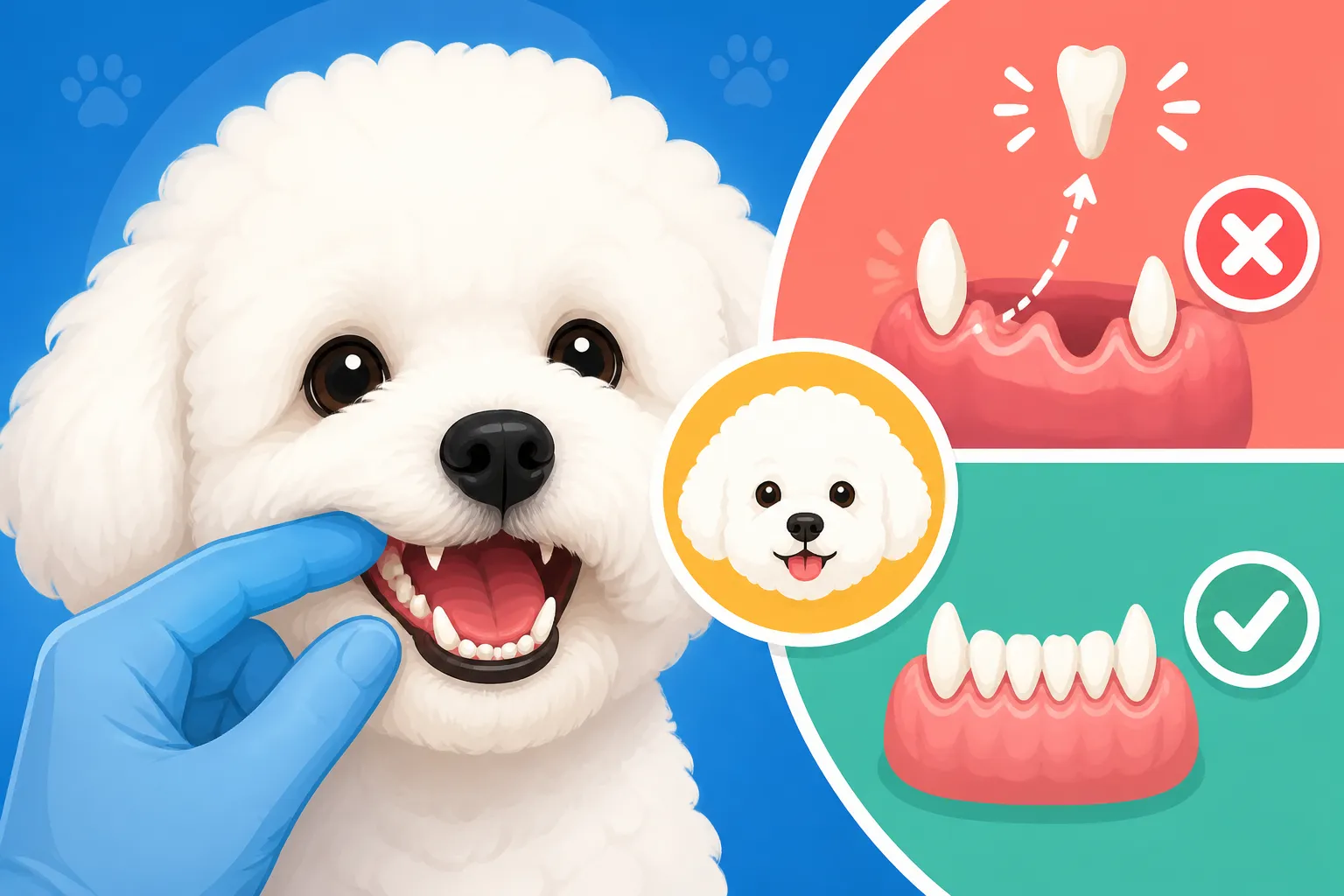
Here's where the frustration often begins for Bichon owners. Despite the natural process, it's incredibly common for small breed dogs, including our beloved Bichons, to retain some of their baby teeth. This happens because the adult tooth doesn't erupt directly beneath its baby tooth counterpart, failing to push the baby tooth out. Instead, the adult tooth comes in adjacent to the baby tooth, leaving both occupying precious space in the jaw. The roots of the deciduous teeth remain intact, anchoring them firmly in the gum line.
The teeth most commonly affected are the canines (the long, pointy "fang" teeth) and sometimes the incisors (the small teeth at the front of the mouth). When you see an adult canine emerging right next to a baby canine that hasn't fallen out, you're looking at a classic case of retained deciduous teeth. This isn't just a cosmetic issue; it's a significant dental health concern that can lead to a host of problems down the line, affecting everything from their bite to their ability to eat comfortably. It’s one of those things that, while common, really needs attention to prevent bigger troubles.
The Real Dangers of Retained Baby Teeth for Your Bichon Frise
It’s easy to think, "Oh, it's just an extra tooth, what's the big deal?" But for a small mouth like a Bichon's, those retained baby teeth are far more than just a minor imperfection. They are a ticking time bomb for serious dental health issues that can cause considerable pain and expense. Ignoring them almost guarantees future problems that are much harder to resolve.
Dental Crowding and Misalignment
Imagine trying to fit two large pieces of furniture into a space designed for one. That's essentially what happens in your Bichon's mouth when both a baby tooth and an adult tooth try to occupy the same spot. The adult tooth is forced to erupt in an abnormal position, often twisted or pushed out of alignment. This creates severe dental crowding, especially noticeable with those pointy canine teeth.
This crowding leads to several compounding problems. Firstly, the tightly packed teeth create crevices and tiny spaces that are incredibly difficult, if not impossible, to clean, even with diligent brushing. Food particles, saliva, and bacteria easily get trapped in these areas, forming plaque and tartar at an accelerated rate. This isn't just unsightly; it's the perfect breeding ground for destructive bacteria that lead to periodontal disease. It's a prime reason why Bichons are often more susceptible to issues like Dental Disease in a Bichon Frise much earlier in life if these foundational problems aren't addressed.
Abnormal Bites and Oral Discomfort
Beyond just crowding, retained baby teeth can drastically alter your Bichon's bite, leading to malocclusion. An abnormal bite occurs when the upper and lower teeth don't fit together correctly when the mouth is closed. For example, a retained upper canine might push the adult lower canine inwards, causing it to bite painfully into the roof of the mouth or the opposing gum tissue. This is incredibly uncomfortable, can lead to chronic pain, and makes even simple actions like chewing or playing with toys a painful experience.
Think about how sensitive your own mouth is to a small canker sore or a piece of food stuck between your teeth. Now imagine a sharp tooth constantly digging into your gums or palate. This ongoing irritation can result in chronic inflammation, open sores, and even infections in the soft tissues of the mouth. This discomfort can impact your Bichon's willingness to eat, play, or even be handled around their face, changing their demeanor and quality of life. Owners might sometimes misinterpret these changes as behavioral quirks when, in reality, it's a direct consequence of oral pain.
Accelerated Tartar Buildup and Infection Risk
The crowded conditions created by retained baby teeth are a direct express lane to severe tartar buildup. Because the toothbrush can't effectively reach between the closely spaced teeth, plaque hardens into tartar much faster. This tartar then provides an even rougher surface for more bacteria to adhere to, leading to a vicious cycle of accumulation.
This accelerated tartar buildup isn't just a cosmetic issue; it's a serious health risk. The bacteria thrive under the tartar and begin to irritate and infect the gums, causing gingivitis. If left unchecked, this inflammation progresses to periodontitis, where the infection spreads beneath the gum line, destroying the supporting structures of the teeth – the bone, ligaments, and gum tissue. This is incredibly painful and can lead to tooth loss, jaw bone infections, and even systemic health issues as bacteria enter the bloodstream, potentially affecting organs like the heart and kidneys. You might find yourself needing to address issues like How Often a Bichon Frise's Teeth Need Scaling far more frequently, or facing more serious interventions, all because those baby teeth were allowed to linger.
When and How Your Vet Steps In Addressing Retained Deciduous Teeth
Once you’ve spotted those stubborn baby teeth alongside their adult counterparts, it’s clear that action is needed. But knowing when and how your veterinarian will intervene can alleviate some of the natural anxiety that comes with any pet procedure. This isn't just about pulling a tooth; it's about setting your Bichon up for a lifetime of better oral health.
The Critical Timing for Intervention
The general consensus among veterinarians is that if a baby tooth is still present when the adult tooth has erupted (or is clearly erupting), it should be removed. For most small breeds like Bichons, this means if you see a retained baby tooth past 5-6 months of age, it's time to talk to your vet. Don't wait until 8, 9, or even 12 months, hoping it will fall out on its own. The longer a retained tooth remains, the more damage it can cause to the permanent tooth and surrounding structures.
Early intervention is crucial because the adult tooth's position can become permanently compromised if the baby tooth isn't removed in a timely manner. If the adult tooth is constantly being pushed into an abnormal position by the retained baby tooth, its growth pattern can be irrevocably altered, leading to a lifelong malocclusion. It’s much easier, and less damaging, to guide the permanent tooth into its correct position when it's still developing and pliable. Your vet will assess the specific situation, often recommending extraction of the retained tooth to allow the permanent tooth the best chance to settle into its proper alignment. This proactive approach significantly reduces the risk of future, more complex dental problems.
The Extraction Procedure
Removing retained deciduous teeth is typically a surgical procedure performed under general anesthesia. Many Bichon owners worry about anesthesia, especially for small dogs, but modern veterinary anesthesia protocols are very safe. Your vet will perform pre-anesthetic blood work to ensure your Bichon is a good candidate and will monitor them closely throughout the procedure. For more information on this, you can look into Whether Anesthesia Is Riskier on a Small Bichon Frise.
The extraction itself requires a delicate touch. The retained baby teeth often have surprisingly long roots, and the veterinarian must carefully extract them without damaging the adjacent permanent tooth. This usually involves creating a small gingival (gum) flap to expose the root, meticulously loosening the tooth from its socket, and then stitching the gum flap back in place. Sometimes, an X-ray is taken to ensure all root fragments have been removed, as leaving even a small piece can lead to future problems. Depending on how many teeth need pulling and the complexity of their roots, the procedure can vary in length. It's an investment, but a necessary one, and knowing What a Bichon Frise's Dental Costs can help you budget for this vital care. Many pet parents wisely invest in pet insurance like Healthy Paws, which can significantly ease the financial burden of unexpected surgeries, making decisions based on health needs rather than cost.
Post-Procedure Care and Long-Term Dental Health
After the extraction, your Bichon Frise will need some attentive post-operative care. Your vet will likely send them home with pain medication and possibly antibiotics. They'll probably recommend feeding soft food for a week or two to avoid irritating the surgical sites. You'll need to monitor their mouth for any signs of swelling, redness, or discharge and ensure they're eating and drinking normally.
The most important long-term aspect is establishing a rigorous home dental care routine. With those extra teeth gone, you now have a much better chance of keeping your Bichon’s mouth clean. This means daily tooth brushing, using pet-specific toothpastes and brushes. Incorporating dental chews or water additives approved by the Veterinary Oral Health Council (VOHC) can also be helpful, but they are never a substitute for brushing. Regular veterinary dental check-ups, potentially including professional cleanings under anesthesia every year or two, will be crucial to prevent the re-accumulation of tartar and maintain optimal oral health. Investing in a good dental care routine now will save you a lot of heartache and expense down the road. For ongoing advice, our article on Whether a Bichon Frise Needs Its Teeth Brushed Daily offers more insights.
Proactive Steps for Bichon Frise Owners
Being a proactive pet parent can make all the difference in catching dental issues early, especially with a breed prone to problems like the Bichon Frise. It’s not just about reacting when a problem arises, but about building good habits and staying vigilant from the start.
Regular Oral Inspections at Home
One of the best things you can do for your Bichon Frise's dental health is to get them used to having their mouth examined from a young age. Start by gently lifting their lips to look at their gums and teeth. As they get older and more comfortable, you can gradually increase the duration and thoroughness of these inspections. Make it a positive experience with praise and treats.
What are you looking for?
- Double Teeth: Are there two teeth occupying the same space where there should only be one? This is the clearest sign of a retained deciduous tooth. Pay close attention to the canine teeth and incisors, as these are the most common culprits.
- Red or Swollen Gums: This could indicate gingivitis, often exacerbated by crowded teeth or food impaction.
- Bad Breath: While some "dog breath" is normal, truly foul breath can signal dental disease or infection.
- Changes in Chewing or Eating: Reluctance to chew on hard toys, dropping food, or showing signs of pain while eating can all be indicators of oral discomfort.
Regularly checking their mouth allows you to spot issues early, sometimes even before your puppy's next vet visit. It empowers you to be your Bichon's first line of defense against dental problems.
Partnering with Your Veterinarian
Your veterinarian is your most valuable ally in maintaining your Bichon Frise's dental health. During puppy wellness exams, your vet will meticulously check your puppy's mouth for developing teeth and any signs of retained deciduous teeth. Don't hesitate to bring up any concerns you have, no matter how small they seem. Your observations from home inspections are incredibly valuable to them.
Many responsible breeders will also discuss potential dental issues, and knowing What a Bichon Frise Puppy Costs From a Real Breeder often includes an understanding of the health guarantees and early vet checks provided. Your vet will advise you on the optimal timing for intervention, typically recommending extraction before significant damage to the permanent teeth occurs. They can also provide guidance on proper home dental care techniques and products. Regular check-ups are also the perfect opportunity for your vet to monitor the success of any previous extractions and to ensure new issues aren't arising. Having a comprehensive pet insurance plan, perhaps from a provider like Healthy Paws, allows you to confidently pursue recommended dental care without undue financial stress, ensuring your Bichon gets the best treatment when they need it most.
By working closely with your vet and staying on top of your Bichon's oral hygiene, you can help prevent many of the common and painful dental problems associated with retained baby teeth, ensuring a healthy, happy smile for years to come.
Bichon Frise Dental Development Snapshot
This table provides a general overview of a Bichon Frise's dental development timeline, along with common issues to watch for. Keep in mind that individual puppies can vary, but these guidelines offer a good framework.
| Age Range | Normal Development | What to Watch For | Potential Issues from Retained Teeth |
|---|---|---|---|
| 0-3 Weeks | No teeth present | None (teeth begin to erupt after this) | N/A |
| 3-8 Weeks | Deciduous (baby) teeth erupt (28 total) | Puppy chewing everything, mild gum irritation | None (too early for retained teeth to be an issue) |
| 3-6 Months | Adult teeth begin to erupt; baby teeth fall out | Mild bleeding, increased chewing, finding tiny fallen teeth | "Double teeth": baby tooth still present as adult tooth emerges; red/inflamed gums |
| 6-7 Months | All 42 adult teeth should be in place | Settled chewing habits, permanent bite establishing | Lingering double teeth: particularly canines and incisors; gum irritation, bad breath |
| 7 Months and Up | Permanent dentition established | Healthy bite, clean teeth (with proper care) | Crowding, malocclusion, rapid tartar buildup, gingivitis, oral pain |
Disclaimer
The information provided in this article is for general educational purposes only and should not be considered a substitute for professional veterinary advice. Always consult with your veterinarian regarding any health concerns or before making any decisions about your pet's medical care.