Whether a Bichon Frise Barks at Delivery Drivers
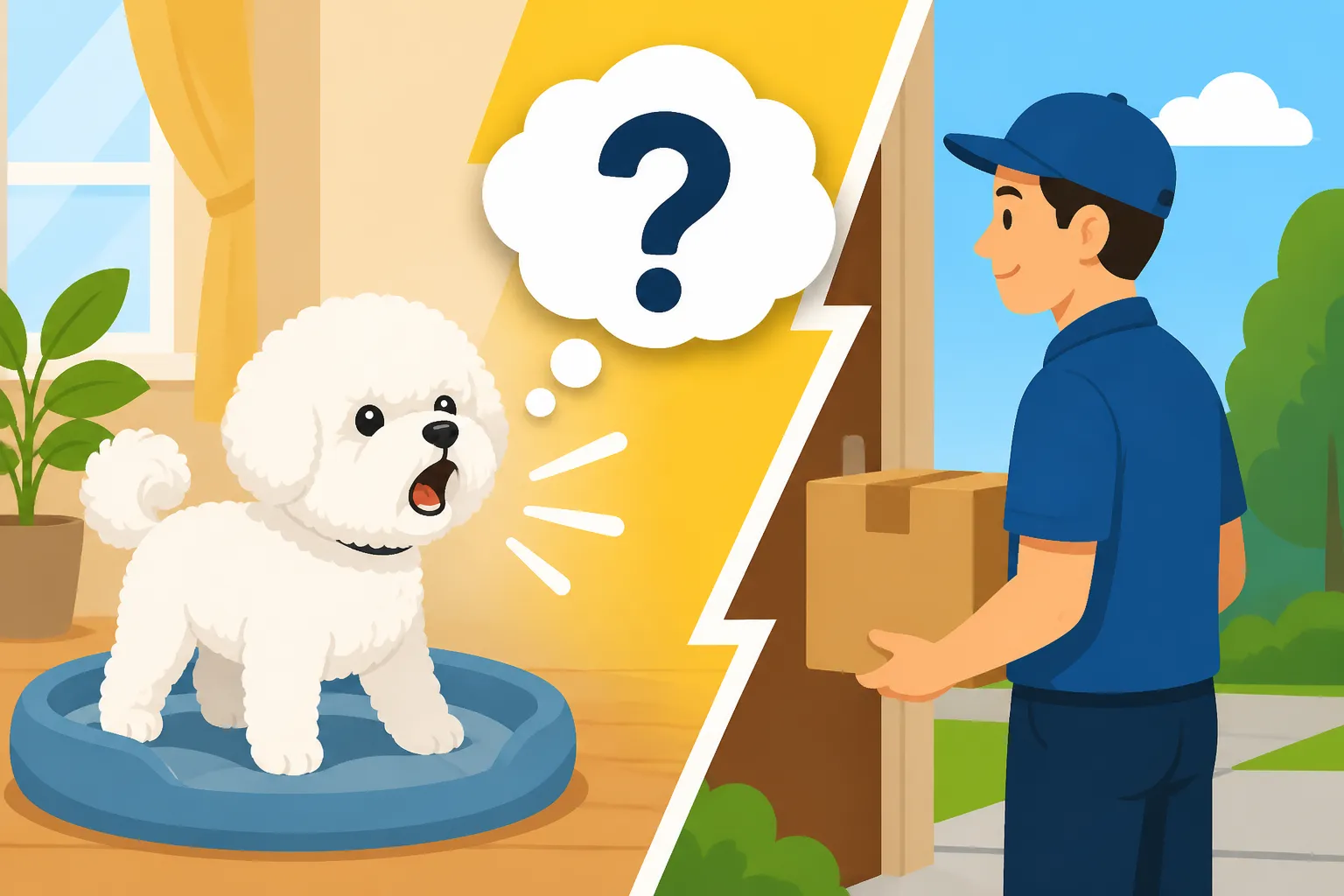
It’s a scene many Bichon Frise owners know all too well: the doorbell rings, or a package truck rumbles down the street, and suddenly your sweet, fluffy companion transforms into a miniature alarm system, barking incessantly at the delivery driver. This guide will walk you through understanding why your Bichon might react this way and offer practical, empathetic strategies to bring peace back to your home, helping your pup feel more secure and less compelled to act as the neighborhood watchdog.
Understanding Why Your Bichon Frise Barks at Delivery Drivers
When your Bichon Frise erupts into a flurry of barks every time a delivery driver approaches, it's not simply "being naughty." There's usually a deeper reason behind it, rooted in their natural instincts, their perception of their environment, and sometimes, even their unique personality traits. Untangling these reasons is the first step toward helping them adjust.
The Territorial Instinct and Small Dog Syndrome
Bichon Frises, despite their small stature, often possess a robust territorial instinct. They see their home and yard as their domain, and anyone approaching it – especially an unfamiliar person in a uniform – can be perceived as an intruder. For a small dog, this can manifest as what some call "small dog syndrome," where they overcompensate for their size by being extra vocal and assertive. They might feel a heightened need to protect their territory because they feel more vulnerable. Imagine feeling like you have to defend your castle, but you're only knee-high to the perceived threat! This instinct is deeply ingrained, and for some Bichons, it's amplified by a lack of early socialization or positive exposure to new people and situations.
Your Bichon might genuinely believe they are protecting you and the home, even if it feels excessive. They hear the rumble of the truck, see a strange person approach their perceived boundary, and their natural alarm system kicks in. This isn't a malicious act; it's a dog doing what dogs instinctively do: alerting the pack to potential danger. They don't understand that the delivery driver is just dropping off a package; they only see a stranger infringing on their space. This can be particularly pronounced in breeds like the Bichon Frise, who are historically companions and alert dogs, bred to be attentive to their surroundings and loyal to their families.
Excitement, Frustration, or a Learned Behavior
Sometimes the barking isn't about fear or aggression but about pure excitement or frustration. Imagine your Bichon seeing a person at the door – they're stimulated, perhaps hoping for interaction, or simply overwhelmed by the sudden novelty of someone new. If they're confined and can't get to the person, this excitement can quickly turn into frustration, and barking becomes their outlet. It's like a child seeing ice cream but being unable to reach it – they might fuss and cry. For dogs, barking is often their primary way of communicating intense feelings.
Furthermore, barking can easily become a learned behavior. If your Bichon barks at a delivery driver, and the driver leaves (which they always do, after dropping the package!), your dog learns that their barking successfully "drove away" the intruder. This positive reinforcement, however accidental, can cement the behavior. They might think, "My barking worked! I saved the day!" Over time, this makes the behavior incredibly hard to unlearn. Owners might also inadvertently reinforce the barking by soothing their dog while they're barking, or by creating a fuss themselves. This tells the dog that barking earns attention, regardless of whether that attention is positive or negative from a human perspective.
The Impact of Sensory Triggers
Bichons are highly attuned to their environment, and sensory triggers play a huge role in their reactions. The sound of a truck pulling up, the specific squeak of a brake, the crunch of gravel as someone walks up the path, or the chime of a doorbell can all be immediate signals. Many delivery services use specific noises, like a truck's engine or a hand cart, that become distinct in your dog's mind. Once they've associated these sounds with an approaching stranger, the barking can start even before the person is visible. It's a preemptive strike, a warning system.
Visual triggers are equally powerful. A delivery person in uniform might look different from your usual visitors. The sight of a large box being carried, or a clipboard being held, can be unfamiliar and therefore suspicious to your Bichon. If your dog spends a lot of time near a window, they're constantly exposed to these stimuli, and the lack of a barrier often means they feel it's their job to react. Curtains or blinds might block the view, but they don't block the sound, and a keen sense of hearing can still set them off. Dogs also pick up on subtle body language – a quick movement, a different stride – that we might not even notice. This combination of sounds and sights creates a potent cocktail of triggers that can send a sensitive Bichon into a barking frenzy. You can read more about what other health issues might cause behavioral changes in your Bichon Frise, such as The First Signs a Bichon Frise Has Stones, which can make them act differently.
Practical Strategies to Manage Delivery Driver Barking
Managing your Bichon Frise’s delivery driver barking requires a multi-pronged approach, combining environmental management, consistent training, and a good dose of patience. It’s about setting your dog up for success and teaching them alternative, calmer behaviors.
Proactive Management and Environmental Control
The first step is often to minimize your Bichon's exposure to the triggers that set them off. This isn't about ignoring the problem, but about creating a training environment where they're less likely to practice the unwanted behavior. Start by making it harder for your Bichon to see the delivery driver. Consider installing window film on lower panes, or simply keeping blinds and curtains closed during peak delivery hours. If your dog races to the window, a baby gate or playpen can create a physical barrier, keeping them away from their preferred barking spot. You can find many options for effective window film or playpens on sites like Amazon.
Sound management is also crucial. A white noise machine or even a radio playing calmly can help mask the sound of approaching vehicles or footsteps. If you know a delivery is coming, put your Bichon in a quieter room, perhaps with a long-lasting chew toy or a puzzle feeder to distract them. This isn't punishment; it's managing the environment to prevent the undesired behavior from occurring. The goal is to reduce the initial arousal, giving you a chance to intervene calmly. For an anxious Bichon, minimizing these startling events can be really beneficial for their overall well-being. Think about your dog's daily routine; are there times they are more prone to barking, such as when they need to go out? Needing more toilet trips could also play a role in their overall agitation.
Training Techniques for a Quieter Welcome
Once you've managed the environment, it's time to introduce new behaviors. The "Quiet" cue is invaluable here. Start practicing this when your dog isn't actively barking at a delivery driver. When your Bichon barks (at anything, like a squirrel outside), let them bark a few times, then calmly say "Quiet," and immediately distract them with a high-value treat. As soon as they stop barking to take the treat, praise them. Gradually increase the duration they need to be quiet before getting the reward.
Next, you need to desensitize them to the triggers. This is where you recreate delivery scenarios in a controlled way. Ask a friend to pretend to be a delivery driver – have them approach the door, knock, and then leave. Start this process from a distance where your Bichon notices but doesn't react strongly. As your dog remains calm, reward them generously. Gradually decrease the distance and increase the realism of the scenario. The key is to reward calmness in the presence of the trigger. Many online dog training programs, like those offered by BAXTER & Bella, provide structured approaches to desensitization and counter-conditioning that can be very helpful for this kind of specific behavioral challenge. They often break down complex behaviors into manageable steps, offering video tutorials and support. Consistency is absolutely key here – every time they see a "delivery driver" and don't bark, they should get a reward. This positive association helps them understand that quiet behavior is what you want.
Consistent Routine and Positive Reinforcement
Dogs thrive on routine and clear expectations. A consistent daily schedule for walks, feeding, and playtime can help reduce overall anxiety, making your Bichon less reactive to unexpected events. Ensure your Bichon is getting enough mental and physical exercise; a tired dog is often a quieter, more content dog. Engaging their minds with puzzle toys or short training sessions can be just as beneficial as a brisk walk.
When a delivery driver does arrive, be prepared. Have high-value treats ready. As soon as you hear the truck or the doorbell, direct your Bichon to a designated "safe spot" – a bed or mat in another room, or away from the window. Ask them to "settle" or "lie down" and reward them for staying calm. The moment the delivery person leaves, reward them again for their quiet behavior. The goal is to redirect their attention from the trigger to you and a positive outcome. Never scold or punish your Bichon for barking; this can actually increase their anxiety and make the problem worse. Instead, focus on rewarding the absence of barking and the presence of calm, desirable behaviors. If you are struggling with their housetraining, remember that this can also affect their overall stress levels; The Toilet Routine That Finally Works on a Bichon Frise could provide additional support.
| Trigger/Scenario | Immediate Action | Long-Term Strategy |
|---|---|---|
| Sound of Delivery Truck | Distract with a favorite toy/treat. Move to a quiet room. | Play white noise/music. Desensitize with recordings. |
| Doorbell Rings | Redirect to a "place" command. Have treats ready. | Desensitize with controlled doorbell rings (no visitor). |
| Sight of Driver | Close curtains/blinds. Block view with a screen. | Practice "look at me" when driver appears from afar. |
| Package Drop-off | Keep dog on leash or secured in another room. | Reward calmness as "pretend" driver approaches and leaves. |
| Post-delivery Barking | Ask for a "quiet" cue, reward immediately when quiet. | Consistent "quiet" training away from triggers. |
When to Seek Professional Help for Persistent Barking
Sometimes, despite your best efforts, your Bichon Frise's barking at delivery drivers can feel overwhelming or even get worse. If you've tried all the standard techniques and aren't seeing progress, or if the behavior is accompanied by other signs of distress, it might be time to bring in the big guns.
Identifying Underlying Anxiety or Fear
Persistent, intense barking might not just be a bad habit; it could be a symptom of deeper underlying anxiety or fear. If your Bichon isn't just barking, but also pacing, panting excessively, trembling, trying to hide, or exhibiting destructive behaviors when delivery drivers are around or even when you leave the house, these are red flags. This might indicate separation anxiety, generalized anxiety, or a strong fear-response to strangers. Some Bichons, due to past experiences or genetic predisposition, can be prone to anxiety. For example, if your Bichon came from a rescue, their past might contribute to their current fears. Whether a Rescue Bichon Frise Has a Stone History or other past traumas could be impacting their current behavior.
It's important to differentiate between nuisance barking and anxiety-driven barking. Nuisance barking is often more about attention or a learned behavior. Anxiety-driven barking is usually accompanied by other body language signals indicating stress. If you suspect anxiety, trying to "train" it away without addressing the root cause can be counterproductive and even harmful, as it can increase your dog's distress. Observing these additional behaviors can help you decide if it's time for more specialized intervention.
The Role of a Certified Professional Dog Trainer
If you're feeling stuck, a certified professional dog trainer (CPDT) or a behavior consultant can be an invaluable resource. They have expertise in canine behavior and can offer personalized strategies tailored to your Bichon's specific needs and your household's dynamics. They can observe your dog's reactions, identify the exact triggers, and help you implement a detailed training plan. This isn't just about teaching your dog not to bark; it's about helping them feel safer and more confident in these situations.
A good trainer will focus on positive reinforcement and force-free methods, ensuring your Bichon doesn't become more fearful or aggressive. They can guide you through techniques like desensitization and counter-conditioning with precision, often achieving results that are difficult for owners to accomplish on their own. They might even suggest specific management tools or exercises you haven't considered. They can help you understand subtle body language cues you might be missing and empower you with the skills to address future behavioral challenges. Organizations like the Certification Council for Professional Dog Trainers (CCPDT) or the Association of Professional Dog Trainers (APDT) can help you find qualified professionals in your area.
Considering Veterinary Consultation
In some cases, especially if anxiety is severe or seems to have an abrupt onset, a visit to your veterinarian is a critical next step. Your vet can rule out any underlying medical conditions that might be contributing to the behavioral issues. Pain, discomfort, or hormonal imbalances can sometimes manifest as increased irritability, anxiety, or reactivity, including excessive barking. For example, issues like Recurrent Ear Infections in a Bichon Frise can make them generally more sensitive and prone to snapping.
If no medical cause is found, your vet might suggest consulting with a veterinary behaviorist, who is a veterinarian with specialized training in animal behavior. They can prescribe medication in conjunction with a behavior modification plan if anxiety is severe enough to warrant it. Medication isn't a magic bullet, but for some dogs, it can lower their anxiety levels enough to make behavior modification training more effective. It helps them get out of that "fight or flight" mode so they can actually learn. This integrated approach, combining veterinary care with professional training, offers the best chance for long-term success in managing challenging behaviors like persistent delivery driver barking.
Helping your Bichon Frise navigate the world of delivery drivers takes patience, consistency, and a deep understanding of their unique needs. By understanding why they bark, implementing smart management strategies, and using positive reinforcement training, you can transform those frantic barks into calmer, more controlled responses. Remember, your goal isn't just to stop the barking, but to help your furry friend feel safe and secure in their home. Keep at it, celebrate the small victories, and don't hesitate to seek professional guidance if you need it.
Disclaimer
This article is for general informational purposes only and does not constitute professional advice. Laws, prices and regulations vary by location and change over time. Consult a qualified professional for guidance on your specific situation.