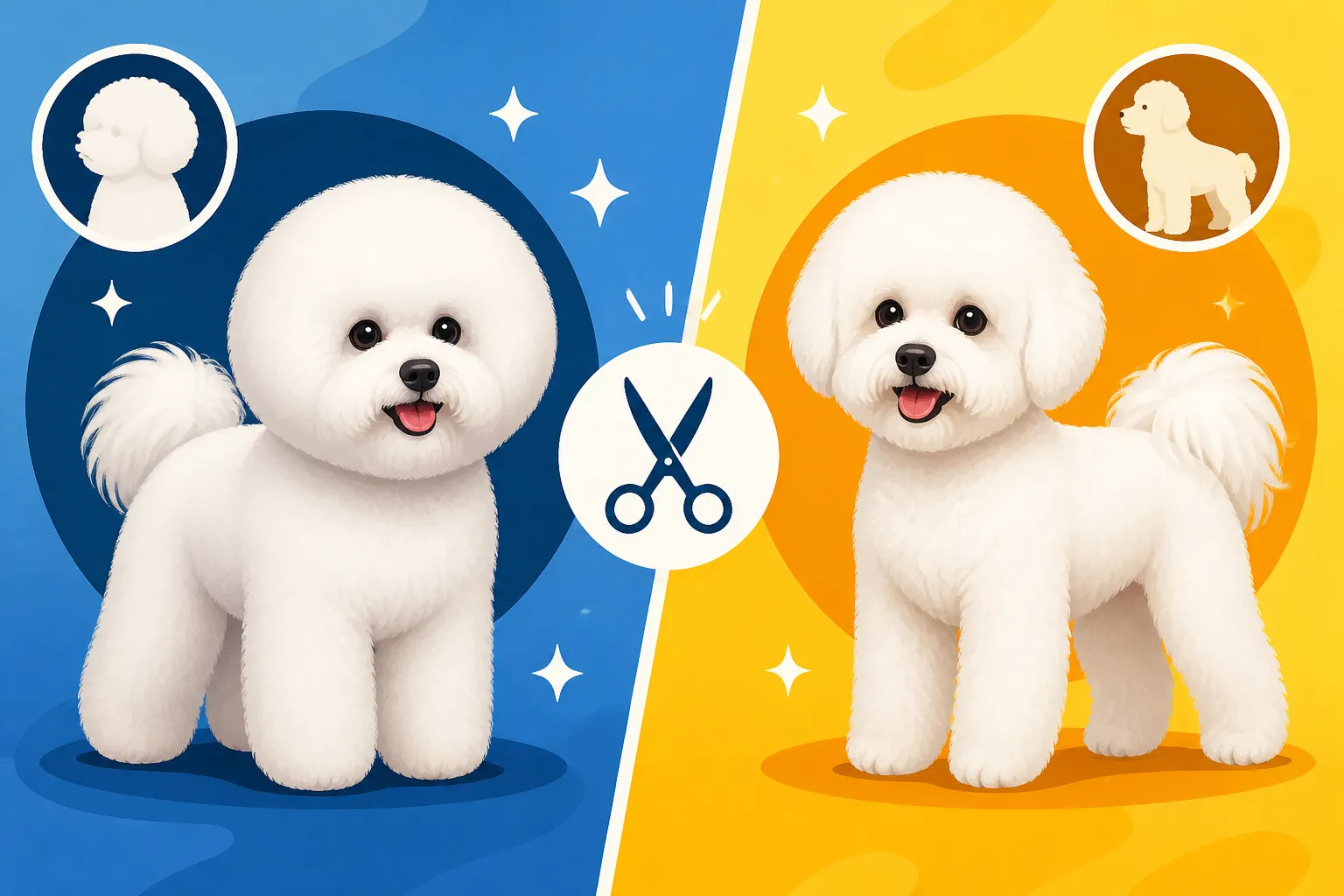
Whether European Bichon Frises Are Trimmed Differently
A European Bichon Frise may look more rounded, longer-coated, or naturally fluffy than one groomed in the United States, but that does not mean Europe has one separate haircut. The difference usually comes down to show rules, local grooming traditions, coat condition, and owner preference. This guide explains what those differences mean and how to ask for the look you want.
What “European trim” usually means
There is no single European haircut
“European Bichon Frise trim” can sound like a formal style with one exact shape. In practice, it is often a casual description of a dog whose coat has been left fuller or shaped in a way a viewer associates with European show dogs. Grooming choices can vary between countries, regions, individual breeders, and groomers, so two dogs from Europe may look quite different.
The breed itself is not divided into a European type with one coat and an American type with another. A Bichon Frise’s coat texture and outline are shaped by its genetics, age, health, coat care, and the groomer’s technique. A puppy in the middle of changing to its adult coat may look different from a mature dog, even if both are groomed to a similar outline.
The setting matters, too. A dog prepared for a conformation show is groomed to present the breed’s outline, while a companion dog may be kept in a shorter, easier-care trim. A full coat can look dramatic, but it also takes regular brushing and careful drying to prevent mats. If you are comparing photos online, check whether the dogs are show entries, family pets, or freshly groomed examples.
For background on the shape judges and groomers aim to preserve, see The Powder Puff Outline a Bichon Frise Standard Describes. It can help you separate the breed’s characteristic outline from a particular groomer’s interpretation of it.
Breed standards describe the coat, not one salon recipe
Breed standards describe characteristics such as coat texture, density, and overall appearance. They are not step-by-step instructions for every pet groom. The Fédération Cynologique Internationale and American Kennel Club each have breed standards, and show rules and presentation conventions can differ. That does not mean every groomer in Europe follows one approach or that every American groomer uses another.
In the show ring, grooming is intended to make the dog’s natural features and proportions easy to assess. The coat is shaped to create a balanced, rounded outline, rather than being styled into an obviously different silhouette. The details of preparation can depend on the handler, breeder, country, and show context.
A pet groom has a different job. It needs to suit the dog’s lifestyle and the owner’s ability to maintain the coat between appointments. A family that enjoys daily brushing may choose a fuller look; someone who finds mats forming behind the ears or under the harness may prefer a shorter trim. Neither choice makes the dog more or less of a Bichon Frise.
How European and American grooming can look different
Show presentation and pet practicality are not the same
A Bichon prepared for a show may have a fuller, carefully balanced coat than a companion dog whose owner prioritizes easy brushing. The difference you notice may be about the dog’s purpose and maintenance routine, not its country of origin. A show coat usually calls for more hands-on preparation, including thorough brushing, bathing, drying, and shaping.
A shorter pet trim can still preserve the familiar rounded head and soft outline, but it reduces the amount of coat that needs daily attention. It may be a sensible option for a dog that plays outdoors, gets wet often, or struggles to stand comfortably through long grooming sessions. If coat care is already stressful, a manageable trim is often kinder than trying to maintain a look that does not suit your household.
| What you notice | What may explain it | Useful question to ask |
|---|---|---|
| A very full, rounded outline | Show presentation or a preference for a longer coat | How much brushing and drying will this look need? |
| A shorter, neater coat | A practical pet trim or a coat kept easier to maintain | Can you keep the head and body balanced while shortening the coat? |
| More visible shaping around the head | A groomer’s interpretation of the breed outline | Can you show me how the head will look from the side and front? |
| Different coat length between dogs | Individual preference, coat condition, or stage of coat development | Is this length suitable for my dog’s coat and routine? |
The fuller outline is sometimes associated with European grooming, but it is not exclusive to Europe. Similarly, a tidy pet trim is not specifically an American style. Photos can make these distinctions seem sharper than they are: coat length, camera angle, grooming finish, and the dog’s natural coat texture all affect the impression.
If you want to understand the difference between shaping with scissors and using clippers, Why a Groomer Scissors a Bichon Frise Instead of Clipping It explains why a groomer may choose one tool over the other. A scissored finish is not automatically “European,” and clipping is not automatically “American”; the choice depends on the desired length, coat condition, and groomer’s method.
Local customs can influence the finish
Groomers often develop their preferred techniques through training, experience, and the expectations of their local clients. A groomer who regularly prepares show dogs may be especially comfortable shaping a full, rounded silhouette. Another may focus on practical pet trims that are easier for owners to maintain. Those are differences in experience and client needs, not proof of a fixed national style.
You may also encounter differences in how people describe a trim. One salon might call a look a “puppy cut,” while another uses “pet trim” for a similar length. Those labels do not guarantee a specific result. Before an appointment, agree on the coat length and outline rather than relying on a style name alone.
If you are travelling with your dog or moving between countries, bring clear photos of the finish you like. It helps to show a front view, side view, and a picture of the coat length you want on the legs and body. A reference photo gives the groomer something concrete to discuss, while leaving room to adjust the plan for your dog’s coat and comfort.
Choosing a trim for your own Bichon Frise
Start with maintenance, not geography
Before asking for a European or American trim, think about the routine you can realistically keep. A longer coat can look beautiful, but loose hair stays caught in the coat and can knot if it is not brushed through regularly. Areas that often need extra attention include behind the ears, the armpits, the chest, the legs, and places where a harness rubs.
A shorter trim can make routine care easier, but it is not maintenance-free. The coat still needs brushing, and the dog may need protection from cold or sun depending on the weather and how closely the coat is cut. A groomer can help you decide whether your dog’s coat condition and temperament make a fuller style practical.
For a show-inspired outline, read Whether a Show Trim Is Practical for a Pet Bichon Frise. The question is not simply whether the style looks good in a photo. It is whether you can keep the coat comfortable and free of painful tangles between professional grooms.
If you are buying basic grooming tools, choose them for your dog’s coat and your technique rather than for a particular country’s style. Chewy is one retailer where owners may look for a slicker brush, metal comb, or dog shampoo, but check that the item is suitable for your dog and ask your groomer what they recommend. A tool that feels too harsh or is used with too much pressure can make brushing unpleasant.
Give the groomer clear instructions
A useful grooming conversation is specific and collaborative. Instead of saying only “make him look European,” explain what you like: a rounded head, a fuller leg, a shorter body, or a natural-looking finish. Tell the groomer how often you brush, whether your dog tolerates drying, and whether there are areas that mat quickly.
Ask how the requested look will affect upkeep. For instance, if you want a long coat but your dog wears a harness every day, ask how to manage rubbing and tangles around the chest and shoulders. If your dog dislikes standing for long periods, ask whether a shorter trim or shorter appointment plan would make grooming more comfortable. A good plan should fit the dog in front of the groomer, not just the inspiration photo.
Before an appointment, you can prepare a short request such as: “I like this rounded head and full legs, but please keep the body at a length I can brush at home. My dog gets tangles behind the ears, so please show me how to check that area.” If you are unsure how to explain the outline, Whether a Groomer Needs Photos of the Bichon Frise Standard offers a useful starting point for discussing reference images.
Chewy may also be useful when you need to replace a comb or brush between appointments, but a product listing cannot tell you whether your technique is reaching through the coat to the skin. Ask your groomer to demonstrate gentle brushing on your dog and show you how to check for knots with a comb. That small lesson can prevent the frustrating discovery of a hidden mat at the next visit.
Maintaining the look between grooms
Keep the coat comfortable and check for mats
Whatever trim you choose, regular coat checks matter more than the label attached to it. Work in small sections rather than brushing only the surface. A comb can help reveal tangles close to the skin that a quick pass with a brush may miss. Go slowly, especially where the coat is fine or the dog is sensitive.
If you find a tight mat, do not pull hard or cut close to the skin with household scissors. Mats can hold skin in a fold, making it difficult to see where the coat ends and the skin begins. A groomer can assess whether the knot can be gently worked out or whether a shorter trim is safer and more comfortable.
A Bichon’s coat can also tangle after bathing if it is left damp or allowed to dry in clumps. Ask your groomer how to dry and brush your dog’s coat at home, particularly if you are maintaining a longer outline. For help understanding how the breed’s rounded head is shaped, see How the Round Head Is Scissored on a Bichon Frise. And if you are weighing a shorter approach, Whether a Bichon Frise Can Be Clipped Instead covers the practical distinction without treating one finish as the only correct choice.
Chewy is one possible place to find coat-care supplies, but avoid choosing a shampoo or grooming tool solely because it is marketed for white dogs or a particular trim. Use products intended for dogs, follow the label, and ask your veterinarian or groomer if your dog has irritated skin or a history of reactions. The best grooming setup is one your dog tolerates and you can use safely and consistently.
The best trim is the one your dog can live with
A European-inspired look can be a lovely choice if you enjoy the full, rounded presentation and can keep up with the coat care it requires. A shorter pet trim can be just as appropriate when it better suits your dog’s comfort, activity, or household routine. The key is to describe the shape you want, understand the upkeep, and keep your dog’s coat and skin in good condition.
If you are uncertain, ask a groomer to explain what is realistic for your dog’s current coat. You can start with a more manageable length and let it grow gradually if you decide you want a fuller outline. That approach is often less stressful than committing to a high-maintenance look before you know how your dog handles brushing and drying.
Ultimately, “European” is best treated as a description of an aesthetic, not a guarantee of a particular method or standard. Look at the actual shape, ask how it is maintained, and choose the finish that works for your Bichon Frise and your life together.
Disclaimer
This article is for general informational purposes only and does not constitute professional advice. Laws, prices and regulations vary by location and change over time. Consult a qualified professional for guidance on your specific situation.