Whether a Bichon Frise Quiets With Age
Aging Bichon Frise barking habits, senior dog vocal changes, and practical methods for managing noise levels as companions enter golden years.
Work with the temperament you have.
House-training and crate work, recall, leash manners, separation anxiety, and the behaviors this breed is wired for.

Aging Bichon Frise barking habits, senior dog vocal changes, and practical methods for managing noise levels as companions enter golden years.

Bichon Frise bark management strategies help owners reduce excessive barking and address underlying causes using humane methods.
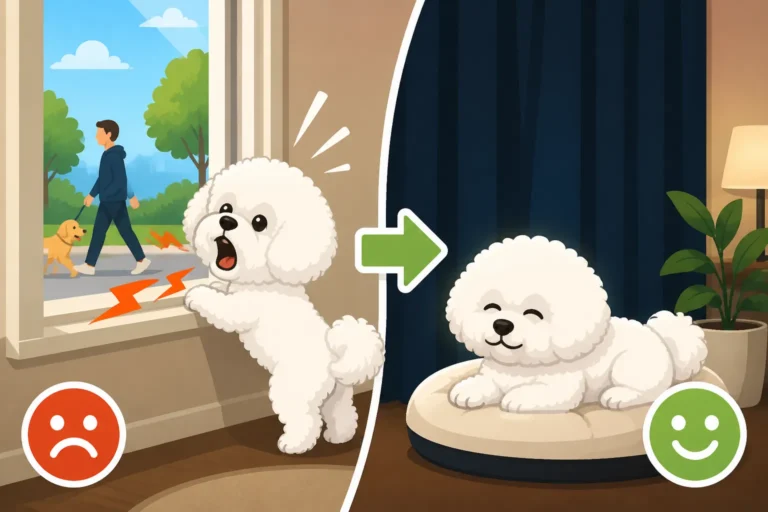
Blocking the window and other management strategies help reduce incessant barking in a territorial or excitable Bichon Frise.

Bichon Frise barking at delivery drivers stems from territorial instincts and sensory triggers, requiring practical management strategies.

Bichon Frise vocalizations and barking habits explained, including common triggers and practical methods for managing noisy small dogs.

Bichon Frise suspicion stems from insufficient early socialization during the critical puppy window between three and sixteen weeks of age.

Bichon Frise watchdog instincts explain why these fluffy dogs bark at strangers and alert owners to visitors at the door.

Play behavior in a twelve-year-old Bichon Frise changes to shorter, gentler activity, distinguishing normal aging from pain.

Bichon Frise independent toy play, breed instincts, and strategies to encourage solo fun while balancing human companionship.

Post-bath energy bursts in Bichon Frises stem from physical relief, scent resetting, and sensory stimulation during the drying process.