Juvenile Cataracts in a Bichon Frise
It's absolutely heartbreaking when you notice something isn't quite right with your beloved Bichon Frise's eyes. You might start seeing a cloudy film, or perhaps your energetic little companion is suddenly bumping into furniture, and your heart sinks with worry. Dealing with vision problems, especially at a young age, can feel overwhelming for any dog parent. This comprehensive guide is here to walk you through everything you need to know about juvenile cataracts in Bichon Frises, offering support and practical advice to help you navigate this challenging condition.
Understanding Juvenile Cataracts in Bichon Frises
When we talk about cataracts, most people think of an age-related issue, something that happens to older dogs or even people. But for some breeds, including our fluffy Bichon Frises, cataracts can make an unwelcome appearance much, much earlier in life. This early onset is what we refer to as "juvenile cataracts," and it carries its own unique set of concerns and challenges.
What Exactly Are Juvenile Cataracts
A cataract is essentially an opacity or cloudiness that develops within the lens of the eye, preventing light from reaching the retina at the back of the eye. Think of it like looking through a foggy window that gets progressively foggier over time. With juvenile cataracts, this cloudiness begins to form when the dog is still young, often between a few months and six years of age. Unlike senile cataracts that develop slowly over many years, juvenile cataracts can sometimes progress more rapidly, leading to significant vision impairment or even blindness relatively quickly. The severity can vary greatly; some might be small, localized spots that don't affect vision much, while others can cover the entire lens, causing complete blindness. It's a condition that can catch owners completely off guard, especially when they expect their puppy to be full of boundless energy and perfect health.
The lens of a dog's eye, just like ours, is normally transparent. Its job is to focus light onto the retina, allowing for clear vision. When proteins within the lens start to clump together and break down, they create these opaque areas. This process is irreversible without intervention. The impact on your Bichon's daily life can range from barely noticeable, if the cataract is small and peripheral, to profoundly disruptive if it’s large and central. Early detection is key, not just for understanding the condition but for preparing for potential management and treatment options down the line.
Why Bichons Are Prone to Early Cataracts
Unfortunately, Bichon Frises have a genetic predisposition to several eye conditions, and juvenile cataracts are high on that list. It's not just bad luck; it's often a hereditary trait passed down through generations. While a definitive genetic marker isn't always identified for every case, it's widely accepted among veterinary ophthalmologists that genetics play a significant role in The Eyes a Bichon Frise Inherits. This makes it particularly frustrating for owners who might have done everything "right" in terms of care, only to find their young pup developing an issue that seems beyond their control.
The exact genetic mechanisms can be complex, involving recessive genes that may not show up in the parents themselves but are carried and passed on. This makes careful breeding practices incredibly important. Reputable breeders will often screen their breeding stock for hereditary eye diseases, including cataracts, using tests like OFA Companion Animal Eye Registry (CAER) exams (formerly CERF). However, even with diligent screening, some cases can still emerge, highlighting the sneaky nature of genetic conditions. Environmental factors are generally less significant in juvenile cataracts compared to genetics, though certain health conditions like diabetes can also lead to cataract formation at any age, even in young dogs, but these are typically considered secondary cataracts rather than primary juvenile ones. Understanding this genetic link helps temper the feeling of guilt many owners experience, reminding them that it's often beyond their direct influence.
Recognizing the Signs and Symptoms
Spotting juvenile cataracts early can be tricky because dogs are incredibly adaptable, and they might compensate for subtle vision changes without you even realizing it. Our Bichons are masters of charm and distraction, and they often try to maintain their usual cheerful demeanor even when something is bothering them. Being observant and knowing what to look for can make all the difference in getting timely veterinary care.
Subtle Early Indicators
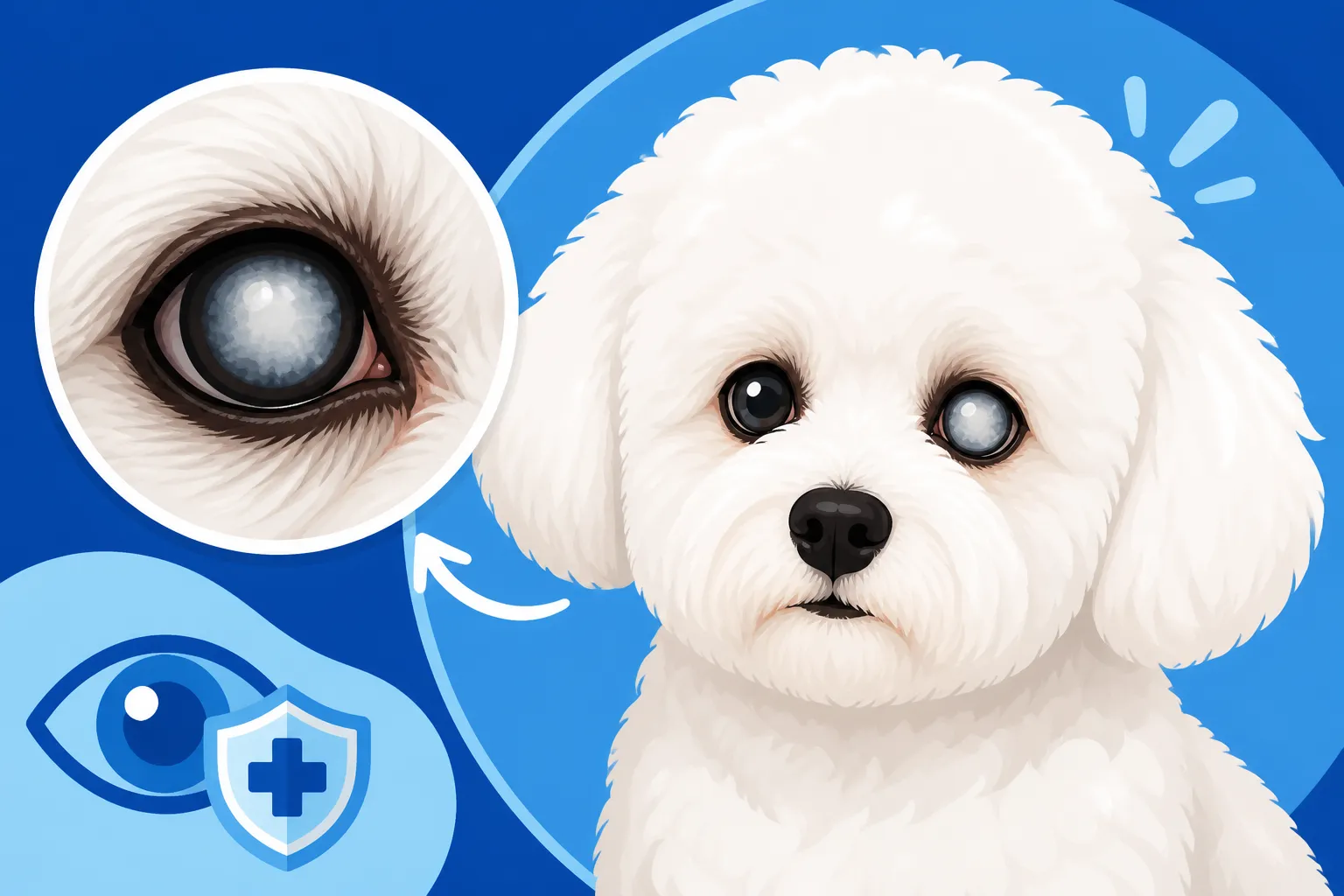
Initially, the signs of juvenile cataracts can be quite subtle and easily missed, especially if you're not specifically looking for them. One of the first things you might notice, if you're really paying attention, is a slight cloudiness or a bluish-white haze in your Bichon's pupils. This might only be visible in certain lighting conditions or from specific angles. It’s not always a sudden, dramatic change. Sometimes, owners describe it as their dog's eyes looking a bit "dull" or "lackluster" compared to their usual bright, sparkling appearance.
Beyond the visible changes in the eye itself, you might start to observe very slight behavioral shifts. For instance, your Bichon might hesitate before jumping off furniture that it used to tackle with no problem, or it might be a little clumsier navigating stairs, especially in dim light. They might also become more reliant on their other senses – sniffing around more intently, or listening more acutely to your voice or familiar household sounds. If you notice your dog starting to bump into things in an unfamiliar environment, but seems fine at home, it could be an early sign that their depth perception is being affected. Don't dismiss these minor changes as just a quirky behavior; they could be a silent cry for help.
Progression of Vision Loss
As juvenile cataracts progress, the signs of vision loss become more pronounced and harder to ignore. The cloudiness in the eyes will become denser and more apparent, eventually covering the entire lens and giving the pupil a milky white or grey appearance. At this stage, your Bichon's world will become increasingly blurry, and their reliance on other senses will grow exponentially. You might see them bumping into familiar objects even in their own home, or struggling to find their toys or food bowl.
Behavioral changes can also escalate. Your once confident and outgoing Bichon might become more hesitant, anxious, or even irritable, particularly when startled or in new environments. They might stick closer to you, demonstrating a heightened need for security. Playtime outdoors might become less enthusiastic, as they struggle to track moving objects like balls. Nighttime can be particularly challenging, as low light conditions exacerbate vision problems. It’s a frustrating situation for both you and your furry friend, as you witness their independence diminish. It’s important to remember that these aren't signs of disobedience or stubbornness, but rather a genuine struggle to perceive their surroundings. Understanding Whether a Bichon Frise Goes Blind due to cataracts can help you prepare for these changes and adapt your care.
Diagnosing Cataracts in Your Bichon Frise
If you suspect your Bichon Frise is developing cataracts, the absolute best thing you can do is schedule a vet visit immediately. Don't wait, hoping it will resolve on its own; early diagnosis is crucial for effective management and potentially preserving as much vision as possible. The diagnostic process usually involves a general check-up followed by more specialized eye examinations.
The Vet Visit and Initial Examination
When you bring your Bichon to your regular veterinarian with concerns about their eyes, the first step will be a thorough general health check-up. This isn't just about their eyes; it's to rule out any underlying systemic diseases that could be contributing to the cataracts, such as diabetes. Your vet will ask about your dog's history, any changes in behavior, appetite, thirst, and of course, what you've observed with their vision. They'll also perform a basic eye examination, which typically includes checking for corneal ulcers, measuring tear production, and performing a general visual inspection of the eye structures.
During this initial exam, your vet might use an ophthalmoscope – a small handheld device with a light – to look inside your Bichon's eye. This allows them to get a clearer view of the lens and assess the extent and type of any cloudiness. They'll be looking to differentiate cataracts from other conditions that can cause similar-looking cloudiness, such as nuclear sclerosis (a normal age-related hardening of the lens that doesn't significantly impair vision). If cataracts are suspected, especially juvenile ones, your general vet will almost certainly recommend a referral to a veterinary ophthalmologist for a more definitive diagnosis and discussion of specialized treatment options. This referral is not a sign that your vet can't handle it, but rather a commitment to ensuring your Bichon gets the highest level of specialized care.
Specialized Ophthalmic Evaluation
Seeing a veterinary ophthalmologist is a critical step for accurately diagnosing and managing juvenile cataracts in a Bichon Frise. These specialists have advanced training and equipment specifically for eye conditions. During the specialized evaluation, the ophthalmologist will perform a comprehensive series of tests. This usually begins with a thorough examination of the eye's external structures, eyelids, and tear film. They'll then dilate your Bichon's pupils, which allows for a much better view of the lens and the back of the eye (retina).
The ophthalmologist will use specialized instruments like a slit-lamp biomicroscope, which provides a magnified, three-dimensional view of the eye's structures, helping them determine the exact location, size, and maturity of the cataracts. They will also perform an electroretinogram (ERG) to assess retinal function. This test is crucial because if the retina is not functional, even successful cataract surgery won't restore vision. Another important diagnostic tool is ocular ultrasonography, which uses sound waves to image the structures behind the lens, especially if the cataract is so dense that the ophthalmologist cannot see through it to the retina. This battery of tests helps confirm the diagnosis, determine the prognosis, and whether your Bichon is a suitable candidate for surgery. This detailed evaluation ensures that any treatment plan is tailored precisely to your dog's individual condition.
Treatment Options and Management
Discovering your young Bichon has cataracts can feel overwhelming, and many owners immediately jump to thoughts of surgery. While surgery is often the most effective treatment for restoring vision, it's not the only consideration. There are both surgical and non-surgical approaches, and the best path depends on the severity of the cataracts, your dog's overall health, and your family's resources.
Surgical Intervention Considerations
For juvenile cataracts that significantly impair vision or are expected to progress to blindness, cataract surgery is generally the gold standard for restoring sight. This procedure, performed by a veterinary ophthalmologist, involves phacoemulsification, which is the same technique used in human cataract surgery. A tiny incision is made in the eye, and an ultrasonic probe is used to break up and remove the cloudy lens material. Once the old lens is removed, an artificial intraocular lens (IOL) is typically implanted to restore proper focusing ability. The success rate for cataract surgery in dogs is quite high, often around 85-95%, especially when performed early before complications arise.
However, surgery isn't a decision to be taken lightly. It's an invasive procedure requiring general anesthesia, and there are potential risks, including infection, glaucoma, and retinal detachment, though these are relatively uncommon. Post-operative care is also intensive, involving multiple eye drops administered several times a day for weeks, sometimes months. The financial aspect can also be a significant consideration, as cataract surgery is a specialized procedure. It's wise to consider pet insurance providers like Healthy Paws well in advance, as they can help cover the substantial costs associated with such advanced treatments, although pre-existing conditions are usually excluded. Discussion with your veterinary ophthalmologist will help you weigh the pros and cons, assess your Bichon's candidacy, and understand the commitment required for a successful outcome. For more on this, you might explore Whether Cataract Surgery Suits a Bichon Frise or even What Cataract Surgery Costs on a Bichon Frise.
Non-Surgical Management and Support
If surgery isn't an option due to financial constraints, your Bichon's health, or personal choice, there are still many ways to manage juvenile cataracts and support your dog. It's important to understand that non-surgical approaches will not cure or reverse the cataracts; their purpose is to alleviate discomfort and help your dog adapt to diminishing vision. Anti-inflammatory eye drops might be prescribed to reduce any inflammation associated with the cataracts, though they won't clear the cloudiness. Antioxidant supplements specifically formulated for canine eye health, containing ingredients like lutein, zeaxanthin, and vitamins C and E, are sometimes recommended, as they may help slow the progression of cataracts, though scientific evidence for this is mixed and it's not a substitute for vet guidance.
A key part of non-surgical management revolves around helping your Bichon cope with vision loss. This means focusing on environmental adaptations, which we'll delve into more deeply in the next section. It also involves consistent communication with your veterinarian and regular check-ups to monitor the progression of the cataracts and address any secondary issues, like glaucoma, that can arise. While it's tough to see your furry friend's vision decline, remember that dogs adapt remarkably well, especially with your loving guidance and a stable, predictable home environment. Many Bichons live full, happy lives even with impaired vision, relying on their keen sense of smell and hearing.
Living with a Bichon Frise with Cataracts
Finding out your young Bichon has cataracts can feel like a devastating blow, turning your world upside down. But I promise you, with a bit of planning, patience, and love, your dog can continue to live a wonderful, fulfilling life. The key is to understand their limitations and proactively create an environment where they feel safe and confident.
Adapting Your Home Environment
The most immediate and impactful way to support a Bichon Frise with progressing cataracts is to make their home environment as safe and predictable as possible. Dogs thrive on routine and familiarity, and this becomes even more crucial when their vision is compromised. Start by trying not to rearrange furniture frequently. Every time you move a chair or a table, it's like throwing a curveball at your dog's already challenged navigation system. If you must move something, guide them around the new obstacle repeatedly until they've mapped it out.
Consider using baby gates to block off stairs or dangerous areas, preventing accidental falls. Placing different textured rugs or runners can help your Bichon differentiate between areas – a plush rug for the living room, a rougher one for the hallway. Some owners even use scent markers, like a dab of essential oil on a doorframe, to help their dog identify specific rooms. Providing a dedicated, comfortable "safe space" like a dog bed or crate that they can easily find and retreat to is also vital. This personal haven helps them feel secure and reduces anxiety. Remember, their world is shrinking visually, so making their immediate surroundings consistent and navigable is paramount.
Maintaining Quality of Life
Beyond adapting the physical space, maintaining your Bichon's quality of life involves nurturing their other senses and emotional well-being. Regular routines are incredibly important. Stick to consistent feeding times, walk schedules, and play sessions. This predictability helps reduce anxiety and builds confidence. When you interact with your Bichon, use your voice more frequently, talking to them softly and clearly to alert them to your presence before you touch them. A sudden touch from an unseen hand can be startling and frightening.
Engage their incredible sense of smell with scent games or puzzle toys that dispense treats. Hide-and-seek with their favorite treats can be a fantastic way to stimulate their mind and keep them active. Continue with short, leashed walks in familiar, safe areas, allowing them to explore and sniff their surroundings at their own pace. If you have a backyard, ensure it’s fully fenced and remove any hazards. Supervision during outdoor time is key. Toys that make noise can also be very engaging. Regular gentle grooming and physical affection will also go a long way in reassuring your Bichon. They might not see your smile, but they'll certainly feel your love and hear your comforting words, which are priceless. Remember, Caring for a Bichon Frise Past Eleven often involves similar adaptations, so these skills will serve you well for their entire lifespan.
Preventative Measures and Breeder Responsibility
When it comes to juvenile cataracts in Bichon Frises, prevention often feels like a tricky word. Since genetics play such a dominant role, much of the preventative work happens long before a puppy even enters your home. As responsible pet parents, understanding the role of breeding practices and supporting overall eye health are critical steps.
The Importance of Responsible Breeding
One of the most significant preventative measures against hereditary conditions like juvenile cataracts lies with responsible breeding. Reputable Bichon Frise breeders are deeply committed to the health of their lines. This commitment means they rigorously screen their breeding dogs for known genetic health issues, including eye conditions. They will typically have their adult dogs undergo regular eye examinations by a board-certified veterinary ophthalmologist. These exams are often registered with organizations like the Orthopedic Foundation for Animals (OFA) through their CAER (Companion Animal Eye Registry) program.
When you're looking for a Bichon Frise puppy, asking to see the health clearances of both parents is absolutely non-negotiable. Don't be shy about it. A good breeder will be transparent and proud to share these results. They should be able to provide documentation proving that the parents have been examined and are clear of hereditary eye diseases. While screening doesn't guarantee a puppy will never develop an issue, it significantly reduces the risk by ensuring that affected or carrier dogs are not used for breeding. This ethical practice is vital in reducing the incidence of debilitating conditions like juvenile cataracts in future generations of Bichons. This directly relates to The Health Tests Both Bichon Frise Parents Should Have.
Nutritional Support and Eye Health
While genetics are the primary driver for juvenile cataracts, a well-balanced diet and certain supplements can support overall eye health in your Bichon Frise, potentially playing a minor role in maintaining the integrity of eye tissues. It's crucial to feed a high-quality, complete, and balanced dog food appropriate for your Bichon's life stage. This ensures they receive all essential vitamins and minerals needed for general health, including eye health.
Beyond the basics, some owners and vets consider supplements that contain antioxidants known for their benefits to eye health. These can include vitamins C and E, lutein, zeaxanthin, beta-carotene, and omega-3 fatty acids (DHA and EPA). These nutrients are thought to help combat oxidative stress in the eyes, which can contribute to cell damage. However, it's absolutely vital to consult with your veterinarian before adding any supplements to your Bichon's diet. Over-supplementation can be harmful, and a vet can guide you on appropriate dosages and whether a particular supplement is even necessary for your individual dog. Remember, supplements are not a cure or a preventative against a strong genetic predisposition, but they can be part of a holistic approach to supporting your Bichon's overall well-being, including their precious eyesight. Regular vet check-ups, including Whether a Bichon Frise Needs a Yearly Eye Exam, are also key to proactive care.
Here's a quick summary of key differences between juvenile and senile cataracts:
| Feature | Juvenile Cataracts (Bichon Frise) | Senile Cataracts (Older Dogs) |
|---|---|---|
| Onset Age | Typically few months to 6 years of age | Generally appears after 6-8 years of age |
| Primary Cause | Predominantly genetic/hereditary predisposition | Age-related protein degradation in the lens |
| Progression Rate | Can be rapid, leading to significant vision loss quickly | Usually slow and gradual, over many years |
| Associated Conditions | Less commonly linked to other systemic diseases | Can be linked to diabetes, but often purely age-related |
| Treatment Urgency | Often requires earlier intervention for vision preservation | May be monitored longer before surgery, depending on impact |
| Impact on Quality of Life | Can drastically affect a young dog's development and training | More often an adaptation challenge for an already established adult dog |
| Prevention Focus | Responsible breeding and genetic screening | General health, nutrition, and regular vet checks |
Important Disclaimer
Please remember, the information provided in this guide is intended for educational purposes only and should not be considered a substitute for professional veterinary advice. Always consult with a qualified veterinarian or a board-certified veterinary ophthalmologist regarding any health concerns or before making any decisions about your Bichon Frise's medical care.