Teaching a Bichon Frise a Quiet Cue
It's incredibly frustrating when your sweet, fluffy Bichon Frise turns into a barking machine at every little sound or movement outside your window. You love their cheerful nature, but the incessant "Woof! Woof! Woof!" at the mail carrier, the squirrel, or even just a falling leaf can drive anyone to distraction. It makes you feel like you can't have guests, can't relax, and can even strain relationships with neighbors. This guide is here to help you regain some peace and quiet by teaching your beloved Bichon a "quiet cue" that really works, helping them understand when it's time to settle down.
The Frustration of Persistent Barking: Why Your Bichon Frise Barks So Much
Bichon Frises are known for their cheerful, playful, and affectionate personalities, but many owners quickly discover they also have a rather vocal side. This isn't just "bad behavior" on their part; it's often rooted in their instincts and how they perceive their world. Understanding why your Bichon barks is the first crucial step toward teaching them how to be quiet. It's not about silencing them completely, but rather teaching them an appropriate off-switch.
Unpacking the Breed's Vocal Nature
Let's be honest, many small breeds have a reputation for being a bit yappy, and while it's a generalization, there's often some truth to it. Bichon Frises, with their alert and curious nature, were historically companion dogs, but they also needed to be aware of their surroundings. That means they developed a keen sense of hearing and a tendency to alert their humans to anything new or unusual. Think of it like a tiny, fluffy alarm system. They’re not necessarily being naughty; they’re doing what their genetics might subtly nudge them towards. It's a natural inclination for many small dogs to bark at perceived threats or even just out of excitement. This characteristic makes it extra important to understand the nuance of their barks. It's often asked, Whether a Bichon Frise Is a Yappy Breed, and while individual personalities vary, their inherent alertness does mean they can be prone to vocalizing.
This isn't to say every Bichon is an incessant barker, but rather that the potential is there, and without proper guidance, it can easily escalate. They want to communicate, and barking is one of their primary tools. If you've ever had a conversation with your Bichon, you know they are expressive. They use their voices to convey excitement, demand attention, or simply to tell you they saw something fascinating out the window. It's a part of who they are, and our job as their guardians is to channel that communication into more desirable forms.
The key is not to suppress all barking, which would be unfair to your dog, but to teach them when barking is appropriate and when it's time to stop. We want them to feel secure that their "alert" has been received and that you, the leader, have things under control. This empowers them to trust you with the 'big decisions' about what needs barking at, rather than feeling like they have to manage everything themselves.
Common Triggers in the Home Environment
Your home, which you see as a sanctuary, is a world of stimuli for your Bichon. The seemingly mundane events of daily life can be major triggers. The classic scenario is the doorbell: ding-dong! and suddenly your Bichon transforms into a fluffy, barking whirlwind. But it's not just visitors. It could be the mail carrier, the package delivery person, the neighbor walking their dog past your front window, or even just a car door slamming down the street. These sounds often mean a change in their routine or the presence of an "intruder" in their perceived territory, even if that territory is just the living room.
Beyond external stimuli, boredom and lack of mental stimulation can also lead to excessive barking. A Bichon Frise is an intelligent little dog, and if they're not given enough to do, they might invent their own entertainment – which often includes barking at anything and everything. Imagine being stuck in a room with nothing to do; you'd probably start making some noise too! Loneliness and separation anxiety are also huge factors. If your Bichon barks constantly when you leave, it's not just them being noisy; they might genuinely be distressed. It's important to differentiate this from simple alert barking.
Even internal factors can play a role. Some Bichons might bark excessively when they need to go outside to relieve themselves, especially if their housetraining isn't quite solid yet, or if they're dealing with a urinary issue. Others might bark when they're hungry, thirsty, or simply want your attention. They learn very quickly that barking often gets them what they want, even if it's just a glance or a "shush" from you – because even negative attention is still attention.
Distinguishing Between Attention-Seeking, Alert, and Anxious Barks
Identifying the type of bark your Bichon is emitting is crucial for effective training. An alert bark is usually sharp, repetitive, and aimed at something specific, like the mail carrier at the door. Your Bichon is telling you, "Hey! Something's out there! You should know!" This is often accompanied by a rigid posture, ears forward, and intense focus. It’s their way of fulfilling their role as your tiny guardian.
Attention-seeking barks are often different. They might be softer at first, then escalate if ignored. These barks are usually directed at you, perhaps while nudging your hand or pacing near you. They want to play, they want a treat, or they want to be petted. If you respond to this type of bark by giving them what they want, you're inadvertently reinforcing the behavior, teaching them that barking is a reliable way to get your attention. It's a common trap many loving pet parents fall into.
Anxious barks, often associated with separation anxiety, tend to be more distressed, sometimes combined with whining, pacing, destructive behavior, or inappropriate urination. If your Bichon is alone and barking, it could be a sign that they're truly uncomfortable with being by themselves. It's a heartbreaking situation for both you and your dog. You might notice your Bichon also vocalizes in a more distressed way if they believe they've been left behind, much like Whether a Bichon Frise Cries When You Leave. Understanding these distinctions allows you to tailor your approach, as an anxious bark requires a different strategy than an alert bark.
Setting the Stage for Silence: Foundations Before the Cue
Before you even begin to teach a "quiet" command, it's essential to create an environment and routine that supports less barking. Imagine trying to learn a new language in a noisy, chaotic room; it's much harder than in a calm, focused setting. The same goes for your Bichon. Laying down these foundational steps will not only make the "quiet" cue easier to teach but will also address some of the underlying reasons for their vocalizations.
Environmental Management: Minimizing Unnecessary Triggers
One of the most effective ways to reduce nuisance barking is to control your dog's environment. If your Bichon barks incessantly at everything outside the window, simply limiting their visual access can make a world of difference. Consider using privacy film on lower window panes, or keeping blinds and curtains closed during peak "trigger" times, like when kids walk past after school or during the mail delivery slot. This isn't about ignoring the problem, but about preventing the rehearsal of the unwanted behavior, making it easier for them to learn a new response. Whether Blocking the Window Quiets a Bichon Frise is a common question, and the answer is often a resounding yes.
Beyond visual barriers, sound can also be a significant trigger. The sound of a doorbell, a distant siren, or even neighbors chatting can set off an alert bark. Introducing white noise can be incredibly helpful. A fan, a radio, or a white noise machine (easily found on platforms like Amazon) can help mask these external sounds, making them less distinct and therefore less likely to trigger a barking spree. This creates a calmer auditory landscape for your Bichon, reducing their need to constantly be on high alert.
It's also worth thinking about where your Bichon spends their time. If their bed is right by the front door, they're going to be the first to "greet" every visitor. Consider moving their bed or crate to a quieter area of the house, away from the immediate hustle and bustle of entrances and main thoroughfares. This gives them a designated "safe space" where they can relax without feeling the constant pressure to be on guard.
Meeting Core Needs: Exercise, Mental Stimulation, and Comfort
A tired Bichon is often a quiet Bichon. While they are small, Bichon Frises still need regular exercise to burn off energy. This isn't just a quick potter around the garden; it means structured walks, playtime, and opportunities for them to explore. If your Bichon isn't getting enough physical activity, that pent-up energy can manifest as excessive barking. Think about it: a dog with a full tank of energy is more likely to react vigorously to every stimulus. This also plays into what's affectionately known as The Bichon Blitz and What It Means, those sudden bursts of crazy energy. Sometimes, these "zoomies" are a sign that they need more consistent outlets for their energy.
Equally important is mental stimulation. Bichons are clever dogs, and their brains need a workout just as much as their bodies. Puzzle toys, snuffle mats (again, a quick search on Amazon will show you tons of options), and training sessions are fantastic ways to engage their minds. Teaching them new tricks or practicing obedience commands for even just 10-15 minutes a day can make a huge difference in their overall calmness and reduce boredom barking. This goes a long way in answering the question, Whether the Blitz Means a Bichon Frise Is Under Exercised. When they're mentally engaged, they're less likely to seek out undesirable ways to entertain themselves.
Finally, ensuring your Bichon feels secure and comfortable is paramount. A cozy bed, a safe crate, and a consistent routine contribute significantly to their emotional well-being. Dogs thrive on predictability, and knowing what to expect can reduce anxiety-induced barking. Make sure they have access to fresh water, appropriate chew toys, and a quiet space where they can retreat when they feel overwhelmed. A dog that feels safe and understood is a dog less likely to bark out of fear or frustration.
Building a "Speak" Command: A Strategic Prerequisite
This might sound counterintuitive, but teaching your Bichon to "speak" on command is actually a powerful tool for teaching them to be "quiet." Why? Because it puts their barking under your control. If they can bark when you ask, it means they understand that their voice is a tool you can both use, and more importantly, you get to decide when they use it. It lays the groundwork for them to understand that they can also stop barking on cue.
To teach "speak," start by finding something that naturally makes your Bichon bark. This could be knocking on the door, ringing the doorbell, or even holding up a favorite toy. As soon as they bark, say "Speak!" (or your chosen cue), praise them enthusiastically, and give them a high-value treat. Repeat this several times in short, positive sessions. The goal is to create an association between your cue, their bark, and a reward.
Once they reliably bark when you say "Speak!", you've established control over their vocalization. This command provides a clear bridge to teaching "quiet." You're showing them that barking is not just a random outburst but something they can offer when prompted. This distinction is crucial for their understanding that they can also withhold barking when prompted. It builds a foundation of communication and control that makes the "quiet" cue much more effective and understandable for your furry friend.
Your Step-by-Step Guide to Teaching the "Quiet" Cue
Now that you've set the stage by managing triggers and establishing a "speak" command, you're ready to dive into the core training: teaching your Bichon Frise to be quiet on cue. This process requires patience, consistency, and a generous supply of high-value treats. Remember, we're not punishing them for barking, but rewarding them for choosing silence.
The "Bark, Quiet, Reward" Sequence
This is the heart of teaching the quiet cue. The idea is to trigger a bark, introduce your quiet cue, and then reward the absence of barking.
- Trigger a Bark: Start by getting your Bichon to bark. If you've already taught "Speak," this is easy – just give your "Speak" command. If not, use one of their natural triggers, like a knock on the door, but keep it mild so they don't get too worked up.
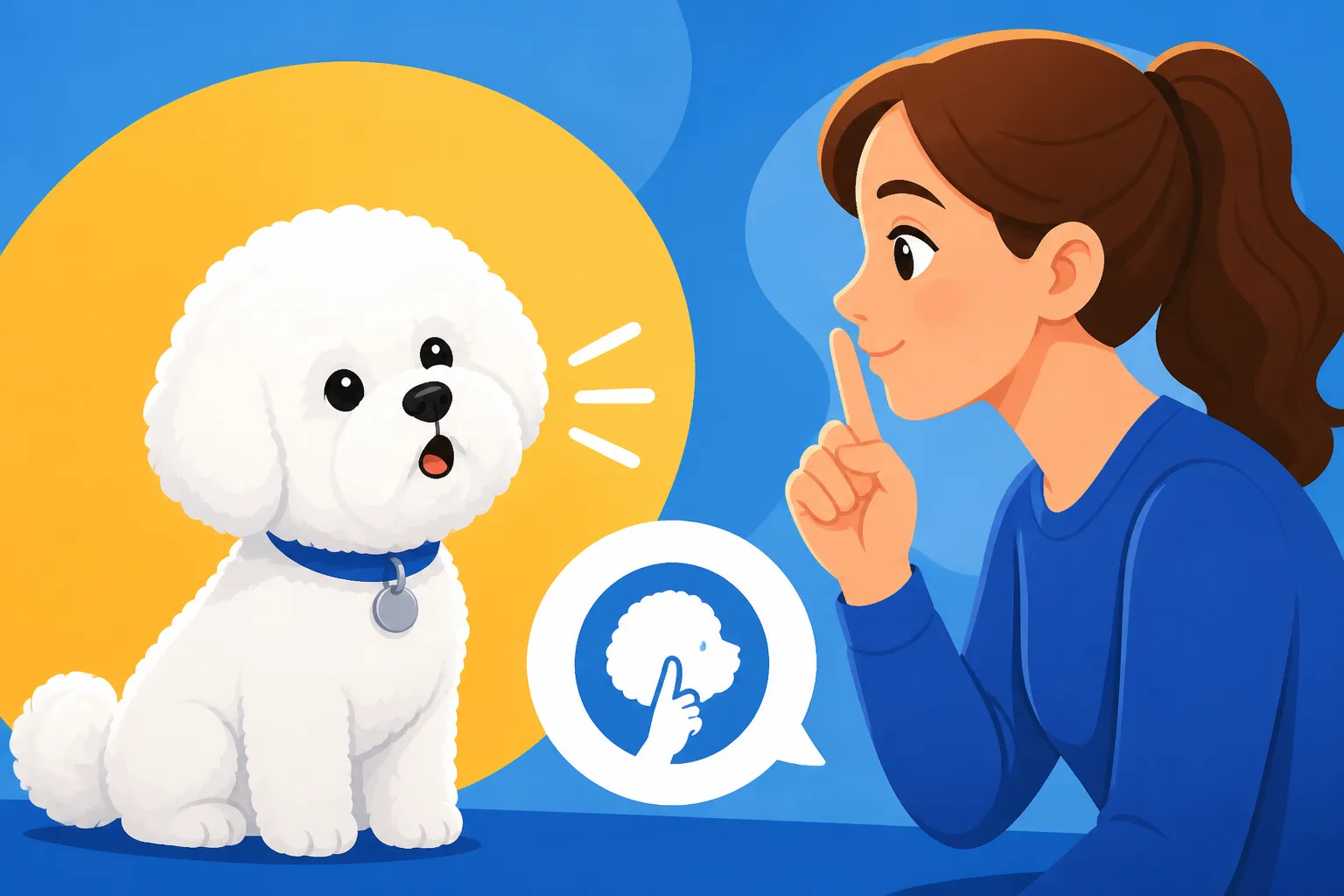
- Introduce the "Quiet" Cue: As soon as your Bichon barks (just once or twice, don't let it escalate), immediately place a high-value treat right in front of their nose. They'll likely stop barking to sniff the treat. The instant they are silent, say "Quiet!" (or your chosen cue), then praise and give them the treat.
- Timing is Everything: The key here is the timing. You must reward the exact moment they become silent. If you wait too long, they might bark again, and you'll have missed your window. The goal is for them to associate the disappearance of the treat (which makes them stop barking) with your "Quiet!" cue, followed by the appearance of the treat as a reward for their silence.
- Repeat, Repeat, Repeat: Practice this sequence in short, frequent sessions, ideally 2-3 minutes long, several times a day. You want to build a strong association. Remember, Whether Short Sessions Suit a Bichon Frise is usually a yes; their attention spans are better managed with quick, engaging bursts of training. Initially, don't worry about how long they stay quiet, just that they stop barking the moment the treat appears.
Gradually Extending the Period of Silence
Once your Bichon consistently stops barking when you put the treat to their nose and say "Quiet!", it's time to increase the duration of their silence. This is where patience really comes into play.
- Delay the Reward: Start by asking for just a second of silence after your "Quiet!" cue. Say "Quiet!", wait one second while they are silent, then praise and treat.
- Incrementally Increase Time: Gradually increase the duration. If they can do one second, try two. Then three. If they bark before you can reward them, that's okay! Just reset, trigger another bark, and go back to a duration they can manage successfully. For example, if they fail at three seconds, go back to two. You want to set them up for success.
- Use a Marker Word: A marker word like "Yes!" or a clicker can be incredibly helpful here. As soon as they are silent for the desired duration, say "Yes!" (or click) then give the treat. This precisely marks the moment of correct behavior.
- Stay Positive: Keep your tone upbeat and encouraging. This should be a fun and rewarding experience for your Bichon, not a frustrating one. The goal is to build their confidence in understanding what "quiet" means and that it leads to good things.
Generalizing Across Locations and Distractions
A cue isn't truly learned until your dog can perform it in various environments and with different distractions. Just because your Bichon is quiet in the living room doesn't mean they'll be quiet when the doorbell rings, or at the park. This is the stage where you make the "quiet" cue practical in real-world scenarios. It's truly amazing How Fast a Bichon Frise Learns a New Cue once they understand the game!
- Change Locations: Begin practicing in different rooms of your house. Start with low-distraction environments (e.g., a quiet bedroom), then move to slightly more distracting ones (e.g., the kitchen while someone is preparing food), and eventually near windows or doors.
- Introduce Mild Distractions: Once they're good in different rooms, start adding mild distractions. For instance, have someone walk past a window without knocking, and then ask for "Quiet!" Or, play a recording of a doorbell at a low volume. The goal is to gradually expose them to the triggers they usually bark at, but in a controlled way where you can still set them up for success.
- Practice with Real-Life Triggers (Controlled): When they are doing well with mild distractions, you can move to more realistic scenarios. Have a family member lightly knock on the door or briefly walk past the window, then immediately use your "Quiet!" cue. This teaches them to respond to the cue even when a trigger is present.
- Maintain High-Value Rewards: In highly distracting or challenging situations, make sure your treats are extra high-value – think small pieces of cooked chicken, cheese, or specialized training treats. The higher the distraction, the more motivating the reward needs to be. This helps ensure that the reward for being quiet outweighs the perceived reward of barking at the distraction.
Troubleshooting and Refinement: When Training Gets Tricky
Even with the best intentions and a solid plan, training isn't always a straight line. There will be days when your Bichon seems to forget everything, or when a particular trigger is just too exciting to ignore. This section will help you navigate those bumps in the road and refine your "quiet" cue.
Addressing Resistance and What Not to Do
It's tempting, when your Bichon is barking relentlessly, to shout "QUIET!" louder and louder. However, this often backfires. To your dog, you might just sound like you're barking with them, reinforcing their behavior. Or, it can scare them, leading to a shutdown rather than genuine learning. Yelling, punishing, or using physical deterrents not only damages your bond but also fails to teach your dog what you want them to do instead. Remember, we're building a foundation of positive communication, not fear.
A common question is Whether a Bark Collar Belongs on a Bichon Frise. While some owners might consider them out of desperation, most positive reinforcement trainers and behaviorists strongly advise against them. Bark collars, whether they use static correction, citronella spray, or vibration, suppress barking through discomfort or fear. They don't teach your dog to be quiet; they just teach them that barking can lead to unpleasant sensations. This can lead to increased anxiety, fear of specific sounds (like the doorbell), or even redirected aggression. Instead, focus on positive methods that teach your dog a clear, desirable alternative behavior.
If your Bichon is resisting the "quiet" cue, go back to basics. Are you using high-value enough treats? Are your training sessions too long? Is the environment too distracting? It’s often a matter of breaking the steps down further, making it easier for them to succeed, and ensuring the reward for quiet is more appealing than the urge to bark. Sometimes, simply ignoring attention-seeking barks (while making sure all their needs are met) and only rewarding silence can be incredibly effective. Just be prepared for an "extinction burst" where the barking might get worse before it gets better, as they try harder to get your attention.
Maintaining Consistency and Preventing Relapses
Consistency is the absolute bedrock of successful dog training, especially with a "quiet" cue. If one family member diligently practices the cue, but another lets the Bichon bark freely, your dog will be confused and progress will be slow or non-existent. Everyone in the household needs to be on the same page, using the same cue, the same rewards, and the same expectations. This includes visitors too; explain your training process to them so they can help reinforce it.
Relapses are a normal part of any training journey. Don't get discouraged if your Bichon suddenly starts barking more after a period of improvement. This can happen for many reasons: a new, exciting stimulus, a change in routine, or simply testing boundaries. When a relapse occurs, don't panic. Go back to a simpler stage of the training where your dog was consistently successful. Re-establish the "bark, quiet, reward" sequence in a low-distraction environment. Then, slowly reintroduce the more challenging elements.
Think of it like building a muscle. You train, you get stronger, but if you stop exercising, you lose some of that strength. Regular, short practice sessions, even after your Bichon has mastered the cue, are crucial for maintenance. Make "quiet" a part of your daily interactions, practicing it a few times a day in different situations to keep it sharp and reinforce their understanding.
Incorporating "Quiet" into Daily Life and Advanced Scenarios
Once your Bichon understands the "quiet" cue in various settings, the next step is to integrate it seamlessly into your daily life, especially for those challenging moments. This is where you connect the training to specific problem behaviors.
For example, if the doorbell is a major trigger, practice a structured routine. When the doorbell rings (or you simulate it):
- Allow one or two alert barks (acknowledging their alarm).
- Immediately say "Quiet!" and present a treat to their nose.
- As soon as they're silent, praise and give the treat.
- After they've been quiet for a few seconds, guide them to a designated "place" (like their bed or mat) with another treat.
- Reward them for staying on their place quietly while you answer the door.
This teaches them a complete alternative behavior: "Alert, then be quiet, then go to your spot, then relax." You're not just stopping the barking; you're replacing it with a desirable action. This comprehensive approach transforms their initial alert into a structured response, rather than an uncontrolled outburst. This structured approach helps manage behaviors like Whether a Bichon Frise Barks at Delivery Drivers.
You can also combine "quiet" with other commands like "sit," "stay," or "down" to create a calm routine. For instance, when a dog walks past outside, you can ask for "Sit," then "Quiet," then reward. This gives them a clear job to do instead of barking. The more alternative behaviors you teach them, the more tools they have to manage their reactions, and the calmer your home will be.
The Long-Term Rewards: A Harmonious Home with Your Bichon
Successfully teaching your Bichon Frise a "quiet" cue isn't just about reducing noise; it's about fostering a deeper understanding and trust between you and your dog. It creates a more harmonious home environment for everyone, enhancing your quality of life and strengthening your bond.
Ongoing Practice and Reinforcement
Training is never truly "done." Like any skill, the "quiet" cue needs ongoing practice and reinforcement to stay sharp. Make it a habit to work on it occasionally, even when your Bichon is behaving perfectly. This could be as simple as practicing the "Speak, Quiet, Treat" routine once a week, or asking for "quiet" during a low-stakes moment when they might normally vocalize, like hearing a distant siren.
Vary your rewards too. While food treats are excellent for initial learning, eventually you can start mixing in praise, a favorite toy, or even a quick game of fetch as a reward for being quiet. This helps keep the motivation high and prevents your Bichon from becoming solely dependent on food for compliance. Remember, a Bichon Frise remains quite playful even in their later years, as seen in topics like Whether a Bichon Frise Still Plays at Twelve, so utilizing play as a reward can be very effective throughout their life.
The goal is for the "quiet" cue to become a natural, ingrained response. The more consistently you practice and reinforce, the more automatic their calm response will be. This long-term commitment will pay dividends in a relaxed, enjoyable companionship with your furry friend. It's about maintaining a polite conversation with your dog, where both of you understand the cues and expectations.
Knowing When to Seek Expert Guidance
Sometimes, despite your best efforts, barking issues can be deeply ingrained or stem from complex behavioral problems like severe separation anxiety or reactivity. If you're finding yourself consistently frustrated, seeing little to no progress, or if your Bichon's barking is accompanied by other concerning behaviors (like aggression, destructiveness, or intense fear), it's time to call in a professional.
A certified professional dog trainer or a veterinary behaviorist can assess your specific situation, identify underlying causes for the barking, and develop a customized training plan. They can observe your dog's body language, evaluate environmental factors you might have missed, and provide hands-on guidance. They have a wealth of tools and strategies to tackle even the most stubborn barking habits.
There are also excellent online resources and programs available for more structured learning. For instance, online puppy and dog training platforms, such as those offered by BAXTER & Bella, can provide comprehensive, step-by-step guidance on various behaviors, including managing barking. These types of programs can be a great option if in-person training isn't feasible or if you prefer to learn at your own pace with professional support. Don't see seeking professional help as a failure; see it as an investment in your dog's well-being and your peace of mind.
The Ripple Effect: A Calmer Dog, a Happier Household
Imagine the quiet joy of being able to have a conversation without interruption, or the simple pleasure of a peaceful evening without constant alerts. Teaching your Bichon Frise a "quiet" cue doesn't just reduce noise; it transforms your home. A calmer dog is a happier dog, less stressed by every passing sound, and more confident in your leadership.
This reduction in stress extends to you, the owner, as well. You'll feel less frustrated, more relaxed, and your bond with your Bichon will deepen as you both learn to communicate more effectively. Guests will feel more comfortable, and you won't dread the mail delivery anymore. The benefits of a well-trained, quiet Bichon are immense, creating a more harmonious living environment for everyone. It can even open doors to new experiences, as a calm and well-mannered Bichon might be able to achieve things like Whether a Bichon Frise Makes a Therapy Dog, showcasing their wonderful temperament to a wider audience.
It's about empowering your Bichon to be their best self – a cheerful, loving companion who knows when to be vocal and, more importantly, when it's time to enjoy the quiet moments with you.
Disclaimer
This article is for general informational purposes only and does not constitute professional advice. Laws, prices and regulations vary by location and change over time. Consult a qualified professional for guidance on your specific situation.