Whether a Bichon Frise Growls at Bigger Dogs
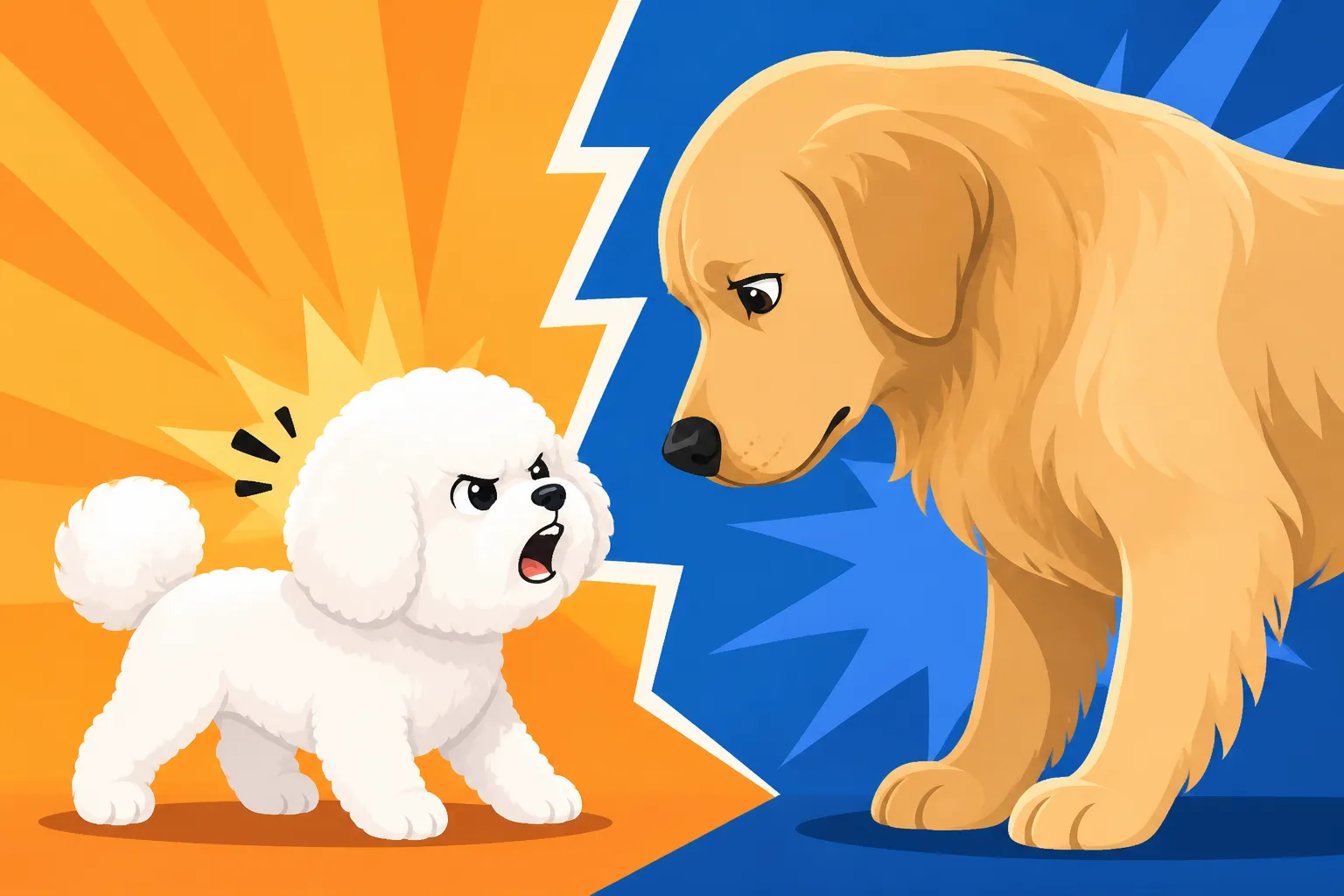
It can be quite startling, even a little embarrassing, when your adorable, fluffy Bichon Frise, usually the epitome of sweetness, suddenly unleashes a surprisingly fierce growl at a much larger dog passing by on your walk. You might wonder if your charming companion secretly harbors a Napoleon complex, or if there's something you're missing about their usually cheerful demeanor. This guide will delve into the reasons behind this behavior, explore what your Bichon might be trying to communicate, and provide actionable strategies to help your little cloud feel safer and behave more confidently around their bigger canine counterparts.
Understanding the Roots of the Growl: More Than Just "Small Dog Syndrome"
Many people are quick to label small dogs who act aggressively towards larger dogs as having "small dog syndrome." While it's true that some small dogs might develop compensatory behaviors, this blanket term often oversimplifies a complex issue. A growl is a form of communication, a warning signal, and understanding why your Bichon is choosing this particular form of expression is key to addressing it effectively. It’s rarely about them thinking they are a giant dog; more often, it’s about fear, insecurity, or a lack of appropriate socialization.
Fear and Insecurity: A Big World for a Little Dog
Imagine walking through a crowd where everyone towers over you, and many of them move quickly and unpredictably. That's often the world from a Bichon's perspective. Larger dogs can seem intimidating purely due to their size, their louder barks, or their more boisterous play styles. A growl, in this context, is not an act of aggression but a defensive plea. It's your Bichon saying, "Please, stay away! I feel threatened!" This is especially common if your Bichon had a scary encounter with a large dog when they were younger, or if they haven't had enough positive exposure to bigger canines in a controlled way.
A Bichon, with their delicate build and relatively small stature, might feel particularly vulnerable. Their instinct for self-preservation kicks in, and rather than fleeing, which might not be an option on a leash, they might choose to "stand their ground" with a vocal warning. It's their way of trying to create distance and prevent a perceived threat from getting closer. This isn't stubbornness, but a deeply ingrained survival mechanism, which makes perfect sense when you consider Whether a Bichon Frise Is Fragile Around Children.
Lack of Early Socialization with Varied Breeds
Early and positive socialization is crucial for any puppy, but it's especially important for breeds like the Bichon Frise who can sometimes be prone to timidity if not properly introduced to the world. If your Bichon puppy primarily interacted with other small dogs or humans, they might not have learned how to interpret the body language of larger dogs. A bouncy golden retriever or a playful German shepherd, whose intentions are entirely friendly, might be misconstrued as aggressive or overwhelming by a Bichon who hasn't learned the nuances of big dog play.
Think about it: a polite sniff from a large dog can feel like a giant maw descending on your tiny pup. A boisterous play bow can look like an imminent pounce. Without the right experiences, your Bichon won't have built up a mental library of what is normal and safe in interactions with dogs of different sizes. This isn't a fault in their temperament, which typically dictates The Merry Temperament the Bichon Frise Standard Demands, but a gap in their early learning experiences that can be addressed.
Resource Guarding or Owner Protection
Sometimes, the growl isn't solely about the other dog, but about what the other dog represents. If your Bichon is on your lap, or you’re holding them, and a larger dog approaches, the growl might be a form of resource guarding – protecting you, their most valuable resource. They might perceive the approaching dog as a threat to their access to you, or even to a favorite toy or treat they happen to be carrying.
This scenario is less about fear of the big dog itself and more about possessiveness. It's their way of saying, "This human is mine, back off!" This behavior can escalate if not managed, and it’s important to understand that while it might seem endearing that they’re "protecting" you, it's actually an anxiety-driven behavior that needs gentle, consistent guidance. A similar possessiveness can also manifest if a Bichon guards its sleeping spot or even its food bowl, a common topic of discussion in training groups.
Decoding the Growl: What Your Bichon is Really Saying
A growl isn't just a growl; it's a nuanced vocalization that can carry different meanings depending on the context, body language, and intensity. Learning to "read" your Bichon's growl can help you respond appropriately and understand their emotional state. Ignoring it or punishing it can suppress the warning signal without addressing the underlying emotion, potentially leading to a more sudden, unprovoked snap or bite.
Different Growls, Different Meanings
A low, rumbling growl with a stiff body and tail tucked might signify deep fear and a desire for distance. They might be trying to make themselves seem bigger or more intimidating while internally feeling very vulnerable. This is a clear "stay away" signal, and it needs to be respected. On the other hand, a short, sharp growl followed by a lunge, with hackles raised, could indicate a more assertive, frustrated, or territorial response.
Consider the classic "Bichon Blitz" or zoomies, a burst of energetic running that shows their joy. A growl during a blitz is very different from a tense growl on a walk. The context and your dog's overall demeanor tell you everything. If your Bichon is usually a very playful dog, you might even hear playful growls during a game of tug-of-war, which is entirely normal and not a cause for concern.
| Growl Type | Body Language | Emotional State | What to Do |
|---|---|---|---|
| Fear/Defensive Growl | Tucked tail, lowered body, lip curled, avoidance | Scared, anxious, vulnerable | Create distance, offer comfort, build confidence |
| Frustration Growl | Stiff body, raised hackles, direct stare, lunging | Annoyed, overstimulated, territorial | Redirect attention, manage environment, reinforce calm behavior |
| Warning Growl | Stiff body, direct eye contact, showing teeth slightly | Assertive, boundary setting | Acknowledge, create space, don't punish (it's communication) |
| Play Growl | Loose body, play bow, wagging tail, bouncy movements | Happy, excited, engaged | Continue play, ensure it doesn't escalate into genuine aggression |
Identifying Triggers: When and Where Does It Happen?
Pay close attention to the specific circumstances surrounding your Bichon's growls. Does it only happen on walks in a busy park, or also in your backyard when a neighbor's dog barks? Does it happen when they're on the leash, or also off-leash? Is it only with certain breeds, or any dog larger than them? Knowing the triggers is crucial for developing an effective management plan.
For example, if your Bichon growls only when on leash and encountering another leashed dog, it might be "leash reactivity." This is often a combination of frustration (because they can't greet or investigate properly) and a perceived lack of escape route, which amplifies fear. If it happens when they're off-leash in a dog park, it might indicate poor social skills or feeling overwhelmed by too many dogs at once. Observing patterns is a powerful tool in understanding your dog's needs.
Strategies for Managing Growling Behavior
Once you understand why your Bichon is growling, you can implement targeted strategies to help them feel more secure and respond more calmly. This isn't about "fixing" your dog, but about teaching them more appropriate coping mechanisms and building their confidence. Patience, consistency, and positive reinforcement are your best friends here.
Counter-Conditioning and Desensitization
This is a powerful technique that involves changing your dog's emotional response to a trigger. The goal is to turn a negative association (big dog = scary) into a positive one (big dog = treats!). Start at a distance where your Bichon notices the large dog but doesn't react with a growl. As soon as they see the big dog, immediately give them a high-value treat. Repeat this over and over. The moment the big dog disappears, the treats stop. Over time, your Bichon will start to associate the sight of a big dog with good things happening.
Gradually, as your Bichon becomes more comfortable, you can decrease the distance, always staying below their "threshold" – the point where they start growling. This process takes time, sometimes weeks or months, and it requires consistency. Remember, you're not trying to force them to like big dogs, just to tolerate their presence calmly. Many online training platforms, such as BAXTER & Bella, offer structured programs that guide owners through these exact techniques, providing valuable resources for managing reactivity.
Leash Handling and Management
Effective leash handling is vital. A tight leash can actually increase your dog's anxiety and make them more likely to react. It communicates tension from you, and it prevents them from using natural canine body language cues. Aim for a loose leash, allowing your Bichon some freedom of movement. If you see a trigger approaching, gently guide your Bichon to the side, create distance, or distract them with a favorite toy or treat before they have a chance to react.
Consider using a front-clip harness or a head halter, which can give you more control without putting pressure on their throat. Many options are readily available on platforms like Amazon. These tools can help you steer your Bichon away from triggers more easily, making walks less stressful for both of you. It's also worth noting that whether a Bichon Frise needs a harness not a collar is a common discussion for various reasons, including better control and preventing tracheal collapse.
Building Confidence Through Positive Experiences
Confidence is key to reducing fear-based growling. Enroll your Bichon in a positive reinforcement-based obedience class. Even if they know basic commands, the controlled environment and exposure to other dogs (and people) can be incredibly beneficial. Focus on teaching them fun tricks and engaging in activities they enjoy, like scent work or puzzle toys, to build their self-esteem. A confident dog is less likely to feel the need to resort to defensive behaviors.
Arrange controlled, positive interactions with calm, larger dogs you know and trust. Start with very short, supervised greetings in a neutral territory. Keep these interactions positive and end them before your Bichon shows any signs of stress. The goal is to show them that not all big dogs are a threat. This gradual exposure can slowly rewire their brain to see larger dogs as less intimidating.
Preventing Future Incidents and Building a Harmonious Life
Managing growling behavior is an ongoing process, but with dedication, you can significantly reduce its frequency and intensity. The ultimate goal is to help your Bichon feel safe and secure, fostering a calm and confident companion.
Consistent Training and Reinforcement
Regular practice of basic obedience commands is foundational. A reliable "sit," "stay," and "come" can be invaluable tools for managing encounters with other dogs. When your Bichon is focused on you and a known command, they are less likely to be preoccupied with a potential trigger. Always reward calm behavior generously. If your Bichon sees a big dog and doesn't growl, even if they're looking at it intently, mark that moment with praise and a treat. That's exactly the behavior you want to reinforce.
Remember that What a Bichon Frise Will Work For often involves high-value treats and enthusiastic praise. Find out what truly motivates your dog and use it strategically during training sessions. The more you reinforce calm, the more often that calm behavior will occur naturally.
Environmental Management and Safe Spaces
Sometimes, the best solution is simply to avoid situations that trigger your Bichon's growling. If certain parks or walking routes are always overwhelming, find quieter alternatives. If your Bichon reacts strongly to dogs passing by your window, consider using privacy film or curtains during peak dog-walking hours. Create a safe, quiet space in your home where your Bichon can retreat if they feel stressed or overstimulated.
This isn't about coddling them but about setting them up for success. By controlling their environment, you reduce the opportunities for negative experiences and create more chances for positive reinforcement of calm behavior. This might mean adjusting your schedule or even exploring new walking spots, but the peace of mind for both you and your Bichon is worth it.
When to Seek Professional Help
If your Bichon's growling is severe, escalating, or if you feel overwhelmed, don't hesitate to seek help from a certified professional dog trainer or a veterinary behaviorist. They can provide a personalized assessment of your dog's behavior, identify underlying issues you might have missed, and develop a tailored training plan. Aggressive behavior, even in a small dog, can be serious, and professional guidance ensures you're using the most effective and safest methods.
A professional might also recommend specific tools or techniques, or even suggest looking into potential medical causes for the behavior, as pain or discomfort can sometimes manifest as aggression. For instance, sometimes dogs growl because they are experiencing discomfort. While not directly linked to growling at other dogs, general health concerns like Slipping Kneecaps in a Bichon Frise could cause a dog to be more irritable or defensive if they anticipate being bumped or hurt. There are numerous excellent resources available for finding qualified professionals. Just as BAXTER & Bella provides online learning, many local trainers offer in-person classes and one-on-one consultations.
The table below summarizes some key do's and don'ts when managing growling behavior:
| Do's | Don'ts |
|---|---|
| Identify and understand triggers | Punish the growl (it's communication) |
| Use high-value treats for counter-conditioning | Force interactions or push your dog past their comfort zone |
| Create distance from triggers | Use harsh corrections or intimidating training methods |
| Build your dog's confidence | Allow off-leash greetings with unknown large dogs |
| Seek professional guidance if needed | Ignore the behavior, hoping it will go away |
| Maintain a loose leash | Keep the leash tight, adding to tension |
Ultimately, your Bichon's growl is a plea for understanding and support. By patiently working with them, respecting their boundaries, and building their confidence, you can transform those stressful encounters into calmer, more enjoyable experiences for everyone. It's a journey, but one well worth taking for the well-being of your beloved fluffy companion. The First Year With a Bichon Frise Puppy is crucial for establishing good habits and positive socialization experiences that can prevent many of these issues from developing in the first place.
Disclaimer
This article is for general informational purposes only and does not constitute professional advice. Laws, prices and regulations vary by location and change over time. Consult a qualified professional for guidance on your specific situation.