Whether a Written Toilet Schedule Helps a Bichon Frise
The endless cycle of cleaning up accidents, watching your fluffy Bichon Frise with a hawk's eye, and feeling like you're stuck in perpetual puppyhood is a frustration many owners know all too well. It’s disheartening when you’ve put in so much effort, yet your sweet little companion still struggles with understanding where they're supposed to do their business. This guide dives deep into whether creating and consistently following a written toilet schedule can be the key to finally achieving reliable housetraining for your beloved Bichon, transforming frustration into a sense of accomplishment for both of you.
The Unique Housetraining Challenges of a Bichon Frise
Let’s be honest, Bichon Frises aren't known for being the easiest dogs to housetrain. Many new owners quickly discover that their charming, playful pup comes with a surprising challenge in this department. It’s not just a rumor; there are real, understandable reasons why this delightful breed can make you feel like you're going bald prematurely trying to keep your floors clean.
Why They're Notoriously Difficult
One of the biggest factors contributing to the Bichon Frise's reputation for being "hard to housetrain" is their physiology. They are small dogs, and small dogs naturally have smaller bladders. This isn't just an excuse; it's a biological reality. A tiny bladder means more frequent trips outside, especially for a puppy whose muscles aren't fully developed. What might be an acceptable holding time for a larger breed simply isn't feasible for a Bichon. You might think an hour is fine, but for a young Bichon, that could be pushing their limits. This often leads owners to underestimate just how often their pup actually needs to go out, resulting in accidents that could have been avoided. This topic is explored in more detail in Why a Bichon Frise Is Famously Hard to Housetrain.
Beyond their small bladder size, Bichons are also highly intelligent and easily distracted. Picture this: you take your puppy outside, ready for them to relieve themselves. But oh, what's that rustling leaf? A bird chirping? A butterfly fluttering by? Suddenly, the urgent need to pee takes a backseat to the fascinating world around them. They might sniff around, play for a bit, and then come back inside, only to relieve themselves on your rug five minutes later because the distraction is gone and the urge returns. This isn't stubbornness; it's a combination of puppy brain and a high level of curiosity. Compounding this, some Bichons are simply not great at giving clear signals that they need to go out. They might quietly wander off, rather than barking at the door or pacing anxiously, leaving you completely unaware until it's too late. The idea that Whether a Bichon Frise's Small Bladder Is the Problem is a common misconception that needs to be properly understood.
When Accidents Aren't Just "Bad Training"
It’s easy to blame yourself or your dog when housetraining isn’t going well, but it's crucial to consider that sometimes, accidents aren't just a sign of incomplete training. There could be underlying medical issues at play that mimic housetraining problems, making a consistent routine feel impossible. Urinary tract infections (UTIs) are a prime example. These can cause sudden onset of frequent urination, straining, or accidents in a previously housetrained dog. The discomfort and increased urge to go can completely derail any progress you’ve made, making your Bichon seem like they’ve forgotten all their training overnight.
Even more serious, Bichons are unfortunately predisposed to bladder stones, particularly calcium oxalate stones. These painful formations can cause chronic irritation, leading to increased frequency, straining, and even blood in the urine. A dog suffering from stones can’t hold their urine effectively, no matter how well-trained they are. They might have accidents because their bladder is constantly irritated, or because a stone is partially blocking their urethra, causing urgency. If your Bichon is frequently squatting with little or no output, or seems unusually urgent, it's vital to rule out medical conditions before assuming it's a training issue. Understanding How Stones Wreck a Bichon Frise Housetraining Routine is paramount for Bichon owners. Sometimes, Whether Frequent Squatting Means Stones Not Training is a question that needs an immediate veterinary answer.
Why a Written Toilet Schedule is Your Best Ally
Given the specific challenges that come with housetraining a Bichon Frise, a haphazard approach simply won’t cut it. This is where a written toilet schedule comes into its own, offering a structured, systematic way to guide your dog towards reliable potty habits. It’s not just about getting them outside; it’s about creating an environment where success is practically inevitable.
Bringing Structure to a Chaotic Process
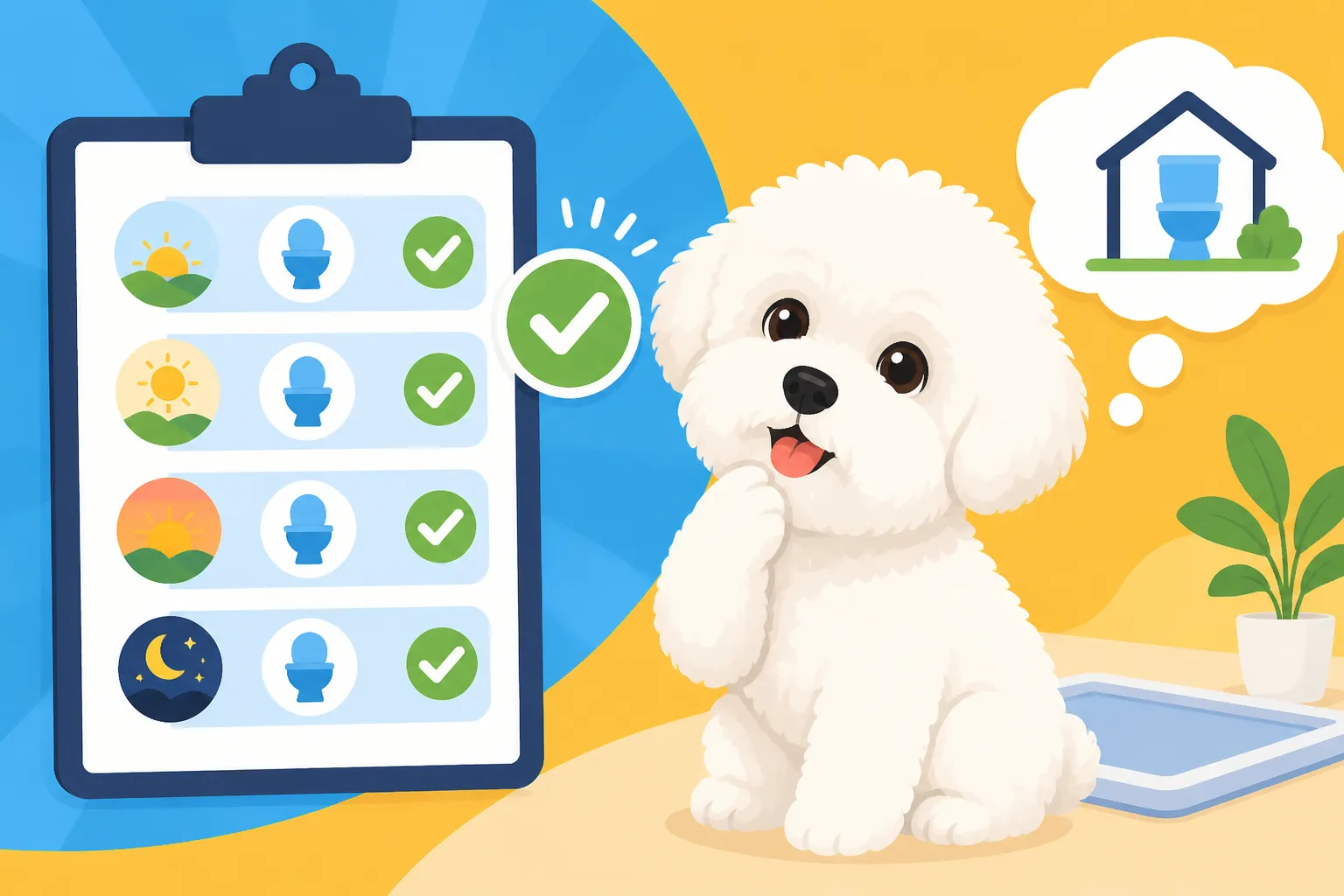
Think about it: dogs thrive on routine and predictability. They don't understand our human concepts of "later" or "when I get around to it." What they do understand is cause and effect. If they consistently go outside at specific times and are rewarded for it, they quickly learn to associate those times and locations with relieving themselves. A written schedule ensures that you are consistent, which is the cornerstone of effective housetraining. Without it, it’s easy to get distracted, push back a potty break by "just five more minutes," and then find yourself cleaning up an accident.
Many owners, especially those new to small breeds, often underestimate just how frequently a young Bichon needs to go out. A schedule forces you to acknowledge and adhere to these frequent needs, especially during the critical puppy stages. It takes the guesswork out of the equation and provides a clear framework for both you and your dog. When you know, for example, that it’s 7 AM, and the schedule says "potty break," there's no debate, no waiting. You grab the leash and go. This predictability reduces anxiety for your dog because they know when their next opportunity to relieve themselves will be, and it builds good habits for you as the owner. The commitment to a consistent routine is truly The Toilet Routine That Finally Works on a Bichon Frise.
Setting Your Bichon Up for Success
The beauty of a written toilet schedule is that it proactively prevents accidents, rather than reacting to them. By taking your Bichon out before they have to go, you create maximum opportunities for them to succeed outdoors. Each successful outdoor potty break is an opportunity for positive reinforcement – praise, a small treat, a happy voice. These positive experiences build a strong association in your dog's mind: "I go potty outside, and good things happen!" This is far more effective than trying to scold or correct them for an indoor accident, which often only confuses or frightens them.
A consistent schedule also helps you, the owner, become more attuned to your dog's natural rhythms. You'll start to notice patterns: they always need to go within 15 minutes of waking up, or right after a particularly vigorous play session. By documenting these events, you gain a deeper understanding of your individual dog’s needs, allowing you to fine-tune the schedule for optimal results. It moves you from a reactive approach ("Oh no, an accident!") to a proactive one ("It's time for a potty break!"). This proactive approach is fundamental to long-term success.
Tracking Progress and Spotting Red Flags
One of the often-overlooked benefits of a written schedule is its ability to serve as a tangible record of your dog's progress. Imagine looking back at a week's worth of entries and seeing a clear reduction in indoor accidents. This provides invaluable motivation, especially when you feel like you're not making headway. It's proof that your efforts are paying off, even if it feels slow at times. You can see when you might have slipped up, or if a particular time of day consistently results in an accident.
Furthermore, this detailed log can be an indispensable tool if you need to consult your veterinarian or a professional dog trainer. If your Bichon continues to have accidents despite a strict schedule, your notes can help identify potential medical issues more quickly. For example, if you see that your otherwise perfectly housetrained dog suddenly needs to go out every hour and is having accidents, your vet can use that data to investigate a UTI or stones more efficiently. This documented history helps you distinguish between a training challenge and a health concern, ensuring your Bichon gets the right kind of help when they need it.
Crafting and Implementing Your Bichon's Custom Schedule
Creating an effective toilet schedule for your Bichon Frise isn't about setting an impossible, military-style routine. It's about designing a realistic, consistent plan that accommodates your dog's needs and your lifestyle. The key is to start with a foundation of frequent opportunities and then gradually adjust as your Bichon matures and demonstrates better bladder control.
Key Elements of an Effective Schedule
At its core, a good schedule revolves around predictable timing and frequency. For a young Bichon Frise puppy, you're looking at very frequent outings. A common guideline is to take them out every 30 minutes to an hour when they are awake and active, and immediately after certain events. These critical times include:
- First thing in the morning: As soon as their paws hit the floor.
- Last thing at night: Right before you go to bed.
- After waking from a nap: Every single time.
- After eating or drinking: Usually within 15-20 minutes.
- After vigorous play sessions: Excitement can stimulate the bladder.
- Before you leave the house and immediately upon returning.
It's also vital to designate a specific potty spot outside. Taking them to the same area helps them associate that location with relieving themselves. When they go, offer immediate, enthusiastic praise and a small, high-value treat. Keep these potty trips strictly business; avoid playing until they’ve done their job, as playtime can easily distract a Bichon. Remember that Whether a Bichon Frise Needs Waking in the Night is often a reality for young puppies, so factor that into your initial schedule.
Step-by-Step Implementation
Starting your schedule is simpler than it sounds. First, grab a notebook, a calendar, or even just a whiteboard. List out the critical times and add regular intervals in between. Don't aim for perfection immediately; aim for consistency.
- Observe and Record: For the first few days, simply write down every time your Bichon eats, drinks, naps, and most importantly, when they eliminate. Note whether it was inside or outside. This observation period helps you understand your dog’s natural rhythms.
- Create Your Draft Schedule: Based on your observations, sketch out a draft schedule. For a young puppy, this might mean an outing every hour on the hour, plus the critical times mentioned above.
- Leash Your Bichon for Every Outing: Even if you have a fenced yard, using a leash ensures you are present, can praise immediately, and prevents your Bichon from getting distracted and forgetting to go. Walk them directly to their designated potty spot.
- Praise and Reward: The moment your Bichon finishes, say "Good potty!" in an upbeat voice and give them a treat. Don't wait until you're back inside; the reward needs to be immediate to create the strong association.
- Clean Accidents Thoroughly: If an accident happens, don't scold. It's too late. Simply clean it up thoroughly using an enzymatic cleaner. Products available on Amazon, specifically formulated to break down pet odors, are crucial for preventing your Bichon from returning to the same spot. Whether Enzyme Cleaner Matters for a Bichon Frise is not just about smell, it's about eliminating lingering scents that attract your dog back to the scene of the crime.
- Use Management Tools: When you can't actively supervise your Bichon, use a crate or a small, puppy-proofed area. Whether Crate Training Works on a Bichon Frise is generally a resounding yes, as most dogs are reluctant to soil their sleeping area. For those who prefer alternatives, Whether a Bichon Frise Learns to Use a Pad can be a valid question, and while pads have their place, relying too heavily on them can sometimes slow outdoor training. Many online resources, like those offered by BAXTER & Bella, provide comprehensive puppy training plans and support that can guide you through setting up and adhering to a successful schedule, including tips on managing those unsupervised moments.
Adjusting and Adapting Over Time
Your Bichon’s toilet schedule won't be static. As they mature and gain better bladder control, you'll gradually be able to extend the time between potty breaks. For example, a young puppy might need to go out hourly, but by six months, they might comfortably hold it for 3-4 hours during the day. The written schedule helps you identify when these extensions are possible without risking accidents.
Be prepared for regressions. Housetraining isn't always a linear path, especially during adolescent phases or if there's a change in routine. If your previously housetrained Bichon starts having accidents, revisit your original strict schedule for a few days or weeks. Shorten the intervals, increase supervision, and reinforce the positive associations with outdoor pottying. It's also important to remember that Whether an Older Bichon Frise Can Still Be Housetrained is often yes, but it may take more patience and a return to very consistent scheduling. Pay close attention to Whether a Bichon Frise Signals When It Needs Out – some dogs will start to paw at the door or whine, while others might give very subtle cues you'll learn to recognize over time.
Here's a sample daily schedule for a young Bichon Frise puppy to get you started:
| Time | Activity | Notes |
|---|---|---|
| 7:00 AM | Wake up, immediate potty break | Leashed to designated spot, praise/treat for success. |
| 7:15 AM | Breakfast | Supervised eating. |
| 7:30 AM | Potty break | Crucial after eating/drinking. |
| 7:30-8:30 AM | Play/Training/Supervised free time | Keep an eye out for sniffing, circling. |
| 8:30 AM | Potty break | Proactive outing. |
| 8:30-9:30 AM | Naptime in crate (or safe confined area) | Most puppies will nap after play. |
| 9:30 AM | Wake up, immediate potty break | Again, essential after sleeping. |
| 9:45-10:45AM | Play/Supervised free time | Continue active supervision. |
| 10:45 AM | Potty break | Proactive outing. |
| 10:45 AM | Lunch (if applicable for young pups) | |
| 11:00 AM | Potty break | After food/water. |
| 11:00 AM-12:30 PM | Play/Supervised free time | Be ready for mid-session breaks. |
| 12:30 PM | Potty break | Regular interval. |
| 12:45-2:30 PM | Naptime in crate | Longer nap if possible. |
| 2:30 PM | Wake up, immediate potty break | Post-nap again. |
| 2:45-3:45 PM | Play/Supervised free time | |
| 3:45 PM | Potty break | |
| 4:00 PM | Dinner | |
| 4:15 PM | Potty break | After eating/drinking. |
| 4:30-6:00 PM | Play/Training/Supervised free time | |
| 6:00 PM | Potty break | |
| 6:00-8:00 PM | Quiet play/Wind-down time | Less vigorous activity before bed. |
| 8:00 PM | Potty break | Last chance before longer stretch. |
| 8:15-9:30 PM | Crate/quiet time with chew | Helps them settle. |
| 9:30 PM | Last potty break before bed | Final outing, praise/treat. |
| Overnight | Potty break if needed | Younger pups may need 1-2 overnight trips. Whether a Bichon Frise Needs Waking in the Night is often true. |
This schedule is a template; adjust times and frequencies based on your Bichon's age, individual needs, and your own daily routine.
Overcoming Common Housetraining Hurdles with a Schedule
Even with a perfectly planned written schedule, you’re likely to encounter a few bumps in the road. Housetraining isn't always a smooth, linear process, especially with a breed as unique as the Bichon Frise. Anticipating these hurdles and having strategies in place can make all the difference in staying consistent and successful.
Dealing with Rain, Snow, and Stubbornness
One of the most common complaints from Bichon owners is their dog's aversion to unpleasant weather. Many Bichons absolutely detest getting their paws wet or stepping out into the cold and snow. You might find your dog planting their feet firmly at the back door, giving you a look that clearly says, "No thanks, I'll hold it in here." This isn't necessarily stubbornness in the malicious sense, but often a genuine discomfort that overrides their need to go. This aversion can completely derail a schedule if not addressed.
To combat this, you can create a covered outdoor potty area. This might be a designated spot under an awning, a small pop-up tent, or even a section of your patio that's protected from the elements. The idea is to make the outdoor experience as comfortable as possible, even in less-than-ideal weather. For very resistant dogs, sometimes a temporary indoor alternative, like a real grass potty patch available through retailers like Amazon, can bridge the gap during severe weather, though the ultimate goal remains outdoor elimination. The most important thing is not to give up on the schedule, even if it means bundling up your Bichon in a little coat and going out with an umbrella. Consistency is king, even when it's raining cats and dogs. It’s important to watch out for behaviors like Whether a Bichon Frise Hides to Toilet Indoors, as this can be a sign of discomfort or a learned behavior from previous reprimands.
Crate Training and Schedules
Crate training is an incredibly powerful tool that complements a toilet schedule beautifully. The principle is simple: dogs are naturally clean animals and generally won't soil their sleeping area. By providing a properly sized crate – one just big enough for your Bichon to stand up, turn around, and lie down comfortably, but not so large they can use one end as a bathroom – you leverage this natural instinct.
When your Bichon is in their crate, they learn to hold their bladder, building muscle control over time. This makes the scheduled potty breaks outside even more effective because they'll likely have a more urgent need to go. The crate becomes a safe, den-like space for naps and quiet time, while also reinforcing the schedule by dictating when they have opportunities to eliminate. Remember, the crate is not a punishment, but a management tool. Never leave your Bichon in the crate for longer than they can reasonably hold it, especially a young puppy. Regularly taking them out of the crate directly to their potty spot, according to your written schedule, will solidify their understanding. If you're wondering Whether Crate Training Works on a Bichon Frise, the answer is almost always yes, provided it's introduced positively and used correctly.
Recognizing and Responding to Setbacks
No matter how diligent you are, accidents will happen. It’s an inevitable part of the housetraining journey. The key is how you respond to them. First and foremost, never, ever punish your Bichon for an accident after the fact. Dogs live in the moment; they won't connect your anger to something they did five minutes ago. Punishment only teaches them to fear you or to hide their accidents, making the problem worse. If you catch them in the act, a quick, sharp noise (like "Ah-ah!") to interrupt them, followed by immediately scooping them up and taking them outside to their spot, can be effective. If they finish outside, praise and treat them lavishly.
If accidents are frequent, it’s a sign that your schedule needs re-evaluation. Are the intervals too long? Is there enough active supervision when they are out of the crate? Go back to basics: shorten the time between potty breaks, increase your supervision, and perhaps limit their access to a smaller, easily cleanable area of the house. Consistency is the most crucial element during these setbacks. If you find your senior Bichon having accidents, it’s a good opportunity to consider Whether an Older Bichon Frise Can Still Be Housetrained or if medical issues might be at play, requiring a vet visit. Remember, every dog is an individual, and sometimes professional guidance from a certified dog trainer can offer tailored strategies for persistent challenges.
Disclaimer
This article is for general informational purposes only and does not constitute professional advice. Laws, prices and regulations vary by location and change over time. Consult a qualified professional for guidance on your specific situation.