Whether a Bichon Frise Cross Sheds
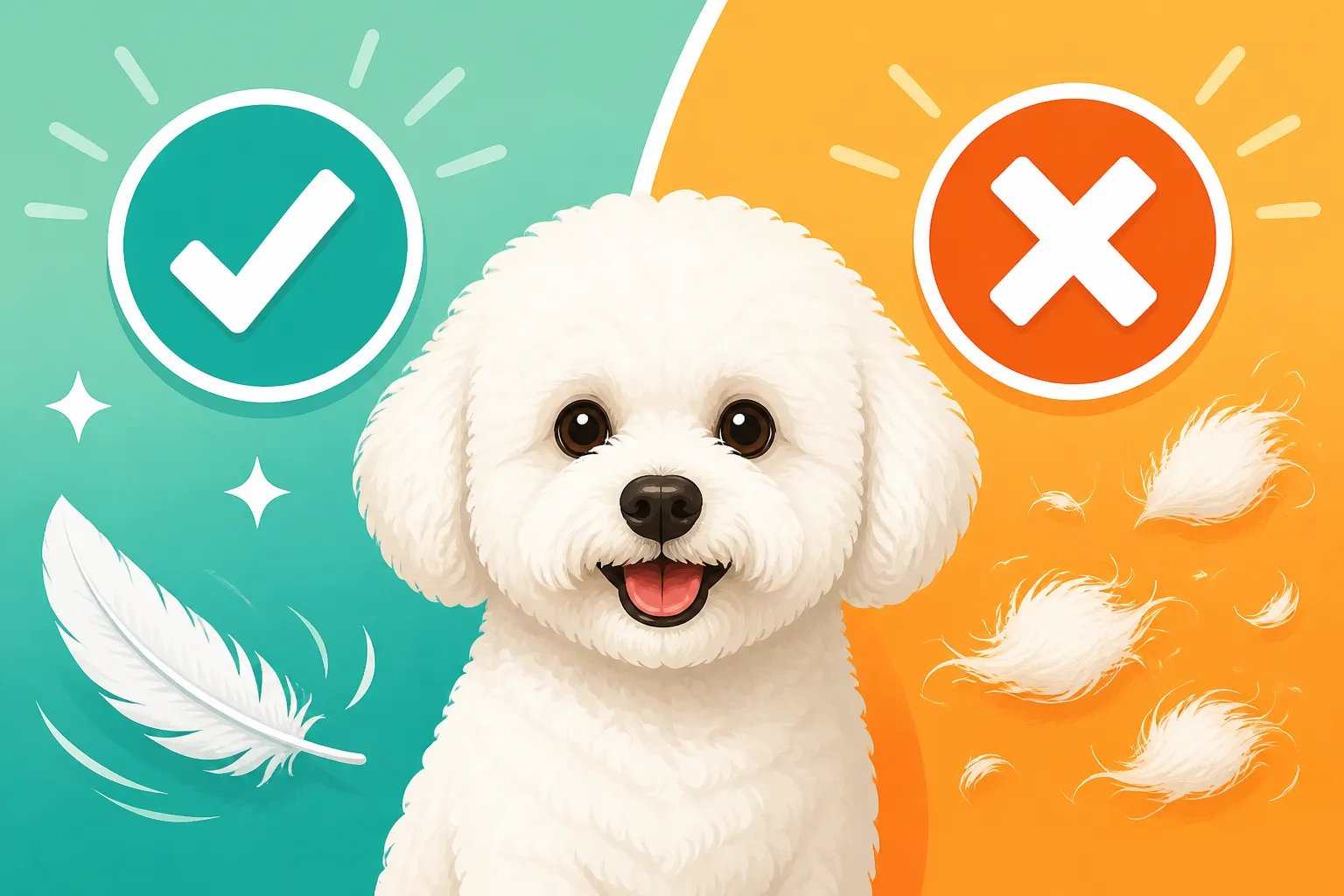
One of the biggest hopes people have when considering a Bichon Frise cross is that they'll get all the charm and cheerful personality of a Bichon, along with that famous "non-shedding" coat. It's a natural assumption, right? You want a dog that doesn't leave tumbleweeds of hair all over your furniture and clothes. But the reality of genetics in crossbreeds isn't always so straightforward, and the question of whether a Bichon Frise cross sheds is one that brings a lot of owners to their wit's end, often after they've already brought their furry friend home. This guide will dive deep into the world of Bichon Frise cross coats, exploring what makes a purebred Bichon low-shedding and how mixing with other breeds can lead to a delightful — or sometimes daunting — surprise.
Understanding the Bichon Frise Coat: The Non-Shedding Myth
Before we talk about crosses, it’s crucial to understand what makes a purebred Bichon Frise so appealing to those of us who dread shedding season. When people say a Bichon Frise is "non-shedding," it's not entirely accurate in the strictest sense. All dogs lose hair, just like humans do. The difference lies in how and when that hair is lost.
What "Non-Shedding" Really Means for a Purebred Bichon
A purebred Bichon Frise has a unique coat that's often described as a double coat, but it's very different from, say, a Labrador Retriever's. It consists of a soft, dense undercoat and coarser guard hairs. What makes it "non-shedding" in the practical sense is that their hair has a much longer growth cycle compared to many other breeds. Instead of shedding frequently and dispersing hair throughout your home, the hair that does naturally shed gets caught within the curly, dense surrounding coat. Think of it like a tangled mess that holds onto the dead hair rather than letting it fall out freely.
This characteristic is a huge relief for many allergy sufferers, as it means less dander (skin flakes attached to shed hair) flying around the house. However, it comes with a trade-off: those trapped hairs, if not regularly brushed out, quickly form mats. These mats aren't just unsightly; they can be incredibly painful for your dog, pulling on their skin and even leading to skin infections if neglected. So, while you might not be vacuuming up clumps of fur daily, you are definitely committing to a rigorous grooming schedule. We discuss this more in Why a Bichon Frise's Shed Hair Stays in the Coat.
The Purebred Bichon's Unique Hair Growth Cycle
The Bichon Frise's hair grows continuously, much like human hair. This is why they need regular haircuts from a professional groomer, typically every 4-6 weeks, to maintain their iconic powder puff look. Without these trims, their coat would grow indefinitely, becoming a long, cumbersome mop that collects debris and mats even more severely. This continuous growth is also why their hair feels so soft and why they don't have seasonal "blow-outs" like breeds with short growth cycles or those that develop thick winter coats and shed them in spring.
This continuous growth cycle is the key genetic trait that contributes to their low-shedding reputation and makes them a popular choice for people with allergies. Understanding this underlying genetic trait is absolutely vital when considering a crossbreed, because you're introducing the genes of another dog into that equation, and nature can be wonderfully, or frustratingly, unpredictable.
The Genetic Roulette of Crossbreeding: Why Predictability Goes Out the Window
This is where the dream of a completely non-shedding Bichon Frise cross can sometimes meet a harsh reality. When you breed two different dogs, you're essentially rolling the genetic dice. Unlike purebreds, where generations of selective breeding have solidified certain traits, a crossbreed inherits a mix of genes from both parents, and predicting which traits will be dominant or recessive in any given puppy is impossible.
How Dominant and Recessive Genes Influence Shedding in Mixed Breeds
Shedding is influenced by a complex set of genes. While we simplify it to "shedding" or "non-shedding," there are different types of coats (curly, wiry, smooth, double-coated) and different degrees of shedding. The "non-shedding" trait, like that of a Bichon or Poodle, is often considered a desirable characteristic that breeders try to pass on. However, if the other parent breed is a heavy shedder, their shedding genes can certainly come to the forefront.
Imagine one parent carrying a gene for low shedding (like the Bichon) and the other carrying a gene for heavy shedding (like a Golden Retriever or a Cavalier King Charles Spaniel). Each puppy in the litter receives a combination of these genes. Some puppies might inherit more of the low-shedding genes and have a coat similar to the Bichon parent. Others might inherit more of the shedding genes and resemble the shedding parent, or even have a combination that results in a coat that sheds and mats – the worst of both worlds! This is why littermates from the same parents can have vastly different coats, ranging from almost non-shedding to quite noticeably shedding. You might get a puppy that still requires frequent grooming, as detailed in How Often a Bichon Frise Needs a Full Groom, regardless of its shedding level.
Common Shedding Parent Breeds in Bichon Frise Crosses
Many popular Bichon Frise crosses involve breeds that are known for shedding. For instance:
- Cavalier King Charles Spaniel (Cavachon): Cavaliers have beautiful, soft coats that shed moderately. When crossed with a Bichon, some Cavachons will have a coat that is more low-shedding and wavy, while others will take on more of the Cavalier's traits and shed more freely.
- Cocker Spaniel (Cocka-Bichon or Cockerchon): Cocker Spaniels have a thick, silky coat that requires significant grooming and sheds regularly. A cross can result in a coat that sheds quite a bit, far more than a purebred Bichon, and may still be prone to matting due to its texture.
- Shih Tzu (Shirchon): While Shih Tzus are also considered low-shedding, their hair type is very different from a Bichon's. They have long, flowing hair that can be very prone to tangles and mats. A cross can result in a coat with shedding characteristics that fall somewhere in between, but the grooming needs will certainly remain high. The Bichon Frise Against the Maltese and the Havanese offers a good comparison of low-shedding breeds.
The key takeaway here is that there's no guarantee. If a low-shedding coat is a non-negotiable factor for you, then opting for a crossbreed carries a significant risk that your puppy might not inherit that trait as strongly as you hope.
Shedding Realities in Popular Bichon Frise Crosses
Let's look at some of the most common Bichon Frise crosses and what you can realistically expect when it comes to shedding. It’s important to remember that these are generalizations, and individual puppies within the same litter can have different coat types.
Decoding the Shedding Potential of Bichpoos and Cavachons
These two are perhaps among the most popular Bichon Frise crosses, and for good reason—they often combine desirable traits from both parents.
-
Bichpoo (Bichon Frise x Poodle):
The Poodle is another breed renowned for its non-shedding, curly coat, similar in many ways to the Bichon. Therefore, a Bichpoo often has a very good chance of being low-shedding. In most cases, Bichpoos will inherit a coat that is curly or wavy and sheds very minimally, much like both parent breeds. This makes them a strong contender for individuals seeking a truly low-shedding mixed breed.
However, "low-shedding" still means "grooming-intensive." Their coats will still grow continuously and will absolutely require regular brushing to prevent matting, along with professional grooming appointments every 6-8 weeks. Think of it less as shedding and more as constant maintenance. Whether a Bichon Frise Is Truly Hypoallergenic can provide further context on why low-shedding breeds are often chosen. -
Cavachon (Bichon Frise x Cavalier King Charles Spaniel):
This cross is a bit more of a gamble when it comes to shedding. Cavalier King Charles Spaniels are moderate shedder with a beautiful, soft, flowing coat. When bred with a Bichon, the shedding potential in a Cavachon puppy can vary significantly.
Some Cavachons inherit a wavier, slightly curly coat that resembles the Bichon and sheds minimally. Others might get a straighter, softer coat more akin to the Cavalier, and these dogs will shed more noticeably. It's not usually heavy, profuse shedding like a Retriever, but you will find hair around your home, especially during seasonal changes. Because both parent breeds have coats prone to tangles, a Cavachon's coat will almost certainly require regular brushing, regardless of its shedding level, to prevent knots and mats.
Other Common Bichon Frise Mixes and Their Coats
There's a whole world of Bichon Frise mixes out there, and each one brings its own set of coat characteristics and shedding expectations:
- Maltichon (Bichon Frise x Maltese):
Both Bichons and Maltese are celebrated for their continuous-growing, low-shedding coats. The Maltese has long, silky hair, while the Bichon has a more robust, curly coat. A Maltichon will almost always be a very low-shedding dog, combining the best of both worlds in terms of hair retention. Their coats will typically be soft, wavy to curly, and, like their parents, will require consistent daily brushing and regular professional grooming to prevent matting. For someone looking for a cross that truly minimizes shedding, this combination is often a safe bet. - Yorkie-Chon (Bichon Frise x Yorkshire Terrier):
Yorkshire Terriers also have a unique, silky, single-layer coat that is considered low-shedding. Therefore, a Yorkie-Chon is highly likely to be a low-shedding dog, similar to the Maltichon. Their coats might be wavy or slightly curly, possibly finer than a purebred Bichon's. Again, the commitment to grooming remains high, with daily brushing to prevent tangles in their finer hair and regular trims. - Shih-Chon (Bichon Frise x Shih Tzu):
As mentioned earlier, Shih Tzus are also low-shedding, but their coat is long, straight, and dense. A Shih-Chon often combines these characteristics, resulting in a dense, flowing, perhaps slightly wavy coat that sheds minimally but is extremely prone to matting. Owners of Shih-Chons must be diligent with daily brushing and professional grooming to keep their coats healthy and comfortable. - Golden Bichon (Bichon Frise x Golden Retriever):
This is one of the more unpredictable crosses. Golden Retrievers are known for their beautiful, thick double coats and moderate to heavy shedding. A Golden Bichon, often referred to as a "Gollichon," can have a coat that varies wildly. Some might inherit the Golden's shedding tendencies, resulting in a dog that sheds noticeably. Others might have a wavier, less shedding coat. The size difference also means the coat length and thickness can be quite substantial, requiring dedicated grooming for whichever coat type emerges.
To summarize the shedding potential of popular Bichon Frise crosses, here's a table:
| Crossbreed Name | Parent Breeds | Typical Shedding Level | Grooming Needs | Key Coat Characteristics |
|---|---|---|---|---|
| Bichpoo | Bichon x Poodle | Very Low | High | Curly, dense, soft, grows continuously |
| Cavachon | Bichon x Cavalier | Low to Moderate | Moderate-High | Wavy to soft-straight, prone to tangles |
| Maltichon | Bichon x Maltese | Very Low | High | Soft, silky, wavy, fine texture |
| Yorkie-Chon | Bichon x Yorkie | Very Low | High | Fine, silky, wavy, prone to tangles |
| Shih-Chon | Bichon x Shih Tzu | Low | Very High | Dense, wavy to long, prone to matting |
| Cocka-Bichon | Bichon x Cocker | Moderate | High | Wavy, often thick, can be quite dense |
| Golden Bichon | Bichon x Golden | Moderate to High | Very High | Varies wildly, can be dense, double-coated, or wavy |
This table clearly illustrates the variability. The more shedding-prone the other parent breed, the higher the chance your Bichon Frise cross will shed.
Managing Shedding in Your Bichon Frise Cross
So, you've brought home a Bichon Frise cross, and you're seeing more hair than you anticipated. Don't despair! With the right approach to grooming and care, you can manage shedding and keep your dog's coat healthy and your home cleaner.
Essential Grooming Tools and Techniques for Mixed Coats
Regular grooming is your best friend when it comes to managing any dog's coat, especially a crossbreed with potentially unpredictable hair. The key is consistency.
- Brushing, Brushing, Brushing: This is paramount. For many Bichon crosses, daily brushing is ideal to remove loose hair before it has a chance to fall out or, more commonly, to mat in the coat. A good quality slicker brush and a metal comb are indispensable. You'll want to line brush, meaning you part the hair and brush in sections all the way down to the skin, making sure you don't just brush the top layer. For a purebred Bichon, a slicker is essential as discussed in Which Brush Suits a Bichon Frise. This applies equally to a cross.
Many owners find brushing their dog while they're relaxed on their lap, perhaps while watching TV, to be a pleasant bonding experience. You can find excellent grooming tools and supplies, including various brushes and combs, at places like Chewy. They often have customer reviews that can help you pick the right tools for your dog's specific coat type. - Professional Grooming: Even if your cross sheds more than a purebred Bichon, regular trips to a professional groomer are likely still necessary, especially if the coat has a tendency to mat. Groomers have the right tools and expertise to properly bathe, dry, and clip your dog's coat, preventing painful matting and reducing shedding by removing dead undercoat (if present). Depending on the coat type, your cross might need grooming every 6-8 weeks. Sometimes, a shorter "pet cut" can make daily home grooming much more manageable.
- Bathing: Regular bathing (every 3-4 weeks for most coats, sometimes more for very curly or dense coats) helps to loosen and remove dead hair. Always use a dog-specific shampoo and conditioner, and ensure you rinse thoroughly to avoid skin irritation. Brushing before and after the bath is crucial. Be very careful to dry your dog completely, ideally with a high-velocity dryer if their coat is dense, as damp hair is a magnet for mats.
- Deshedding Tools: For crosses that truly shed, you might explore deshedding tools. These are designed to reach through the topcoat and remove loose undercoat. However, be cautious: some tools can cut or damage hair if used improperly, especially on a Bichon-type coat that is prone to matting. Consult with your groomer or vet to see if a deshedding tool is appropriate for your specific cross's coat type.
Diet, Environment, and Professional Help for Shedding
Beyond the direct grooming routine, other factors can influence your dog's coat health and shedding.
- Nutrition: A high-quality diet plays a massive role in coat health. Look for dog foods that list real meat as the first ingredient and contain essential fatty acids like Omega-3 and Omega-6. These nutrients contribute to a healthy, shiny coat and can help reduce excessive shedding by promoting stronger hair follicles. If your dog has a particularly dry or dull coat, your vet might recommend specific supplements. Chewy offers a wide range of premium dog foods and supplements tailored to coat health.
- Hydration: Ensure your dog always has access to fresh, clean water. Good hydration is vital for overall health, including skin and coat condition. Dehydrated skin can lead to dry, brittle hair that breaks and sheds more easily.
- Environment Control: While you can't stop natural shedding, a clean home environment helps. Regular vacuuming, especially with a pet-specific vacuum cleaner, and washing dog beds frequently will help keep shed hair at bay. Air purifiers can also help reduce airborne dander, which is particularly beneficial for allergy sufferers.
- Veterinary Consultation: If your Bichon Frise cross is shedding excessively or has a poor coat condition despite consistent grooming and a good diet, it's wise to consult your veterinarian. Excessive shedding can sometimes be a sign of underlying health issues such as allergies, parasites, hormonal imbalances, or nutritional deficiencies. Your vet can rule out medical causes and provide tailored advice. This is especially important if you notice skin irritation or hair loss, which could indicate conditions like What Atopic Dermatitis Does to a Bichon Frise.
Ultimately, while the appeal of a non-shedding Bichon Frise cross is understandable, the reality is that genetic lottery means there are no guarantees. What you can guarantee, however, is your commitment to their well-being, which includes understanding and addressing their unique grooming needs. By being prepared for potential shedding and dedicating time to regular care, you can ensure your furry companion, regardless of their exact coat type, stays happy, healthy, and comfortable.
Disclaimer
This article is for general informational purposes only and does not constitute professional advice. Laws, prices and regulations vary by location and change over time. Consult a qualified professional for guidance on your specific situation.