Whether a Bichon Frise Needs a Force Dryer
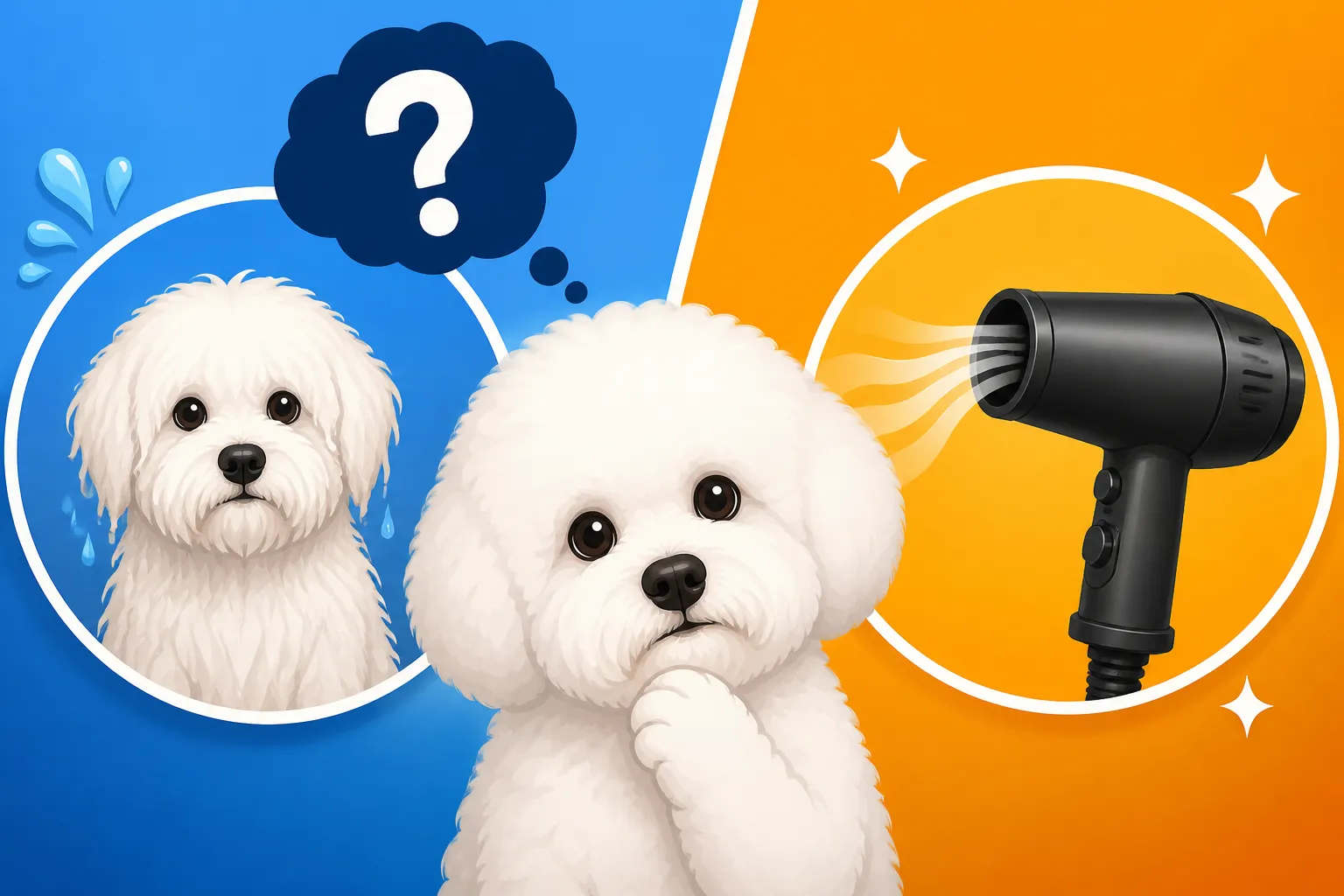
Ah, the post-bath Bichon Frise. If you've ever found yourself with a sopping wet fluffball, towel-drying until your arms ache, and then spending another hour with a human hairdryer that barely makes a dent, you're not alone. The dense, curly coat of a Bichon Frise is notorious for holding onto water, and getting it truly dry to the skin can feel like an impossible mission. This guide is here to shed some light on whether a specialized tool, the force dryer, is the secret weapon you've been missing in your Bichon grooming arsenal.
Understanding the Unique Bichon Frise Coat
Let's be real, the Bichon Frise coat is a thing of beauty, a cloud of white fluff that's soft to the touch and makes them look like living cotton balls. But that very charm comes with its own set of challenges, especially when it comes to bathing and drying. It's not just a single layer of hair; it's a carefully structured marvel designed to protect them.
The Double Coat Dilemma
Unlike many other breeds with single coats, a Bichon Frise possesses a double coat. This means they have a soft, dense undercoat that provides insulation and a coarser, curlier outer coat that gives them their characteristic powder puff appearance. When your Bichon gets wet, that undercoat acts like a sponge, trapping an incredible amount of moisture close to the skin. You can towel dry the outer layer all you want, but getting that inner layer bone dry is a whole other story. This is why you can feel the dampness hours later, even after what feels like a thorough towel-and-blow-dry session. This persistent dampness is a prime contributor to matting, skin irritation, and even a lingering damp dog smell that no one wants. Think of it like trying to dry a thick wool blanket by just patting the outside – the core remains stubbornly wet.
Why Air Drying Just Isn't Enough for a Bichon
Many dog owners, understandably, might think simply letting their dog air dry is the easiest solution. After all, isn't that how animals dry in nature? For a Bichon Frise, however, air drying is a recipe for disaster. Because of their dense double coat and the way their hair grows in curls that naturally intertwine, allowing them to air dry almost guarantees a matted mess. As the water evaporates slowly, the hairs shrink and twist, pulling together into tight knots, especially in areas like behind the ears, armpits, and under the tail. These mats aren't just unsightly; they can be incredibly painful, pulling on the skin, causing hot spots, and creating a breeding ground for bacteria and yeast infections. A deeply matted Bichon often requires a complete shave down, which not only changes their appearance but can also impact the regrowth of their unique coat. Proper and thorough drying is not just about aesthetics; it's a crucial part of maintaining their health and comfort.
What Exactly Is a Force Dryer and How Does It Work?
When we talk about "needing" a force dryer for a Bichon Frise, it's really about understanding what this specialized piece of equipment does and how it differs from what most of us have at home. It's not just a powerful hairdryer; it's designed with specific goals in mind for canine coats.
More Air, Less Heat: The Key Difference
The biggest misconception about force dryers, also known as high-velocity dryers, is that they're essentially super-hot hairdryers. This couldn't be further from the truth. A force dryer primarily uses a powerful stream of unheated or minimally heated air to blast water off the dog's coat. Instead of relying on high temperatures to evaporate moisture, which can damage a dog's skin and hair, it uses sheer air volume and velocity. Imagine a strong wind gust literally pushing water droplets away from the hair shaft. This process is incredibly efficient because it works mechanically to separate the hair and push the water out, right down to the undercoat and skin. It’s this focused, high-speed airflow that makes all the difference, cutting drying time dramatically and ensuring a thorough job that a regular human hairdryer, with its lower air pressure and higher heat, simply can't achieve.
How a Force Dryer Tackles the Bichon Coat
For a Bichon Frise, that powerful, unheated airflow is absolutely crucial. As we discussed, their dense double coat holds water like a sponge. A force dryer's concentrated blast of air penetrates through the outer curly coat, reaches deep into the undercoat, and lifts the hairs, separating them as it dries. This action not only removes water efficiently but also helps to de-shed loose undercoat and straighten the curls as they dry. This simultaneous drying and de-matting action is what makes the force dryer so indispensable for achieving that fluffy, mat-free "powder puff" look a Bichon is known for. Without it, you're fighting a losing battle against humidity trapped deep within their fur, which inevitably leads to tangles and mats. It's a game-changer for maintaining the integrity and health of their signature coat.
The Benefits of Using a Force Dryer for Your Bichon Frise
So, is a force dryer really a need or just a nice-to-have? When it comes to a Bichon Frise, the benefits often tip the scale firmly into the "highly recommended" category, if not outright necessity for their coat health.
Dramatically Reduced Drying Time
This is perhaps the most immediate and noticeable benefit. If you've ever spent an hour or more trying to dry your Bichon with towels and a regular hairdryer, you know the struggle. The dense coat just doesn't want to let go of moisture. A force dryer, with its powerful airflow, can slash drying time significantly, often cutting it down to 15-30 minutes for a full, thorough dry, depending on the dog's size and coat density. This isn't just a convenience for you; it's less stress and discomfort for your dog, who won't have to endure prolonged periods of being wet and chilly. This efficiency is a massive win for busy owners and for the dog's patience levels.
Preventing Mats and Promoting Coat Health
The unique action of a force dryer isn't just about speed; it's about coat maintenance. As the high-velocity air blasts through the fur, it separates individual hairs and helps to push out any loose undercoat that would otherwise contribute to matting. Think of it as a super-powered comb that works with air. By getting the coat completely dry down to the skin and fluffing it out, you drastically reduce the chances of mats forming. This is especially vital for a Bichon's curly, dense coat, which is highly prone to tangles. Regular and thorough drying with a force dryer keeps the coat healthier, making subsequent brushing and grooming sessions much easier and less painful for your dog. It also helps distribute natural oils, promoting a shiny, vibrant coat. Preventing mats means fewer painful brushing sessions, less risk of skin issues, and a much happier Bichon.
Improved Skin Health and Detecting Issues
A thoroughly dry coat isn't just about preventing mats; it's also crucial for skin health. Persistent dampness in a Bichon's dense undercoat creates a warm, moist environment that is a breeding ground for yeast and bacterial infections. If your Bichon often seems to have an itchy or flaky skin, or if you've noticed a peculiar odor, incomplete drying could be a contributing factor. A force dryer ensures the skin is completely dry, reducing the risk of such issues. Furthermore, the act of using a force dryer allows you to get a really good look at your dog's skin. As you're blasting air and separating the fur, you might notice small bumps, hot spots, dry patches, or even parasites that you might otherwise miss with a quick towel dry. It becomes a valuable tool for early detection of potential skin problems, allowing you to address them with your vet sooner rather than later. For example, knowing The Atopic Skin a Bichon Frise Is Born With can help you recognize subtle changes.
Efficient Deshedding
While Bichons are often touted as low-shedding (and they are, compared to many breeds), they still have an undercoat that sheds. The difference is, this loose hair tends to get trapped within their dense outer coat, leading to mats if not removed. A force dryer is incredibly effective at blasting out this loose undercoat. As the air penetrates and separates the hair, dead and shedding hairs are literally blown away. This means less loose hair around your home, fewer mats for your Bichon, and a more comfortable dog. It's a much more efficient way to deshed than brushing alone, and it ensures that the coat stays light and airy.
Potential Downsides and Considerations When Using a Force Dryer
While force dryers offer significant advantages for Bichon Frise owners, it's also important to be realistic and consider some potential drawbacks. No tool is perfect for every situation, and being prepared can make all the difference.
The Noise Factor and Startled Pups
Let's not sugarcoat it: force dryers are loud. They produce a powerful, high-pitched whine that can be quite startling, especially to a sensitive dog or a young puppy not accustomed to loud noises. This noise can cause anxiety, fear, or even aggression in some dogs, making the grooming process difficult for both you and your Bichon. It's crucial to introduce the force dryer slowly and positively, starting with short bursts at a distance and gradually bringing it closer as your dog tolerates it. Using treats, praise, and a calm demeanor are key. Some force dryers come with noise-reduction technology, but even these are not silent. Ear protection, such as cotton balls or specialized dog ear muffs, can also be used to help reduce the sound impact on your dog's sensitive ears. Remember, patience is paramount; rushing the process can create a negative association that's hard to overcome.
Initial Investment and Space Requirements
A good quality force dryer is an investment. They are significantly more expensive than a human hairdryer, and prices can vary widely depending on features, motor power, and brand. While you can find options on platforms like Chewy or Amazon, it’s worth researching different models and reading reviews to ensure you're getting a durable and effective product that suits your needs. Beyond the initial cost, consider where you'll store and use it. These are not compact devices; they require a dedicated space, usually in a well-ventilated area that can handle the flying hair and water mist. If you live in a small apartment, finding a suitable spot and dealing with the mess might be a consideration. However, for many Bichon owners, the long-term savings on professional grooming and the benefits to their dog's health often outweigh the initial cost.
Learning Curve and Technique
Using a force dryer effectively requires a bit of a learning curve. It's not as simple as pointing and blasting. You need to learn proper technique to avoid discomfort or injury to your dog. The air pressure is strong enough that if directed improperly, it can be uncomfortable, particularly around sensitive areas like the eyes, ears, and genitals. You'll need to learn how to hold the nozzle, how close to position it, and how to move it to efficiently dry the coat without causing tangles or scaring your dog. Too close or too still in one spot can cause skin irritation; too far away reduces effectiveness. It takes practice to become proficient and ensure a safe and positive experience for your Bichon. Watching online tutorials and starting with a professional groomer's advice can be incredibly helpful. This is especially true for Bichons, where getting the coat to lay properly for scissoring depends heavily on correct drying technique.
Potential for Over-Drying or Skin Irritation
While force dryers primarily use unheated air, prolonged exposure to high-velocity air, or using a model with a heating element that's too high, can still lead to over-drying of the skin for some sensitive dogs. This can manifest as dry, flaky skin or even exacerbate existing skin conditions. It's important to monitor your dog's skin condition and adjust your technique accordingly. Always keep the nozzle moving and avoid directing the airflow at one spot for too long. If your Bichon has What Atopic Dermatitis Does to a Bichon Frise, you'll need to be extra vigilant. Always use the lowest effective speed setting and ensure the air is not uncomfortably hot to your own hand before directing it at your dog. Proper post-bath conditioning can also help maintain skin moisture.
Alternatives to Force Drying and When They Might Be Suitable
While a force dryer is arguably the most efficient and beneficial tool for drying a Bichon Frise, it's not the only option. For various reasons, some owners may choose alternatives. Understanding these can help you make an informed decision, but it’s crucial to be realistic about their limitations for this specific breed.
Towel Drying and Its Limitations
Towel drying is, of course, the first step for almost any dog after a bath, and it's essential for a Bichon to remove as much surface water as possible. Use highly absorbent microfiber towels and gently squeeze and blot the coat rather than rubbing vigorously, which can create tangles. While towel drying can get the outer coat mostly dry, it simply cannot penetrate the dense undercoat of a Bichon Frise effectively. You'll find that even after extensive toweling, your Bichon will still feel damp to the touch, especially closer to the skin. If you rely solely on towel drying, you're almost guaranteed to face significant matting as the coat slowly air dries and curls tighten. This can make How Long Brushing a Bichon Frise Takes an even more arduous task. Towel drying is a good start, but it's rarely a sufficient end for a Bichon's grooming routine.
Human Hairdryers: Use with Extreme Caution (or Not at All)
A regular human hairdryer might seem like the next logical step after towel drying, but it comes with significant risks for a Bichon Frise. The primary issue is heat. Human hairdryers are designed to evaporate water using high heat, which can easily burn a dog's sensitive skin. Dogs don't dissipate heat the same way humans do, and their skin is much thinner. Even on a "cool" setting, prolonged use can still overheat them. Furthermore, the airflow from a human hairdryer is typically much weaker than a force dryer, meaning it takes a very long time to get a Bichon's coat dry down to the skin. During this long drying process, you're still exposing them to heat and often failing to prevent mats effectively. If you must use one in a pinch (and I strongly advise against it for anything more than a quick paw dry), use the coolest setting, keep it moving constantly, and hold it a significant distance from the skin. It's a tool best avoided for a Bichon's full coat.
Cage Dryers: Professional but Not for Home Use
You might see cage dryers in professional grooming salons, where dogs are placed in a cage with controlled airflow and sometimes heat. These are a more passive drying method. While they can be effective for some breeds, they are generally not suitable for direct home use by owners for several reasons. Firstly, they are large, expensive pieces of equipment designed for a salon environment. Secondly, while some offer heat-free options, those that use heat require constant monitoring to prevent overheating, especially for breeds with dense coats like the Bichon. An unattended dog in a heated cage dryer can quickly suffer from heatstroke. A professional groomer understands how to use these safely and efficiently, often pairing them with initial force drying. For home grooming, a cage dryer is impractical and generally not recommended.
When Alternatives Might Be Considered
For a Bichon Frise, the instances where alternatives are truly sufficient are very limited:
- Spot Cleaning: If your Bichon only has a small area that needs cleaning, like a dirty paw or a quick wipe of the muzzle, towel drying might be enough, followed by a very brief, cool human hairdryer if absolutely necessary, focusing only on that tiny spot.
- Emergency Situations: If your force dryer breaks down and you absolutely must bathe your dog (e.g., they rolled in something foul), then a combination of extensive towel drying, gentle blotting, and perhaps air drying in a warm, dry room with very frequent, thorough brushing every 15-20 minutes to prevent mats, might be a temporary solution. But this is far from ideal and still carries significant matting risk.
Ultimately, for the routine full bath of a Bichon Frise, a force dryer is by far the most effective, safest, and most coat-friendly option for preventing mats and maintaining their signature fluffy appearance.
Tips for Introducing and Safely Using a Force Dryer
Okay, so you're convinced a force dryer is the way to go for your fluffy friend. That's great! But don't just unbox it and blast away. Introducing it properly and learning safe usage techniques are crucial for a positive experience for both you and your Bichon.
Slow and Steady Wins the Race: Acclimatization
The sound and power of a force dryer can be intimidating. The key is gradual introduction, making it a positive experience.
- Start with the sound: Begin by simply turning the dryer on in another room or far away from your dog, letting them hear the noise without being directly exposed to the air. Offer high-value treats and praise calmly.
- Gradual exposure to air: Once your Bichon is comfortable with the sound, turn the dryer on its lowest setting and direct the air away from them. Let them investigate it at their own pace.
- Short bursts: Next, briefly direct the air towards their body (never the face or sensitive areas initially), always on the lowest setting. Immediately follow with a treat and praise.
- Increase duration and intensity: Slowly increase the duration of the drying bursts and gradually move to higher settings as your dog tolerates it. Always associate the dryer with positive reinforcement.
- Use during non-bath times: Practice these steps when your dog isn't wet and anxious from a bath. Make it a game. This process might take days or even weeks, but patience will pay off in a well-adjusted Bichon.
Essential Safety Precautions During Use
Safety is paramount when using a force dryer. Here are crucial tips to protect your Bichon:
- Protect sensitive areas: Never aim the nozzle directly into your dog's ears, eyes, nose, or genitals. The air pressure can be damaging. Use your hand to shield their ears and face, and consider using cotton balls in their ears to muffle the sound. There are also specific "snoods" or ear covers available.
- Keep the nozzle moving: Always keep the nozzle in constant motion. Never hold it stationary on one spot, as this can cause skin irritation or even blow dryer burn if there's any residual heat.
- Check temperature: Though force dryers are largely unheated, some models have a mild warming feature. Always test the air on your own skin (the inside of your wrist is good) before directing it at your dog to ensure it's not too hot.
- Maintain distance: While the force dryer needs to be close enough to be effective, avoid pressing the nozzle directly against the skin. A few inches away is usually sufficient to get proper airflow.
- Use proper grooming equipment: A sturdy grooming table with a non-slip surface and a grooming arm with a noose (always supervise!) can make the process much easier and safer, preventing your Bichon from jumping down and injuring themselves. You can find these at pet supply retailers.
Techniques for Achieving that Perfect Fluff
Once your Bichon is comfortable with the force dryer, learning proper technique will help you achieve that beautiful, fluffy coat.
- Start from the back: Many groomers start drying from the hindquarters, working their way forward. This allows the dog to get used to the sensation before you tackle more sensitive areas.
- Work in sections: Focus on drying one section of the body at a time, ensuring it's completely dry before moving on. For the Bichon coat, you want to "line dry," meaning you use the force dryer to separate layers of hair and dry them from the root to the tip. Imagine parting the hair and drying along that line.
- Brush while drying: For a really fluffy finish, use a slicker brush simultaneously while drying. As you blast the air, brush the coat in the direction you want it to lay. This helps to straighten the curls, remove any remaining tangles, and achieve that signature Bichon volume and shape. This is particularly useful to make the coat ready for detailed Whether Scissoring Beats Clipping on a Bichon Frise.
- Face last: Save the face for last, and always use the lowest setting and extreme caution. Shield their eyes and ears with your hand. A gentle blast from a distance is usually enough, then finish with a towel around the eyes and muzzle.
- Don't forget the feet: Bichon feet are prone to matting between the pads. Ensure these areas are thoroughly dried. Whether a Bichon Frise's Feet Stain Brown can be linked to persistent dampness.
By following these tips, you can transform bath time from a dreaded chore into a manageable and even enjoyable routine, ensuring your Bichon Frise always looks their best and their coat stays healthy and mat-free.
Disclaimer
This article is for general informational purposes only and does not constitute professional advice. Laws, prices and regulations vary by location and change over time. Consult a qualified professional for guidance on your specific situation.