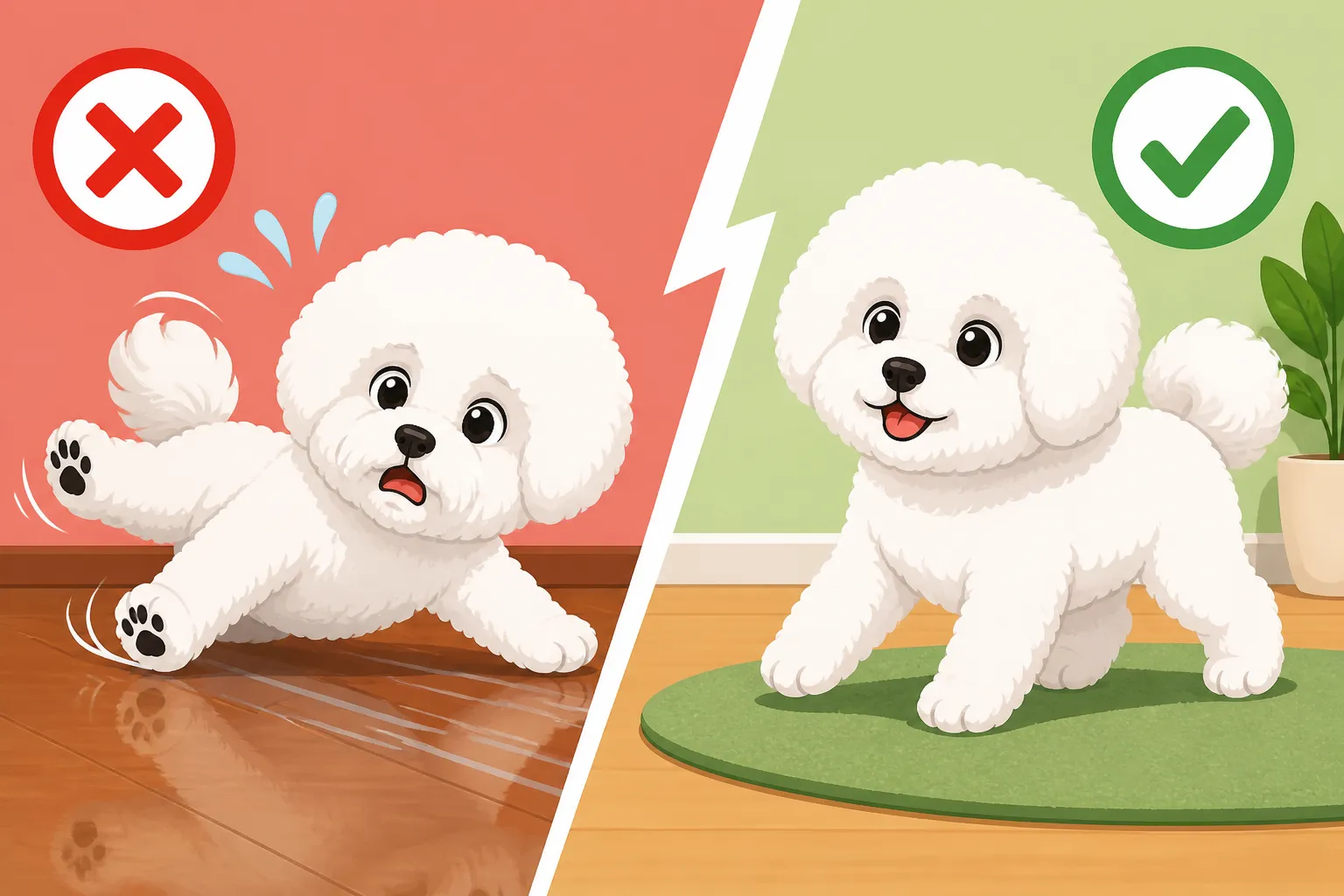
Whether a Bichon Frise Slips on Hard Floors
It's a common and genuinely worrying sight for any Bichon Frise owner: you see your sweet, fluffy companion attempt to walk across your gleaming hard floors, only for their little legs to splay out from under them, or for them to skid ungracefully into a piece of furniture. That sudden loss of traction isn't just awkward; it can be downright dangerous and can seriously impact your Bichon's confidence and long-term health. This guide is dedicated to understanding why Bichons struggle on slippery surfaces and, more importantly, what practical steps you can take to make your home a safer, happier place for them.
The Reality of Slippery Surfaces for Your Bichon Frise
Let's be honest, those beautiful hardwood floors or sleek tiles we love for their aesthetics and easy cleaning aren't always a Bichon's best friend. Their unique anatomy and coat can make navigating these surfaces a genuine athletic challenge, often leading to more than just a little embarrassment. It's not just "clumsiness"; there are real physical reasons why they struggle.
Why Hard Floors Are a Challenge for Small Dogs
Imagine trying to run on ice with slippery shoes – that's often what it feels like for a Bichon on a polished floor. Their smaller size means their center of gravity is lower, but also that their short legs have less leverage to recover from a slip. They rely heavily on their paw pads for grip, but if those pads are compromised (think long hair between them or dry skin), they might as well be wearing tiny skates. This lack of natural traction makes every step a calculated risk, and it can really chip away at their joyful, confident demeanor. You might notice them walking more stiffly, or even "tiptoeing" to try and find purchase, which isn't a natural or comfortable gait for them.
Furthermore, a Bichon's fluffy coat, while adorable, can sometimes contribute to the issue. If the hair on their legs and paws isn't regularly trimmed, it can extend beyond their paw pads, further reducing the direct contact their pads have with the floor. This creates an even slicker surface for them to contend with. It's a cruel irony that the very thing that makes them so endearing can also make their daily movements challenging.
The Immediate Risks: Skids, Sprains, and Falls
The most obvious danger of slippery floors is the immediate physical harm. A sudden skid can lead to a pulled muscle, a sprain, or even a more serious injury like a fracture, especially in a small dog like a Bichon. We’ve all seen those dramatic, cartoon-like slips, but in reality, they're not funny. A fast run across the kitchen tile to greet you at the door could end in a yelp of pain. Think about how many times a day your Bichon might zoom around, play, or simply stand up from a nap. Each of those movements carries a risk if they don't have stable footing.
Beyond the obvious injuries, repeated minor slips can cause microtraumas to their joints and soft tissues. A Bichon might not overtly limp, but they could be experiencing discomfort that builds up over time. It's particularly concerning for puppies whose bones and joints are still developing, or for older Bichons whose bodies are already more fragile. This isn't just about preventing a dramatic fall, but also about protecting them from the cumulative wear and tear that constant slipping can inflict.
Long-Term Concerns: Joint Health and Confidence
The effects of slippery floors aren't just immediate; they can have significant long-term consequences. Constant slipping and sliding forces your Bichon's joints to move in unnatural ways, putting extra stress on ligaments, tendons, and cartilage. This can exacerbate existing conditions or even contribute to the development of new ones. For example, if your Bichon is genetically predisposed to conditions like Slipping Kneecaps in a Bichon Frise (patellar luxation), the repeated twisting and instability caused by slippery floors can make the condition worse or hasten its onset. Even mild hip or elbow discomfort can be magnified by the struggle for traction.
Beyond the physical, there's a huge psychological toll. A dog that constantly feels unstable or fears falling can lose confidence. You might observe your Bichon becoming hesitant to move around freely, especially in areas with hard floors. They might stick to rugs, avoid certain rooms, or become less playful. This isn't just about convenience; it impacts their quality of life. A dog that's afraid to run and play due to slippery floors is a dog whose spirit is being dampened, and that's something no devoted owner wants to see. Their natural "Bichon Blitz" (zoomies) become a hazard instead of a joyous expression of energy.
Recognizing the Signs of a Struggling Bichon on Hard Floors
Sometimes, the signs that your Bichon is struggling on hard floors are subtle. They might not always yelp or limp dramatically. As owners, it's crucial to be observant and understand the cues our furry friends give us, both in their behavior and their physical movements. Early recognition means we can intervene sooner and prevent more serious issues.
Behavioral Cues: Hesitation and Reluctance
One of the first things you might notice is a change in your Bichon's usual behavior. Are they avoiding certain areas of the house they used to love? Do they walk cautiously, as if testing the ground with each paw? Perhaps they only choose to cross the hard floor if they have a clear path to a rug or carpeted area. This hesitation is a strong indicator of discomfort and a lack of confidence in their footing. You might see them pause at the threshold of a room with hard floors, trying to decide if it's "safe" to proceed.
Another behavioral sign is an unwillingness to engage in activities they once enjoyed, like playing fetch or zooming around the house. If their joyous The Bichon Blitz and What It Means is now confined to carpeted rooms or the outdoors, it's a red flag. They might also appear stiff when getting up or lying down, or they might take longer to settle into a comfortable position. These small changes, when observed together, paint a picture of a dog that isn't fully at ease in their own home environment.
Physical Indicators: Splayed Legs and Difficulty Rising
Beyond behavior, there are clear physical signs that your Bichon isn't getting adequate traction. The most common is the splaying of their legs, either when standing, walking, or trying to turn. Their back legs might slide out to the sides, or their front paws might lose grip, causing them to nearly "do the splits." This uncontrolled movement is not only potentially harmful but also looks visibly uncomfortable.
You might also notice them struggling to get up from a lying position on a hard floor. Instead of a smooth, easy rise, they might scramble, push with their front paws, or need several attempts to gain enough purchase to stand. Similarly, when they lie down, they might 'plop' down quickly, almost as if trying to minimize the time their body is unstable while lowering itself. Observe their gait closely: do their paws slide slightly with each step? Do they seem to take shorter, choppier steps to avoid losing balance? These are all physical manifestations of the challenge posed by slippery surfaces.
Practical Solutions to Create a Safer Home Environment
The good news is that we don't have to choose between beautiful floors and a safe Bichon! There are many effective and often simple solutions to mitigate the risks of slippery surfaces. It's all about adding traction and supporting your Bichon's natural abilities.
Traction Solutions: Rugs, Runners, and Non-Slip Mats
This is often the most straightforward and effective solution. Strategically placing rugs, runners, or non-slip mats in high-traffic areas, or wherever your Bichon tends to play or rest, can make a world of difference. Think about the paths your Bichon typically takes through your home – from the living room to the kitchen, or from their bed to the back door. Lay down runners along these "dog highways." You can find an incredible variety of sizes and styles on sites like Amazon or Chewy, making it easy to match your decor.
When choosing rugs, opt for ones with a good grip on the underside or invest in non-slip rug pads that go underneath. These pads are essential because a rug that slides can be just as dangerous as the bare floor. Consider washable rugs for areas prone to accidents, making cleanup a breeze. Even a few small, well-placed mats can create safe "islands" for your Bichon to navigate through the house. It's about breaking up those long, treacherous stretches of hard floor into manageable, grippy sections.
Paw Care: Keeping Nails Trimmed and Paws Groomed
Proper paw care is absolutely critical for traction. Overgrown nails prevent a dog's paw pads from making full contact with the ground. Instead, the nails act like little stilts, making it much harder for them to grip. Regular nail trims are a must. For a Bichon Frise, whose nails can be hard to see due to their white fur, this might involve learning to use a grinder or getting regular professional help. Whether a Bichon Frise Needs a Nail Grinder is a great resource if you're considering this.
Equally important is trimming the hair between their paw pads. This seemingly minor detail can have a major impact. Long hair here can become matted, reducing the natural friction of the paw pads and making them as slick as a pair of furry slippers. A quick, careful trim with blunt-nosed scissors or a small clipper can reveal those important paw pads and significantly improve their grip. This is a common part of a How Often a Bichon Frise Needs a Full Groom routine, so talk to your groomer about keeping those paw pads clear.
Footwear and Paw Protection
While not every Bichon will tolerate them, paw protection products can be a game-changer for some. Paw balms, for instance, can help keep paw pads moisturized and healthy, preventing cracks and improving their natural texture for better grip. There are also specialized paw waxes designed to increase traction on slippery surfaces; you simply rub them onto your dog's pads.
For more significant traction issues, or for dogs that are particularly prone to slipping, dog socks or boots with non-slip soles can be an option. Many brands offer socks specifically designed for indoor use, with rubberized grips on the bottom. It takes patience and positive reinforcement to get a dog used to wearing them, but for some, the added stability is worth the effort. You can find these types of products on online retailers like Chewy and Amazon, with various sizes to ensure a good fit for your small Bichon.
Addressing Underlying Health Considerations
While improving traction is key, it's also vital to consider if underlying health issues are contributing to your Bichon's struggles on hard floors. Sometimes, slipping isn't just about the floor; it's about a dog's physical ability to navigate it.
Joint Issues and Slippery Floors: A Dangerous Combination
Bichon Frises, like many small breeds, can be prone to certain joint conditions. Slipping Kneecaps in a Bichon Frise (patellar luxation) is a common one, where the kneecap temporarily slips out of place. If your Bichon already has this condition, a slippery floor can be incredibly dangerous, leading to more frequent luxations and increased pain. Similarly, conditions like arthritis, especially in Arthritis in a Bichon Frise at Eleven or older dogs, can make movement painful, and a slippery surface exacerbates that pain and reduces their ability to compensate.
If you suspect your Bichon is struggling due to joint pain or instability, a visit to your veterinarian is crucial. They can assess your dog's mobility, potentially grade any patellar luxation, and discuss management options, which might include pain relief, anti-inflammatory medications, or joint supplements. Slippery floors won't cause these conditions, but they can certainly make them worse and increase the risk of injury.
Age-Related Mobility Changes
As Bichons age, their bodies naturally undergo changes that can affect their mobility. Just like humans, senior dogs can develop arthritis, muscle weakness, and a general decline in coordination. Their eyesight might also diminish, making it harder to judge distances and navigate tricky surfaces. What was once a minor annoyance on a hard floor can become a significant obstacle for an older Bichon. You might notice them being slower to rise, more hesitant to walk, or simply less steady on their feet.
For Caring for a Bichon Frise Past Eleven, adapting your home to their changing needs is paramount. This includes providing extra soft bedding, elevated food and water bowls, and, of course, addressing slippery floors. A combination of good traction solutions and veterinary support for their aging joints can vastly improve their comfort and mobility during their golden years. Don't dismiss their struggles as "just old age"; often, we can provide significant relief.
The Vet's Role: Assessing Mobility and Pain
If you've implemented traction solutions and your Bichon is still struggling, or if you notice new signs of pain, lameness, or severe hesitation, it's time to involve your veterinarian. A professional examination can rule out or diagnose underlying medical conditions that might be contributing to their lack of stability.
The vet can perform a thorough orthopedic examination, checking for issues like patellar luxation, hip discomfort, or spinal problems. They might suggest X-rays or other diagnostics to get a clearer picture of their joint health. It's important to be honest with your vet about your observations, including how often your Bichon slips, their reluctance to move, or any specific behaviors you've noticed. This comprehensive approach ensures that you're not just treating the symptom (slipping) but also addressing any root causes that might be making your Bichon unsteady on their paws.
Training and Enrichment to Build Confidence on All Surfaces
While physical adjustments to your home are vital, don't underestimate the power of positive reinforcement and confidence-building exercises. A confident dog is often a more capable one, and gentle training can help your Bichon feel more secure moving around, even as you introduce more traction.
Positive Reinforcement for Movement
Encouraging your Bichon to move confidently on different surfaces, particularly those that are now made safer with rugs, can be a great way to rebuild their trust. Use high-value treats and enthusiastic praise for every confident step they take on a "safe" path. Start small: reward them for walking from one rug to another, then gradually extend the distance they need to travel. The key is to make it a positive, rewarding experience.
Avoid scolding or showing frustration if they slip; this can actually increase their anxiety. Instead, gently guide them, use encouraging words, and celebrate their successes. You can even play short, calm games on the rugs to associate movement and fun with stable footing. The goal is to create positive associations with movement throughout the house, fostering a sense of capability rather than fear.
Creating "Safe Zones"
Think about the areas where your Bichon spends the most time: their bed, their eating area, their favorite spot by the window. These should be priority "safe zones" with ample traction. For instance, place a non-slip mat under their food and water bowls. Not only does this prevent spills, but it also ensures they have stable footing while eating or drinking, which can be a vulnerable position for a dog prone to slipping.
If your Bichon has a favorite napping spot on a hard floor, add a plush, non-slip bed or a thick rug. Making these core areas reliably stable will give them places to retreat and feel secure. Once they have these established safe havens, they might feel more comfortable venturing out onto the treated pathways you've created. It's about giving them a solid foundation of security within their environment.
Gradual Exposure and Desensitization
For a Bichon who has developed a strong aversion to hard floors, a gradual approach can be very helpful. Once you've laid down rugs and runners, don't expect them to immediately dash across every surface. Start by rewarding them for simply approaching the edges of the hard floor. Then, reward them for placing a single paw on it, then two, and so on.
You can use a leash for gentle guidance initially, not to pull them, but to offer a sense of security and direction. Make these sessions short, fun, and always end on a positive note. Over time, as they consistently experience stability and positive reinforcement, their confidence will grow. Remember, it's about patient desensitization, slowly helping them realize that those once-treacherous floors are now manageable, thanks to your thoughtful interventions.
Disclaimer
This article is for general informational purposes only and does not constitute professional advice. Laws, prices and regulations vary by location and change over time. Consult a qualified professional for guidance on your specific situation.