Whether a Bichon Frise Should Be an Only Dog
A Bichon Frise can be perfectly happy as the only dog in the home, but that does not mean every Bichon is content to be left alone for long stretches. These affectionate, people-focused dogs need company, routine, and attention. This guide explains how to tell whether solo-dog life suits your Bichon and how to meet their social needs.
Can a Bichon Frise Be Happy as an Only Dog
Being an only dog is not the same as being lonely
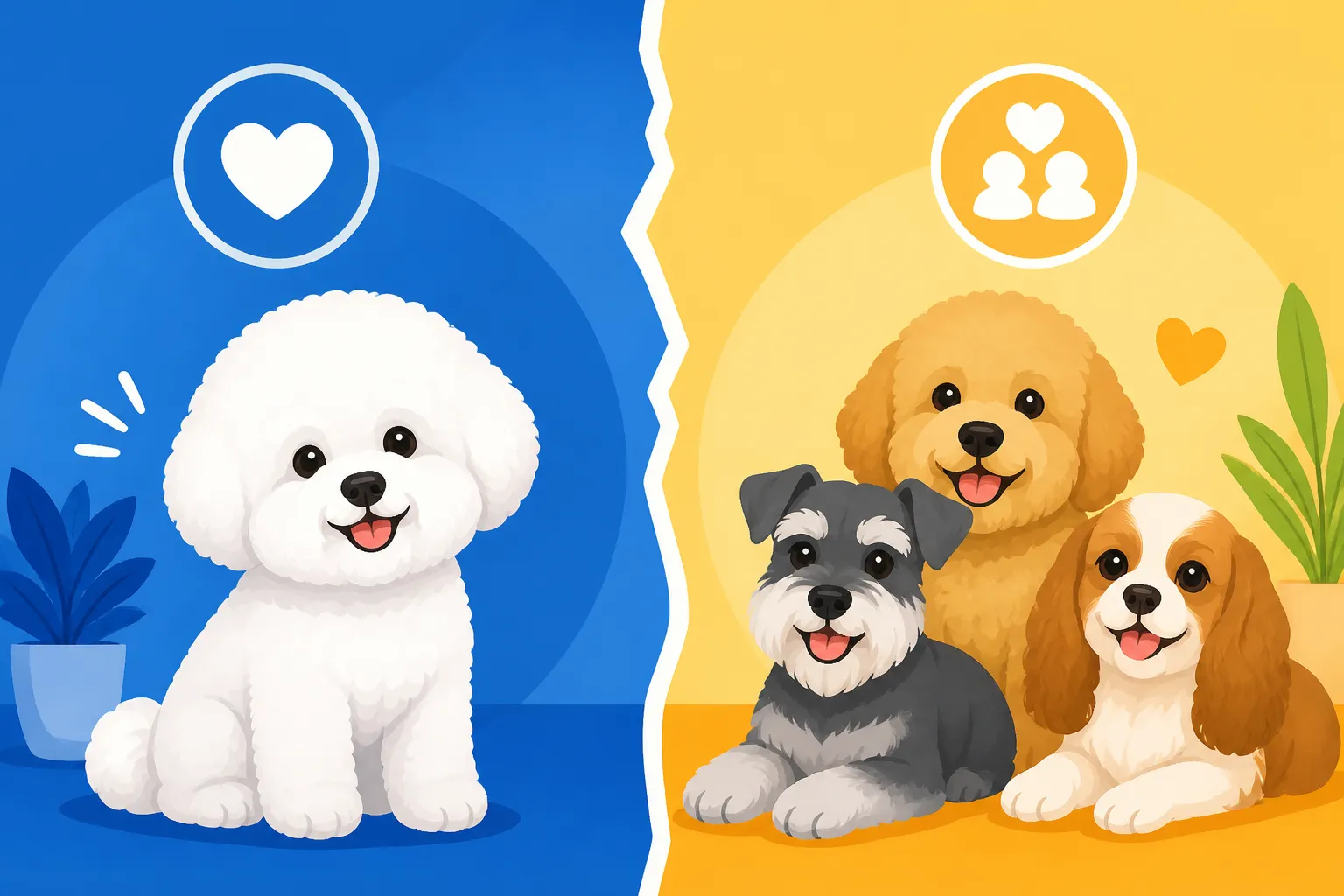
A Bichon Frise does not need another dog simply to feel complete. Many thrive as the sole pet, especially when they get regular interaction with their people, exercise, play, and a predictable daily routine. Your dog may be happiest having your attention to themselves rather than sharing your home, toys, and resting spots with another animal.
What matters is the quality of your Bichon’s daily life. A dog who gets a walk, a little training, time to play, and relaxed company at home may be content as an only dog. A dog who is alone for much of the day with little to do may struggle, even if another dog lives in the house. A second pet is not a substitute for attention, enrichment, or help with separation-related distress.
Bichons are known for being sociable and often enjoy being close to their families. That affection can be lovely, but it can also make a long, quiet day feel difficult for a dog who has not learned to settle independently. If your Bichon follows you from room to room, that alone does not mean they need a canine companion. Look instead at how they cope when you are busy or away, and whether they can relax on their own.
What your Bichon’s personality can tell you
Some Bichons are outgoing with nearly every dog they meet. Others prefer familiar canine friends, or simply enjoy people more than dogs. Watch your dog’s body language during calm, supervised interactions. Loose posture, relaxed sniffing, a willingness to disengage, and playful invitations can suggest comfort. Hiding, stiffening, persistent avoidance, or repeated attempts to get away are reasons to slow things down rather than assume a companion would help.
Age and past experience matter, too. A confident adult who has lived peacefully as the only pet may have little interest in sharing their home. A young dog accustomed to a litter or a multi-dog household might enjoy canine company, but that is not a guarantee. Senior Bichons may value quiet and familiarity more than a lively new housemate.
If you are trying to understand whether your dog enjoys closeness with people, Whether a Bichon Frise Is a Lap Dog explores that affectionate side of the breed. For a broader look at individual temperaments, What Bichon Frise Owners Wish They Had Known can help you think through the everyday realities of living with one.
How to Tell Whether Your Bichon Needs More Company
Signs of boredom, stress, or separation difficulty
A Bichon who is having a hard time alone might bark, whine, pace, scratch at doors, or become destructive after you leave. Some dogs toilet indoors despite being housetrained, while others seem unable to settle and stay close to the exit. These behaviors can have several causes, so they are clues to investigate rather than proof that your dog needs another pet.
Pay attention to when the behavior happens. If your dog begins whining as you pick up your keys and the problem intensifies soon after you leave, separation-related distress may be part of the picture. If they chew objects during quiet periods but settle after a sniffing walk or a short training session, boredom or unmet activity needs might be contributing. A veterinarian or qualified behavior professional can help if the behavior is persistent, severe, or new.
A camera can help you see what actually happens after you go. Some dogs bark for a few minutes and then nap; others remain distressed for much longer. That difference matters. Don’t punish a dog for noise or damage that happens while you are away. Punishment after the fact is confusing, and it does not teach a dog how to feel safe alone.
For more on vocalizing around departures, see Whether a Bichon Frise Cries When You Leave. If you are comparing household routines, Whether a Bichon Frise Suits a Full Time Worker is also relevant, because the time a dog spends alone can be just as important as whether another pet is present.
A practical guide to reading the situation
Use the pattern of your Bichon’s behavior, not one isolated incident, to decide what support might help. The table below can help you organize what you notice before making a major decision.
| What you notice | What it might suggest | A useful next step |
|---|---|---|
| Your dog settles after a brief departure | They may be learning to cope with alone time | Keep departures predictable and build up gradually |
| Barking or pacing continues for much of your absence | Significant stress may be present | Record the behavior and ask a veterinarian or behavior professional for guidance |
| Chewing occurs mainly after a low-activity day | Boredom or excess energy may contribute | Add sniffing, play, and short training sessions |
| Your Bichon avoids other dogs | A second dog may not be a good fit | Respect their preferences and focus on enrichment with you |
| Your dog enjoys familiar dogs but rests well at home | They may enjoy social outings without needing a live-in companion | Arrange calm, supervised visits with compatible dogs |
| Behavior changes suddenly | Pain or another health issue could be involved | Arrange a veterinary check rather than assuming it is behavioral |
A daily notebook can make these patterns clearer. Record when you leave, how long you are gone, what your dog did beforehand, and what you observe afterward. Include changes such as construction noise, visitors, schedule shifts, or a new household member. Details that feel minor to you can explain why one day went smoothly and another did not.
What to Do Before Getting a Second Dog
Try support and enrichment first
Before adopting another dog, make sure your Bichon has appropriate opportunities to move, explore, and use their brain. A walk is useful, but it does not have to be the only activity. Sniffing games, food puzzles, short training sessions, and gentle play can give a dog satisfying things to do at home. Rotate toys so that the same objects do not become background clutter.
Food-based enrichment can be helpful for dogs who enjoy working for meals. You might scatter part of a meal in a safe, easy-to-clean area or use a puzzle feeder suited to your dog’s ability. Chewy carries enrichment toys and puzzle feeders, which can be one place to browse when you are looking for options. Choose items that are sturdy, appropriately sized, and safe to use without supervision only if your dog has already shown they can use them safely.
If your Bichon is anxious when alone, enrichment alone may not solve the problem. Start with absences short enough that your dog can remain comfortable, and increase them gradually. If your dog becomes distressed even during brief separations, consult a veterinarian or behavior professional about a plan. For a dog who is struggling, simply adding a second pet can create more activity and stress without resolving the underlying issue.
Make a second-dog decision around compatibility
If you are considering another dog, think about the match rather than choosing based on appearance or breed alone. Consider energy level, play style, age, size, and how each dog handles sharing space. A calm adult dog may be easier for a settled Bichon to live with than a boisterous puppy, though individual personalities are more important than a simple age rule.
A well-managed introduction gives both dogs room to approach or retreat. Start in a neutral, low-pressure setting with enough space, and keep early interactions brief. At home, provide separate resting places, food bowls, and valued toys. Feed them apart at first, and supervise interactions until you have a clear sense of how they behave together. Neither dog should be forced to share a bed, lap, or favorite toy.
The practical side matters too. A second dog means separate veterinary care, grooming needs, training, and daily attention. Bichons need regular coat care, and managing two dogs can make routines more demanding rather than easier. If you are weighing the added work, Whether Two Bichon Frises Are Easier Than One offers another angle on the decision. For a related question about whether a dog needs a canine companion, read Whether a Bichon Frise Needs a Second Dog.
Building a Good Only-Dog Routine
Give your Bichon predictable social time
A useful routine does not have to be elaborate. Regular walks, brief training, play, and calm time together help your dog know what to expect. Some Bichons love a busy social calendar; others do best with a few familiar people and dogs. If your dog enjoys meeting other dogs, supervised walks or visits with a compatible friend’s dog can provide social contact without changing the household.
Let your Bichon choose how much interaction they want. A dog who turns away, moves behind you, or stops engaging may need a break. Socialization is not about making every dog greet every other dog. It is about helping your dog feel safe in different situations and giving them the option to disengage.
You can also make ordinary home life more enriching. Ask for a simple cue before meals, hide a few pieces of kibble for your dog to sniff out, or practice a short “settle” routine while you read or work. Chewy offers treat-dispensing toys and other enrichment products, but a carefully supervised game with familiar household items can also provide variety. Keep food portions in mind so treats do not quietly add too much to your dog’s daily intake.
Help your dog practice being alone
Dogs can benefit from learning that a closed door or a short departure is not a crisis. Begin with tiny steps: ask your Bichon to rest on a bed while you move around the room, step briefly behind a door, and return before they become worried. Keep the practice calm and repeat it at a pace your dog can manage. If your Bichon becomes distressed, make the next attempt easier rather than pushing through.
Leaving the house can be less confusing when the routine is low-key. Give your dog a comfortable resting spot and a safe activity, then depart without a dramatic goodbye. When you return, greet them calmly and continue with your normal routine. The point is not to ignore your dog, but to make departures and arrivals feel ordinary instead of alarming events.
If you have recently adopted or rehomed your Bichon, give them time to adjust before drawing conclusions about their long-term needs. A new home, different schedule, unfamiliar sounds, and changed people can affect behavior. Settling a Rehomed Bichon Frise covers the transition in more detail. If you are deciding whether your home setup is suitable, Whether a Bichon Frise Suits an Apartment may also help; a yard is not a replacement for interaction, and an apartment does not automatically make an only-dog life unsuitable.
A Bichon Frise can do very well as an only dog when their social, physical, and emotional needs are met. The right answer depends less on a breed-wide rule than on your individual dog: whether they enjoy canine company, how they cope with time alone, and what your household can realistically provide. Observe, adjust, and seek professional help when distress is persistent rather than assuming a second dog is the fix.
Disclaimer
This article is for general informational purposes only and does not constitute professional advice. Laws, prices and regulations vary by location and change over time. Consult a qualified professional for guidance on your specific situation.