Whether a Bichon Frise’s Tail Should Touch Its Back
A Bichon Frise’s tail is meant to curve over its back, but the question of whether it must physically touch the back can be confusing. The breed’s outline, tail set, plume, and posture all affect what you see. This guide explains the breed-standard look, why a pet’s tail may sit differently, and what changes are worth having checked.
What the Bichon Frise tail is supposed to look like
The curve matters more than a perfect touch
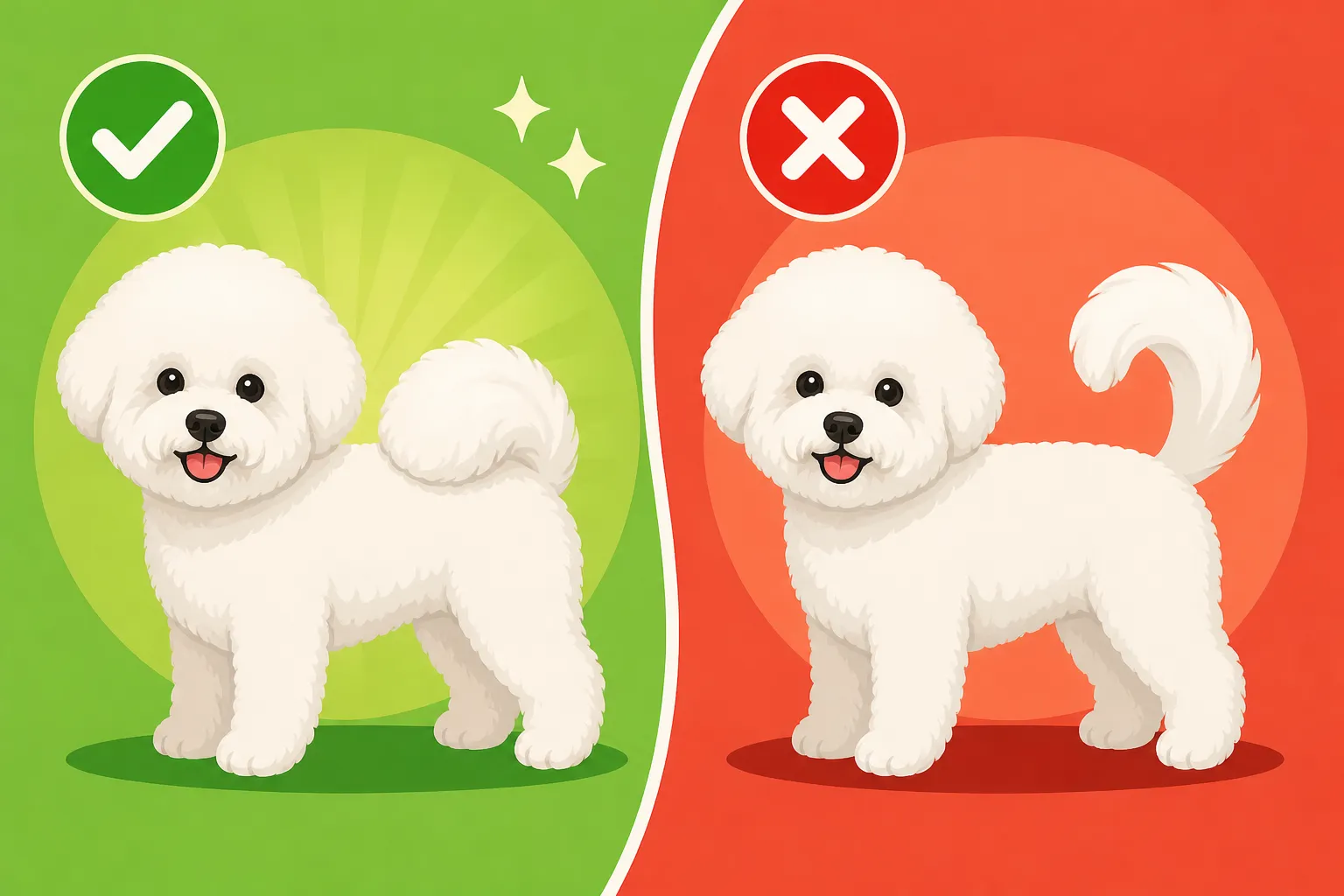
The Bichon Frise is known for a tail carried over the back, with a plume of hair resting along the back. That creates the familiar curled silhouette, but it does not mean every dog’s tail must press against the same spot or form an identical loop. Tail shape and carriage vary, and the coat can make the curve look more or less pronounced.
It helps to look at the tail in two parts: the underlying tail and the plume of hair. The tail itself curves over the back; the longer hair adds volume and can lie across the dog’s back. A full, well-groomed plume may appear to touch even when the tail’s actual curve is not especially tight. Conversely, a short or uneven trim can make a normal tail look as though it sits farther away.
The breed’s outline is a combination of features rather than one isolated detail. If you are comparing your dog with a show photograph, remember that grooming, posture, coat length, and the moment the picture was taken can all change the effect. The broader silhouette is explained in The Powder Puff Outline the Bichon Frise Standard Describes, while Whether a Bichon Frise Is Judged on Its Outline looks at how the whole shape is considered.
Tail set and tail carriage are different
“Tail set” describes where the tail begins on the body. “Tail carriage” describes how the dog holds it. A tail set high enough to curve over the back may look different when the dog is standing quietly than when it is alert, playing, or greeting someone at the door. It is normal for a Bichon to change posture throughout the day.
A relaxed dog may carry the tail more loosely, while excitement can make the curve look tighter or lift the plume. That does not mean the tail has changed shape. It simply shows why a single snapshot is not always a reliable way to judge a dog’s natural carriage.
The tail should also be viewed in proportion to the dog’s back and overall build. A particularly dense plume can seem to cover more of the back, while a close trim can reveal the tail’s outline more clearly. The breed’s general proportions are covered in How Big a Bichon Frise Gets, and the tail’s curve is discussed more specifically in Whether a Bichon Frise's Tail Curves Over Its Back.
Why your Bichon’s tail may not seem to touch its back
Coat length and grooming can change the appearance
A Bichon’s coat is a major part of its look, and the tail plume can be shaped or shortened during grooming. If the hair has been trimmed close, the tail may appear to sit away from the back even though its underlying curve is typical. If the plume is long and full, it may drape across the back and make the tail look more tightly curled than it is.
Mats can also distort the outline. Hair tangled near the tail or along the back may pull, clump, or stick out, making the tail appear uneven. Don’t try to yank a mat apart, especially close to the skin. If you are uncertain whether a tangle is loose coat or a tight mat, ask your groomer to assess it. A comb and brush selected for the coat can help with routine upkeep; if you are shopping for grooming supplies, retailers such as Chewy may carry basic options, but your groomer can advise on what is suitable for your dog’s coat.
When discussing a trim, describe the look you want rather than asking for a specific tail position. A groomer can shape the plume, but grooming cannot change the underlying tail set. It can, however, make the tail blend more naturally into the dog’s outline. A few clear photos of your dog’s usual shape can help you explain what you mean, especially if the coat has grown out since the previous appointment.
Posture, age, and individual variation matter
A dog does not stand like a show dog all day. Your Bichon may hold the tail differently while walking, sniffing, resting, or watching something interesting. A soft, loose posture can make the tail look less curved; alertness may make it appear more lifted. Check the tail over several ordinary moments rather than deciding from one image.
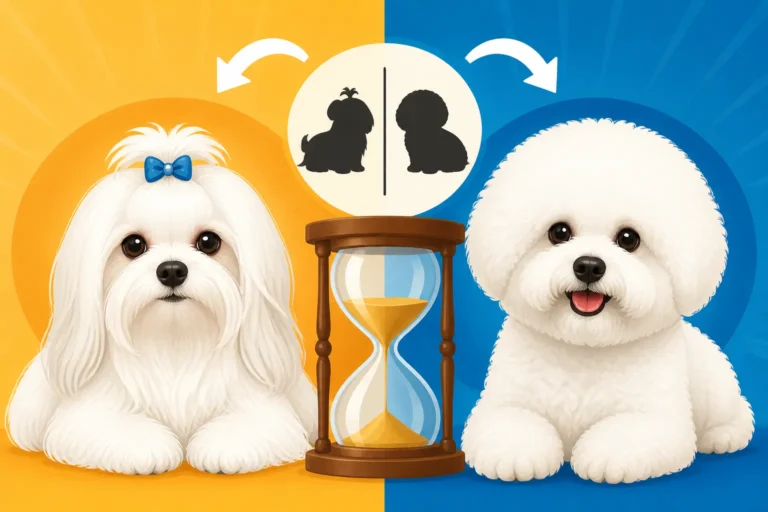
Individual dogs also differ. The tail’s appearance can be affected by body proportions, coat texture, plume fullness, and how the dog naturally carries itself. A pet Bichon does not need to match a perfectly posed show photograph to be a healthy, loved companion. If you are still comparing the breed’s ideal outline with everyday variation, The Bichon Frise Against the Maltese and the Havanese offers useful context about how breed silhouettes differ.
| What you notice | Possible explanation | Practical next step |
|---|---|---|
| The plume barely reaches the back after a trim | The coat may be shorter, while the tail itself still curves over the back | Ask the groomer to assess the tail’s shape when the coat grows out |
| The tail looks different when your dog is excited | Tail carriage changes with posture and attention | Observe it during relaxed and alert moments |
| Hair sticks out or forms clumps | Uneven coat, tangles, or mats may affect the silhouette | Have a groomer check the coat rather than pulling at tangles |
| Your dog suddenly carries the tail differently | A new posture change may have several explanations, including discomfort | Contact your veterinarian, particularly if there are other signs of pain |
How to assess the tail without overthinking it
Look at the whole dog, not just the plume
Stand your Bichon on a level surface and look at the back and tail together. Try to observe your dog when relaxed and when alert, since tail carriage can shift. You are looking for the general shape and how the tail fits the dog’s outline—not a precise point where the hair must land.
If the coat is long, gently part the hair enough to see where the tail joins the body. Do not pull the tail or force it into a position. A natural, comfortable posture is more useful than a pose created by handling. If your dog seems uneasy when you approach the area, stop and let a veterinarian or groomer take a closer look.
Photos can help you compare changes over time, but take them in similar conditions: standing on the same surface, from a similar angle, and with the coat in roughly the same state. A freshly groomed tail and a grown-out plume can look quite different. Avoid using a single online photo as a pass-or-fail test for your own dog.
Know when a change deserves attention
A tail that has always rested a little differently is not automatically a problem. A sudden change is more important than a long-standing appearance. If your Bichon begins holding the tail lower than usual, seems reluctant to sit or move, reacts when the tail area is touched, or has swelling, a wound, or other signs of discomfort, contact your veterinarian for advice. Don’t try to diagnose the cause by manipulating the tail.
A groomer can help with coat-related concerns, such as whether a trim or mat is affecting the plume. A veterinarian is the right person to assess a new physical change or signs that your dog may be sore. If you’re unsure which kind of appointment makes sense, describe what changed, when you first noticed it, and whether your dog’s behavior has changed too.
For an ordinary grooming question, a photo can be useful when you contact your salon. If you keep grooming notes or purchase tools through a retailer such as Chewy, treat those as practical records—not as a substitute for a professional assessment when your dog seems uncomfortable. The goal is not to make the tail match a picture; it is to understand whether the appearance is simply coat and posture or part of a change in your dog.
What the tail means for pet owners
Breed-standard appearance is not a health verdict
The curved tail and plume are recognizable parts of the Bichon Frise look. In a breed-standard setting, judges consider how a dog’s features contribute to its overall outline. At home, however, a tail that does not seem to touch the back is not by itself proof that something is wrong. Coat length, grooming, posture, and individual variation can all affect what you see.
If you are choosing a puppy, avoid making a decision based only on a tail’s position in a single photo. Ask to see the puppy moving and standing naturally, and consider the whole dog: temperament, health information, care needs, and the environment in which it is being raised. What Bichon Frise Owners Wish They Had Known is also useful if you are weighing the everyday realities of living with the breed.
For an adult dog, focus on what is normal for that individual. A familiar tail carriage that has not changed is different from a sudden shift accompanied by discomfort or behavior changes. Keeping that distinction in mind can save you from worrying over a harmless difference while still helping you notice when a genuine change needs attention.
The simplest answer is that a Bichon Frise’s tail should curve over the back, with the plume resting along it, but it does not have to make an identical, tightly pressed contact in every dog or every moment. Look at the natural curve and the dog’s overall comfort rather than measuring the distance between the tail and back.
Disclaimer
This article is for general informational purposes only and does not constitute professional advice. Laws, prices and regulations vary by location and change over time. Consult a qualified professional for guidance on your specific situation.