The Bichon Frise Street Performing Years After the Revolution
It’s easy to look at our fluffy, cheerful Bichon Frises today, lounging on soft cushions or prancing through the park, and imagine they’ve always been pampered lapdogs. But beneath that adorable powder-puff exterior lies a history of incredible resilience and showmanship, born from a tumultuous time when survival meant performing on the cobbled streets of post-Revolutionary France. This guide will take you on a journey through those fascinating, often gritty, street-performing years, exploring how this challenging era shaped the beloved breed we know today.
The Tumultuous Tides: From Royal Lap to Revolutionary Streets
The French Revolution wasn't just a political upheaval; it was a societal earthquake that shook every aspect of life, including the lives of beloved pets like the Bichon Frise. Before the revolution, these charming little dogs were the darlings of the French nobility and royalty, nestled in luxury, enjoying exquisite meals, and adorned with ribbons. They were symbols of status and companionship, living a life of utter comfort.
The Collapse of Courtly Life
Imagine a Bichon Frise named Fifi, a constant shadow to her aristocratic mistress, Madame de Valois, within the opulent halls of a Parisian mansion. Fifi's days were filled with naps on silk pillows, delicate tidbits from the dinner table, and gentle grooming by servants. Her purpose was simply to charm and be cherished. Life was predictable, safe, and utterly lavish. She knew nothing of hunger or hardship.
Then, almost overnight, the world outside those gilded gates erupted. The cries of "Liberté, égalité, fraternité!" echoed through the streets, and the lives of the nobility, and by extension, their pets, were irrevocably altered. Madame de Valois, like many others, found herself stripped of her wealth, her home, and her social standing. The days of silk cushions and endless treats were over, replaced by a desperate struggle for survival. Fifi, once a symbol of extravagance, became a burden and, surprisingly, a potential lifeline.
The New Reality of Survival
For many former nobles and their retainers, the sudden loss of income meant a stark choice: starve or find a way to earn. With their skills as courtiers no longer in demand, some turned to street performance, a long-standing tradition in Europe, but one that was now imbued with a new sense of urgency and desperation. A well-trained, charismatic dog could draw a crowd and, more importantly, coins. The Bichon Frise, with its inherent intelligence and cheerful disposition, was uniquely positioned to adapt to this dramatic shift. Their very existence now depended on their ability to entertain and captivate audiences, a far cry from simply looking pretty on a lady's lap.
From Pampered Pet to Performing Partner
The transition from a life of ease to one of performance was not instantaneous, but it was often swift and brutal. Owners and their Bichons had to learn entirely new skills, forging a bond of necessity that went far beyond mere companionship. This was a partnership for survival, where each relied heavily on the other.
The Spark of Ingenuity and Necessity
Consider Jean-Pierre, a former stablehand for a minor noble, now penniless in the bustling, grimy streets of Paris. He had always admired the little white dogs of the gentry, and by some stroke of luck, he found himself with a young Bichon, perhaps abandoned or given up by a fleeing family. Jean-Pierre wasn't a showman by trade, but he was resourceful. He observed the street performers – the acrobats, the musicians, the puppeteers – and saw how some incorporated animals into their acts. He realized his fluffy companion, with its quick wit and eagerness to please, might just be his ticket to a meal.
This period saw an explosion of canine performers across France, and Bichons, with their striking white coats and naturally engaging personalities, quickly became favorites. They needed to learn tricks that were eye-catching, relatively easy to teach, and could be performed repeatedly for small donations. How Fast a Bichon Frise Learns a New Cue would have been critical in those days.
The Gritty Training Regimen
Training a Bichon for street performance was a stark contrast to the gentle coaxing they might have received in a noble household. It was a rigorous, often demanding process driven by hunger and the need for immediate results. Tricks weren't just for fun; they were for food. Owners used whatever meager resources they had – perhaps a scrap of cheese, a piece of bread, or simply enthusiastic praise – to motivate their canine partners.
The focus was on tricks that maximized visual appeal and engagement: walking on hind legs, rolling over, balancing small objects on their noses, "playing dead," or even performing simple dances to a tune from a hurdy-gurdy. These were not complex routines but rather quick, repeatable acts designed to garner a few francs or sous from passersby. This intense, outcome-driven training likely contributed to the breed's renowned intelligence and eagerness to please, as they quickly learned that their efforts directly resulted in positive outcomes for both themselves and their human partners.
The Repertoire of the Street Performer
The tricks performed by Bichon Frises on the streets were a blend of innate charm, clever training, and sheer desperation. They had to be versatile, able to adapt to different audiences and circumstances, and always captivating enough to loosen a coin from a spectator's pocket.
Classic Tricks and Crowd-Pleasers
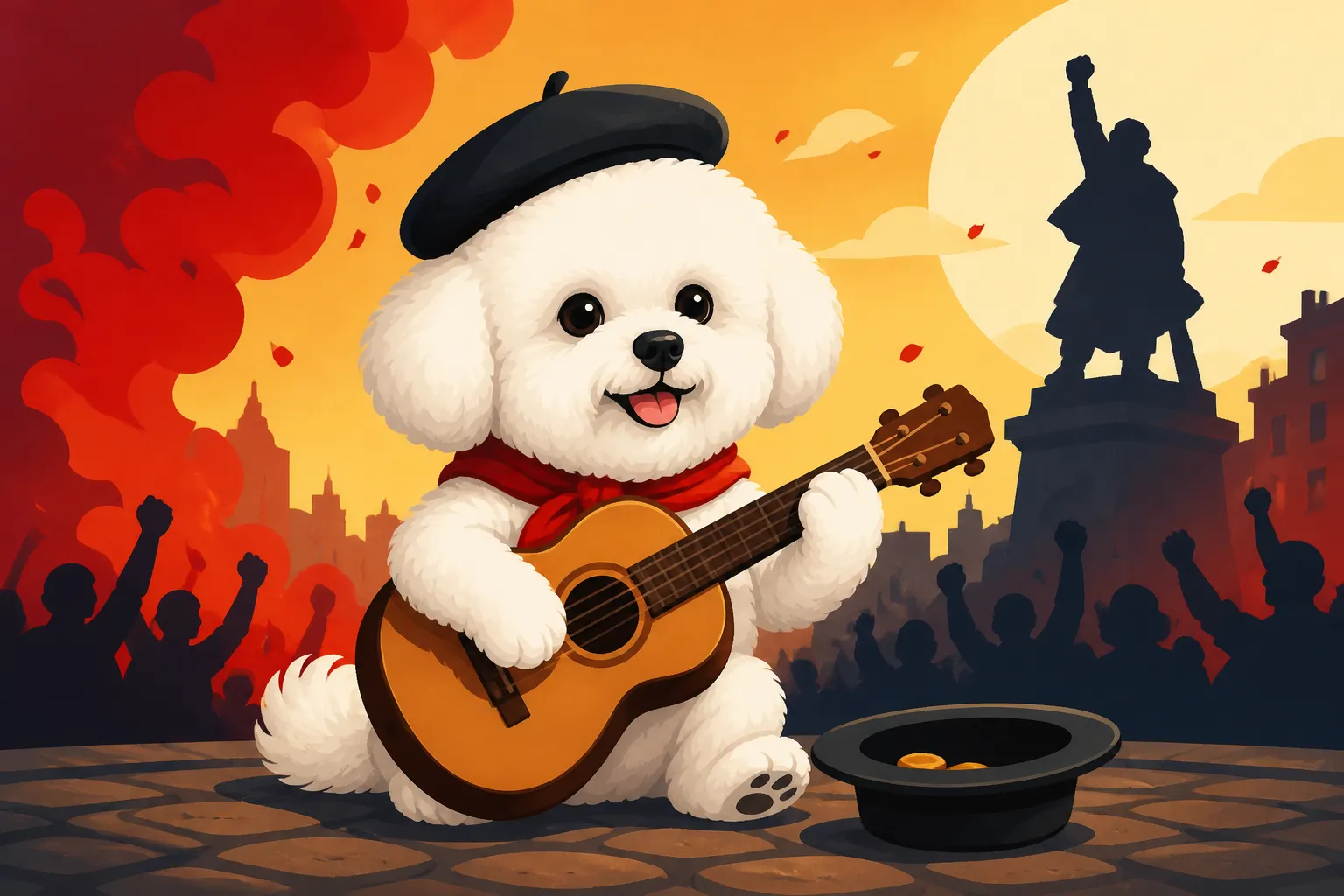
A common sight might have been a Bichon named 'Pierrot,' named after the commedia dell'arte clown, standing on his hind legs, paws clasped together as if begging, then twirling around to the delight of children. Another might "play dead" when a mock pistol shot was fired, only to spring back to life with a joyful bark. Balancing acts were popular too – a small bread crust or even a miniature hat balanced precariously on a Bichon’s nose, only to be expertly caught and eaten as a reward. These were the simple, yet effective, acts that formed the core of a street performer's routine.
Imagine the worn cobblestones as their stage, the bustling market square as their theater. The performers had to be quick, their acts short and punchy, as attention spans were fleeting and competition was fierce. They often worked in tandem with human musicians, dancers, or storytellers, adding an extra layer of charm and novelty to the overall spectacle. The bright white coat of the Bichon, perhaps kept as clean as possible with careful daily grooming, would have stood out against the drab attire of the era, making them an instant focal point.
The Importance of Temperament and Charisma
Beyond mere tricks, the Bichon Frise's inherent temperament played a monumental role in their success as street performers. Their naturally cheerful and outgoing disposition, often described as 'merry,' allowed them to connect with audiences. A timid or aggressive dog would quickly fail in this environment. The Bichon’s ability to approach strangers with an almost infectious joy, to make eye contact, and to seemingly relish their moment in the spotlight was invaluable. What Merry Means in the Bichon Frise Standard truly manifested during these years.
Their boundless energy and playful nature, which modern owners sometimes refer to as "the Bichon Blitz," also served them well. A burst of energetic running and playful leaps could easily draw a crowd and inject life into a street corner, encouraging people to stop and watch. This wasn't just about survival; it was about performance, about truly embodying the spirit of entertainment.
A Day in the Life of a Street-Performing Bichon
Life on the streets was far from easy, a stark contrast to the comfortable existence enjoyed by their ancestors. Every day was a grind, filled with uncertainty, danger, and the constant need to earn their keep.
The Daily Grind and Its Challenges
For a Bichon like "Bijou" and her human, Madame Dubois, a typical day would begin at dawn. They would walk miles across the city, seeking out prime locations – bustling market squares, popular bridges, or outside busy taverns – where crowds were likely to gather. The competition was fierce, with other performers, beggars, and peddlers all vying for attention and spare change. Madame Dubois would set out a worn blanket or a small mat, tune her mandolin, and begin her performance, with Bijou at her side, ready for her cues.
Weather was a constant adversary. Rain or bitter cold could easily ruin a day's earnings, leaving them hungry and exposed. Hunger was a frequent companion, and the scraps they might earn were often meager. Dogs were also at risk of injury from careless crowds, other animals, or even cruel individuals. There was no vet care as we know it today, and a sick or injured dog meant a loss of livelihood. The Fourteen to Fifteen Years a Bichon Frise Lives would have been a hard-won achievement for a dog living this kind of life.
The Deep Bond of Mutual Dependence
Despite the hardships, or perhaps because of them, the bond between a street performer and their Bichon was incredibly deep. This wasn't just a pet-owner relationship; it was a partnership based on mutual survival and profound trust. The human relied on the dog for income, and the dog relied on the human for food, shelter, and protection. Every successful performance was a shared victory, every hungry night a shared struggle.
This intense connection fostered an extraordinary level of communication and understanding. Owners would learn to read every nuance of their dog's body language, and the Bichon, in turn, would become incredibly attuned to their human's moods and commands. This era likely solidified the Bichon Frise's reputation as a highly intelligent, perceptive, and devoted companion, characteristics that are still cherished by owners today. You can imagine the absolute relief and joy when a good day meant they could afford a decent meal, perhaps even a treat from a stall that might be found on a modern pet supply site like Chewy (though of course, Chewy wasn't around then!).
The Legacy of Resilience and Adaptability
The street-performing years were a crucible that forged many of the enduring traits we now associate with the Bichon Frise. Their history is not just a quaint anecdote; it’s a fundamental part of their genetic and behavioral makeup.
Inherent Intelligence and Trainability
Think about the sheer number of tricks a Bichon needed to learn to keep an audience engaged. They weren't just repeating rote actions; they were responding to subtle cues, adapting to changing environments, and often improvising. This demanding lifestyle honed their intelligence and trainability to an exceptional degree. The breed’s innate desire to please, combined with their sharp minds, made them excellent pupils. They understood that their performance directly contributed to their well-being, creating a powerful motivation to learn and excel. Whether a Bichon Frise Is Easy to Train is a common question today, and this historical context provides a strong answer.
This legacy means that modern Bichons are typically eager participants in training, whether it's for basic obedience, agility, or learning fun tricks. They thrive on mental stimulation and enjoy having a "job" to do, even if that job is simply delighting their family with their antics.
The Unshakeable Cheerful Disposition
Perhaps the most remarkable trait to emerge from these difficult times is the Bichon Frise's enduring cheerful disposition. To maintain a bright, engaging demeanor day after day, despite hunger, cold, and uncertainty, speaks volumes about the breed's inherent optimism and resilience. They learned to project joy and enthusiasm because it was directly rewarded. This isn't just a superficial trait; it’s a deep-seated part of their character.
This historical resilience is why even today, Bichons often possess an almost magical ability to lift spirits and bring a smile to anyone they meet. Their "merry" nature isn't just for show; it's a deeply ingrained coping mechanism that transformed hardship into an opportunity for connection and survival. This unshakeable happiness, born from necessity, makes them wonderful therapy dogs and constant sources of joy.
Echoes in the Modern Bichon Frise
Even though the era of street-performing Bichons is long past, the experiences of their ancestors continue to resonate in the breed today. Modern Bichons carry the echoes of those brave, resourceful performers in their personalities and needs.
A Need for Engagement and Companionship
A Bichon Frise is not a dog content to be left alone for long periods. Their history as performing partners, constantly interacting with their human counterparts and engaging with crowds, fostered a profound need for companionship and interaction. They thrive when they are an integral part of family life, involved in daily activities, and receiving plenty of attention. Whether a Bichon Frise Needs a Second Dog or a human who is home often, stems from this deep-seated need for connection.
This isn't just about being cuddly; it's about being present and involved. A Bichon who feels neglected can develop behavioral issues, much like their ancestors might have lost their sparkle if disengaged from their performance. They need to feel valued and have a purpose, even if that purpose is now simply to be a beloved family member.
The Desire to Perform and Entertain
Watch a Bichon "blitz" around the house, performing zoomies with wild abandon, or learn a new trick with astonishing speed, and you're seeing the spirit of their street-performing ancestors at play. Many Bichons still possess an inherent desire to entertain. They love being the center of attention, performing their silly antics, and eliciting laughter and praise. This trait is not just charming; it's a deeply rooted part of their identity.
This desire means that positive reinforcement training works exceptionally well with Bichons. They love the reward of praise and attention, much as their ancestors loved the applause and coins of a grateful audience. Providing them with opportunities to "perform," whether it's through learning new tricks, participating in dog sports, or simply being the family comedian, fulfills this ancient instinct. Whether a Bichon Frise Can Do Agility is a resounding yes, thanks to this inherited drive.
Preserving the Bichon Frise Spirit
Understanding this unique history allows us to better appreciate and care for our modern Bichon Frises. It’s not just about providing food and shelter; it’s about nurturing the spirit of resilience, intelligence, and companionship that was forged in challenging times.
Embracing Their Trainability
Given their history, investing time in training your Bichon Frise isn't just recommended; it's essential for their well-being. They truly enjoy the process of learning and the mental stimulation it provides. Consider enrolling in obedience classes, trying out dog tricks, or even exploring canine sports like rally or agility. This not only strengthens your bond but also taps into their ancestral talent for performance. Consistent, positive reinforcement methods will yield the best results, as they were, and still are, highly motivated by praise and connection.
Remember that a well-trained Bichon is a happier Bichon, one that feels engaged and understood. Their quick minds mean they can master a wide array of commands and tricks, often surprising owners with their cleverness. Regular training sessions, even short ones, can help prevent boredom and destructive behaviors that can arise from an unfulfilled need for mental engagement.
Nurturing Their Social Needs
The street-performing Bichons depended on human interaction for their very existence. This legacy means that today's Bichons need ample socialization and companionship. They are not suited to being isolated. Regular walks, trips to dog-friendly places, and consistent interaction with family members are crucial for their emotional health. If you work long hours, consider a dog walker or doggy daycare to ensure they receive the social stimulation they crave. Whether a Bichon Frise Needs a Dog Walker can indeed be a very important question.
Making your Bichon a central part of your family activities, whether it's movie night on the couch or a walk in the park, will fulfill their deep-seated need for belonging and companionship. They are truly people-oriented dogs, and their happiness is intrinsically linked to the time and attention they receive from their human family. Ensuring they have a consistent routine and plenty of company will help them thrive. And of course, keeping them supplied with their favorite toys and comfy beds from places like Chewy helps ensure their modern pampered lives are still fulfilling.
The Modern Pampered Performer
Today, our Bichon Frises enjoy lives that their street-performing ancestors could only have dreamed of. They have reliable meals, soft beds, regular vet care, and consistent grooming. However, the essence of that past remains. They are still charming, intelligent, resilient, and utterly devoted companions with a natural flair for entertaining.
The next time your Bichon does a little "Bichon Blitz" or looks at you with those soulful, intelligent eyes, remember their incredible journey. From the laps of luxury to the hardscrabble streets and back to our loving homes, the Bichon Frise has proven to be a truly extraordinary breed, defined by a spirit that refuses to be diminished by adversity. Their story is a testament to the enduring power of the human-animal bond, forged in the most unexpected and challenging of circumstances.
Disclaimer
This article is for general informational purposes only and does not constitute professional advice. Laws, prices and regulations vary by location and change over time. Consult a qualified professional for guidance on your specific situation.