Whether Goya Painted a Bichon Frise
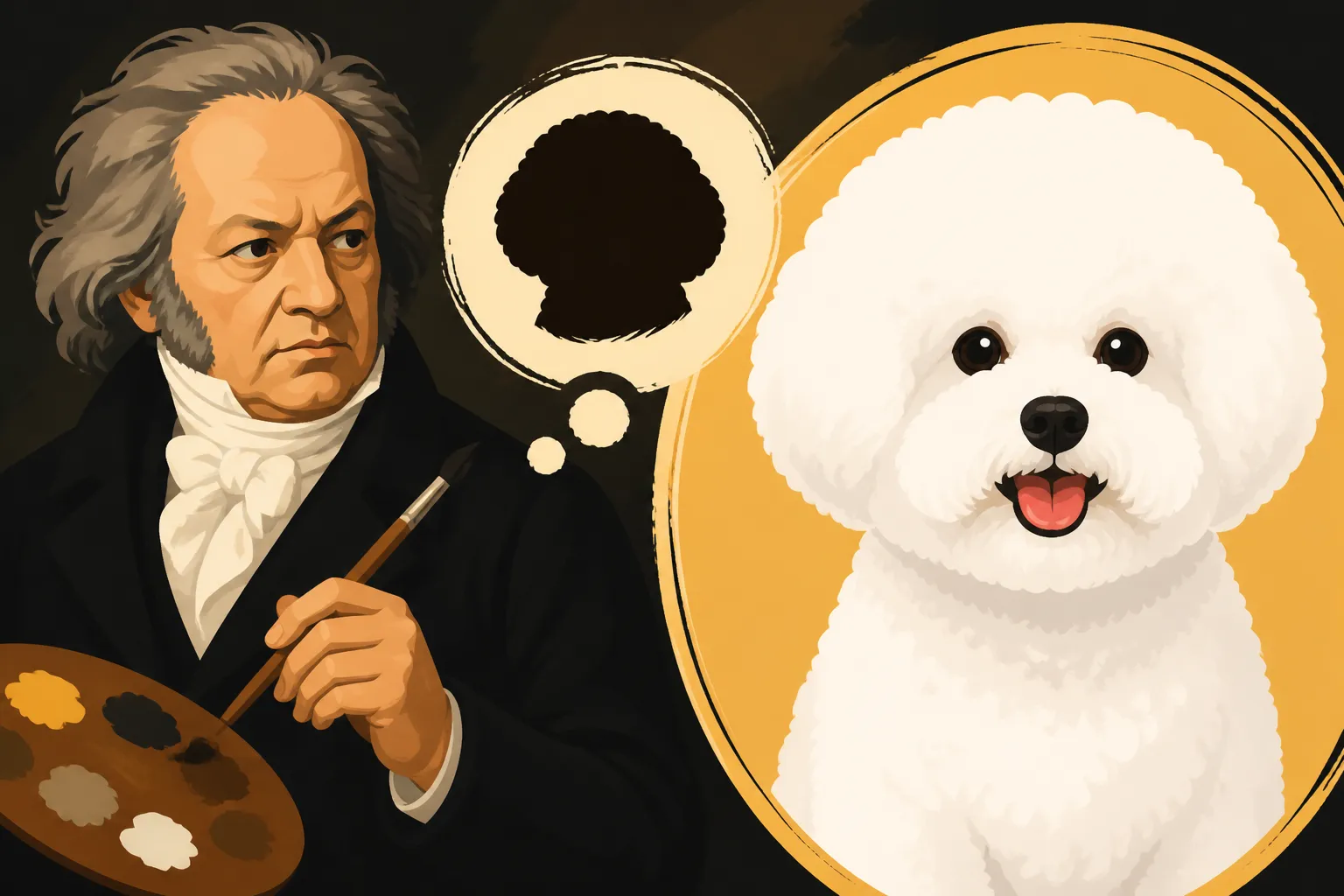
Many Bichon Frise enthusiasts, myself included, often find themselves gazing at classic artworks, wondering if our beloved fluffy companions ever graced the canvases of master painters. It's a common desire to see a piece of our daily joy reflected in history, and for a breed with such a rich past among nobility, it’s not a far-fetched thought. This guide will explore the fascinating history of the Bichon Frise, delve into the world of Francisco Goya, and examine whether there's any historical or artistic evidence to suggest that this celebrated Spanish artist ever captured the charming spirit of a Bichon Frise.
The Bichon Frise: A History in the Lap of Luxury
The Bichon Frise didn't just appear out of nowhere; this delightful breed has a lineage deeply intertwined with European aristocracy and art. Understanding their journey is key to appreciating their potential presence in historical paintings. It's truly amazing to think how far back their roots go, originating from a much larger family of small, white dogs.
From Seafaring Dogs to Royal Companions
Our story begins far from the opulent courts of Europe, instead tracing back to the sunny shores of the Mediterranean. The Bichon Frise, or rather its ancestral types, were known as "Barbichon" dogs, a group that included the Maltese, Bolognese, Havanese, and Coton de Tulear. These clever little canines were highly valued by sailors and merchants, often accompanying them on long voyages across the seas. They were excellent companions, and their cheerful disposition likely provided much-needed comfort during lonely journeys. You can learn more about their geographical origins by reading The Canary Island the Bichon Frise Is Named After and How Sailors Carried the Bichon Frise Around the Mediterranean.
As trade routes expanded, so did the reach of these charming dogs. Italian sailors, particularly, are credited with bringing these "Tenerife dogs" (as they were sometimes called, after one of the Canary Islands) back to mainland Europe, especially to Italy in the 14th century. It wasn't long before their appealing looks and vivacious personalities caught the eye of the Italian nobility. These fluffy white dogs quickly transitioned from shipboard companions to pampered pets, becoming status symbols among the wealthy and elite.
The Golden Age of Bichons: When They Were Truly En Vogue
By the 16th century, the Bichon Frise had truly made its mark, especially in France. It was during the French Renaissance that these dogs achieved peak popularity. King Henry III of France, a well-known dog lover, was reportedly so enamored with his Bichon Frises that he carried them everywhere in a basket, even adorning them with ribbons and perfume. Can you imagine the sight? This royal endorsement solidified their status as court favorites, and it became fashionable for ladies and gentlemen of the aristocracy to own a Bichon-type dog. If you’re curious about which specific monarchs favored them, check out Which French Kings Kept Bichon Frises.
This period, from the 16th to the 18th centuries, was indeed the golden age for these breeds. Their elegant white coats and intelligent, merry expressions made them perfect subjects for portraiture. Artists of the time frequently depicted noblewomen and their children with their cherished companion dogs, often small, fluffy, and white, nestled in their laps or at their feet. These paintings served not just as portraits of individuals, but also as a testament to their wealth, status, and refined taste. The presence of such a dog in a portrait was a subtle, yet powerful, statement. The breed's journey to European courts is fascinating, as detailed in The French Court That Made the Bichon Frise Fashionable.
Goya's Canines: What Dogs Appeared in His Art?
Now, let's shift our focus to the master painter himself, Francisco Goya. Born in Fuendetodos, Spain, in 1746, Goya's career spanned the late 18th and early 19th centuries, a period of immense social and political upheaval in Spain. His work evolved dramatically over his lifetime, moving from cheerful Rococo-inspired tapestry cartoons to stark, powerful portraits, and later, to dark, introspective works that explored human suffering and the absurdities of war.
Goya's Style and Subjects
Goya was a groundbreaking artist, known for his incredible versatility and often unflinching realism. Unlike many of his predecessors who might have idealized their subjects, Goya often captured the true essence, the flaws, and the spirit of the people he painted. He served as court painter to the Spanish Crown, creating numerous portraits of the royal family, aristocrats, and other prominent figures of his era. These portraits offer a fascinating glimpse into the fashion, social customs, and even the personalities of late 18th and early 19th century Spain.
When Goya included dogs in his paintings, they weren't just decorative elements; they often played a symbolic role or provided a subtle insight into the sitter's character. Sometimes they were hunting dogs, representing power or masculinity, while other times they were small companions, hinting at affection or domesticity. He had a knack for depicting animals with great accuracy, capturing their individual expressions and breeds. However, his focus was largely on the human condition and the political landscape, so while dogs appear, they are usually secondary to the main human subjects.
Common Breeds in 18th/19th Century Spanish Art
In Goya's time, much like in other European courts, various breeds of dogs were popular. Hunting dogs, such as pointers and greyhounds, were common in paintings featuring noblemen or scenes of the hunt. For companion dogs, small spaniel types, often referred to broadly as "toy spaniels," were frequently depicted. These might have included ancestors of today's Cavalier King Charles Spaniel or similar small, long-haired breeds.
It's also important to remember the "Barbichon" family of dogs, from which the Bichon Frise descends. These small, white, fluffy dogs were indeed fashionable. While distinct breeds as we know them today were still evolving and not always as rigidly defined as they are now, the general type of a small, white companion dog was certainly present and beloved in Spanish high society. The Maltese, a close cousin of the Bichon, was also a well-established and highly regarded lapdog in many European aristocratic households, including those in Spain. The question then becomes, did Goya specifically capture what we would recognize as a Bichon Frise?
The Case for a Bichon Frise in Goya's Brushwork
This is where it gets interesting! While Goya did paint dogs, finding a definitive "Bichon Frise" among his works is a bit more nuanced than a simple yes or no. The breed's presence in Spain during his lifetime makes it entirely plausible, but specific identification can be tricky.
Examining the Evidence
When we look at Goya's portraits featuring small, white dogs, there are a few contenders that Bichon enthusiasts sometimes point to. Perhaps the most famous (or infamous) example often discussed in relation to Goya and small white dogs is The Duchess of Alba and Her Maid, 'La Beata' (1795). In this painting, a small, white dog, possibly a Maltese or a similar Barbichon type, is seen at the Duchess's feet, with a red ribbon. While this dog certainly shares some characteristics with a Bichon Frise – small size, white coat, fluffy appearance – the exact breed identification is still debated by art historians. It's safe to say it's a dog from the "Bichon type" family.
Another work that comes to mind is Manuel Osorio Manrique de Zúñiga (1784-88), a famous portrait of a young boy in a red suit. While this painting prominently features a magpie and several cats, a leash is visible leading off-canvas, suggesting the presence of a dog just out of frame. And while not a direct depiction, the context implies that companion animals, including small dogs, were very much part of aristocratic life, even if not always the central focus of Goya's compositions.
It's also worth considering how breeds were named and categorized at the time. The term "Bichon Frise" as a distinct, standardized breed name didn't become universally recognized until much later. Goya and his contemporaries would have referred to these dogs by regional names, or simply as "lap dogs" or "toy dogs." The specific traits defining a "Bichon Frise" today might have been present, but the dog wouldn't necessarily have been called that name in 18th-century Spain. This difficulty in precise historical identification means that while dogs resembling Bichons appear, a definitive stamp of "This is a Bichon Frise" is rare for any painter of that era. However, it's certainly known that Whether the Bichon Frise Was in Spanish Paintings is a topic of keen interest for art and dog lovers alike.
The "Tenerife Dog" Connection
Let's not forget the breed's earlier name: the "Tenerife Dog." This designation directly links the Bichon's ancestors to Spain, specifically the Canary Islands, which have been Spanish territory for centuries. Given this geographical and historical connection, it's highly probable that dogs of the Bichon type were common in Spain long before Goya picked up his brush. They would have been familiar sights in homes and among the wealthy patrons he painted.
So, while Goya might not have explicitly labelled a painting "Portrait of a Bichon Frise," the strong historical ties of the Bichon's ancestors to Spain, coupled with their popularity among the upper classes, make it very likely that dogs fitting the general description of a small, white, fluffy companion dog were present in his visual world. It's less about a direct naming convention and more about the visual characteristics of the dogs he depicted. When considering The Barbichon Family the Bichon Frise Belongs To, you can see how intertwined these breeds are, making it difficult to isolate one from the other in ancient art.
To summarize the visual characteristics often attributed to Bichon-type dogs in the Goya era versus what we know today:
| Characteristic | 18th/19th Century "Bichon Type" (as seen in art) | Modern Bichon Frise Standard |
|---|---|---|
| Size | Small, lapdog size | Small, compact, typically 12-18 lbs |
| Coat Color | Predominantly white | Pure white is preferred |
| Coat Texture | Fluffy, soft, often curly or wavy | Soft, dense, curly "powder puff" |
| Head Shape | Roundish, sometimes blended with longer muzzle | Round, soft expression |
| Ears | Dropped, often obscured by coat | Dropped, well-covered with long hair |
| Tail | Carried gaily over the back | Carried proudly over the back |
| Expression | Alert, charming, sometimes sweet | Merry, intelligent, inquisitive |
It's clear that the general look of what we now call a Bichon Frise was present and admired in Goya's time.
Why Historical Accuracy Matters for Our Beloved Bichons
Understanding the historical context of a breed like the Bichon Frise, including its representation in art, isn't just a fun fact for dog lovers. It deepens our appreciation for their lineage and the unique role they've played throughout human history. It reminds us that these little fluffy creatures are far more than just pets; they are living testaments to centuries of companionship.
Beyond the Canvas: The Enduring Appeal of the Bichon
Even if we can't definitively point to a painting and say, "There's a Bichon Frise by Goya!" the journey through art history still enriches our understanding of the breed's timeless appeal. The qualities that made them favorites of kings and queens are the same ones that capture our hearts today: their merry temperament the Bichon Frise standard demands, their cheerful disposition, and their undeniable charm. These dogs were bred for companionship, and that purpose has remained steadfast through centuries of societal change.
Their playful nature, often expressed in what we fondly call the "Bichon Blitz," or "zoomies," is something that has likely delighted owners for generations. Can you imagine a fluffy white dog racing around a gilded drawing-room, causing a stir among the courtiers? Their ability to brighten a day, to offer unconditional love, and to simply be a joyful presence has ensured their place in human hearts, whether in an elaborate portrait or curled up on our modern sofas.
How Historical Context Enriches Our Bond
Knowing that the ancestors of our Bichons were cherished by royalty and possibly even depicted by great artists like Goya adds another layer to our bond with them. It connects us to a long line of dog lovers who adored these fluffy companions. It helps us appreciate that the characteristics we love so much—like their bright eyes, soft fur, and endearing personality—are part of a legacy that spans hundreds of years.
Moreover, studying their history helps us understand the importance of responsible breeding and preservation. It highlights the traits that have been valued for generations and encourages us to maintain the health and temperament of the breed for future generations. For example, understanding the physical traits that make up The Powder Puff Outline the Bichon Frise Standard Describes helps ensure breeders work towards preserving the breed's distinctive look and structure. Even considering how far back the Maltese's history goes in comparison, explored in Whether the Maltese Is Older Than the Bichon Frise, helps put the Bichon's lineage into broader perspective.
So, while Goya might not have painted a "Bichon Frise" by name, his era certainly saw the flourishing of the Bichon's ancestors in the highest echelons of Spanish society. The spirit of the merry little white dog, a dog that would eventually become our cherished Bichon Frise, was undoubtedly part of the vibrant world Goya observed and immortalized on canvas.
Disclaimer
This article is for general informational purposes only and does not constitute professional advice. Laws, prices and regulations vary by location and change over time. Consult a qualified professional for guidance on your specific situation.