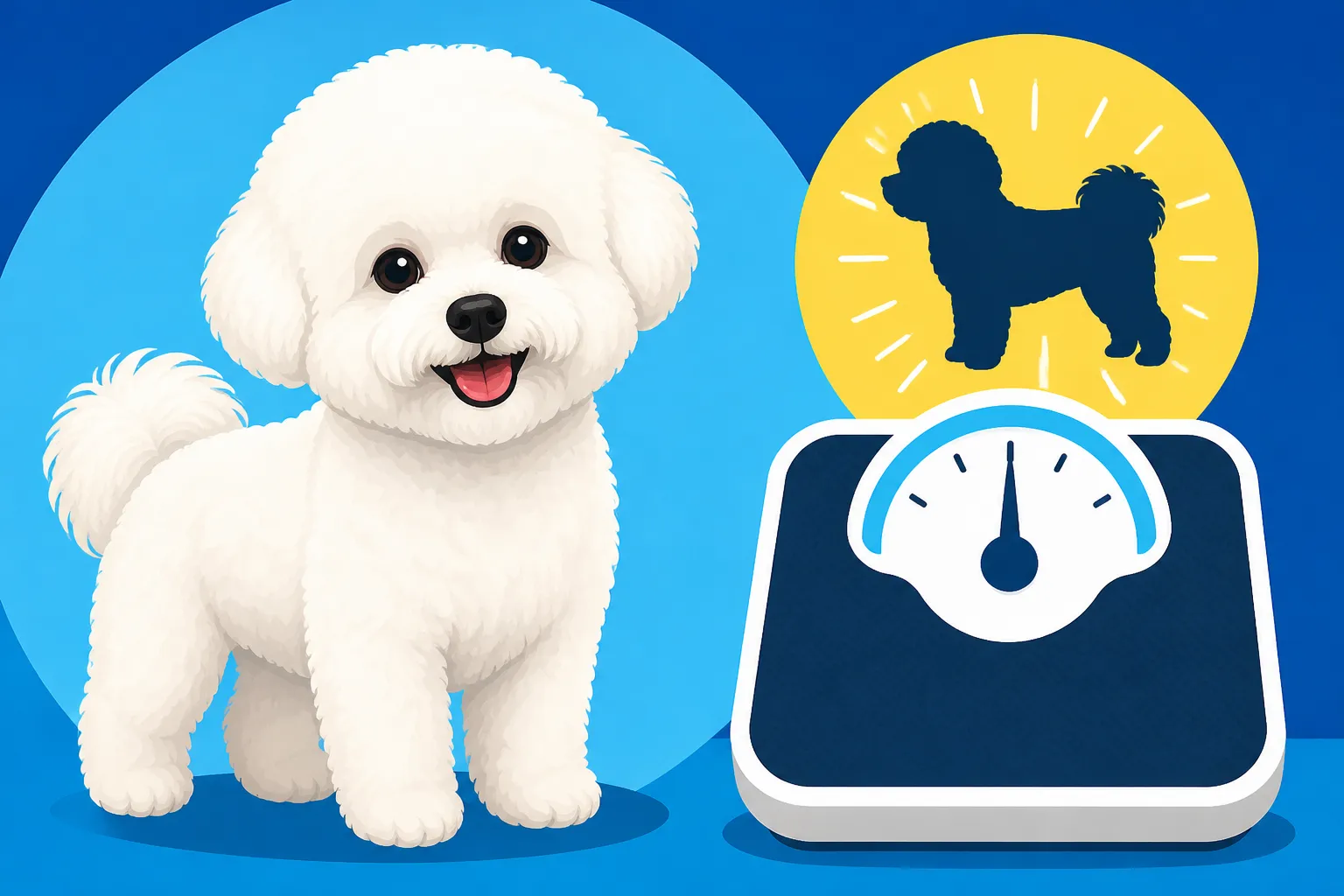
What an Adult Bichon Frise Weighs
An adult Bichon Frise usually weighs about 12 to 18 pounds, but that range is only a starting point—not a verdict on whether your dog is healthy. A compact, sturdy Bichon and a taller, finer-built one can both be in good condition at different weights. This guide explains the typical range, how to assess body shape, and when a weight change deserves a vet call.
The typical adult Bichon Frise weight
What the usual weight range means
A fully grown Bichon Frise commonly weighs between 12 and 18 pounds. That’s a practical breed reference, not a requirement every individual dog must meet. Height, bone structure, muscle, sex, and inherited build all affect the number on the scale.
If your Bichon weighs 11 pounds or 19 pounds, that alone does not establish a problem. A small dog with a naturally narrow frame may be healthy near the lower end, while a taller, sturdier dog may carry more weight appropriately. What matters is whether your dog’s weight suits their frame and whether their body condition stays consistent.
For a broader look at the breed’s build, see What a Bichon Frise Actually Weighs and How Big a Bichon Frise Gets. These measurements are useful context, but your own dog’s body condition and veterinary history are more useful than comparing them with a single number.
Weight is not the same as body condition
Two Bichons can weigh the same and have very different amounts of body fat. A dog with good muscle tone may look and feel different from a dog with less muscle and more fat, even if the scale reads the same. That’s why a healthy-weight assessment looks at body shape and how easily you can feel the ribs, rather than relying only on pounds.
A Bichon’s dense, fluffy coat can make this assessment surprisingly tricky. A dog may look round because of a full coat, or appear trim after a short haircut while still carrying excess weight. Check how the body feels under the coat, and ask your veterinarian to assess body condition during routine visits.
When a dog is still growing
Bichon puppies do not reach adult size overnight. Many approach their adult height during their first year, then continue to fill out as they mature. The pace varies, so a puppy’s weight should be interpreted alongside age, growth pattern, and body condition rather than judged against the adult range.
If you’re trying to estimate your puppy’s eventual size, the parents’ size can offer some clues, but it cannot provide a guarantee. For more context, read The Age a Bichon Frise Reaches Full Size and Whether Parent Weights Predict a Bichon Frise's Size. A vet can help distinguish ordinary growth from a weight pattern that needs closer attention.
How to tell if your Bichon is at a healthy weight
Use your hands as well as your eyes
With your dog standing comfortably, gently run your hands along both sides of the rib cage. You should generally be able to feel the ribs without pressing hard, but they should not be sharply visible in a dog with a healthy body condition. A thick coat can fool your eyes; your fingertips are often more informative.
Look at your Bichon from above and from the side. From above, there should usually be a visible waist behind the ribs. From the side, the abdomen should tuck upward somewhat rather than forming a straight or sagging line from chest to hindquarters. These are broad guidelines, not a home diagnosis: a vet can assess the dog’s body condition and explain what is normal for their frame.
If the waist is difficult to see or the ribs are hard to feel, excess weight may be worth discussing. If ribs, spine, or hip bones are prominent, or your dog seems to be losing muscle, schedule a veterinary check rather than trying to solve the issue by simply increasing food.
Consider coat, posture, and muscle
Bichons are often kept in a rounded trim, which can make their outline look fuller than their body actually is. A recent groom may also make a dog appear suddenly slimmer. Neither a fluffy silhouette nor a sharp change in appearance necessarily means the dog’s weight has changed.
Pay attention to how your dog moves and how their body feels. Notice whether they tire more easily, have trouble jumping onto a familiar low surface, or seem less comfortable on walks. Those changes can have many causes, including joint pain or other health issues, so avoid assuming that weight is the only explanation.
For a practical checklist of signs to watch for, see Signs a Bichon Frise Is Carrying Too Much Weight. It can help you describe what you’re noticing, but a vet’s hands-on assessment is the right way to confirm whether a change in body condition is significant.
Keep a simple weight record
A single weigh-in is a snapshot. A series of weigh-ins, taken in a consistent way, can show whether your dog is stable, gradually gaining, or losing weight. Record the date and weight, and note changes in food, treats, activity, or health around the same time.
Small dogs can be weighed at home if you have a suitable pet scale. Some owners compare small pet scales at local shops or online retailers such as Chewy; the important part is using the same scale consistently and placing it on a firm, level surface. If your Bichon will not stand still, or the reading seems unreliable, your veterinary clinic can help with a weigh-in.
| What you notice | What it may suggest | A sensible next step |
|---|---|---|
| Ribs are easy to feel, with a visible waist | Often consistent with a healthy body condition | Maintain the routine and track weight periodically |
| Ribs are difficult to feel and the waist is hard to see | Possible excess body fat | Ask your vet to assess body condition |
| Ribs, spine, or hips are prominent | Possible low body fat or muscle loss | Arrange a veterinary assessment |
| Weight changes noticeably without an obvious reason | A health, diet, or activity change may be involved | Contact your vet and bring your weight notes |
Why a Bichon’s weight can change
Food portions and treats add up
A portion that looks small to you can still be a large share of a small dog’s daily intake. Measuring food with a scoop can also be inconsistent, especially if the scoop is heaped one day and level the next. Use a consistent measuring method and review the portion with your vet if your dog’s weight is changing.
Treats, training rewards, dental chews, and table scraps count too. They can add up quietly across the day, particularly in a household where several people offer “just one little bite.” If you’re comparing small-breed foods on Chewy or elsewhere, check the feeding guidance and calorie information on the specific product, then ask your vet how it fits your dog’s needs. A package recommendation is a starting point, not a personalized prescription.
For more on feeding amounts, see How Much an Adult Bichon Frise Eats Daily. If your dog has a medical condition or has been prescribed a therapeutic diet, check with the veterinary team before changing foods or adding new treats.
Activity and routine can shift
A Bichon who used to take several lively walks may become less active during a busy season, after an injury, or as they age. If food portions remain unchanged while daily movement drops, gradual weight gain can follow. On the other hand, a sudden increase in activity can change energy needs.
The goal is not to force strenuous exercise. Regular walks, indoor play, and short training sessions can help keep activity steady, adjusted to your dog’s age, fitness, and comfort. If your Bichon is reluctant to move, limping, coughing, or tiring unexpectedly, speak with a vet before trying to exercise them more.
Health changes deserve attention
A gradual gain may be associated with routine, portion size, or reduced activity, but weight change can also accompany health problems or medication effects. Unexplained weight loss is particularly important to discuss, even if your dog still seems cheerful and eager to eat. Small dogs can change noticeably without a dramatic difference on the scale.
Contact your veterinarian if your Bichon loses or gains weight without an obvious explanation, has a changed appetite, vomits repeatedly, has diarrhea, drinks or urinates more than usual, or seems unusually tired. Seek prompt advice for rapid deterioration or difficulty breathing. The vet may ask about food, treats, medications, activity, and the timing of the change, so a simple log can make the conversation more useful.
Helping your Bichon maintain a healthy weight
Make changes gradually and with guidance
If your veterinarian confirms that your Bichon should lose weight, ask for a target and a plan that fit your dog’s size, age, and health. Avoid sharply cutting food on your own. Too large a reduction may leave a dog hungry or fail to provide appropriate nutrition, and the right approach depends on the individual.
Measure meals consistently and include treats in the daily plan. You can reserve part of your dog’s regular food for training rewards, or ask your vet which low-calorie options are suitable. If several people feed the dog, agree on portions and keep a shared record; this prevents duplicate meals and treats.
For an overweight Bichon, Getting Weight Off a Bichon Frise offers more detail on the weight-management process. Your veterinarian can help set a realistic pace and reassess the plan if your dog is not responding as expected.
Choose food based on the dog, not just the label
A small-breed formula may suit some Bichons, but the phrase “small breed” alone does not tell you whether a food is right for your particular dog. Consider life stage, activity, health needs, and how well your dog tolerates the food. Your veterinarian can help compare options, especially if your Bichon has a condition requiring a specific diet.
If you shop at Chewy or another retailer, use the product’s feeding directions and calorie information as reference points rather than assuming that one brand or formula is automatically best. A vet can help you interpret the label and decide whether your dog needs a standard maintenance food or a different approach. See Whether a Bichon Frise Needs Small Breed Kibble for more on that choice.
Recheck rather than guessing
After a diet or activity change, follow the monitoring schedule your vet recommends. Weigh your dog under similar conditions each time, such as at the same clinic or on the same home scale. Also keep track of body shape, appetite, energy, and stool quality. If weight continues to move in the wrong direction, share the record and revisit the plan instead of making repeated changes without guidance.
For many owners, the hardest part is noticing a slow shift beneath the Bichon’s coat and knowing whether it matters. You do not need to solve that by eye alone. A consistent weight record, a gentle rib-and-waist check, and a veterinary body-condition assessment together give a much clearer picture than the scale number by itself.
Disclaimer
This article is for general informational purposes only and does not constitute professional advice. Laws, prices and regulations vary by location and change over time. Consult a qualified professional for guidance on your specific situation.