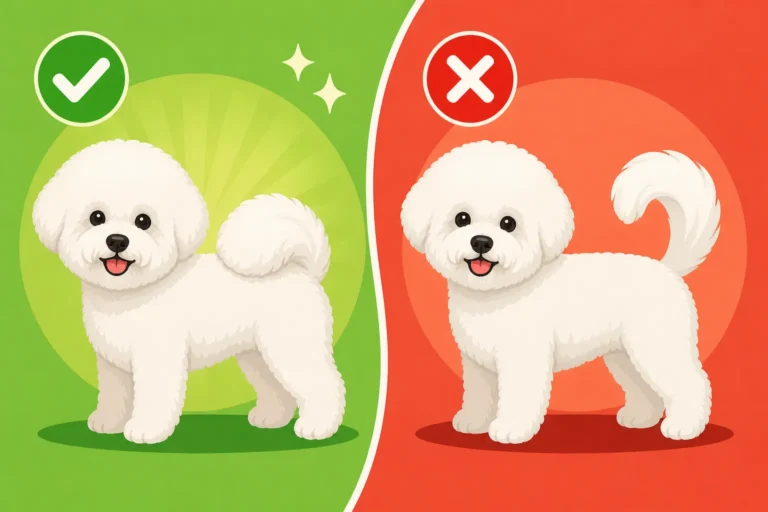
Whether the Smallest Bichon Frises Are Healthy
A very small Bichon Frise can be perfectly healthy, but size alone doesn’t tell you whether a puppy is thriving. “Teacup” and “miniature” labels can make it harder to separate a naturally petite dog from one whose growth is affected by illness, poor breeding, or inadequate care. This guide explains what to look for, what to ask, and when to involve your veterinarian.
What counts as a small Bichon Frise
Small is not the same as miniature
Bichon Frises are small dogs, and individuals vary in height, build, and adult weight. A dog at the lower end of the breed’s usual size range is not automatically unhealthy. More useful than a single number on the scale is the whole picture: the dog’s age, body condition, growth over time, energy, appetite, and veterinary history.
“Teacup” and “miniature” are often marketing terms rather than separate, officially recognized Bichon Frise varieties. A seller may use them to suggest that a puppy will remain unusually tiny, but the label itself does not prove that the dog is healthy, purebred, or likely to reach a particular adult size. If you’re trying to understand the breed’s typical range, What an Adult Bichon Frise Weighs and Whether a Miniature Bichon Frise Is Real offer useful context.
A naturally petite Bichon may simply come from smaller parents or have a lighter build. That’s different from being undersized because of a health problem. Even parent size is only a clue, not a promise: puppies in the same litter can grow at different rates, and adult size cannot be predicted precisely from a photo or a seller’s estimate. For more on that uncertainty, see Whether Parent Weights Predict a Bichon Frise's Size.
Why body condition matters more than the smallest number
A healthy small dog should be well-proportioned, with enough muscle and energy for ordinary play and walks. You should be able to feel the ribs under a light layer of tissue, but they should not be sharply prominent. A tucked-up waist is normal; a hollow appearance, visible bones, or sudden loss of weight deserves attention.
Coat can disguise a Bichon’s shape. Their fluffy hair may make a thin dog look round, or make a healthy dog appear larger than they are. During grooming, gently feel along the ribs, spine, and hips rather than relying only on how the dog looks. If you’re unsure whether your Bichon is too thin, too heavy, or just petite, ask your veterinarian to assess body condition and explain what to monitor at home.
A dog’s size can also be misleading in the other direction. A compact Bichon with a round belly may be carrying excess weight rather than being naturally stocky. Weight management matters even for small dogs: extra weight can put more strain on joints and make movement less comfortable. Don’t try to change your dog’s food or portions sharply just to reach a number you saw online; get an individual feeding recommendation instead.
| What you notice | What it may mean | A sensible next step |
|---|---|---|
| A petite dog who eats, plays, and steadily grows | May simply be naturally small | Keep routine veterinary visits and track growth |
| A puppy who is much smaller than littermates and not gaining | Could have a health or feeding problem | Arrange a veterinary assessment |
| Prominent ribs, spine, or hips | May be underweight or unwell | Contact your veterinarian, especially if weight loss is new |
| Sudden change in appetite, energy, or weight | Can signal illness, whatever the dog’s size | Seek veterinary advice promptly |
| A seller promises an extra-small adult dog | A marketing claim, not a health guarantee | Ask for records, parent information, and veterinary documentation |
Health questions to consider in a very small Bichon
Small size alone does not diagnose a health problem
A small Bichon may be healthy and lively throughout life. But when a puppy is unusually tiny, it’s worth asking why rather than assuming that “smaller” means “special.” Poor growth can have several possible explanations, including inadequate nutrition, parasites, illness, or an underlying developmental problem. Only a veterinarian can assess the individual dog and decide whether testing or treatment is needed.
Pay attention to changes and patterns. Is the puppy gaining weight over time? Does it eat willingly? Is it alert and curious when awake? Does it tire unusually quickly, vomit repeatedly, have diarrhea, or seem weak? One small measurement by itself may not be alarming, but poor growth combined with symptoms should not be brushed off as a breed trait.
Very small puppies also have less physical reserve than sturdier adult dogs. They can be more vulnerable to accidental injuries, particularly when dropped, stepped on, or allowed to leap from furniture. That does not mean you must keep a Bichon wrapped in cotton wool. It does mean supervising interactions with young children, providing safe routes on and off furniture, and avoiding rough handling. For a broader look at their build and needs, see Whether a Bichon Frise Is Sturdier Than It Looks.
Some risks are about the individual dog, not its size
Bichon Frises can have health concerns that have little to do with whether they are small for the breed. A petite dog should still receive regular veterinary care, dental checks, preventive care, and attention to changes in movement, urination, skin, or appetite. Don’t assume that a tiny frame explains every symptom. Straining to urinate, repeated vomiting, marked weakness, or sudden difficulty walking should be discussed with a veterinarian rather than attributed to size.
Ask a breeder about the health history of the parents and close relatives, and about screening that is relevant to the breed. A responsible breeder should be willing to talk plainly about known issues and provide records, rather than relying on assurances such as “the parents are tiny and healthy.” The post The Health Tests Both Bichon Frise Parents Should Have can help you prepare questions about health screening.
Likewise, a small puppy should not be selected solely because it looks like it will stay tiny. Choose for health, temperament, and responsible breeding practices—not the promise of a particular adult weight. If a seller refuses to share veterinary records, won’t let you ask about the puppy’s background, or pressures you to pay quickly for a “rare teacup” dog, pause and investigate before committing.
How to check that a small puppy is growing well
Track progress instead of comparing puppies
Puppies grow at different rates, so comparing your Bichon with a littermate, a dog on social media, or a breed chart can cause unnecessary worry. A more useful approach is to record your own puppy’s weight at regular intervals and share the pattern with your veterinarian. Consistent measurements help show whether growth is steady, slowing, or reversing.
Use the same scale when possible, and note the date and any relevant changes, such as a move to a new home, a diet change, or a recent illness. A home log does not replace a veterinary exam, but it can help you give clear information instead of trying to remember whether your puppy “seemed smaller” last month. Your vet can interpret the trend alongside the puppy’s age, examination, and history.
Keep an eye on behavior as well as the scale. A healthy puppy should have periods of active play and rest, show interest in food, and respond normally to its surroundings. A puppy who is persistently weak, unusually sleepy, unwilling to eat, or struggling to keep food down needs professional attention. With a very small puppy, it is especially wise to call the clinic for guidance rather than waiting several days to see if the problem passes.
Ask direct questions before bringing a puppy home
If you’re choosing a puppy, ask the breeder for the puppy’s veterinary records, vaccination and parasite-control history, and recorded weights. Ask how the puppy is eating and whether it has had any health concerns. Request information about the parents’ size and health, but remember that parental measurements cannot guarantee the puppy’s final adult size.
Ask how the breeder describes the puppy’s expected size and what that estimate is based on. A careful breeder will explain that adult size can vary rather than promising that a puppy will remain below a particular weight. Be cautious if the puppy is advertised as “teacup” or “miniature” with no clear explanation of its health history or breeding.
It can also help to meet the puppy and observe the conditions it has been raised in. Is it alert and able to move comfortably? Is the environment clean and calm? Does the breeder welcome questions? A healthy appearance on one visit is not a guarantee of future health, but openness and good documentation make it easier to make an informed decision. For more help evaluating a seller’s practices, see Whether a Bichon Frise Breeder Screens for Stones and Whether an Untested Bichon Frise Litter Is Worth Buying.
Everyday care for a petite Bichon
Make food and supplies fit the individual dog
Feed a complete, balanced food appropriate for your dog’s life stage, and ask your veterinarian how much to offer. A very small puppy may need a feeding routine tailored to its age and condition, while an adult dog’s portions depend on body condition and activity—not on the marketing label attached to its size. Avoid adding supplements or switching to a restrictive diet simply because a dog is small.
When shopping for a harness, carrier, or other equipment, measure your dog rather than guessing from breed or weight. A harness that is too loose can allow an escape; one that is too tight can rub or restrict movement. Chewy and local pet-supply shops may list sizing guidance, but check the measurements against your dog and make sure the equipment can be adjusted comfortably. Recheck the fit as a puppy grows.
Food choices can be confusing when bags use phrases like “small breed.” If you’re considering a different kibble or feeding approach, ask your vet whether it suits your dog’s age, health, and chewing ability. Chewy can be one place to compare food labels and package sizes, but the label does not replace advice specific to your Bichon. Keep any diet changes gradual unless your veterinarian tells you otherwise.
Protect small dogs without limiting a happy life
Use sensible safety measures at home. Block risky gaps, supervise stairs if your dog is unsteady, and provide a stable step or ramp if jumping on and off furniture is becoming a problem. When children are around, show them how to support the dog’s body and let the Bichon approach rather than being grabbed or carried unexpectedly.
Small dogs can be easy to overlook underfoot, so establish calm household habits: check before sitting on a blanket where the dog may be curled up, keep doors from swinging into the dog, and make sure visitors know not to pick the dog up without permission. These simple routines reduce avoidable accidents without treating the Bichon as fragile in every situation.
For outings, choose a carrier or harness that fits securely, and introduce it gradually so your dog can become comfortable with it. Chewy may offer a range of travel and walking gear, but fit and comfort matter more than a product’s “tiny dog” label. If your Bichon resists a piece of equipment or shows rubbing, coughing, or restricted movement while wearing it, stop using it and ask your veterinarian or a qualified fitting professional for help.
The most reassuring sign is not that a Bichon Frise is the smallest puppy in the group; it’s that the dog is growing appropriately for their own circumstances, maintaining a healthy body condition, and behaving normally. A veterinarian can help you judge those details far better than a seller’s size promise or a comparison with another dog.
Disclaimer
This article is for general informational purposes only and does not constitute professional advice. Laws, prices and regulations vary by location and change over time. Consult a qualified professional for guidance on your specific situation.