Whether a Bichon Frise Suits a Cold Climate
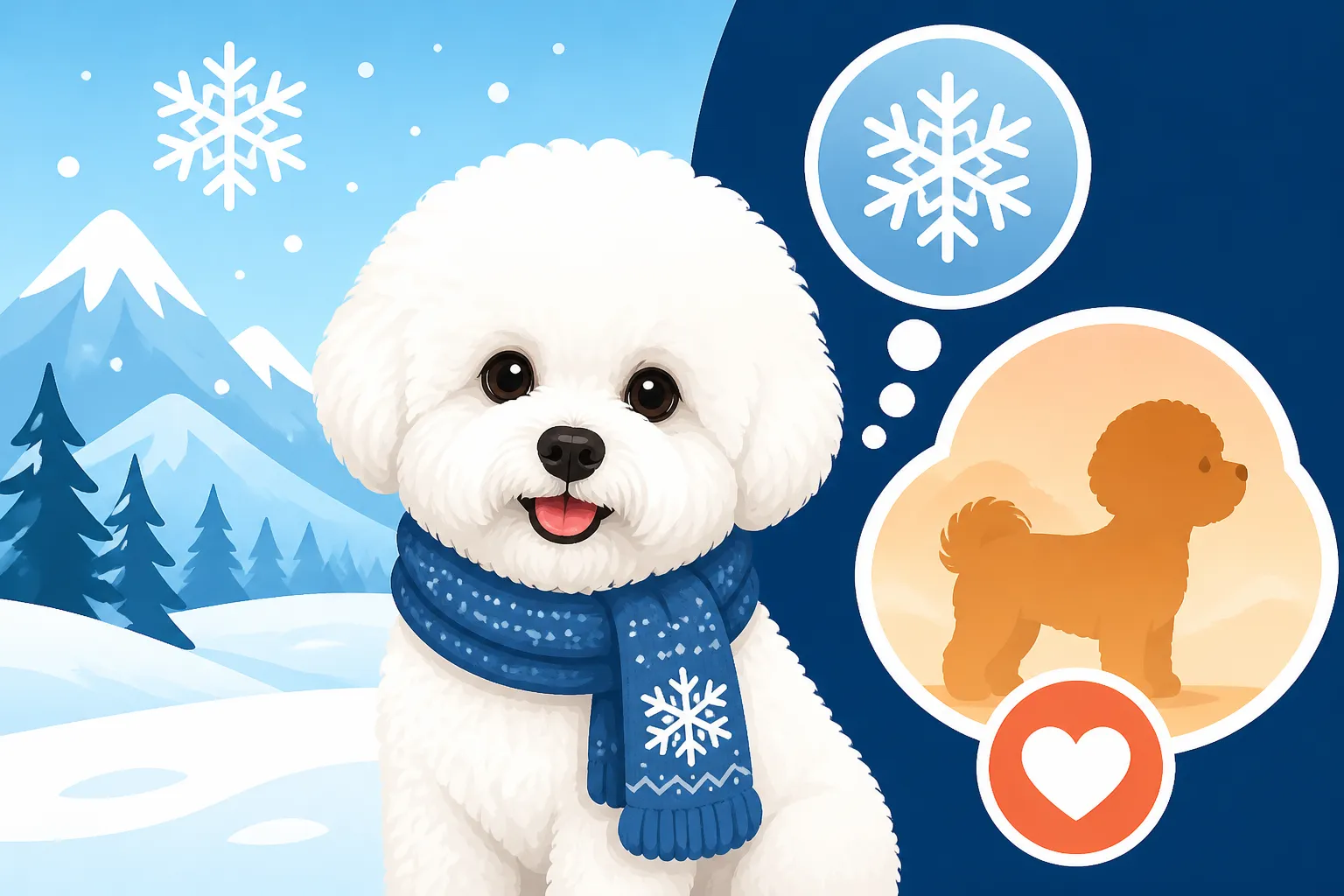
A Bichon Frise can live comfortably in a cold climate, but that doesn’t mean its fluffy coat makes it ready for every winter walk. Small dogs lose heat quickly, and cold wind, wet fur, ice, and road salt can turn an ordinary outing into an uncomfortable one. This guide explains how to judge your dog’s comfort and make winter routines safer.
Can a Bichon Frise Handle Cold Weather
What the Bichon’s coat can and cannot do
A Bichon Frise’s dense, curly coat offers some insulation, so the breed may tolerate cool weather better than a very short-coated dog. But coat length is not a reliable measure of warmth. A carefully trimmed pet Bichon, a puppy with a changing coat, and an older dog with a thinner coat can all feel cold sooner than a healthy adult with a full coat.
A Bichon is also a small companion dog, not a breed designed to spend long periods outdoors in winter. Its size means it can lose body heat relatively quickly, particularly when it is standing still, exposed to wind, or walking on cold, wet ground. A dog that seems happy to dash outside for a few minutes may still be uncomfortable during a long stroll.
The coat’s condition matters, too. Damp fur can leave your dog chilled, while tangles and mats can make thorough drying difficult. Regular brushing and grooming help you check the skin and keep the coat manageable; advice in Whether a Bichon Frise Has an Undercoat and Whether Loose Hair Trapped in the Coat Causes Mats can help you understand why a fluffy appearance is not the same as dependable cold-weather protection.
Why individual dogs respond differently
There is no single temperature that is comfortable for every Bichon Frise. Wind, dampness, sunshine, activity, and the time spent outside all affect how cold a dog feels. A brisk walk on a dry, calm day may be fine for one dog, while another may want to turn back after a short trip to the yard.
Age and health also change the picture. Puppies, senior dogs, and dogs with medical conditions may have a harder time maintaining body warmth. A freshly groomed Bichon may need more protection than it did before a trim. If your dog is recovering from illness or surgery, or has a condition that affects mobility or circulation, ask your veterinarian how to adapt walks and outdoor time.
Pay attention to your own dog rather than relying on the calendar. If your Bichon slows down, lifts its paws, shivers, or repeatedly tries to head home, treat that as useful information. Even a dog that usually loves snow may decide that a windy, slushy day is not worth the outing.
Winter Clothing and Outdoor Safety
Choosing a coat or sweater
A coat can help on cold or windy outings, especially for a small dog, a clipped dog, or one that seems reluctant to stay outside. It should fit comfortably around the chest and shoulders without restricting movement, rubbing under the front legs, or interfering with toileting. Check the fit while your dog walks, sits, and turns—not just while standing still.
Look for practical coverage rather than a bulky garment that gets in the way. If the weather is wet, a water-resistant outer layer may be useful, but the coat should not trap moisture against the dog’s skin. Remove it indoors and check the coat beneath it after walks. Dampness, rubbing, or tangled fur are signs that the garment or fit needs attention.
Give your Bichon time to get used to winter clothing. Start with a brief indoor try-on and reward calm behavior. If your dog freezes, scratches at the garment, or walks awkwardly, check the fit and introduce it more gradually. For general winter wardrobe planning, see Whether a Bichon Frise Needs a Coat in Winter. Chewy may be one place to look for basic coats and sweaters, but measure your dog carefully and use the garment’s fit guidance rather than choosing by breed label alone.
Protecting paws from ice and salt
Paws take a direct hit from winter conditions. Ice can collect between the toes, while de-icing products and gritty sidewalks may irritate paw pads. After a walk, check between your dog’s toes and around the pads for ice, redness, cuts, or debris. Rinse or wipe the paws with clean water if they have contacted salt or sidewalk treatments, then dry them thoroughly.
Booties can offer protection, but many dogs need practice before they accept them. Introduce them indoors for short periods, and make sure they stay on without pinching. If your Bichon refuses footwear, shorter routes on cleaner surfaces and a careful paw rinse afterward may be more realistic. Paw balm can be another option for some dogs, but ask your veterinarian before using a product if the pads are cracked, sore, or bleeding.
Chewy carries a range of pet-care supplies, so it may be a convenient place to compare booties, paw wipes, or balm. Whatever you choose, check the ingredients and directions, and prevent your dog from licking products off its paws. Keep walks away from visibly treated puddles and piles of slushy snow when possible.
| Winter condition | What to watch for | A practical response |
|---|---|---|
| Cold wind | Shivering, hunching, reluctance to walk | Shorten the outing and use a comfortable coat |
| Wet snow or rain | Damp coat, seeking shelter, slowing down | Head indoors, towel-dry, and check the skin |
| Ice and road salt | Paw lifting, licking, redness, grit between toes | Avoid treated areas and rinse and dry paws |
| Deep snow | Struggling to move or snow packed in the coat | Choose a cleared route and check feet often |
| Warm indoor heating after a walk | Wet or matted coat beneath clothing | Remove outerwear and dry the coat fully |
Building a Safe Cold-Weather Routine
Adjusting walks and bathroom breaks
In winter, it is often more comfortable to take several short outings rather than one long walk. Keep your dog moving at a gentle pace, but do not push on if it is lagging, shivering, or repeatedly lifting its feet. On a particularly rough-weather day, a brief bathroom trip followed by indoor play or training can be a sensible alternative to a full walk.
Choose routes with cleared, familiar surfaces where you can see ice and avoid heavy salt use. Keep your Bichon on a leash near snowbanks, frozen ponds, and roads: snow can hide hazards, and icy footing can make a sudden dash risky. A harness can help you guide a small dog without putting pressure on the neck; see Whether a Bichon Frise Should Wear a Harness for more on choosing one.
If your dog has a predictable toilet routine, try to keep it steady while adjusting the length of outdoor trips. A cold, wet yard can make some dogs hurry back inside before they have finished. Give your Bichon a sheltered, cleared spot and enough time to go, then reward the behavior you want. If cold weather is making toileting difficult, Whether a Bichon Frise Hates Wet Grass may offer relevant ideas for handling reluctance.
Drying and grooming after outings
When you come inside, remove wet clothing and check the belly, legs, feet, and areas where a harness or coat may have held moisture. Use a towel to blot the coat rather than rubbing it into knots. Pay special attention to the feet and the hair between the toes, where snow and grit can stay hidden.
If your dog is soaked, dry it thoroughly in a warm room. Avoid using high heat or holding a dryer too close to the skin. Some Bichons are nervous about dryers, so use a calm, gradual approach and stop if your dog becomes distressed. A damp coat can become tangled more easily, so once the dog is comfortable, gently comb through areas prone to matting.
Winter may affect how often you need to brush or book a groom, especially if your dog wears clothing or gets wet often. A coat that is shorter and easier to maintain can be a practical choice for an active pet, but it may leave the dog needing extra warmth outdoors. For grooming context, read How Many Weeks Between Bichon Frise Grooms and Whether a Bichon Frise Mats Behind the Ears. Chewy may also be useful for finding towels or basic grooming tools, but choose tools that suit your dog’s coat and introduce them gently.
Recognizing Cold Stress and Knowing When to Call the Vet
Signs your Bichon may be too cold
Shivering is an obvious warning, but it is not the only one. A cold or uncomfortable Bichon may hunch its back, tuck its tail, hold up one or more paws, move stiffly, whine, or repeatedly try to turn toward home. Some dogs become unusually quiet or seem distracted rather than showing dramatic distress.
If you see these signs, end the outing. Take your dog indoors, remove wet clothing, and warm it gradually with a dry towel and a comfortable room. Do not use very hot water, heating pads directly against the skin, or a hot hair dryer to warm a chilled dog. If the dog is not improving, contact a veterinarian for guidance.
A Bichon that is merely reluctant to walk may be reacting to cold paws, uncomfortable clothing, or an unpleasant surface. But do not assume every change in movement is a weather preference. Limping, persistent paw licking, or a sudden refusal to walk can also indicate an injury or a paw problem that needs attention.
When cold exposure is an emergency
Severe cold exposure can become dangerous. Weakness, confusion, difficulty standing, shallow or slow breathing, and unresponsiveness require urgent veterinary attention. Frostbite may not be obvious immediately; pale, gray, bluish, swollen, or painful skin—particularly on the ears, tail, and paws—should be assessed by a veterinarian.
Move a severely chilled dog indoors and handle it gently. Wrap it in dry blankets, avoid rubbing affected areas, and call a veterinary clinic or emergency service. Do not wait to see whether serious symptoms disappear on their own. Fast professional care matters when a dog has become very weak, has collapsed, or seems mentally altered.
A safer routine comes down to observing your individual dog, limiting exposure when conditions are harsh, and checking the coat and paws after every outing. Many Bichons can enjoy winter walks with sensible adjustments; they simply need their person to notice when the cold has stopped being fun.
Disclaimer
This article is for general informational purposes only and does not constitute professional advice. Laws, prices and regulations vary by location and change over time. Consult a qualified professional for guidance on your specific situation.