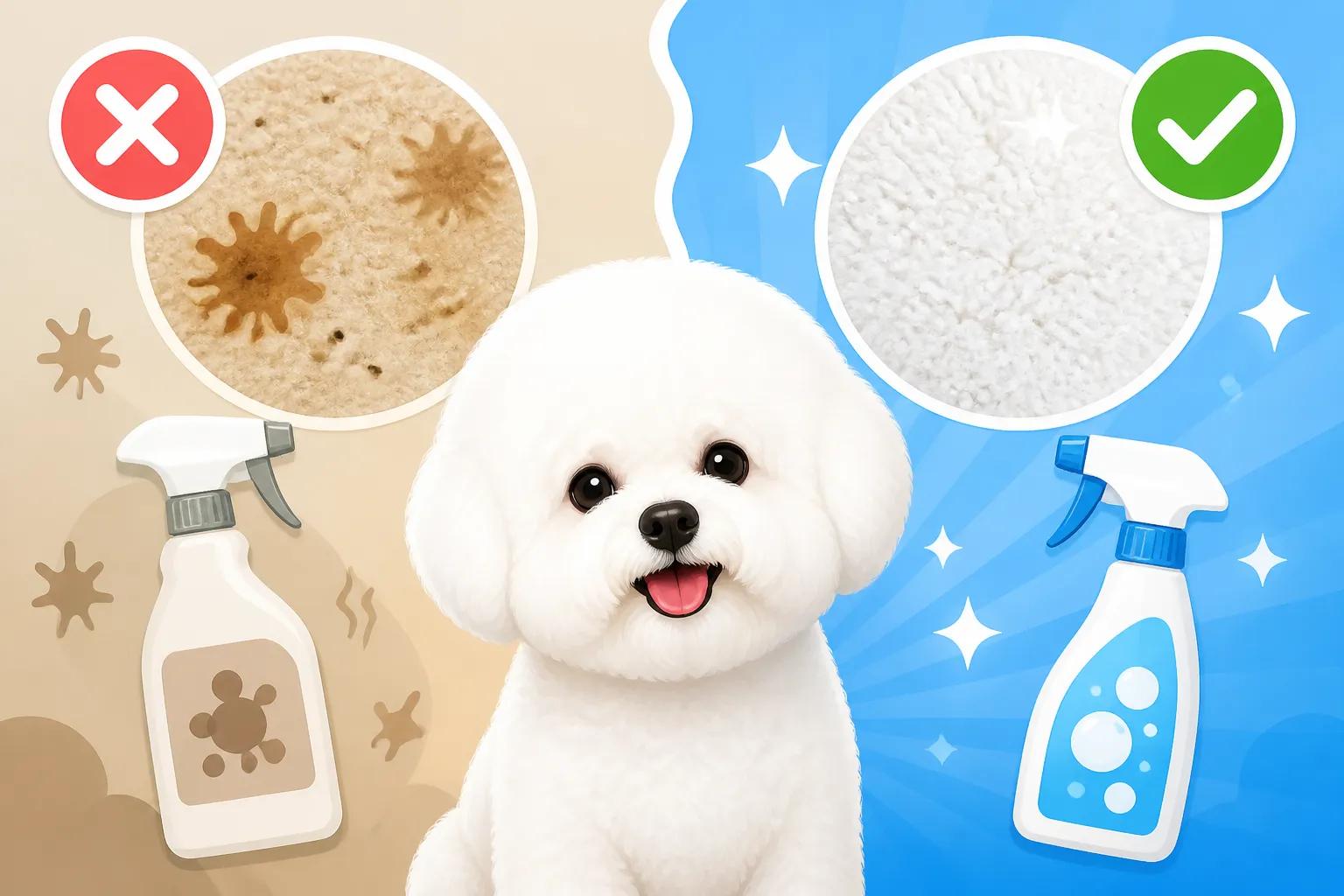
Whether Enzyme Cleaner Matters for a Bichon Frise
Oh, the sheer frustration of finding a little (or not-so-little) puddle or stain on your carpet, even after you thought your adorable Bichon Frise was completely housetrained! It's enough to make any dog owner feel like they're failing, especially when the accidents keep happening in the same spots. This guide is going to dive deep into why enzyme cleaners aren't just a nice-to-have, but an absolute necessity for dealing with Bichon Frise accidents, helping you understand their unique needs and keep your home truly clean.
The Persistent Problem of Bichon Frise Accidents
Let's be honest, housetraining a Bichon Frise can sometimes feel like an uphill battle. You might have moments of triumph, thinking you've finally cracked the code, only to discover another wet patch. It's not always about stubbornness; often, there are underlying reasons that make these fluffy companions a bit more challenging, and understanding these factors is the first step toward a cleaner home and a happier relationship.
Why Bichons Can Be Tricky to Housetrain
Bichon Frises, with their small stature and quick metabolisms, often have bladders that need emptying more frequently than larger breeds. A young Bichon puppy might need to go out every hour or two, and even adult dogs may struggle to hold it for extended periods. This isn't a flaw in their character; it's just how their little bodies are designed. Moreover, some Bichons can be prone to urinary tract issues, like bladder stones or infections, which can lead to increased urgency and accidents even in perfectly housetrained dogs. Imagine trying to hold it when you have a sharp stone irritating your bladder – it's practically impossible! Whether a Bichon Frise's Small Bladder Is the Problem touches on this common concern.
Beyond the physical aspects, Bichons are also very sensitive to their environment. A sudden change in routine, a stressful event, or even just disliking the rain can make them hesitant to go outside. They thrive on consistency, and any disruption can throw their housetraining off track. This means that while training is key, so is understanding their potential health vulnerabilities that might manifest as "accidents."
The Scent Marker Dilemma
Here's the often-overlooked truth about pet accidents: dogs don't just "go" anywhere. They're driven by scent. When your Bichon has an accident, even if you clean it up with your usual household cleaner, residual urine odors often linger, completely imperceptible to the human nose but screaming "toilet here!" to your dog. It's a primal instinct, really. They smell their own scent, or the scent of another dog, and it tells them, "This is a safe and acceptable place to relieve yourself."
This is why, no matter how much you scrub with soap and water or spray with air freshener, your Bichon might return to the same spot again and again. You're cleaning the visible mess, but you're not eliminating the invisible, potent olfactory signal. This cycle of accident and insufficient cleaning can be incredibly frustrating for owners and confusing for the dog, who is just following its natural inclinations.
What Enzyme Cleaners Are and How They Work
So, what's the magic behind these enzyme cleaners that makes them so essential for pet owners, especially those with sensitive-nosed Bichons? It's not magic at all, but rather some pretty clever biology at play. Understanding how they work can truly change your approach to cleaning up pet messes.
The Science Behind the Clean
Enzyme cleaners contain specialized proteins, known as enzymes, that are specifically designed to break down organic matter. Think of them as tiny, highly efficient Pac-Men for odors and stains. When you apply an enzyme cleaner to a urine stain, these enzymes get to work, literally "eating" the uric acid crystals, proteins, and other organic components found in urine. Unlike typical cleaners that might just dilute or mask the odor, enzyme cleaners actually neutralize it by dismantling the molecular structure of the odor-causing compounds.
This process is critical because it eliminates the source of the smell completely, rather than just covering it up. The enzymes continue to work as long as the area remains damp, penetrating deep into carpet fibers, upholstery, or even hard floor grout where urine might have soaked in. This deep cleaning ensures that the powerful scent marker, so attractive to your Bichon's keen nose, is utterly destroyed.
Why Regular Cleaners Fall Short
Most household cleaners, while excellent for general dirt and grime, are simply not equipped to handle the unique chemistry of pet urine. They often contain strong fragrances that temporarily mask the smell for humans, but they don't break down the uric acid crystals. In fact, some cleaners, especially those with ammonia, can even make the problem worse because ammonia is a component of urine, potentially reinforcing the "toilet here" message for your dog.
Imagine trying to clean up spilled milk with just a towel. You'd get the visible liquid, but the sour smell would linger, right? Urine is similar, but far more complex and potent. Without an enzyme to break down the microscopic components that cling to surfaces, you're fighting a losing battle against odor and the cycle of repeat accidents. This is particularly important when dealing with breeds like the Bichon Frise, whose sensitive noses can pick up scents we can't even imagine. Whether Enzyme Cleaner Matters for a Bichon Frise is the core of this discussion, highlighting this very point.
The Specific Importance for Bichon Frises
For Bichon Frise owners, the importance of enzyme cleaners goes beyond just having a clean-smelling home. It's deeply intertwined with their training, health, and overall well-being. This breed has specific characteristics that make these specialized cleaners particularly crucial.
Addressing Urinary Tract Sensitivities
As we touched on earlier, Bichon Frises are unfortunately prone to certain urinary tract conditions, most notably calcium oxalate bladder stones and urinary tract infections. Why a Bichon Frise Forms Stones Twenty Times as Often and What a Calcium Oxalate Stone Is in a Bichon Frise illustrate this genetic predisposition. When a Bichon is experiencing the discomfort of a UTI or bladder stones, they might have accidents not because of poor training, but because they physically cannot hold their urine, or they feel an increased urgency to go.
In these situations, the urine may have a stronger odor or even contain blood, making the residual scent even more compelling for the dog to return to that spot. Using an enzyme cleaner isn't just about cleaning; it's about breaking the cycle of reinforcement. If a dog associates discomfort with peeing inside, but then smells its own urine in that spot, it creates confusion. Thorough enzyme cleaning helps ensure that accidental urination from a medical issue doesn't accidentally derail months of good housetraining because the "spot" is still there, screaming its presence to their nose.
Protecting Your Home and Your Sanity
Beyond the medical considerations, consistently using an enzyme cleaner protects your home from long-term damage and, frankly, protects your sanity. Urine can cause permanent staining and odor in carpets, hardwood floors, and furniture if not properly treated. The longer urine sits, the deeper it penetrates, and the more challenging it becomes to remove. Imagine the lasting smell in your home, even after countless superficial cleanings.
By consistently using enzyme cleaners, you're not just removing the immediate mess; you're investing in the longevity of your home's surfaces and preventing future headaches. A clean, odor-free environment is essential for effective housetraining, too. When your Bichon can't smell past accidents, it's easier for them to understand that the only acceptable place to go is outside. This consistency fosters trust and clarity in their training, reducing stress for both of you. It also means you spend less time scrubbing and worrying, and more time enjoying your fluffy companion. The Toilet Routine That Finally Works on a Bichon Frise often includes diligent cleanup as a core component for success.
Choosing and Using the Right Enzyme Cleaner
With so many products on the market, how do you choose the right enzyme cleaner, and once you have it, how do you use it effectively to ensure those pesky odors and stains are truly gone for good? It’s not just about spraying and wiping; a little knowledge goes a long way.
Key Features to Look For
When you're sifting through options, especially online marketplaces like Amazon, you'll want to prioritize a few key things. First and foremost, look for cleaners specifically labeled as "enzymatic pet odor and stain removers." This ensures they contain the right type of enzymes for urine. Always check that the product is non-toxic and pet-safe. Your Bichon lives close to the ground and will inevitably come into contact with the cleaned area, so safety is paramount. You don't want to trade a urine stain for a chemical irritation.
Consider the application method. Sprays are great for surface stains, while some products come in larger jugs for carpet cleaners or for soaking heavily soiled areas. Read reviews from other pet owners, especially those with small dogs or dogs prone to accidents, to get a sense of real-world effectiveness. While there are many good brands out there, finding one that specifically targets the enzymes needed for urine and is safe for your delicate Bichon is key. Remember, while a comprehensive training program like BAXTER & Bella can guide you through housetraining, the effectiveness of that training is always boosted by a truly clean environment where old accidents don't silently sabotage your efforts.
Here's a quick comparison of enzymatic vs. non-enzymatic cleaners:
| Feature | Enzymatic Cleaner | Regular Household Cleaner |
|---|---|---|
| Odor Removal | Breaks down and neutralizes odor-causing molecules | Masks odor, often temporarily |
| Stain Removal | Digests organic matter, lifts stains effectively | Cleans surface stains, may not prevent deep set |
| Scent Elimination | Eliminates scent markers that attract pets | Leaves residual scent undetectable to humans, but not pets |
| Active Ingredients | Biological enzymes | Chemicals, surfactants, fragrances |
| Pet Safety | Generally non-toxic and pet-safe (check labels) | Can contain harsh chemicals, may be irritating |
| Long-term Effectiveness | Prevents repeat accidents, truly cleans | Can lead to recurring accidents and lingering odors |
Step-by-Step Application
Using an enzyme cleaner isn't a spray-and-go situation; it requires a bit of patience and a specific process to be truly effective.
- Blot, Don't Rub: As soon as you discover an accident, blot up as much of the urine as possible with a clean, absorbent cloth or paper towels. Press down firmly. Avoid rubbing, as this can push the urine deeper into the fibers.
- Saturate the Area: Generously apply the enzyme cleaner to the affected area. You want to make sure it soaks down into every layer the urine touched, including the carpet padding or grout beneath. Don't be shy with the product; undersaturating is a common mistake.
- Let it Sit (Patience is Key!): This is where many people go wrong. The enzymes need time to work their magic. Follow the product's instructions, but typically, you'll need to let it sit for at least 10-15 minutes, or even longer for older, tougher stains. Some products might suggest covering the area with a damp cloth or plastic wrap to keep it moist and allow the enzymes to continue working.
- Blot Again: Once the recommended time has passed, blot up any excess cleaner. Again, press firmly with a clean towel. You might see more discoloration coming up, which means the enzymes are doing their job.
- Air Dry Completely: Allow the area to air dry completely. This can take several hours or even a full day. Resist the urge to speed it up with heat, as heat can sometimes set stains. You can place a fan nearby to help circulate air.
- Repeat if Necessary: For old, stubborn stains or areas with strong, lingering odors, you might need to repeat the process one or more times. Sometimes, it takes multiple applications to fully break down all the uric acid crystals.
Remember, consistency is key. Every single accident, big or small, needs this enzyme treatment. It might seem like a lot of effort at first, but it saves you much more time and frustration in the long run, leading to a truly clean home and a fully housetrained Bichon Frise.
Conclusion
Finding a urine accident from your beloved Bichon Frise can be disheartening, especially when you're doing everything you can to housetrain them. But understanding the unique challenges of the breed, from their sensitive bladders and potential for urinary issues to their keen sense of smell, illuminates why enzyme cleaners aren't just an optional cleaning product, but an indispensable tool. They don't just mask odors; they dismantle them at a molecular level, removing the invisible scent markers that silently tell your dog, "This is a potty spot." By integrating proper enzyme cleaning into your routine, you're not only protecting your home from stubborn stains and smells, but you're also setting your Bichon up for success in their housetraining journey, fostering a cleaner, happier environment for everyone.
Disclaimer
This article is for general informational purposes only and does not constitute professional advice. Laws, prices and regulations vary by location and change over time. Consult a qualified professional for guidance on your specific situation.