Whether a Bichon Frise Gets Epilepsy
Bichon Frise epilepsy risk, primary versus secondary seizure types, and veterinary diagnostic steps for canine neurological disorders.
Know what to watch for.
Breed-specific conditions, screening and DNA tests, what surgery actually costs, and the daily habits that stretch a healthy lifespan.

Bichon Frise epilepsy risk, primary versus secondary seizure types, and veterinary diagnostic steps for canine neurological disorders.

Bichon Frise neck and trachea safety depends on comparing collars and harnesses to prevent tracheal collapse, neck pain, and thyroid risks.

Collapsing trachea in Bichon Frises causes a harsh honking cough when weakened windpipe cartilage rings flatten and obstruct airflow.

Mitral Valve Disease in Bichon Frises explains heart valve degeneration, aging risks, and signs of backward blood regurgitation.

Yearly veterinary eye exams help detect genetic cataracts and glaucoma early in Bichon Frises to preserve their vision and comfort.

Corneal ulcers in Bichon Frises involve superficial epithelial defects and deep stromal sores, requiring early treatment to protect canine eyesight.

Bichon Frise tear drainage system anatomy and blocked ducts explain why excessive tearing creates reddish-brown facial stains.

Bichon Frise vision loss involves inherited juvenile cataracts, progressive retinal atrophy, and retinal dysplasia leading to blindness.

Cataract surgery for a Bichon Frise requires a veterinary ophthalmologist to evaluate retinal function and overall health.
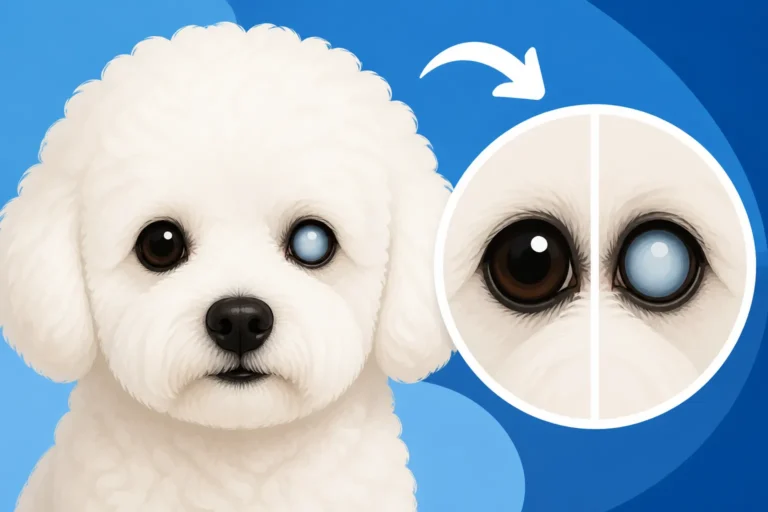
Bichon Frise cataracts and their typical onset age, genetic causes, diabetes links, and progressive eye cloudiness are explained.