Arthritis in a Bichon Frise at Eleven
Arthritis signs, diagnosis methods, and comfort management techniques help eleven-year-old Bichon Frises maintain their happy, active lives.
Know what to watch for.
Breed-specific conditions, screening and DNA tests, what surgery actually costs, and the daily habits that stretch a healthy lifespan.
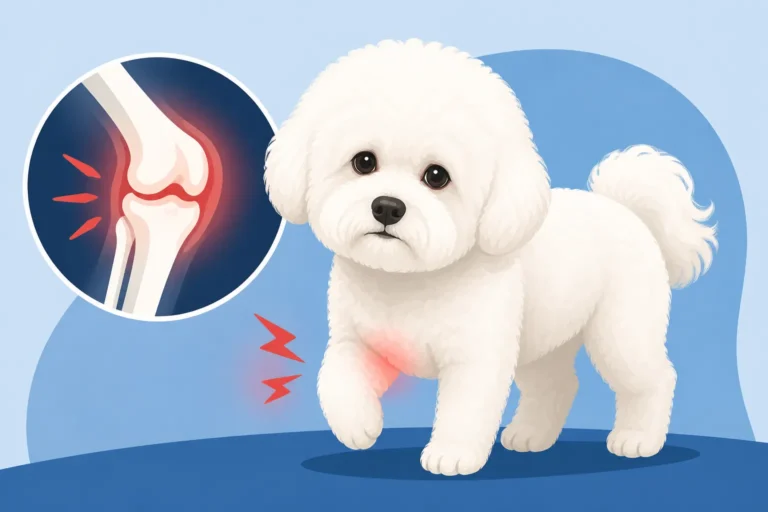
Arthritis signs, diagnosis methods, and comfort management techniques help eleven-year-old Bichon Frises maintain their happy, active lives.

Joint supplements for a Bichon Frise and their effects on patellar luxation, cartilage degradation, and canine arthritis.
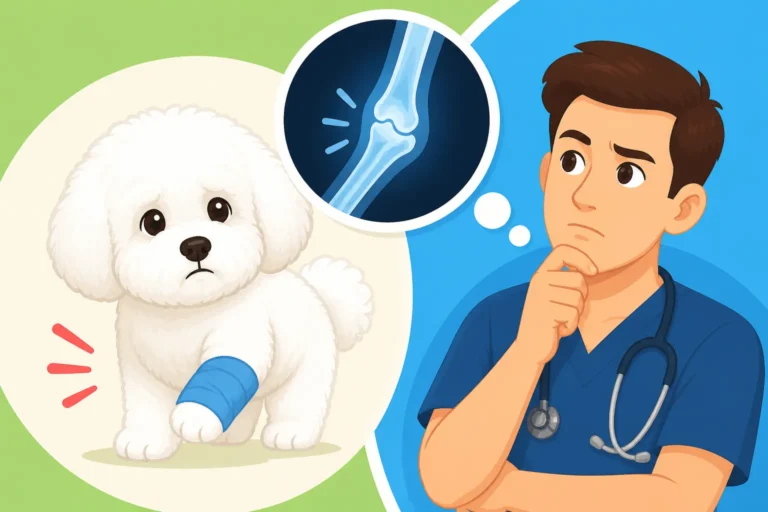
Common causes of limping in Bichon Frises and specific signs indicating when veterinary X rays are necessary for diagnosis.
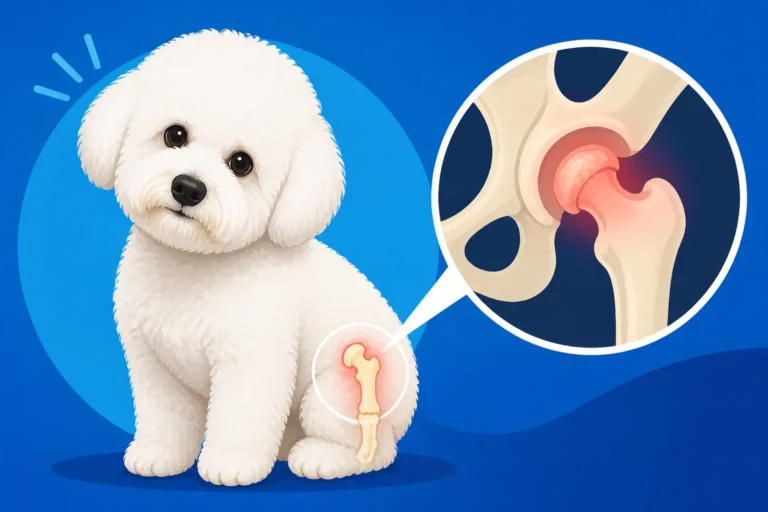
Legg-Calve-Perthes disease destroys the femoral head, typically showing painful symptoms in Bichon Frise puppies aged four to twelve months.

Slippery floors cause sprains, strains, and patellar luxation in Bichon Frises, explaining acute injuries, joint risks, and home safety steps.

Bichon Frise jumping off furniture causes joint, spine, and soft tissue injuries, explaining risks to protect their health.

Stairs and patellar luxation in Bichon Frises, explaining how joint health and slipping kneecaps are affected across grades one to four.
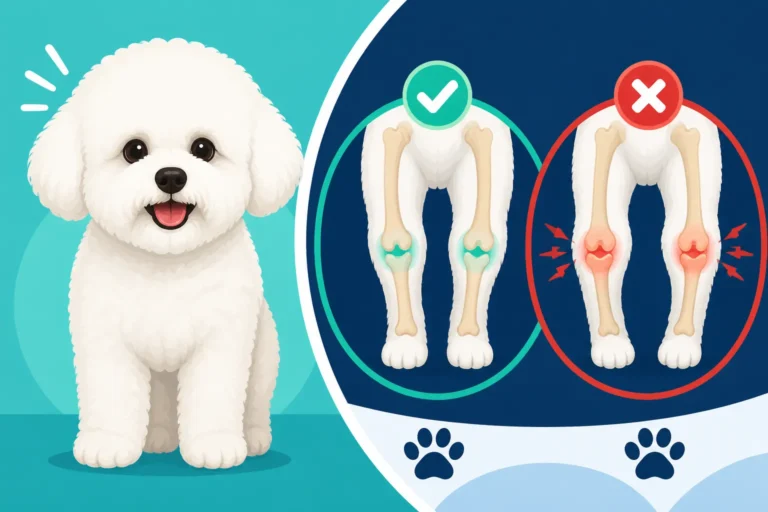
Bilateral patellar luxation in Bichon Frises explains why both knees frequently experience slipping kneecaps due to genetics.
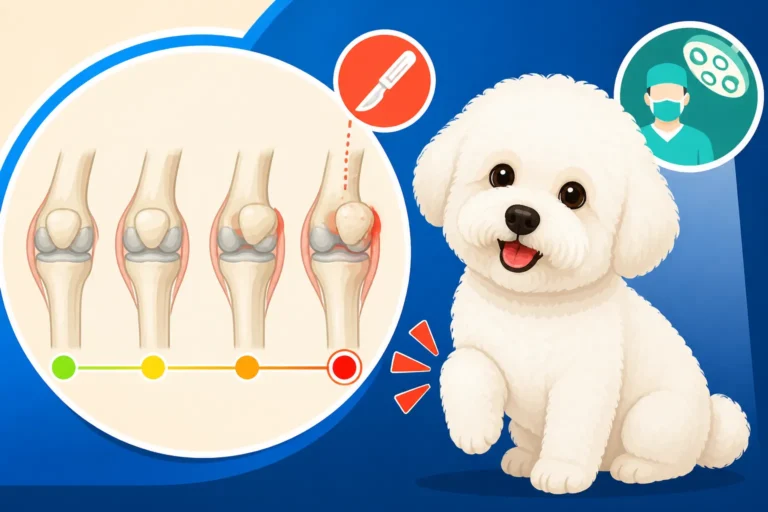
Bichon Frise patellar luxation grades one through four explain when slipping kneecaps cause lameness and require surgery to restore mobility.
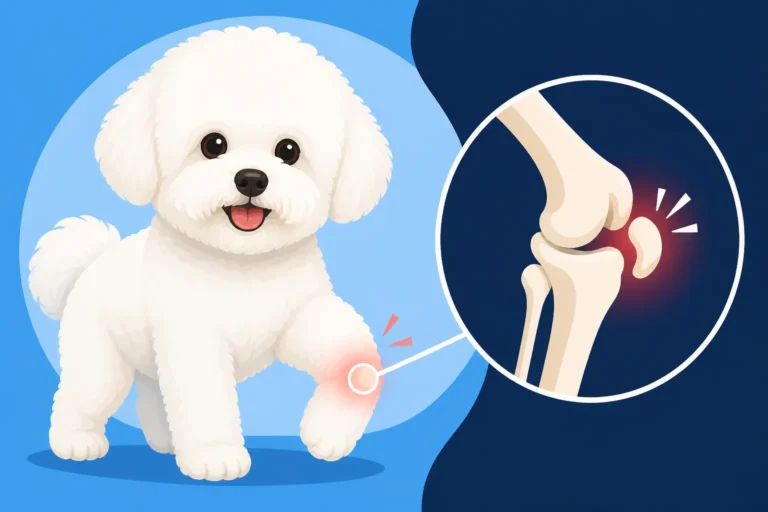
Patellar luxation in a Bichon Frise usually starts between four months and one year of age when the kneecap slips from its groove.