Whether a Bichon Frise Should Wear a Harness
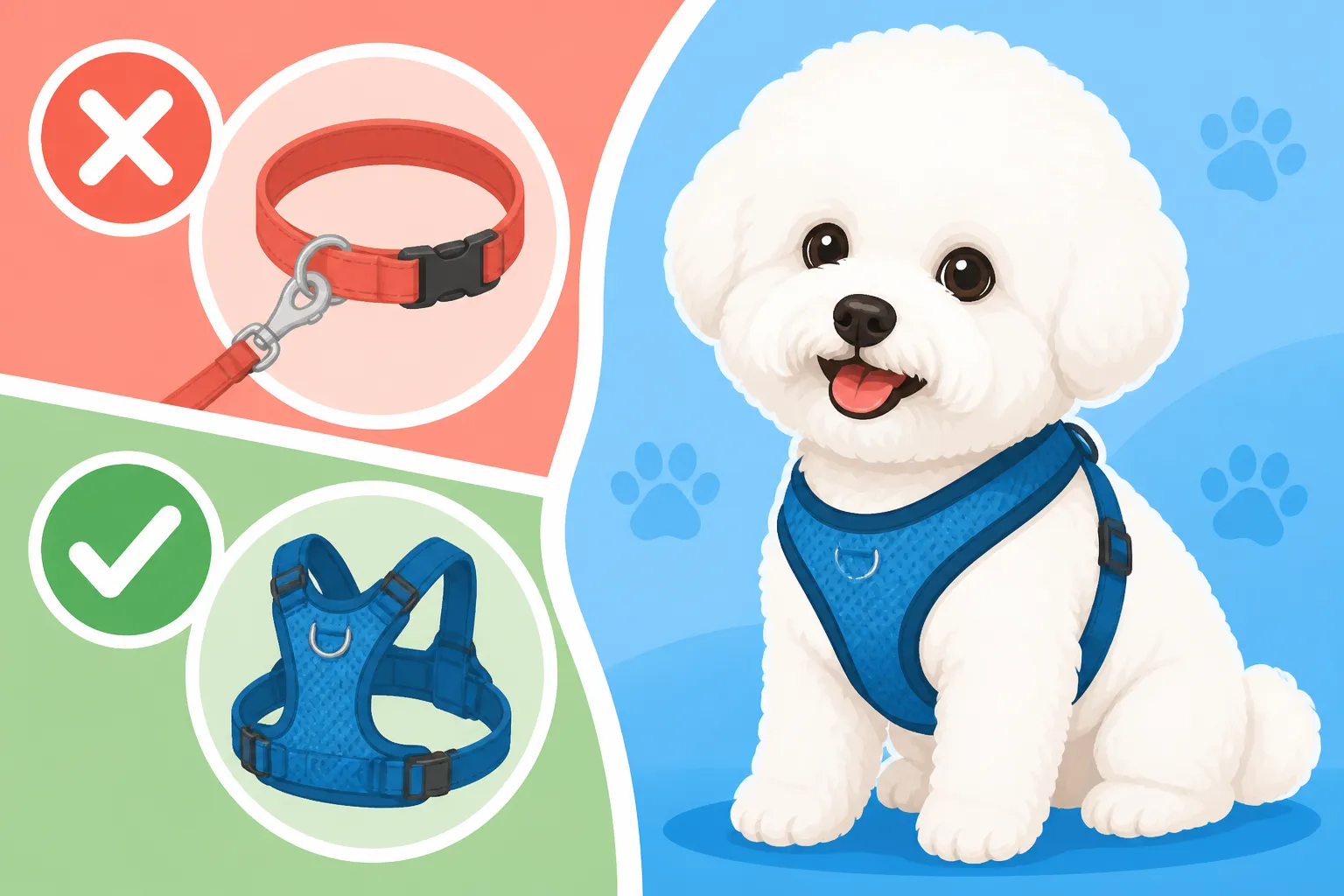
It's a common dilemma for Bichon Frise owners: should your fluffy companion wear a collar or a harness? Many of us instinctively reach for a collar, it's what dogs traditionally wear, right? But for small breeds like our beloved Bichons, a collar can pose real risks to their delicate necks and tracheas, turning a simple walk into a potential health hazard. This guide will delve deep into the pros and cons, helping you make an informed decision to keep your Bichon Frise safe and comfortable.
The Delicate Nature of a Bichon Frise's Neck and Trachea
When you look at a Bichon Frise, with their cloud-like coat and cheerful demeanor, it's easy to forget how delicate their physical structure can be. Their small size means their neck, throat, and spine are more vulnerable to pressure and sudden impacts than those of larger, more robust breeds. This anatomical reality is a critical factor in deciding between a collar and a harness.
Understanding Tracheal Collapse Risk in Small Breeds
One of the most significant concerns for Bichon Frise owners is the risk of tracheal collapse. This condition, prevalent in small breeds like Bichons, Pomeranians, Yorkshire Terriers, and Chihuahuas, occurs when the C-shaped cartilage rings that support the trachea (windpipe) weaken and flatten, making it difficult for air to pass through. While some dogs are genetically predisposed to this, external factors, particularly repeated pressure on the neck, can exacerbate or even initiate the problem. A dog pulling frequently or suddenly on a collar can put immense strain on this delicate structure, potentially leading to or worsening a collapsed trachea. You might hear a characteristic 'goose honk' cough, especially when your Bichon gets excited or pulls against their leash. This isn't just a quirky sound; it's a serious sign that their airway is being compromised. If you're concerned about this, it's vital to learn more about Whether a Bichon Frise Gets a Collapsing Trachea.
The Dangers of Collar Pressure on the Neck
Beyond tracheal collapse, a collar exerts pressure on several other sensitive areas of a Bichon Frise's neck. The thyroid gland, located in the neck, can be affected by constant constriction, potentially leading to hormonal imbalances over time, although research on this specific link is ongoing. Even more immediately, sudden jerks on a collar can cause damage to the larynx (voice box) or pharynx, leading to coughing, gagging, or even difficulty swallowing. Imagine having a tight band around your throat every time you moved or got excited – it's hardly comfortable, and for a small dog, it can be downright dangerous. This is especially true for Bichons who are still learning to Whether a Bichon Frise Walks on a Loose Leash, as they might pull more frequently.
Impact on Neck and Spinal Health
A Bichon Frise's cervical spine, the portion of the spine in the neck, is also quite delicate. Repeated stress from a collar can contribute to chronic neck pain or even spinal injuries, particularly in older dogs or those with pre-existing conditions like arthritis. We often see dogs "brace" against a collar, tensing their neck and shoulder muscles, which can lead to muscle strain and discomfort over time. For a breed that's generally considered playful and active, preserving their structural integrity is paramount. While they might appear sturdy, it's important to remember Whether a Bichon Frise Is Sturdier Than It Looks when considering potential harm from improper equipment.
Why a Harness is Often the Recommended Choice
Given the vulnerabilities of a Bichon Frise's neck and throat, veterinarians and experienced dog trainers overwhelmingly recommend harnesses for these charming little dogs. A harness fundamentally changes how pressure is distributed, moving it away from the sensitive neck area and onto stronger parts of the dog's body.
Distributing Pressure Evenly
The primary advantage of a harness is its ability to distribute any pulling pressure across your Bichon's chest, shoulders, and back, rather than concentrating it solely on their neck. This significantly reduces the risk of tracheal damage, neck strain, and injury to the delicate thyroid or laryngeal structures. When your Bichon pulls, the force is absorbed by their rib cage and shoulder muscles, which are much better equipped to handle it. This makes walks not only safer but also much more comfortable for your furry friend, encouraging a more relaxed and enjoyable experience for both of you. This is especially beneficial when you're working on leash manners or dealing with a puppy during The First Year With a Bichon Frise Puppy.
Types of Harnesses Best Suited for Bichons
Not all harnesses are created equal, and choosing the right type for a Bichon Frise is crucial. Generally, "H-style" or "Y-style" harnesses that have straps crossing the chest and behind the front legs are excellent choices. These designs avoid placing pressure directly on the throat while still offering secure control. Avoid "step-in" harnesses that can sometimes rub uncomfortably in the armpits or "vest-style" harnesses if they are too bulky, especially in warmer climates, as they can trap heat. A good harness for a Bichon will allow for a full range of motion for their front legs and shouldn't chafe or pinch. Look for soft, breathable materials that won't irritate their fluffy coat and delicate skin. Some harnesses even come with a front-clip option, which can be an invaluable tool for preventing pulling on the leash.
The Benefits for Training and Control
Harnesses aren't just about safety; they're also fantastic tools for training and control, especially for a lively Bichon. With a harness, you have better leverage to guide your dog without causing discomfort or potential harm. If your Bichon has a tendency to Whether a Bichon Frise Jumps Up on People when greeting guests on a walk, a harness provides a safer way to manage their excitement and prevent them from hurting themselves or others with a sudden lunge. Front-clip harnesses, in particular, are excellent for teaching loose-leash walking because they redirect your dog's momentum back towards you when they pull, making it less rewarding for them to forge ahead. This gentle redirection is far more effective and humane than yanking on a collar, which can be counterproductive and painful.
When a Collar Might Still Be Used With Caution
While a harness is highly recommended for walks and any activity where your Bichon Frise is on a leash, a collar can still serve a purpose in specific, limited situations. The key is understanding when and how to use it safely, and always prioritizing your dog's well-being.
Identification Purposes and ID Tags
The most common and arguably safest use for a collar on a Bichon Frise is purely for identification. A lightweight, flat collar worn loosely around the neck can carry your dog's ID tags, including their name, your phone number, and perhaps a rabies tag. This is incredibly important for any dog, as it significantly increases the chances of them being returned to you if they ever get lost, even if they somehow slip out of their harness. However, this collar should be loose enough to not exert any pressure, even if caught on something, and certainly never used for leash attachment. It should be able to slide easily, allowing you to fit two fingers comfortably underneath it. Always remember that even a seemingly harmless ID collar can pose a snagging risk if your dog is left unsupervised, especially in crates or play areas with other dogs.
Short-Term, Supervised Use
In very specific scenarios, a collar might be used for extremely short periods under direct supervision. For instance, if you're just moving your Bichon a few steps from one room to another without a leash, or during a quick, supervised potty break in a secure, fenced yard where they won't pull. Even then, many owners prefer to keep a harness on their Bichon for these quick transitions to eliminate any risk whatsoever. The absolute rule here is: never attach a leash to a collar for walking or any activity where your Bichon might pull, jump, or make sudden movements. The potential for injury simply isn't worth the convenience.
The Importance of a Proper Fit
Whether you choose a harness or decide to use a collar for identification only, a proper fit is non-negotiable. For an ID collar, it should be loose enough that you can easily slide two fingers between the collar and your Bichon's neck, but not so loose that it can slip over their head. For a harness, the fit is even more critical. A well-fitted harness will be snug but not tight, allowing full range of motion for the shoulders and legs without chafing. It shouldn't ride up into the throat area or be so loose that your Bichon can back out of it. An ill-fitting harness can cause skin irritation, rub patches in their beautiful white coat, or even lead to escape, defeating its purpose entirely. Before you head out for a walk, always double-check the fit of your chosen equipment.
Choosing the Right Harness for Your Bichon Frise
Selecting the perfect harness for your Bichon Frise involves more than just picking a pretty color. It requires careful consideration of design, material, and adjustability to ensure maximum comfort, safety, and effectiveness. Investing in a good quality harness is a small price to pay for your dog's long-term health and your peace of mind. While the initial What a Harness for a Bichon Frise Costs might seem like an expense, it's an investment in preventing much costlier vet bills down the line.
Key Features to Look For
When shopping for a harness for your Bichon, keep these features in mind:
- Material: Opt for soft, breathable, and durable materials like padded nylon mesh, soft fleece lining, or even lightweight canvas. Avoid stiff, rough materials that could chafe their sensitive skin or mat their delicate coat. A quick-drying material is also a plus, especially if your Bichon loves to splash in puddles.
- Design: As mentioned, H-style or Y-style harnesses that fit around the chest and behind the front legs are ideal. Look for designs that specifically avoid the throat area. Some harnesses offer both a back clip and a front clip (on the chest). A front clip can be incredibly helpful for managing dogs who pull, gently turning them to the side when they try to forge ahead.
- Adjustability: Bichons vary slightly in size and shape, and their coats can also influence fit. A harness with multiple adjustable straps (around the neck opening and chest girth) ensures a snug and secure fit that can be customized. This adjustability also means the harness can grow with a puppy or accommodate slight weight changes.
- Fasteners and Hardware: Look for sturdy plastic buckles that snap securely and metal D-rings for leash attachment that are robust and won't bend or break. Smooth edges on all hardware are also important to prevent irritation.
- Visibility: For evening or early morning walks, reflective stitching or material on the harness can significantly enhance your Bichon's visibility, adding an extra layer of safety.
Here's a quick comparison of common harness types:
| Harness Type | Pros | Cons | Best For |
|---|---|---|---|
| H-Style/Y-Style | Distributes pressure well, good control, often adjustable. | Can sometimes rub under armpits if not fitted correctly. | Everyday walks, training, dogs prone to tracheal issues. |
| Front-Clip | Excellent for preventing pulling, offers great control. | May twist on some dogs, can get tangled if dog is very active. | Pullers, training loose-leash walking. |
| Vest Harness | Comfortable, covers larger area, good for very small or fragile dogs. | Can be hot, less airflow, sometimes bulky, can lead to chafing if ill-fitting. | Cold weather, elderly or very tiny dogs needing extra support. |
| Step-In Harness | Easy to put on, no need to go over the head. | May rub under armpits, less control than other styles. | Dogs who dislike things going over their head, non-pullers. |
How to Properly Fit a Harness
Getting the fit right is paramount. Here's a general guide:
- Placement: The harness should sit snugly around your Bichon's chest, with the horizontal strap well behind their front legs. The neck opening should not constrict their throat or obstruct their natural movement.
- Two-Finger Rule: After putting the harness on, you should be able to comfortably slide two fingers under any strap of the harness. If you can fit more, it's too loose. If you struggle to fit two, it's too tight.
- Range of Motion: Watch your Bichon walk, run, and sit while wearing the harness. Their front legs should move freely without the harness rubbing or restricting their shoulder movement.
- No Chafing: Check for any signs of rubbing or irritation, especially in the armpit area. If you notice redness or hair loss, the harness is likely ill-fitting or made of an unsuitable material.
- Escape Proof: Test if your Bichon can back out of the harness. If they can, it's too loose or the wrong design. A properly fitted harness should be secure enough to prevent them from slipping out.
Remember, a Bichon's fluffy coat can sometimes make it tricky to gauge the fit, so gently feel beneath the fur to ensure the straps are in the correct position against their skin.
Introducing a Harness to a Puppy or Reluctant Adult
If your Bichon Frise is new to wearing a harness, take your time with the introduction. For puppies, start early, making it a positive experience. Let them sniff the harness, offer treats, and praise them. Begin by putting it on for very short periods, perhaps just before mealtime, and then immediately taking it off. Gradually increase the time they wear it.
For an adult Bichon who might be resistant, the approach is similar:
- Positive Association: Let them associate the harness with good things – treats, praise, playtime.
- Short Bursts: Start with putting the harness on for just a few seconds, then remove it. Reward them heavily.
- Gradual Increase: Slowly increase the duration, always ending on a positive note.
- Leash Introduction: Once they're comfortable with the harness, attach the leash for short periods indoors, letting them drag it around (under supervision) before trying a walk.
Patience is key. Some dogs adjust quickly, while others may need a few days or even weeks. Never force the harness on, as this can create a negative association. If you're struggling, consult with a professional positive reinforcement trainer or your vet. They might suggest particular brands or methods. For instance, some Bichon owners find that a provider like Healthy Paws, which covers behavioral therapy in some plans, is helpful if their dog has anxiety around new gear.
Disclaimer
The information provided in this article is for general informational purposes only and is not a substitute for professional veterinary advice. Always consult with a qualified veterinarian regarding any health concerns or before making any decisions about your pet's care, diet, or training.