Whether a Bichon Frise Is Judged on Its Outline
Bichon Frise conformation judges evaluate dog outlines, structure, and movement to assess balance, proportion, and breed type.

Bichon Frise conformation judges evaluate dog outlines, structure, and movement to assess balance, proportion, and breed type.
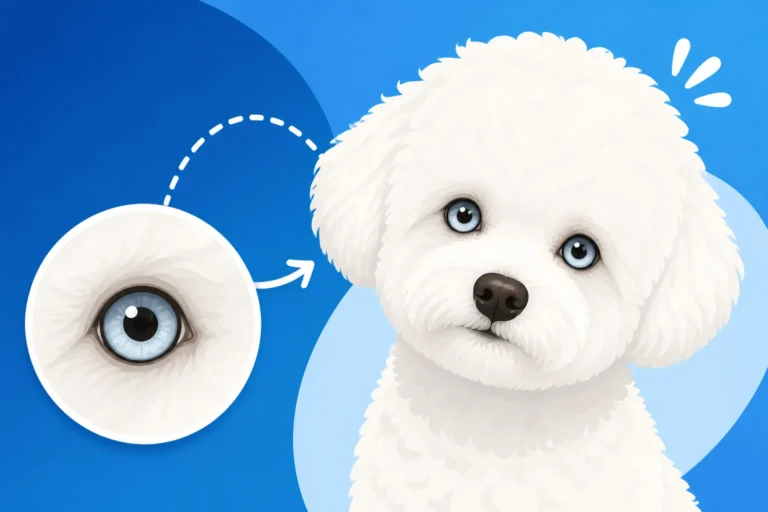
Light Bichon Frise eye color variations, puppy development, breed standards, and veterinary examination signs are explained here.

Bichon Frise eye halo pigment explains whether dark skin rims around the eyes indicate health problems or normal variation.

Dark skin under a Bichon Frise white coat often represents normal pigmentation, but texture changes require veterinary attention.
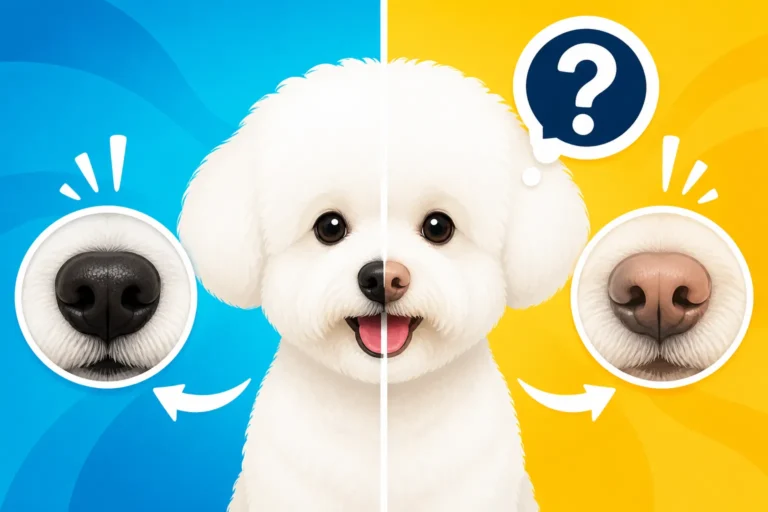
Bichon Frise nose pigment loss and seasonal hypopigmentation explain why a jet-black button nose turns pink during winter.

A Bichon Frise brown nose occurs due to normal variations or genetics, explaining why some dogs lack black pigmentation.

Buff Bichon Frise coat colors and puppy markings, explaining purebred lineage versus official breed standard requirements.

Bichon Frise puppy apricot markings fade naturally as the soft puppy coat transitions into a dense white adult coat.

Bichon Frise coat color standards and temporary puppy markings explain why some young dogs have cream or apricot patches.

Bichon Frise cross shedding genetics determine if mixed puppies inherit the low-shedding traits of purebred parents.