Whether a Bichon Frise Can Have Light Eyes
A Bichon Frise’s bright, dark eyes are part of the breed’s familiar expression, so light eyes can catch an owner off guard. The key is to separate a natural variation from a sudden eye change that needs attention. This guide explains what counts as light, how puppies’ eye color may develop, what breed standards say, and when to ask a veterinarian for an examination.
Can a Bichon Frise Have Light Eyes
What the breed standard describes
A Bichon Frise can be born with eyes that look lighter than the deep brown or black eyes people often expect, but light eyes are not the typical breed-standard look. Breed standards describe dark, round eyes, with dark eye rims that help define the expression. The standard is a guide to the ideal appearance in the show ring; it is not a diagnosis or a complete description of every healthy individual dog.
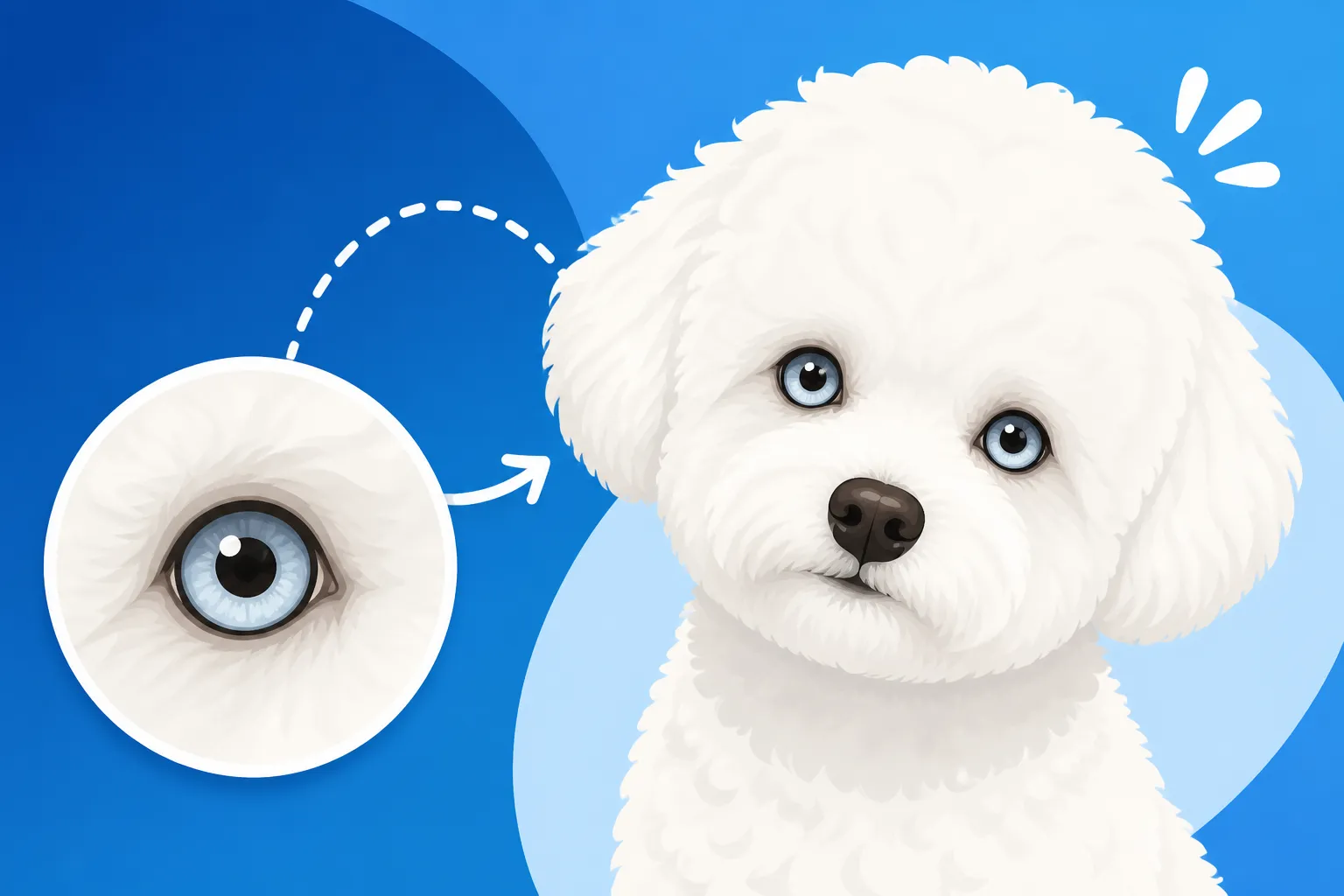
“Light eyes” can also mean different things to different people. One owner may use the term for a warm brown iris, while another may mean amber, pale hazel, blue, or one eye that differs from the other. Lighting, the color of the surrounding coat, and the size of the pupil can all affect how an eye appears in a photograph or across a room.
A lighter iris by itself does not prove that a Bichon Frise is unhealthy or that the dog is not purebred. Appearance alone cannot establish a dog’s ancestry. If you are assessing a puppy or adult for show, ask a knowledgeable breed mentor to explain how the dog’s features compare with the standard. For a pet dog, the more important question is whether the eye looks healthy and whether its color has changed.
For context on the breed’s characteristic eye shape and appearance, see The Eyes a Bichon Frise Inherits. It is also useful to distinguish iris color from the dark skin and pigment around the eye. Those are separate features, even though they work together to create the familiar Bichon expression. Whether a Bichon Frise Needs Black Eye Rims explores that surrounding pigmentation.
Why a dog’s eyes can look lighter than expected
Sometimes what looks like a pale iris is simply a visual effect. Bright sunlight, a camera flash, a large pupil, or a close-up photograph can alter how an eye appears. White facial hair can make an iris seem more prominent, while dark eye rims may create contrast that makes the same eye look darker. Compare photos taken in ordinary, indirect daylight rather than relying on a flash picture.
It is also easy to mistake a change on the eye’s surface for a change in iris color. A cloudy or bluish film over the eye, for example, is not the same as a naturally light-colored iris. If the eye looks hazy, dull, or different from the other eye, pay attention to when the appearance began and whether it is changing. A new visual difference deserves a veterinary opinion rather than an assumption that it is just an unusual color.
An owner might notice this while wiping tear marks or brushing the hair away from the face. If you are checking the eye area regularly, look at the iris, the clear surface of the eye, the eyelids, and the skin around them as separate parts. Changes in staining or surrounding pigment do not necessarily mean the iris itself has changed. The Tear Stains Under a Bichon Frise's Eyes and Whether a Bichon Frise's Nose Loses Pigment discuss other kinds of color changes owners may notice.
Puppy Eye Color and Changes Over Time
What to expect as a puppy grows
Puppy eye color can look different from an adult dog’s eye color as the puppy develops. The color visible early in life may deepen as pigment develops, but individual puppies do not all change in the same way or on the same schedule. It is sensible to observe the eyes over time rather than treating one early photograph as a final answer about their adult shade.
If you are choosing a puppy, ask the breeder whether the eyes have changed and whether both parents have any known eye conditions. A breeder’s observations can provide helpful background, but they cannot replace an examination by a veterinarian. In a pet home, take a clear photo in natural light every so often if you want a record. That makes it easier to compare the eyes if you later notice a difference.
A puppy’s eye color is only one part of an overall health picture. Look for comfortable, open eyes and normal behavior, such as tracking people and toys. Squinting, persistent rubbing, discharge, or a sudden change in the appearance of either eye matters more than whether the iris is a shade lighter than expected. When anything seems uncomfortable, arrange a veterinary check rather than waiting for the color to settle.
When a change is not just a color variation
A stable, naturally light iris is different from an eye that has recently become cloudy, pale-looking, red, or uneven. A sudden change can have several possible causes, and it is not possible to identify the cause by color alone. A veterinarian can examine the eye’s surface and internal structures and decide whether further testing is needed.
Watch for squinting, keeping one eye closed, pawing at the face, excessive tearing, unusual discharge, or reluctance to be in bright light. These signs can point to pain or irritation, even if the eye color itself seems unchanged. A Bichon Frise who suddenly bumps into furniture, hesitates on stairs, or struggles to find a familiar toy should also be assessed promptly.
If the eye is painful, injured, markedly cloudy, or changing quickly, contact a veterinary clinic as soon as you can. Do not put human eye drops or leftover pet medication in the eye unless a veterinarian has specifically advised it. Some products can be inappropriate for a particular cause, and delaying the right examination can make an eye problem harder to manage. For related concerns, read Whether a Bichon Frise Gets Corneal Ulcers and Whether a Bichon Frise Goes Blind.
Possible Explanations for Light or Uneven Eyes
Natural variation and inherited traits
Eye color is influenced by pigment and inherited traits. A Bichon Frise may have an iris that looks somewhat lighter than another Bichon’s without showing signs of an eye disease. Differences between individual dogs can occur, and a visual trait alone does not tell you exactly what genes a dog carries or whether there is a health problem.
If one or both eyes have been the same color for as long as you have known the dog, and the eyes are clear and comfortable, that history is useful information for your veterinarian. It does not guarantee that every aspect of eye health is normal, but a longstanding color is generally a different concern from a sudden change. Routine examinations help put what you see at home into context.
If the dog’s background is uncertain, avoid drawing conclusions about breed ancestry from eye color alone. A rescue dog may have incomplete records, and even a detailed pedigree cannot substitute for a health assessment. If your question is about whether a particular dog fits the breed description, consult a breed expert; if your question is about whether the eye is healthy, consult a veterinarian.
Eye conditions that may affect appearance
Several eye conditions can affect how an eye looks, but they do not all change the iris in the same way. Cloudiness, a blue-white haze, redness, or a visible spot may involve the cornea or another part of the eye rather than the iris. Cataracts, for instance, affect the lens inside the eye and can make the pupil area appear cloudy. A veterinary examination is needed to tell these possibilities apart.
Some inherited or age-related eye problems may develop gradually, while irritation or injury can cause a more sudden change. A dog may also have vision difficulties without an obvious change in iris color. That is why watching behavior matters: reluctance to move in dim light, misjudging a step, or not noticing a toy on one side can be worth mentioning at a checkup.
Do not assume that every pale or blue-looking eye means blindness, and do not assume that a dark eye must be healthy. Color is only one observation. If you have concerns about a cloudy appearance or vision, ask your clinic what examination is appropriate. You can also read Juvenile Cataracts in a Bichon Frise and Whether a Bichon Frise Gets Dry Eye for more on eye issues that may affect comfort or appearance.
| What you notice | What it may mean | A sensible next step |
|---|---|---|
| A consistently lighter iris with no discomfort | Natural variation or an appearance affected by lighting | Mention it at a routine veterinary visit |
| A color difference that appears suddenly | A change in the eye that needs assessment | Contact your veterinarian for advice |
| Cloudiness, redness, discharge, or squinting | Possible irritation, injury, or eye disease | Arrange a prompt veterinary examination |
| Bumping into things or hesitating in familiar spaces | Possible vision difficulty or another health concern | Book an examination and describe the behavior |
How to Care for a Bichon Frise’s Eyes
Make routine checks calm and simple
A quick, gentle look during regular grooming can help you notice changes early. Choose a calm moment, use good indirect light, and avoid forcing the eyelids open. Check whether both eyes look similarly clear, whether your dog is blinking comfortably, and whether there is unusual redness or discharge. If your Bichon turns away or seems painful, stop and contact a veterinary clinic rather than continuing to handle the area.
Keep hair from irritating the eyes, but use caution with scissors near the face. A professional groomer can help maintain a clear view around the eyes, and you can ask for a conservative trim if your dog is sensitive. If facial grooming is difficult, do not turn it into a struggle; gradual, reward-based handling can make future checks easier. Whether a Bichon Frise Needs a Yearly Eye Exam explains why an eye check can be a useful part of preventive care.
If you routinely buy grooming or basic pet-care supplies through a retailer such as Chewy, keep products intended for the face separate from anything meant for the eyes. Read labels carefully and ask your veterinarian before using eye washes, drops, or supplements. A product marketed for stain removal is not automatically appropriate for treating irritation or a change in eye color.
Keep observations useful for your veterinarian
When you call the clinic, describe what changed and when you first noticed it. Say whether one eye or both are involved, whether the eye looks cloudy or simply has a lighter iris, and whether your dog is squinting, rubbing, tearing, or acting differently. A photo in natural light can help show what you mean, particularly if the appearance varies with lighting.
It can help to keep a brief note of changes rather than repeatedly checking or touching the eye. Write down the date, which eye is affected, and any behavior you notice. If you have more than one photo, compare them in similar lighting. This makes the history more useful than a series of flash pictures that can make healthy eyes look different from one another.
For an appointment, bring any relevant medical records and a list of medications or eye products your dog has used. If you have been considering an over-the-counter product found through Chewy or another shop, show the label to the veterinarian and ask whether it is suitable. The right care depends on the cause, so avoiding unnecessary products is often the simplest way to prevent added irritation.
A Bichon Frise can have eyes that appear lighter than the ideal dark look described in the breed standard. A stable shade on a comfortable, clear eye is not the same as a new cloudiness, redness, or change in vision. Keep an eye on the whole picture, and get veterinary advice when the appearance changes or your dog seems uncomfortable. For general eye-care questions or supplies, Chewy may be one place owners browse, but diagnosis and treatment decisions belong with your veterinary team.
Disclaimer
This article is for general informational purposes only and does not constitute professional advice. Laws, prices and regulations vary by location and change over time. Consult a qualified professional for guidance on your specific situation.