Whether a Bichon Frise Is Worth Insuring From Eight Weeks
Bringing a new Bichon Frise puppy home is an absolute joy, filled with fluffy cuddles and playful antics. But amidst all the excitement, many new puppy parents find themselves wrestling with a crucial decision: when exactly should you get pet insurance? It’s a common frustration to feel overwhelmed by all the options and wonder if insuring your tiny eight-week-old fluffball so early is truly necessary. This guide aims to cut through the confusion and help you understand why insuring your Bichon Frise from as young as eight weeks old can be one of the most proactive and financially savvy decisions you’ll make for their lifelong well-being.
The Rationale for Early Puppy Insurance
Thinking about insurance for an eight-week-old puppy might seem premature. After all, they’re just little bundles of energy, right? They haven't had a chance to develop any major health issues. And that, my friends, is precisely the point. The earlier you get coverage, the more comprehensive that coverage is likely to be over the long haul, especially for a breed like the Bichon Frise with its unique predispositions.
Establishing Continuous Coverage Early
One of the biggest benefits of enrolling your Bichon Frise in pet insurance from eight weeks old is avoiding the dreaded "pre-existing condition" clause. Most pet insurance policies consider any illness, injury, or symptom that occurred before the policy started or during a waiting period as a pre-existing condition, and these are typically excluded from coverage. This means if your Bichon Fron has a little cough at seven weeks old, and you wait until they're twelve weeks to get insurance, that cough (and anything related to it) might not be covered.
For Bichon Frises, this is particularly important because they are known to be prone to certain genetic and breed-specific conditions. Imagine if your sweet pup develops a luxating patella, or slipping kneecap, which is not uncommon in small breeds. If the vet notes this condition, even a mild one, before your insurance policy is active or before the waiting period for orthopedic issues is over, it could be deemed pre-existing. This could leave you footing the bill for expensive diagnostics, medications, or even surgery later on. Starting early essentially gives your Bichon a clean slate, maximizing the chance that any health issue that crops up down the line will be covered. This gives you peace of mind, knowing you’ve laid the groundwork for continuous care.
Protecting Against Puppy Mishaps and Illnesses
Let’s be honest, puppies are adorable, but they’re also tiny, clumsy, and incredibly curious adventurers. They're like little toddlers exploring the world with their mouths and paws. It's not uncommon for a new puppy to get into something they shouldn’t, leading to an upset stomach, a swallowed foreign object, or even a tumble that results in a sprain or fracture. These unexpected incidents can lead to emergency vet visits, X-rays, medications, and sometimes even surgical interventions, all of which come with a hefty price tag.
Beyond accidents, puppies are also susceptible to common illnesses. While vaccinations protect against many serious diseases, a puppy's immune system is still developing. They can easily pick up kennel cough from a puppy class, develop a nasty ear infection (especially with those adorable, floppy Bichon ears!), or suffer from a gastrointestinal bug that requires fluid therapy and medications. Having insurance from eight weeks means these everyday puppy woes, which are often unpredictable and costly, are covered. You won't have to agonize over the expense when your little one needs urgent care, allowing you to focus on their recovery. For more on general vet costs, you might want to read What a Bichon Frise's Yearly Vet Bill Looks Like.
Locking in Rates and Benefits
When you insure your Bichon Frise as a young puppy, you often get to lock in more favorable rates. Insurance premiums typically increase as a pet ages because older animals are more likely to develop health issues. By starting at eight weeks, you're getting in at the lowest risk point. Some providers may also offer more comprehensive benefits or lower deductibles for pets enrolled at a young age.
What's more, enrolling early means any minor, asymptomatic conditions that might only be detected later (like a heart murmur that is still physiologically insignificant, or a very mild, unnoticeable patella luxation) may still be covered if they were truly undiagnosed and unrecorded before your policy started and waiting periods elapsed. This isn't a guarantee, of course, as policies vary, but the earlier you enroll, the less history there is that could lead to exclusions. It's about securing the best possible foundation for future coverage before any health concerns, big or small, even have a chance to manifest.
Common Health Concerns in Bichon Frises and Insurance Implications
Bichon Frises are generally healthy, long-lived dogs, often enjoying The Fourteen to Fifteen Years a Bichon Frise Lives. However, like all breeds, they do have certain genetic predispositions and common health issues that can become quite expensive to manage. Understanding these specific risks highlights why early insurance is such a smart move for Bichon owners.
Predisposition to Urinary Stones
This is a big one for Bichon Frise parents. Our beloved fluffy companions are notoriously prone to developing bladder stones, especially calcium oxalate stones. These aren't just a minor inconvenience; they can cause pain, frequent urination, blood in the urine, and in severe cases, blockages that become life-threatening emergencies. The age a Bichon Frise forms its first stone can vary, but it can happen earlier than you might expect.
The costs associated with diagnosing and treating urinary stones are significant. This often includes multiple vet visits, urinalysis, blood tests, X-rays or ultrasounds to confirm the presence and type of stones, and often, surgery to remove them. Even after surgery, there's a lifelong management plan involving special prescription diets, regular urine testing, and follow-up imaging to monitor for recurrence. If your Bichon develops stones before you have insurance, or during a waiting period, those costs could fall entirely on you. Having a policy in place from eight weeks old means that when your vet says, "It looks like Fido has a stone," you can focus on Fido's health rather than the overwhelming bills. For an idea of the costs, check out What One Bichon Frise Stone Surgery Costs and What Three Cost.
Orthopedic Vulnerabilities
Small breeds like Bichon Frises can be prone to certain orthopedic issues, with luxating patellas (slipping kneecaps) being among the most common. This is where the kneecap temporarily slips out of its groove. While some cases are mild and managed with observation, others require surgical correction to prevent pain, lameness, and the development of early arthritis. Another, though less common, condition is Legg-Calve-Perthes disease, which affects the hip joint.
These conditions often have a genetic component and may become apparent as your puppy grows, sometimes around 6-12 months of age, or even later. If your puppy starts showing a skip in their step, or develops lameness, and it's diagnosed as a luxating patella, if you didn't have insurance from early on, it would likely be considered a pre-existing condition. Surgeries for these issues are very expensive, involving specialist veterinary care, anesthesia, the procedure itself, and post-operative recovery. Having insurance from eight weeks helps ensure that if your Bichon Frise ever needs help with its knee or hip, you're financially prepared. You can explore more about this in Whether a Bichon Frise's Knee Needs Surgery.
Allergic Skin Disease
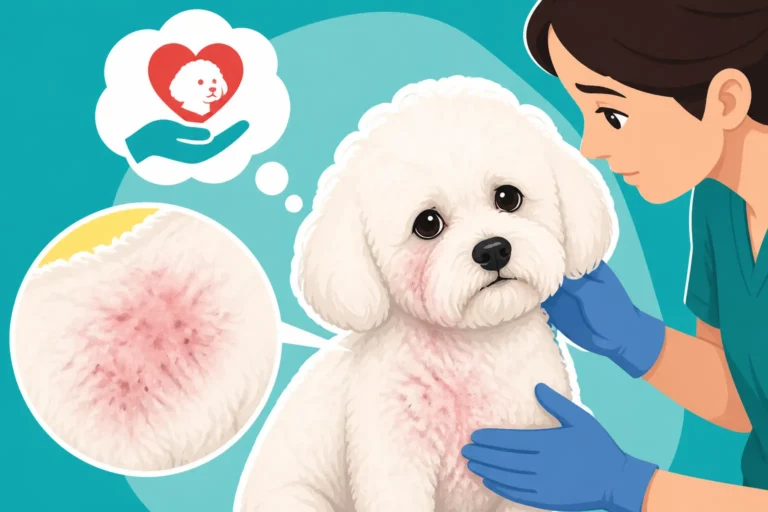
Bichon Frises are sadly quite prone to developing environmental allergies, also known as atopic dermatitis. This can manifest as relentless itching, paw licking (sometimes to the point of rawness), ear infections, and skin irritation. The good news is there are many ways to manage these allergies, including medications, medicated shampoos, dietary changes, and even allergy shots. The bad news is that managing chronic allergies is often a lifelong commitment that can become very expensive, very quickly.
Allergies typically don't show up in an eight-week-old puppy; they often develop between six months and three years of age. This makes early insurance even more critical. If you wait until your Bichon starts scratching incessantly to get insurance, the allergies will likely be deemed pre-existing. Then, all those ongoing costs for vet visits, allergy testing, and medications like Apoquel or Cytopoint (which can be pricey on their own) would be out-of-pocket. Insuring from eight weeks protects you financially against the potential for chronic allergic conditions that can require continuous care. We cover this in more detail in The Atopic Skin a Bichon Frise Is Born With.
Understanding Insurance Policies for Puppies
Navigating the world of pet insurance can feel like trying to solve a puzzle, especially when you're already busy with a new puppy. But understanding the basics of policies available for young pups is key to making an informed decision.
Accident-Only vs. Accident & Illness Plans
When choosing a policy for your eight-week-old Bichon Frise, you'll generally encounter two main types:
- Accident-Only Plans: As the name suggests, these plans cover unexpected injuries resulting from accidents, such as broken bones, cuts, or swallowing foreign objects. They are typically less expensive than accident and illness plans. While they offer a safety net for puppy mishaps, they do not cover illnesses like infections, allergies, or chronic conditions (like stones or luxating patellas). For a breed with known health predispositions like the Bichon, an accident-only plan might leave significant gaps in coverage.
- Accident & Illness Plans: These are comprehensive plans that cover both accidents and a wide range of illnesses, including breed-specific conditions, infections, allergies, digestive issues, and sometimes even chronic conditions like diabetes or Cushing's disease (should they develop later in life). They are more expensive but offer much broader protection. For a Bichon Frise, given their genetic tendencies for issues like bladder stones and patellar luxation, an accident & illness plan is almost always the recommended choice for maximum peace of mind and financial security.
| Policy Type | What It Covers | Pros | Cons | Best For |
|---|---|---|---|---|
| Accident-Only | Injuries from accidents (e.g., fractures, cuts, ingestions) | Lower monthly premiums | Does not cover illnesses, chronic conditions, or breed-specific diseases | Owners on a tight budget needing basic emergency coverage for accidents |
| Accident & Illness | Accidents, illnesses, chronic conditions, emergencies, breed-specific issues | Comprehensive coverage, greater peace of mind | Higher monthly premiums | Owners seeking robust protection for all major health issues, especially for breeds with known predispositions like the Bichon Frise |
Waiting Periods and Exclusions
It's absolutely critical to understand waiting periods. Every pet insurance policy has them – a specific period of time after you enroll before certain coverages kick in. These vary by provider and by the type of condition. For instance:
- Accident Waiting Periods: Often short, perhaps 2-3 days, before accident coverage starts.
- Illness Waiting Periods: Typically 14 days for most illnesses.
- Orthopedic Waiting Periods: This is particularly important for Bichons. Many policies have longer waiting periods (e.g., 6 months or even a year) for conditions like luxating patellas or cruciate ligament issues. This is precisely why insuring an eight-week-old is so beneficial; you want to get through these waiting periods long before your puppy is old enough for these conditions to potentially manifest.
Make sure to read the policy terms carefully. Some policies might also have specific exclusions, although reputable providers generally cover common breed-specific conditions if they aren't pre-existing. When looking at providers like Healthy Paws, make sure you understand their specific terms regarding waiting periods and breed-specific conditions. Inquire about how they handle conditions that are common in Bichons to ensure you’re getting the coverage you need.
Choosing a Provider and Policy
When selecting a pet insurance provider for your Bichon Frise puppy, consider a few key factors:
- Reputation and Customer Service: Look for providers with strong reviews and a history of reliable claims processing. Ask fellow Bichon owners for recommendations.
- Deductibles: This is the amount you pay out-of-pocket before your insurance starts covering costs. Lower deductibles mean higher monthly premiums, and vice versa.
- Reimbursement Rates: This is the percentage of the vet bill the insurance company will pay after your deductible is met (e.g., 70%, 80%, or 90%).
- Annual Limits: This is the maximum amount the policy will pay out in a given year. Some plans offer unlimited annual coverage. Given the potential for recurring issues like stones, an unlimited or very high annual limit can be very reassuring.
- Add-ons: Some policies offer optional add-ons for things like wellness care (vaccines, routine exams), which are generally not covered by accident & illness plans. For a young puppy, these can be useful for covering standard preventative care.
Remember, what works for one pet parent might not work for another. It's always a good idea to get quotes from several providers and compare their plans side-by-side. Look into their specific policies on breed-specific conditions for Bichons, as this is where an informed choice can really pay off in the long run.
Weighing the Costs and Benefits
Ultimately, the decision to insure your Bichon Frise from eight weeks comes down to a balance of financial foresight, potential veterinary expenses, and the peace of mind that comes with knowing you're prepared.
The Financial Burden of Unexpected Vet Bills
Let's face it, veterinary care is expensive, and it's only getting more so with advances in medical technology. A single emergency visit, diagnostic tests, or a necessary surgery can easily run into the thousands of dollars. For instance, removing bladder stones from a Bichon Frise is not a trivial expense, often costing several thousand dollars for the surgery alone, not including diagnostics or post-operative care. What Stone Surgery Involves on a Bichon Frise goes into more detail. Managing chronic conditions like allergies can add up to hundreds or even thousands annually for medication, special foods, and vet visits.
Without insurance, these unexpected bills can create significant financial stress, forcing difficult decisions or delaying necessary treatment. Many loving pet parents find themselves in a terrible bind, choosing between their pet's health and their financial stability. Insuring your Bichon from eight weeks old means that when these unpredictable costs arise, you have a financial partner helping to shoulder the burden. It's about ensuring your furry family member always gets the best care possible, without you having to dip into emergency savings or, worse, compromise on treatment.
Peace of Mind for New Pet Parents
Beyond the financial aspect, early pet insurance offers invaluable peace of mind. Bringing a new puppy home is a huge responsibility, and worrying about potential health issues and their associated costs can dampen the joy of puppyhood. Knowing that you have a comprehensive insurance policy in place from virtually day one allows you to relax and truly enjoy those precious early months and years with your Bichon Frise.
You won't have to hesitate to take your puppy to the vet at the first sign of an unusual symptom, or agonize over the cost of additional diagnostics when something seems off. This security allows you to be proactive about your Bichon's health, knowing that you're prepared for whatever comes your way. It’s about being able to say "yes" to the best course of treatment, regardless of the price tag, and that feeling is truly priceless.
Long-Term Value vs. Immediate Premiums
It's true that you'll start paying monthly premiums from eight weeks, and for those first few months, your puppy might be perfectly healthy, making it feel like an unnecessary expense. However, consider this an investment in their long-term health and your financial future. The real value of pet insurance often becomes apparent when a major illness or accident strikes, which can happen at any age.
If your Bichon Frise is one of the many who develop bladder stones, allergies, or orthopedic issues later in life, the premiums you paid over the years will likely be dwarfed by the cost of even a single major veterinary event. By insulating yourself against these significant, often unpredictable expenses, you’re not just buying insurance; you’re buying security, flexibility, and the ability to make health decisions based on what’s best for your beloved companion, rather than what’s best for your wallet. It's a fundamental part of responsible pet ownership for a breed with specific health considerations.
Disclaimer
This article is for general informational purposes only and does not constitute professional advice. Laws, prices and regulations vary by location and change over time. Consult a qualified professional for guidance on your specific situation.