What Stone Surgery Involves on a Bichon Frise
The moment your vet suggests stone surgery for your beloved Bichon Frise, it’s completely natural for your heart to sink. The idea of your fluffy companion undergoing an invasive procedure can be terrifying, filled with worries about recovery, pain, and the financial strain. You’re not alone in feeling this way; bladder stones are a common, frustrating issue for Bichons, and navigating the surgical process can feel overwhelming. This guide is here to walk you through exactly what stone surgery entails for your Bichon Frise, from preparation to post-operative care, helping you feel more informed and prepared for this challenging time.
Understanding the Need for Stone Surgery in Bichons
It's a tough pill to swallow when you learn your little Bichon has bladder stones. For many of us, these dogs are part of the family, and hearing they need surgery is heartbreaking. But understanding why this happens and when surgery becomes the best, or only, option can help you approach the situation with a clearer head.
Why Bichons Are Prone to Stones
If you own a Bichon Frise, you've likely heard that they're a breed particularly susceptible to certain health issues, and bladder stones, especially calcium oxalate stones, are unfortunately high on that list. It often feels unfair, doesn't it? Like you're doing everything right, and still, these problems crop up. The reality is, it's not usually due to anything you've done wrong. This predisposition is largely genetic, woven into the very fabric of their breed. Bichons have a specific metabolic makeup that can lead to their urine being oversaturated with certain minerals, making them more likely to crystallize and form stones. Their small bladders might also play a role, as urine doesn't always have ample time to dilute before being passed, concentrating those stone-forming elements. It’s a frustrating genetic lottery that many Bichon owners find themselves dealing with, and it can feel like a constant battle to keep them healthy.
These stones aren't just a minor inconvenience; they can grow, irritate the bladder lining, and lead to painful inflammation, chronic infections, and, in severe cases, life-threatening blockages. The problem is compounded by the fact that calcium oxalate stones, which are most common in Bichons, don't dissolve with diet changes like some other types of stones, such as struvite. This means that once they've formed and reached a problematic size, surgical removal is often the most direct and effective course of action. It’s a harsh reality that owners face, knowing that their dog's breed predisposes them to such a significant health challenge.
When Surgery Becomes Necessary
The decision to proceed with surgery is never taken lightly, but there are clear indications that make it the best, and sometimes only, path forward for your Bichon. Often, the first signs you might notice are changes in your dog's urination habits. You might see them straining to urinate, taking much longer than usual, or even squatting repeatedly without producing much urine. There might be blood in their urine, which can range from a faint pink tinge to a noticeable red, causing immediate alarm bells to ring. These symptoms are all tell-tale signs that something is wrong with their urinary tract, and unfortunately, in a Bichon, stones are a prime suspect. To get a clearer picture of what's happening, you might want to read about The First Signs a Bichon Frise Has Stones.
The most critical situation, and one that absolutely necessitates immediate surgical intervention, is a urinary blockage. This occurs when a stone moves from the bladder and gets lodged in the urethra, completely preventing your dog from urinating. If your Bichon is desperately trying to pee but can't, seems uncomfortable, or their abdomen feels hard and distended, it’s an emergency. This is where Whether a Straining Bichon Frise Is an Emergency becomes a crucial read. A blocked bladder can quickly lead to kidney damage, bladder rupture, and even death within a matter of hours if not addressed swiftly. While dietary management and other non-surgical approaches are sometimes considered for very small stones that aren't causing significant issues, once stones are large, numerous, or causing clinical signs, especially an obstruction, surgery becomes the gold standard for resolution.
The Surgical Procedure: A Step-by-Step Guide
Facing stone surgery for your Bichon Frise can be nerve-wracking, but understanding each stage of the process can help alleviate some of that anxiety. It's a precise medical procedure designed to get your furry friend feeling better and back on the road to recovery as quickly as possible.
Pre-Surgical Preparations and Diagnostics
Before your Bichon Frise even sets paw in the operating room, a series of important steps are taken to ensure they are as healthy as possible for anesthesia and surgery. Your vet will perform a thorough physical examination, listening to their heart and lungs, and generally assessing their overall condition. This initial check-up is crucial for identifying any underlying issues that could complicate the procedure. It's a time for your vet to get a complete picture of your dog's health beyond just the bladder stones.
Next, a comprehensive round of diagnostic tests will be performed. This typically includes blood work, such as a complete blood count (CBC) to check for infection or anemia, and a biochemistry panel to evaluate organ function (kidneys, liver, etc.). A urinalysis and urine culture are also vital to identify any concurrent urinary tract infections, which are common with bladder stones. Imaging, usually X-rays or an ultrasound, will precisely locate the stones within the bladder and urethra, giving the surgeon a roadmap. In some cases, a contrast study might be used to get an even clearer view. You’ll be instructed to fast your Bichon for a certain period before surgery, usually 8-12 hours, to prevent nausea and potential aspiration during anesthesia. This preparatory phase is meticulous for a reason: it dramatically improves the safety and success rate of the surgery.
Here's a quick look at the typical pre-surgical checklist:
| Step | Purpose | Owner Action (if applicable) |
|---|---|---|
| Full Physical Exam | Assess overall health, identify pre-existing conditions. | Discuss your Bichon's health history, any recent changes. |
| Blood Work (CBC & Chemistry) | Evaluate organ function, check for infection, anemia. | (Vet takes blood samples) |
| Urinalysis & Culture | Detect infection, analyze urine composition for stone type. | Collect a fresh urine sample (if requested by vet). |
| X-rays / Ultrasound | Pinpoint stone location, size, and number. | (Vet performs imaging) |
| Fasting Instruction | Prevent aspiration during anesthesia. | Withhold food/treats for 8-12 hours prior; water often allowed. |
| IV Catheter Placement | Provide IV fluids during surgery, administer medications. | (Performed at vet clinic on morning of surgery) |
The Cystotomy Procedure Itself
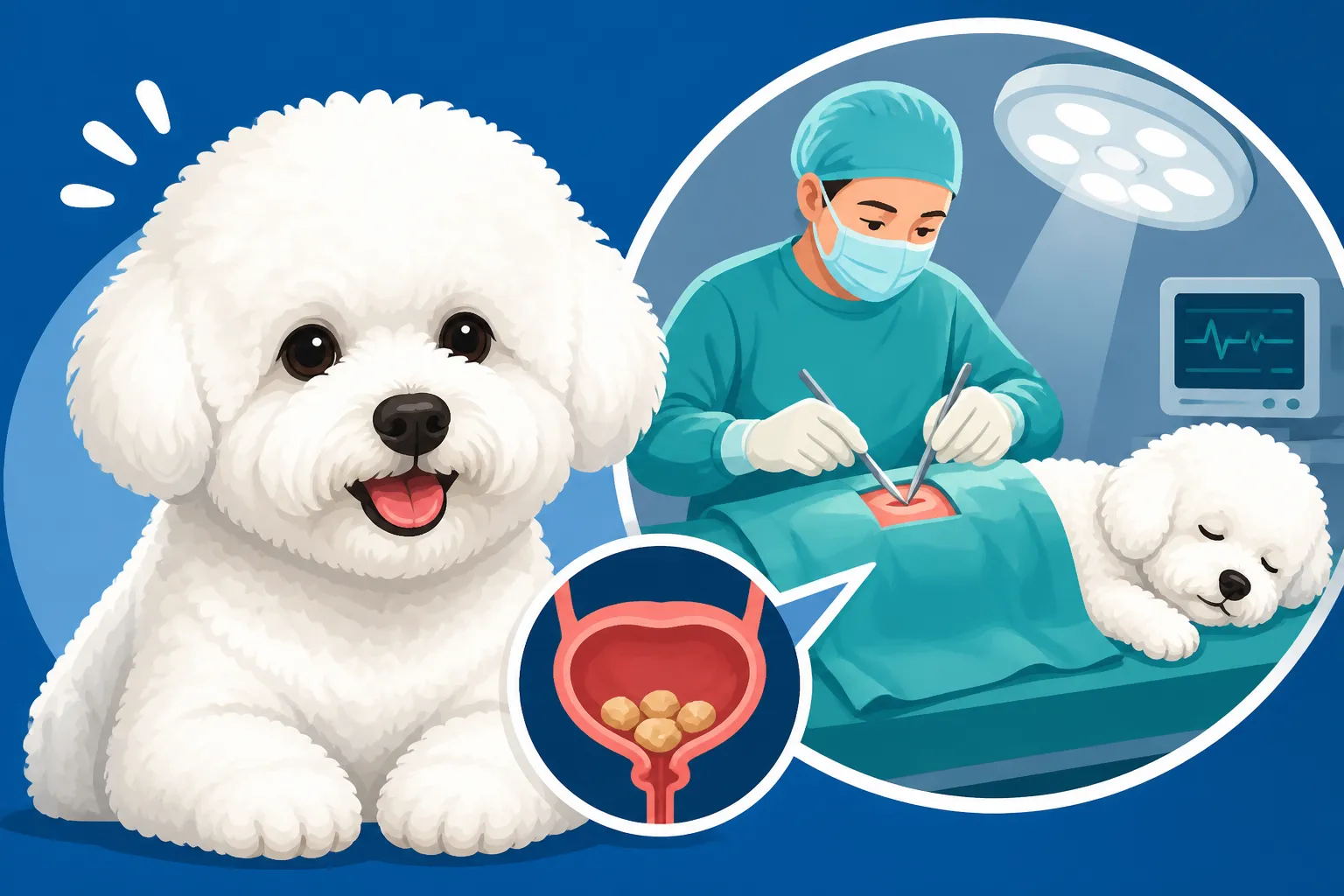
When it's time for the surgery, known as a cystotomy, your Bichon Frise will be placed under general anesthesia. This means they'll be completely unconscious and feel no pain during the procedure. Anesthesia is always a concern for pet parents, especially with small breeds, but modern veterinary anesthesia protocols are incredibly safe, with continuous monitoring of vital signs like heart rate, breathing, blood pressure, and oxygen saturation. A trained veterinary technician will be dedicated to monitoring your dog throughout the entire surgery.
Once properly anesthetized, the surgical site – your Bichon's abdomen – will be meticulously clipped and sterilely prepped to minimize the risk of infection. The surgeon will then make an incision into the lower abdomen, carefully navigating through layers of tissue to expose the bladder. The bladder itself is then gently isolated, and a small incision is made directly into its wall. This is the moment the surgeon accesses the stones. They will carefully remove all visible stones, sometimes using specialized instruments to retrieve smaller fragments. The bladder is thoroughly flushed with sterile saline to ensure no tiny stones or grit remain, as even microscopic particles can become the nucleus for future stone formation. After all stones are removed and the bladder is clean, the incision in the bladder wall is meticulously closed with sutures, followed by the closure of the abdominal muscle layers and skin. For more information on the financial aspects, you might want to look into What Cystotomy Costs on a Bichon Frise.
Post-Surgical Care and Immediate Recovery
The surgery itself is only part of the journey; the immediate post-operative period is crucial for a smooth recovery. Once the surgery is complete, your Bichon Frise will be moved to a recovery area where they are closely monitored as they wake up from anesthesia. Pain management is a top priority, and your dog will receive appropriate pain medications to ensure they are comfortable. They might also receive intravenous fluids to maintain hydration and support kidney function, especially important after a procedure involving the urinary tract.
During this time, the veterinary team will constantly monitor your Bichon's vital signs, incision site, and, crucially, their urination. It's normal for them to be a little groggy, disoriented, or even nauseous as the anesthesia wears off. You might notice some blood in their urine for a few days post-surgery, which is usually normal given the bladder manipulation. However, the team will be watching for excessive bleeding or any signs of difficulty urinating, as these could indicate complications. Your Bichon will likely stay at the veterinary clinic for 1-3 days, depending on their individual recovery, ensuring they are stable and comfortable before heading home. This critical period allows the medical team to address any immediate concerns and ensure a good start to healing.
Life After Surgery: Managing Recovery and Preventing Recurrence
Bringing your Bichon Frise home after stone surgery is a huge relief, but it also marks the beginning of an intensive period of home care and a long-term commitment to preventing future stone formation. It's understandable to feel a bit overwhelmed by the responsibility, but with the right information and dedication, you can significantly improve your dog's chances of a healthy, stone-free future.
Home Care and Medication
Once your Bichon is back home, your primary focus will be on managing their pain, preventing infection, and ensuring proper wound healing. Your vet will send you home with a detailed discharge plan, including specific instructions for administering medications. This will typically involve a course of pain relievers, and antibiotics to guard against post-surgical infections. It’s absolutely vital to give all medications exactly as prescribed, even if your dog seems to be feeling better. Stopping antibiotics early, for instance, can lead to resistant infections, which are much harder to treat.
Activity restriction is also paramount. No jumping, no running, no stairs, and short, leashed walks only for a few weeks. This prevents undue stress on the incision site, which could lead to complications like dehiscence (the incision opening up). And let's not forget the dreaded Elizabethan collar, or "cone of shame," which your Bichon will likely need to wear to prevent them from licking or chewing at their sutures. While it might seem cruel, it's essential for proper healing. Alternatively, some owners find Whether a Bichon Frise Wears a Recovery Suit to be a more comfortable option. Keep a close eye on the incision for any signs of redness, swelling, discharge, or if it appears to be opening. Any concerns should prompt an immediate call to your vet.
The Critical Role of Diet and Hydration
This is arguably the most crucial aspect of preventing stone recurrence in a Bichon Frise, and it's where your long-term commitment truly comes into play. Since Bichons are primarily prone to calcium oxalate stones, which typically cannot be dissolved, the goal of post-surgical diet is to create a urinary environment where new stones are less likely to form. This means a special prescription urinary diet will become a permanent fixture in your Bichon's life. Brands like Royal Canin Urinary SO, Hill's c/d Multicare, or Purina Pro Plan Veterinary Diets UR are commonly prescribed. It's a significant change, and you might wonder The Diet a Bichon Frise Stays On for Life. These diets work by carefully controlling mineral levels, particularly calcium and oxalate, and by promoting a more dilute urine and an appropriate pH.
Your vet will likely emphasize that Whether Diet Alone Stops a Bichon Frise Reforming Stones is not usually a standalone solution for dissolving calcium oxalate stones, but it is indispensable for prevention. Even one forbidden treat can potentially throw off the delicate balance these diets aim to achieve. This often means saying goodbye to many regular treats and table scraps, which can feel challenging, but it's a small price to pay for your dog's health. You'll also need to focus heavily on hydration. Encouraging your Bichon to drink more water helps dilute their urine, making it harder for crystals to form. Adding water to their kibble, offering wet food, or even using a pet water fountain can help. Many owners wonder Whether Wet Food Helps a Bichon Frise's Stones or how to best ensure Getting Enough Water Into a Bichon Frise. It's a strict regimen, and many owners ponder Whether a Bichon Frise Ever Comes Off the Stone Diet, but adherence is key to preventing a repeat performance of stone surgery.
Ongoing Monitoring and Follow-Up
The journey doesn't end after your Bichon's incision heals and they're happily eating their new diet. Due to the high recurrence rate of bladder stones in Bichon Frises, diligent, lifelong monitoring is absolutely essential. Your vet will schedule follow-up appointments, often starting a few weeks post-surgery, and then regularly thereafter, typically every 3-6 months. These check-ups aren't just routine; they're your best defense against new stones.
Each follow-up will usually involve a urinalysis to check urine pH, specific gravity (how concentrated the urine is), and to look for crystals or signs of infection. A urine culture may also be performed periodically. Critically, regular imaging – either X-rays or ultrasound – will be recommended to screen for any new stone formation. These small stones can grow silently, and catching them early, before they cause symptoms or a blockage, is paramount. You might ask How Often a Bichon Frise's Stones Return or Whether a Bichon Frise Should Be Urine Tested Yearly to your vet. The frequency of these tests will be tailored to your individual Bichon’s history and risk factors. While it adds to the ongoing cost and effort, this proactive approach can save your Bichon from another painful surgery down the line. It's a testament to the fact that stone prevention is a marathon, not a sprint.
Costs and Emotional Toll of Stone Surgery
Beyond the physical recovery for your Bichon, stone surgery brings with it significant financial and emotional considerations for you as their owner. It's a challenging time, and acknowledging these burdens is an important part of navigating the process.
Financial Considerations
Let's be blunt: Bichon Frise stone surgery is not inexpensive. The cost can vary widely depending on your geographic location, the specific veterinary clinic (emergency vs. general practice), the complexity of the case, and the duration of your dog's hospital stay. You're looking at expenses that include pre-surgical diagnostics (blood work, X-rays, ultrasound), the surgery itself (anesthesia, surgical supplies, surgeon's fee), post-operative medications, and follow-up care. A single stone surgery can easily range from $1,500 to $5,000 or more, and that's just for the initial procedure. If your Bichon experiences complications or, unfortunately, requires repeat surgeries, the costs can escalate dramatically. It's a harsh reality that many owners struggle with, especially when dealing with a recurring issue for a breed already prone to this problem. You can explore this further by looking into What One Bichon Frise Stone Surgery Costs and What Three Cost.
Beyond the surgery, remember the lifelong commitment to prevention. The prescription urinary diet, regular urine tests, and follow-up imaging all add up over the years. These ongoing expenses, while necessary, can put a strain on your budget. This is where having pet insurance can be a game-changer. Companies like Healthy Paws can help alleviate the financial burden of unexpected surgeries and chronic conditions like bladder stones. Many owners find peace of mind knowing that a significant portion of these high veterinary bills could be covered, allowing them to make treatment decisions based on their pet's health, rather than solely on their wallet. It’s definitely something to consider if you're facing stone issues with your Bichon, or even before they arise, as early enrollment can prevent conditions from being considered "pre-existing."
Supporting Your Bichon (and Yourself) Through Recovery
The emotional aspect of stone surgery is often overlooked but incredibly significant for both you and your Bichon Frise. Seeing your usually lively dog subdued, in a cone, and potentially in pain, can be heartbreaking. You might feel guilt, frustration, or intense worry, especially if this isn't their first encounter with stones. It's vital to acknowledge these feelings and give yourself grace. You are doing everything you can for your furry family member. Your Bichon will rely heavily on your calm presence and consistent care during their recovery. They might be disoriented or irritable due to pain medication or the general stress of surgery, so patience and a gentle approach are key.
Create a quiet, comfortable space for them to rest, away from household commotion. Spend extra time with them, offering gentle petting (avoiding the incision site) and reassuring words. Your comfort and reassurance will go a long way in helping them feel safe and loved as they heal. Remember, recovery is a process, not an event, and there will be good days and challenging ones. Lean on your veterinary team for support and advice, and don't hesitate to reach out if you're struggling. This journey is a partnership between you, your Bichon, and your vet, and a strong support system makes all the difference.
Disclaimer
This guide is intended for informational purposes only and does not constitute medical advice. Always consult with a qualified veterinary professional for any health concerns or before making any decisions about your Bichon Frise's medical care. Individual outcomes can vary, and your vet is the best resource for tailored advice for your specific pet.