Whether a Bichon Frise Walks on a Loose Leash
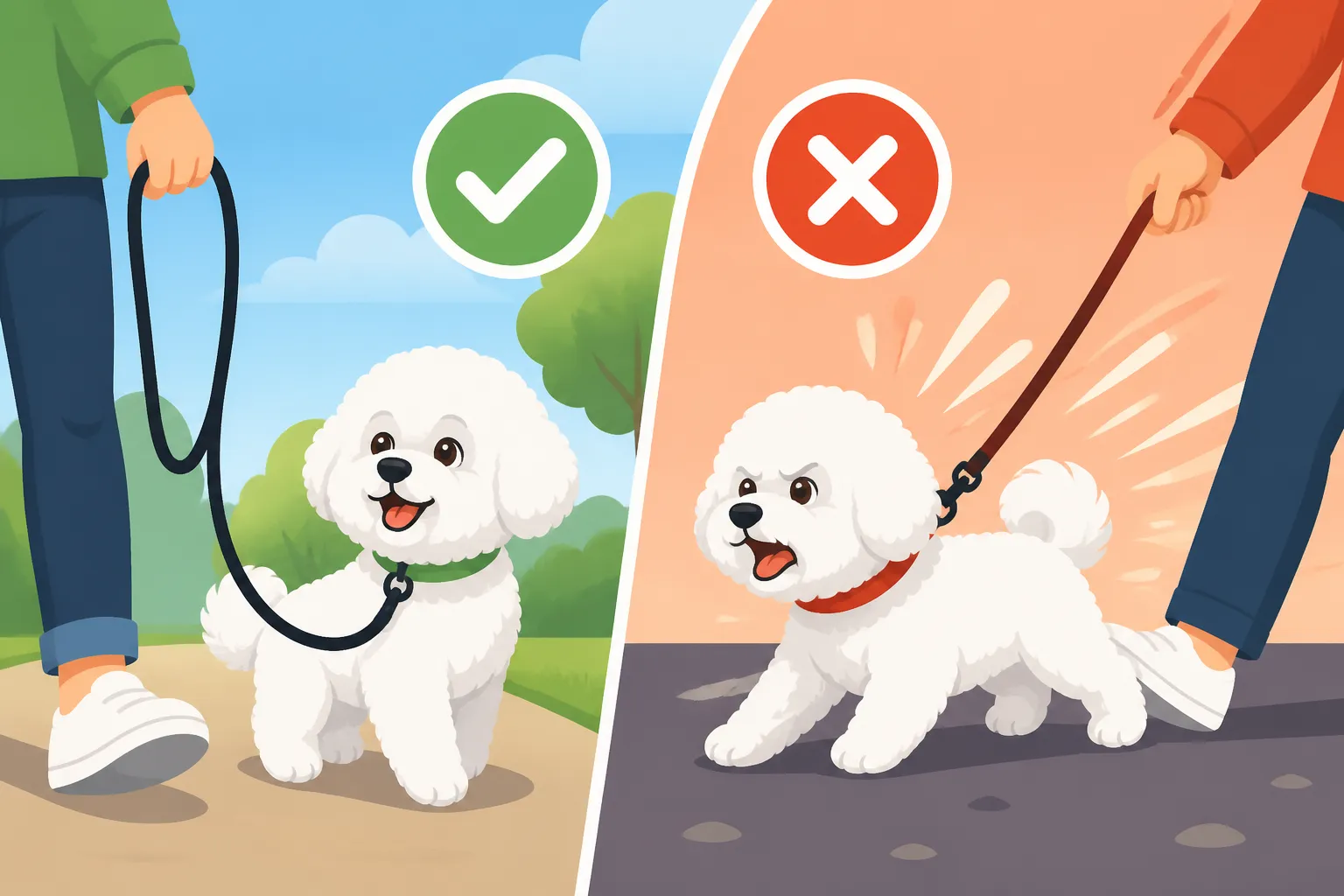
Oh, the age-old question for many small dog owners, especially those of us blessed with a lively Bichon Frise! There's nothing quite like the dream of a peaceful stroll, your fluffy companion trotting happily by your side on a loose leash, but often the reality is more of a frantic tug-of-war, with you being dragged down the street by what feels like a tiny, determined sled dog. This guide is here to shed light on why your Bichon might be pulling and, more importantly, how you can cultivate that serene loose leash walk you've always envisioned.
Understanding the Bichon Frise's Natural Tendencies on Leash
Let's face it, Bichons are bundles of joy and energy, and sometimes that energy translates directly to their leash manners. It's not always defiance; often, it's just pure, unadulterated Bichon-ness.
Why They Pull: Energy, Curiosity, and Small Stature
Bichon Frises are known for their lively, cheerful dispositions. They're curious little explorers, and the outside world is a wonderland of smells, sounds, and sights. For a dog that's only a foot high, every blade of grass, every dropped crumb, every distant squirrel is an adventure waiting to happen. This boundless curiosity, combined with their natural zest for life, can easily lead to pulling.
Imagine being so excited by everything around you that you just have to get to it, and your human is moving too slowly. That's often a Bichon's perspective. Their small size means they have to work harder to keep up or to investigate something that catches their eye. A seemingly gentle pull from a tiny dog can still be quite jarring, especially when it's constant. It's frustrating when you just want a pleasant walk, and instead, you're bracing your arm against their enthusiastic lunges, feeling like your shoulder is going to pop out of its socket. It's important to remember that they aren't trying to be naughty; they're simply responding to their instincts and the exciting world around them.
The "Zoomies" Factor Outdoors
Ah, the "Bichon Blitz" – we all know and love (or are occasionally bewildered by) it indoors. But have you ever noticed that same burst of spontaneous energy, those sudden, frantic dashes, sometimes manifesting outdoors while on a leash? It's a real thing! A sudden excitement, a new smell, or even just a cool breeze can trigger this burst of energy, sending your Bichon into a frenzy of pulling as they try to dart and weave. The Bichon Blitz and What It Means is definitely something to understand.
This isn't always a sustained pull but rather sudden, unpredictable lunges that can catch you off guard. One moment you're walking calmly, the next your arm is being yanked as your Bichon decides to suddenly sprint after an imagined butterfly. These unpredictable bursts make consistent loose leash training even more challenging, as you're not just dealing with steady tension but also sudden jerks. It's easy to get discouraged when your dog seems to forget everything you've taught them in a split second of pure exuberance.
Common Misconceptions and Training Challenges
Many Bichon owners, myself included, have fallen into the trap of thinking certain things about loose leash walking that simply aren't true or make the training process harder. Let's bust a couple of those myths.
"They're So Small, It Can't Be That Bad!"
This is perhaps the biggest misconception. While a 15-pound Bichon might not be able to drag you across a field like a large retriever, their consistent pulling can still cause significant issues. For you, it means shoulder pain, joint strain, and a general unpleasantness that makes you dread walks instead of enjoy them. For your Bichon, constant pulling against a collar can lead to neck strain, tracheal damage (especially with their delicate little windpipes), and even eye pressure issues. It also fosters a habit of ignoring you on walks, making it harder to get their attention when you really need it, say, if there's an approaching car or an off-leash dog.
A walk should be an enjoyable experience for both of you, a chance to bond and explore together. When one party is constantly being yanked, and the other is constantly straining, that bond can suffer, and walks become a chore. It's not just about strength; it's about control, comfort, and safety. A small dog that pulls incessantly can still lead to big problems.
The Lure of Distractions: Sights, Sounds, and Smells
The world is an incredibly stimulating place for a dog, and for a Bichon with their keen senses, it's like a constant sensory party. Every tree is a pee-mail bulletin board, every rustle in the bushes could be a squirrel, and every distant siren is a mystery to be investigated. This intense focus on the environment makes it incredibly difficult for them to pay attention to you. When they're nose-deep in an interesting scent, or their eyes are locked on a moving leaf, your gentle tug or verbal cue can simply fade into the background.
This isn't them being disrespectful; it's just how their doggy brains are wired. They're responding to their primal instincts and their immediate surroundings. The challenge for us as owners is to somehow become more interesting than the entire world around them, which, let's be honest, is a tall order! It requires patience, high-value rewards, and a consistent approach to help them learn to check in with you amidst all the tempting distractions.
Effective Strategies for Loose Leash Walking
So, what can we actually do to turn that tug-of-war into a tango? It's all about consistency, the right tools, and understanding your Bichon's motivations.
The Right Equipment Makes a Difference
Before you even step out the door, the equipment you choose can significantly impact your success. For Bichons, given their delicate necks and propensity for respiratory issues like a collapsing trachea, a harness is often a much safer and more comfortable option than a traditional neck collar.
- Harnesses vs. Collars: A standard flat collar puts direct pressure on your Bichon's neck and throat, especially if they pull. A harness, on the other hand, distributes pressure across their chest and shoulders, reducing the risk of injury.
- Front-Clip Harnesses: For a dog that pulls, a front-clip harness can be a game-changer. Instead of attaching the leash to their back, where they can lean into the pull with their full body weight, a front-clip harness has the leash attachment on the chest. When your Bichon pulls, they are gently redirected to the side, making it much harder for them to continue forging ahead. There are many excellent options available on platforms like Amazon that offer both comfort and effective control. Some even have a dual clip option, allowing you to switch between front and back as your training progresses.
Here's a quick comparison:
| Feature | Traditional Collar | Back-Clip Harness | Front-Clip Harness |
|---|---|---|---|
| Pressure Distribution | Concentrated on neck/throat | Distributed over back/chest | Distributed over chest/shoulders |
| Control Over Pulling | Minimal; can exacerbate pulling | Can still allow strong pulling | Redirects dog to the side; reduces pulling |
| Safety | Risk of neck/tracheal injury | Generally safer than collar | Safer for neck/trachea |
| Comfort | Less comfortable if dog pulls | Generally comfortable | Comfortable; can feel a bit odd initially |
| Training Effectiveness | Less effective for pulling issues | Good for general walking once trained | Excellent tool for teaching loose leash |
For additional guidance on equipment, you might find Whether a Bichon Frise Should Wear a Harness Not a Collar helpful.
Positive Reinforcement and Consistency are Key
When it comes to training a Bichon, positive reinforcement is your best friend. They thrive on praise, treats, and affection. The goal is to make loose leash walking more rewarding than pulling.
- Reward the Right Behavior: Every single time your Bichon walks with a loose leash – even if it's just for one step – mark that behavior with a verbal cue like "Yes!" or a clicker, and immediately give them a high-value treat. Don't wait until they've walked perfectly for a block; start small. This instant feedback helps them understand exactly what they're being rewarded for.
- High-Value Treats: Forget the boring kibble. On walks, you're competing with squirrels and fascinating smells, so you need something truly irresistible. Think small pieces of cooked chicken, cheese, or specialized training treats.
- Short, Frequent Sessions: Bichons have relatively short attention spans, especially when they're young or just starting out. Instead of one long, frustrating walk, aim for multiple short training sessions throughout the day. Even 5-10 minutes of focused loose leash practice in a low-distraction environment can yield better results. Whether Short Sessions Suit a Bichon Frise is a concept that applies perfectly here.
- Stay Consistent: Everyone in the household needs to be on the same page. If one person allows pulling and another doesn't, it will confuse your Bichon and slow down progress. Establish a clear routine and stick to it. Consistency is vital for any training, and How Fast a Bichon Frise Learns a New Cue often depends heavily on this. If you're looking for structured guidance on training, a program like BAXTER & Bella offers comprehensive online resources that can walk you through the steps.
Mastering the Stop-Start Method and Direction Changes
These two techniques are fundamental to teaching loose leash walking.
- The Stop-Start Method: This is simple but incredibly effective. The moment your Bichon starts to pull, stop walking. Don't say anything, don't yank the leash back – just freeze. Wait for the leash to go slack, even for a second, or for your Bichon to look back at you. The instant the leash is loose, say your marker word ("Yes!") and take a step forward, then reward. If they pull again, stop again. Your Bichon will quickly learn that pulling gets them nowhere, but a loose leash gets them moving. This can feel tedious at first, but patience pays off.
- Direction Changes: This method keeps your Bichon engaged and prevents them from always leading. When your Bichon starts to pull or gets too far ahead, calmly change direction. If they're pulling left, turn right. If they're pulling forward, turn around. Again, don't yank; just smoothly turn. As they follow and the leash loosens, reward them. This teaches them to pay attention to where you're going and to maintain a loose leash, because they never know which way you'll turn next. It turns the walk into a team effort rather than a solo mission for your dog.
Desensitization and Counter-Conditioning to Distractions
The world is full of distractions, and your Bichon needs to learn to navigate them calmly. This involves two steps:
- Desensitization: Gradually expose your Bichon to distractions at a distance where they can still remain calm and focused on you. For example, if they pull when they see other dogs, start training across the street from a park, far enough away that they notice dogs but aren't reacting strongly.
- Counter-Conditioning: Pair the presence of the distraction with something positive. Every time your Bichon sees a trigger (like another dog) but doesn't react by pulling, immediately reward them with a high-value treat and praise. The goal is to change their emotional response from "OMG, must pull!" to "Oh, another dog! Maybe I'll get a treat if I stay calm." Slowly, as they get better, you can decrease the distance to the distraction. This takes time, patience, and often a lot of delicious treats. Remember What a Bichon Frise Needs Every Day includes walks, and these need to be calm and controlled.
Addressing Specific Pulling Scenarios
Pulling isn't always just general excitement. Sometimes it's triggered by specific situations.
Pulling to Greet Other Dogs or People
This is a classic scenario: your Bichon spots a friendly face (human or canine) and lunges with all their might, often emitting excited squeaks or barks. It’s adorable in its enthusiasm, but still not ideal for walking.
- Manage the Environment: Try to anticipate these encounters. If you see another dog or person approaching, calmly direct your Bichon to the side, get their attention, and have them sit. Reward them for maintaining focus on you while the distraction passes.
- "Watch Me" Command: Teach your Bichon a "watch me" or "look" command in a low-distraction environment. Practice it until they can hold eye contact for several seconds. Then, gradually introduce distractions, using the command to redirect their attention to you. When they look at you instead of lunging, reward heavily.
- Short Greetings, Controlled Introductions: If a greeting is unavoidable and appropriate, keep it short and controlled. Ask the other person or dog owner if their pet is friendly. Keep your Bichon on a loose leash and interrupt any pulling with a gentle redirection. The idea is to teach them that calm behavior earns them the chance to greet, not pulling.
Reactivity and Fear-Based Pulling
Sometimes, pulling isn't about wanting to get to something but wanting to get away from something. This is often seen in fear-reactive dogs who might bark, lunge, and pull intensely when they see something that scares or overwhelms them, like a large dog, a loud truck, or an unfamiliar person. Understanding the difference is crucial, as the training approach will vary. For Bichons, sometimes the world can feel quite large and overwhelming, leading to these reactions.
- Identify Triggers: Pay close attention to what causes your Bichon to react. Is it specific types of dogs? Loud noises? Certain people? Knowing the triggers helps you avoid or manage situations more effectively.
- Increase Distance: The easiest way to manage reactivity is to increase the distance from the trigger. If your Bichon reacts to other dogs at 20 feet, work at 30 feet. The goal is to stay below their "threshold" – the point at which they start reacting.
- Positive Associations: When you spot a trigger at a safe distance, immediately start giving your Bichon high-value treats, even if they're just glancing at the trigger. The moment the trigger is gone, stop the treats. This helps them associate the scary thing with good things happening.
- Seek Professional Guidance: Fear-based reactivity can be complex and challenging to address on your own. A certified professional dog trainer or veterinary behaviorist can provide tailored strategies and support. They can help you develop a safe and effective plan to help your Bichon feel more confident in the world. Sometimes, a Bichon might even growl at bigger dogs out of fear, and professional help can be invaluable for these situations. Whether a Bichon Frise Growls at Bigger Dogs addresses this directly.
When to Seek Professional Help
While many loose leash walking challenges can be overcome with consistent at-home training, there are times when bringing in a professional can make all the difference.
Recognizing When You Need Extra Support
You're not failing as a dog owner if you need help! Sometimes, despite your best efforts, your Bichon's pulling might persist, or underlying behavioral issues might be making progress difficult.
Here are some signs it might be time to call in the experts:
- No Progress: You've been consistently applying training techniques for several weeks or months, and you're seeing little to no improvement.
- Escalating Behavior: The pulling is getting worse, or it's accompanied by other concerning behaviors like excessive barking, lunging, or aggression towards other dogs or people.
- Frustration and Stress: Walks have become a source of significant stress and frustration for both you and your Bichon, leading you to avoid them entirely.
- Injury Risk: You or your Bichon are at risk of injury due to the intensity of the pulling.
- Lack of Motivation: You feel completely stuck and unsure how to move forward, or you've run out of ideas.
Remember, a professional trainer can offer a fresh perspective, identify subtle cues you might be missing, and introduce new techniques that are tailored to your Bichon's specific needs and personality. They can also help bridge the gap if your Bichon is struggling with things like Whether a Bichon Frise Passes a Group Class.
Finding the Right Trainer for Your Bichon
Choosing the right professional is crucial. Not all trainers are created equal, and some methods can actually be detrimental to a sensitive breed like a Bichon Frise.
- Look for Positive Reinforcement Trainers: Seek out trainers who use positive reinforcement, force-free, and fear-free methods. They focus on rewarding desired behaviors rather than punishing unwanted ones. Avoid trainers who advocate for harsh corrections, choke chains, prong collars, or electronic collars, especially for a small dog like a Bichon.
- Certifications and Experience: Look for trainers with reputable certifications (e.g., CPDT-KA, KPA-CTP, or those certified by a veterinary behaviorist organization). Experience with small breeds and specific issues like leash reactivity is a bonus.
- Observation and References: Ask to observe a training session before committing. This allows you to see their methods in action and ensure they align with your values. Ask for references from past clients.
- Veterinary Behaviorists: If your Bichon's pulling is deeply rooted in fear, anxiety, or aggression, a veterinary behaviorist (a vet with specialized training in animal behavior) might be the most appropriate professional. They can diagnose underlying medical or behavioral conditions and prescribe medication if necessary, alongside a behavior modification plan.
- Online Resources: While not a substitute for hands-on help, online training platforms can also be a valuable resource for learning positive training techniques. Companies like BAXTER & Bella offer virtual training programs and support that can be incredibly helpful, particularly if you're a Whether a Bichon Frise Suits a First Time Owner or just need a refresher. If you're considering Whether a Bichon Frise Can Do Agility or Whether a Bichon Frise Makes a Therapy Dog, loose leash walking is a foundational skill that any good trainer will emphasize.
Achieving that dream of a Bichon walking calmly on a loose leash is entirely possible with dedication, patience, and the right approach. It's a journey, not a destination, and every step of progress is worth celebrating.
Disclaimer
This article is for general informational purposes only and does not constitute professional advice. Laws, prices and regulations vary by location and change over time. Consult a qualified professional for guidance on your specific situation.