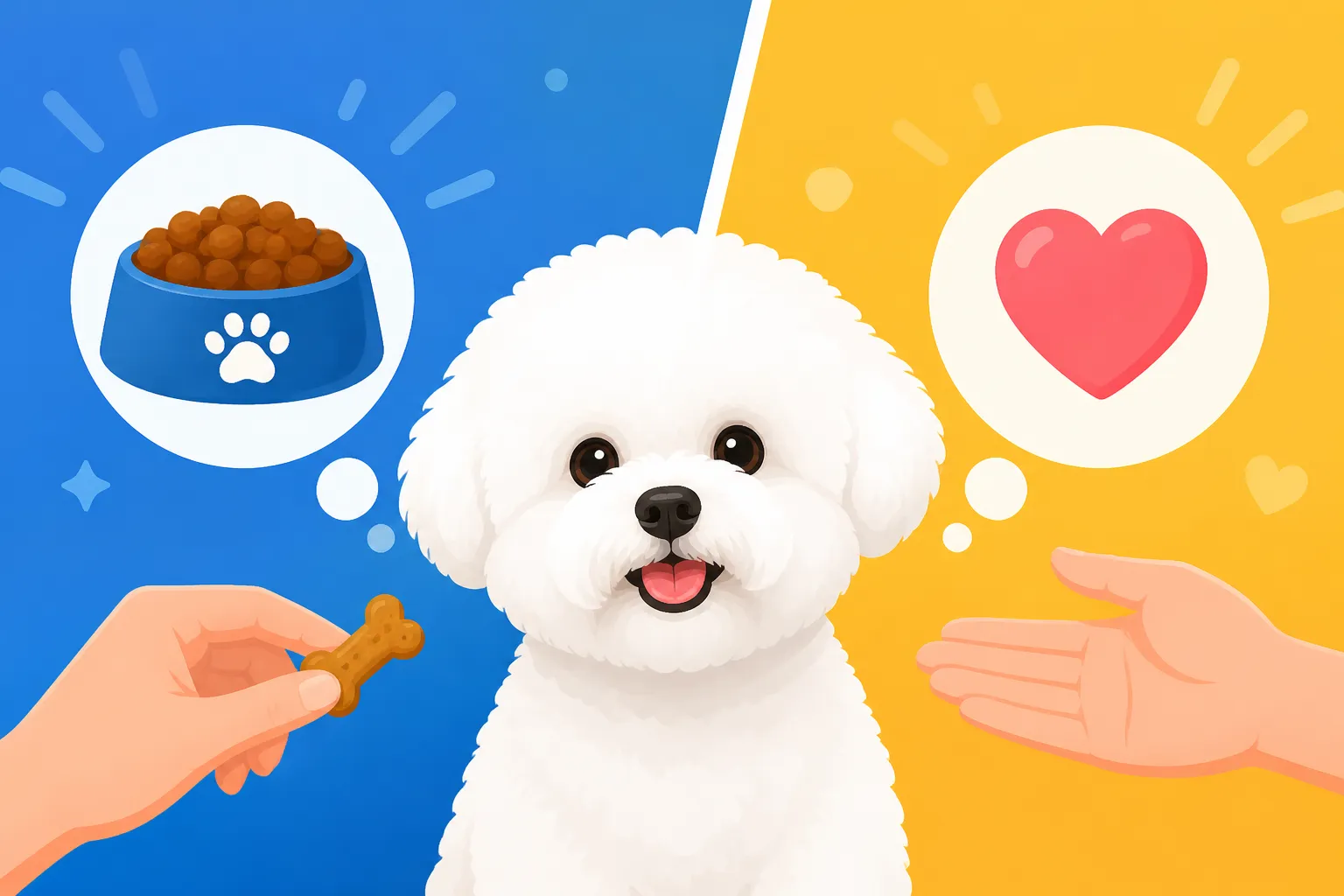
Whether a Bichon Frise Works for Food or Praise
It's a question every Bichon Frise parent eventually asks themselves: "Is my fluffy companion a tiny gourmet with an insatiable appetite, or do they truly value my adoring praise more than anything?" Trying to figure out what truly motivates your Bichon, especially when it comes to training or just getting them to cooperate, can feel like solving a fluffy, white riddle. This guide will dive deep into the fascinating world of Bichon Frise motivations, helping you understand whether it's the delicious morsel or your enthusiastic "Good dog!" that truly makes their little tail wag.
Understanding Bichon Frise Motivations
Bichon Frises are known for their charming, often comical personalities and their deep attachment to their families. This unique blend of traits means their motivations for learning and behaving can be a bit nuanced. It’s rarely a simple case of one or the other; typically, it's a combination, but the balance can lean heavily one way or the other for individual dogs.
The Food Drive of a Bichon Frise
Let's be honest, many Bichons act like they've never eaten a meal in their lives, even moments after finishing their breakfast! This strong drive for food isn't just a quirk; it's often a highly effective tool in training. Their small size and relatively fast metabolisms mean that tiny, high-value treats can make a huge impact without overfeeding them.
Think about it: a small piece of cooked chicken, a bit of cheese, or even a specialized training treat can immediately capture their attention. For a breed that sometimes has a reputation for being a bit stubborn when it comes to things like Whether Bichon Frises Really Are Hard to Housetrain, having a powerful incentive like food can be a game-changer. When you're trying to teach a new command, like 'sit' or 'stay', the immediate reward of a treat creates a clear, positive association that your Bichon can easily understand. They quickly learn that performing a specific action leads to something delicious. This rapid feedback loop is incredibly powerful, especially in the early stages of training. You can find a huge variety of low-calorie training treats suitable for small breeds on platforms like Amazon, making it easy to experiment and find what your particular Bichon considers high-value.
However, it's not just about the calorie count; it's also about the value of the food. A dry piece of kibble might work for a simple 'sit' in a quiet living room, but if you're trying to get your Bichon to recall in a distracting park, you'll need to pull out the big guns – something truly irresistible. This is where understanding their personal preferences comes in. Some Bichons go wild for soft, chewy treats, while others prefer crunchy ones. Observing what truly excites them can give you a significant advantage in tailoring your training approach.
The Deep Desire for Praise and Affection
Beneath that fluffy exterior lies a heart yearning for connection and approval. Bichons were bred to be companions, and this inherent desire to please their people is a profound motivator. They thrive on attention, cuddles, and enthusiastic praise. A genuine, happy "YES! Good dog!" delivered with an excited tone and a loving pet can often be just as rewarding, if not more so, than a treat, especially once a behavior is established.
Consider the classic "Bichon Blitz" or "zoomies." Often, these bursts of frantic energy are performed with an eye on their human, seemingly inviting laughter and engagement. This breed truly lives to be a part of your life and to be adored. When your Bichon comes to you for comfort after a loud noise, or proudly brings you a toy, the most powerful reward you can give them is your undivided, loving attention. Acknowledging their efforts and showing them how pleased you are reinforces their positive behaviors and strengthens your bond. It's a two-way street: you're affirming their actions, and they're soaking up your affection, which is incredibly fulfilling for them.
Praise and affection are crucial for building a strong relationship and fostering intrinsic motivation. While food can kickstart learning, praise helps to solidify it and makes your Bichon want to offer behaviors because they enjoy the interaction with you. Imagine your Bichon performing a perfect 'down-stay' at the coffee shop – the proud look on their face isn't just about the expectation of food, but the satisfaction of a job well done and your beaming smile. It's a reminder of their heritage as charming court companions who lived for human adoration.
The Art of Combining Motivators for Training
The most effective training approach for a Bichon Frise almost always involves a thoughtful combination of both food and praise, adapting the balance as your dog progresses and as the situation demands. It's about leveraging their natural drives to create a well-behaved, happy companion.
Finding Your Bichon's Sweet Spot
Every Bichon is an individual, and what sets one dog's tail wagging might leave another utterly unimpressed. This is where your detective skills come in! Observe your Bichon closely in different situations. What truly gets their attention? What do they get excited about? Is it that specific squeaky toy, a game of fetch, or a particular type of super-tasty treat?
Start by testing various rewards. For new, difficult, or high-distraction environments, higher value rewards are typically needed. This might mean tiny pieces of cooked hot dog or cheese. For behaviors they already know well in a low-distraction setting, a simple piece of their regular kibble or even just a happy "good boy!" might suffice. Think of it like a reward hierarchy. Your job is to understand what falls into the "jackpot" category versus the "everyday" category for your specific Bichon. This isn't a static thing, either. What's high-value today might be less exciting tomorrow, so being flexible is key. Paying attention to their body language – how eagerly they approach the reward, the intensity of their tail wags – will tell you a lot. Don't be afraid to try different things and see what sparks joy for them.
For more complex training, like those involved in an obedience course, an online program such as BAXTER & Bella can provide structured guidance on using various motivators effectively. They often teach how to fade food rewards and transition to life rewards and praise as your dog masters new skills. Remember, the goal isn't just to get them to perform a trick, but to build a strong desire to engage with you and learn.
Practical Application: Using Both Food and Praise Effectively
When you first introduce a new behavior, food is often your best friend. It’s immediate, tangible, and highly motivating. Let's say you're teaching your Bichon to lie down. As soon as their elbows hit the floor, mark the behavior with an enthusiastic "Yes!" or a clicker, and immediately follow with a delicious, small treat. This clear sequence helps them connect the action to the reward.
Once your Bichon consistently understands the command, you can start to phase out the food. This doesn't mean stopping it entirely, but rather becoming more strategic. Instead of every single time, try giving a treat every other time, then every third time, always paired with lavish praise. Eventually, for well-known commands in low-distraction environments, praise and a joyful pat will be enough. The key is to keep the praise genuine and enthusiastic, so it remains a high-value reward. For challenging commands or in new, exciting environments, don't hesitate to bring back the higher-value food rewards. This variability keeps your Bichon engaged and prevents them from thinking that the treat is the only reason to perform. It teaches them that sometimes they get a treat, sometimes they get a head scratch, but they always get your approval, which for a Bichon, is gold.
Beyond the Basics: Advanced Motivation Strategies
While food and praise form the cornerstone of Bichon motivation, there are other powerful tools in your training arsenal that can keep things interesting and effective. Expanding your reward repertoire can enhance engagement and solidify learned behaviors.
Incorporating Play and Toys
For many Bichons, play is a huge part of their daily joy. Their playful spirit, often seen in the "Bichon Blitz," can be harnessed as a fantastic motivator. A quick game of tug, a chase after a favorite squeaky toy, or even just a few rounds of "fetch" with a soft ball can be incredibly rewarding. Think of using play as a "life reward" – something your dog naturally enjoys doing.
If your Bichon absolutely loves their plush hedgehog, use access to that toy as a reward for a perfectly executed 'stay'. For instance, ask for a 'stay', and when they hold it, release them with an enthusiastic "Go get it!" and immediately engage them in a short play session. This works especially well for dogs who might be losing interest in food after a long training session or who are already full. Play also offers a fantastic outlet for their energy and helps to strengthen your bond through shared fun. Just ensure the toy is appropriate for their size and supervised to prevent accidental ingestion, especially with small, easily chewed items that can become choking hazards.
The Role of Environmental Rewards
Beyond tangible items, your Bichon Frise values access to certain activities or environments. These "environmental rewards" can be incredibly powerful because they tap into what your dog naturally wants to do. For example, if your Bichon loves to go for walks, making "going outside" contingent on a calm sit at the door can be a strong motivator. The reward isn't a treat, but the opportunity to enjoy something they truly desire.
Similarly, if your Bichon gets excited when guests arrive, teaching them to 'sit' patiently before greeting visitors can be rewarded by allowing them to approach and receive attention. Access to a favorite sunny spot, a car ride, or even just being allowed onto the couch for cuddles can all serve as environmental rewards. The key is to identify what your Bichon genuinely enjoys and then use those opportunities to reinforce desired behaviors. This teaches them that good manners lead to desirable outcomes, creating a polite and happy companion who understands how to earn what they want in life. This strategy is particularly useful for reducing unwanted behaviors like jumping up or excessive barking, by teaching an alternative, polite behavior to earn the same desired outcome.
Common Pitfalls and Troubleshooting
Even with the best intentions, using food and praise as motivators can sometimes come with their own set of challenges. Understanding these common pitfalls can help you troubleshoot and adjust your approach for optimal results with your Bichon Frise.
When Food Rewards Lead to Pickiness or Weight Gain
One of the most common issues with relying heavily on food rewards is that your Bichon might become a bit of a connoisseur, developing pickiness towards their regular food or less exciting treats. If you're constantly doling out high-value chicken, they might turn up their nose at their kibble. To combat this, rotate your treats, keeping some "jackpot" rewards for truly challenging situations and using lower-value options for everyday practice.
Another very real concern for a small breed like the Bichon Frise is weight gain. Those tiny training treats add up quickly! Even a few extra calories can make a big difference to their waistline, and an overweight Bichon is at higher risk for various health issues, including Whether a Bichon Frise Gets Diabetes or exacerbating joint problems like Slipping Kneecaps in a Bichon Frise. To prevent this, always factor training treats into their daily calorie intake. Use pea-sized portions, break larger treats into smaller pieces, and consider using a portion of their regular kibble for training if they find it motivating enough. You can also opt for very low-calorie options like freeze-dried liver (broken into tiny bits) or small pieces of plain cooked carrot or green bean. Monitoring their body condition regularly will help you catch any creeping weight gain early.
When Praise Isn't Enough
Sometimes, no matter how enthusiastic your "Good dog!" is, it just doesn't seem to cut through the distractions or motivate your Bichon to perform a challenging task. This can be incredibly frustrating. If your Bichon isn't responding to praise, especially in new or stimulating environments, it's likely that the praise simply isn't a high enough value reward in that moment.
In such cases, you need to revisit your reward hierarchy and bring back those higher-value food rewards or even incorporate a favorite toy or play session. Gradually, as your Bichon consistently performs the behavior with the higher-value reward, you can start to re-introduce and strengthen the association with praise. It's also important to ensure your praise is genuinely exciting and varied. A flat "good dog" can become mundane. Use different tones, add physical affection like gentle ear rubs or chest scratches (if your dog enjoys them), and make it a real celebration. If you're struggling with a particular behavior, consider breaking it down into smaller, easier steps that your Bichon can succeed at, and then reward each tiny step with high-value motivation. Sometimes, a lack of response isn't about the motivator itself, but about the difficulty of the task or the level of distraction.
The table below summarizes some key considerations when choosing between food and praise as primary motivators for your Bichon Frise:
| Feature | Food Rewards | Praise/Affection Rewards |
|---|---|---|
| Immediacy | Very immediate, clear, and tangible feedback. | Can be immediate, but impact depends on context and delivery. |
| Value | Often high-value, especially for new or complex tasks. | Value builds over time and with strong human-dog bond. |
| Sustainability | Risk of overfeeding/weight gain; can lead to pickiness. | Sustainable long-term; no caloric impact. |
| Versatility | Excellent for initial learning and high-distraction. | Best for maintaining learned behaviors and strengthening bond. |
| Portability | Easy to carry and dispense in various settings. | Always available, requires no physical items. |
| Relationship | Builds positive association with training. | Deepens emotional bond and intrinsic motivation. |
Ultimately, understanding your individual Bichon Frise and being flexible with your training approach will yield the best results. Whether they're a little foodie, a cuddle bug, or a bit of both, combining strategies will help them become the well-adjusted, joyful companion they're meant to be.
Disclaimer
This article is for general informational purposes only and does not constitute professional advice. Laws, prices and regulations vary by location and change over time. Consult a qualified professional for guidance on your specific situation.