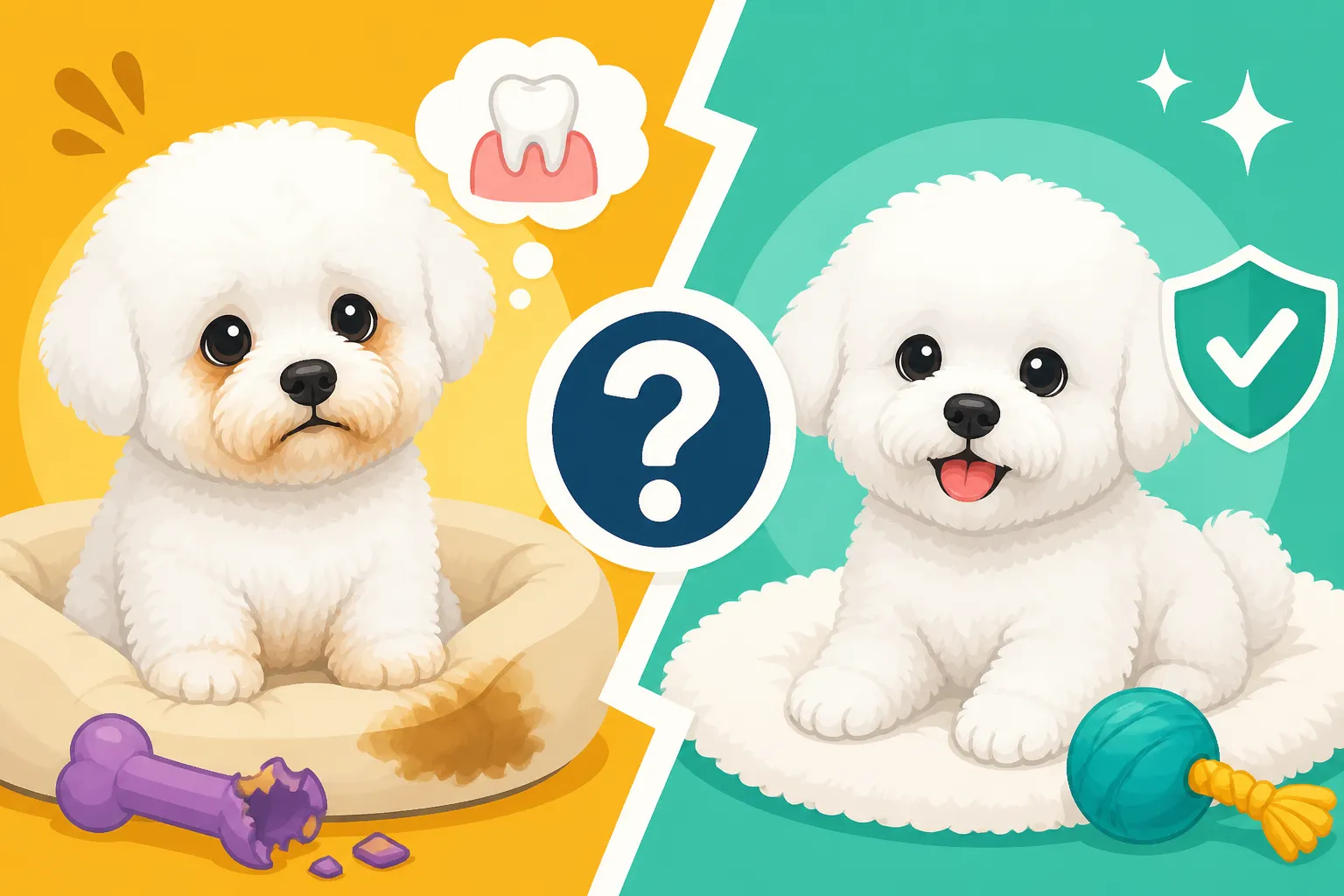
Whether a Puppy Bichon Frise Stains Worse While Teething
One common concern that often pops up for new Bichon Frise puppy parents, especially those experiencing their first fluffy bundle of joy, is the sudden, sometimes dramatic, increase in tear staining. You've heard all about keeping those beautiful white coats pristine, and then suddenly, during those tumultuous puppy months, you're faced with stubborn reddish-brown streaks under your little one's eyes. It can be incredibly frustrating to feel like you're losing the battle against the stains, especially when you're diligently wiping. This guide will delve into whether teething actually exacerbates tear staining in your Bichon Frise puppy and what you can do about it.
Understanding Tear Stains in Bichon Frise Puppies
Ah, tear stains. They're practically a rite of passage for many white-coated breeds, and our beloved Bichon Frises are no exception. These reddish-brown marks, often seen under the eyes and sometimes around the muzzle, are caused by porphyrins, which are iron-containing waste products from the breakdown of red blood cells. Porphyrins are excreted through tears and saliva. When these porphyrin-rich fluids sit on light-colored fur, exposure to light and air causes them to oxidize and create that tell-tale rusty hue. It's not just an aesthetic issue; persistent wetness can also lead to yeast infections in the damp fur, which adds a darker, sometimes smelly, dimension to the staining.
The Basics of Bichon Frise Tear Stains
The fundamental causes of tear staining in Bichons are multi-faceted. Sometimes it's simply a matter of genetics – some dogs are just predisposed to producing more porphyrins or having tear ducts that don't drain perfectly. Environmental factors also play a huge role. Things like dust, pollen, and even the quality of the water your puppy drinks can contribute. Allergies, whether to food or environmental triggers, can cause increased tear production, leading to more staining. If your Bichon's eyes are constantly watery, it means there's more fluid to deposit those porphyrins. It's a delicate balance, and any disruption can throw it off. You might find yourself constantly wiping, yet the stains just keep coming back. For a deeper dive, check out What Causes a Bichon Frise's Tear Stains.
The anatomy of a Bichon Frise's face can also be a factor. Their relatively flat faces and prominent eyes mean that tears often don't drain efficiently into the nasal passages. Instead, they spill over onto the delicate fur below the eyes. Combine this with the fine, dense, perpetually growing hair around their faces, and you have a perfect storm for trapping moisture and fostering staining. It's not uncommon for owners to trim the hair around the eyes regularly to help alleviate this, but it's a constant battle.
How Teething Plays a Role
Now, let's talk about teething. Those first few months with a Bichon Frise puppy are a whirlwind of tiny shark teeth, endless chewing, and exploring the world with their mouths. It's a critical developmental period, and it puts a surprising amount of stress on their little bodies. Think about it: new teeth are erupting through sensitive gums, causing inflammation, discomfort, and sometimes even a low-grade fever. This internal upheaval can absolutely have a ripple effect, including on tear production.
When a puppy is teething, their immune system is working hard to manage the inflammation and discomfort in their mouth. This general inflammatory response in the body can sometimes lead to increased secretions, including tears and saliva. It's a bit like how a child might get a runny nose when they're cutting a tooth. The body is simply reacting to the internal changes. Plus, the constant chewing on toys, hands, and anything else they can get their mouths on means more saliva production, which can also contribute to staining around the muzzle if not kept clean.
Moreover, the stress of teething can temporarily impact a puppy's overall well-being. A puppy that isn't feeling 100% might have a slightly compromised immune system, making them a little more susceptible to minor irritations that could increase tear flow. Even subtle shifts in their normal routine or diet due to teething discomfort can play a part. Perhaps they're a bit pickier with their food, or they're not drinking quite as much water. All these small factors, when combined, can create a noticeable increase in tear staining during this specific developmental stage.
The Teething Process and Its Impact on Your Puppy's Body
Teething in puppies typically begins around 3-4 weeks of age when their baby teeth start to emerge, and continues until they're about 6-7 months old, when all their adult teeth have usually come in. For a Bichon Frise, this often means weeks, if not months, of chewing, drooling, and sometimes a little grumpiness. It's a perfectly natural process, but it's far from comfortable for them, and it impacts more than just their mouths.
Inflammatory Response and Increased Secretions
When those sharp little puppy teeth start pushing through the gums, it causes a localized inflammatory response. Their gums become sore, swollen, and sometimes even a bit bloody. This isn't just a minor irritation; it's a significant physiological event for their young bodies. The inflammation isn't always confined strictly to the gums; it can create a mild systemic response. This means their body is actively working to manage the discomfort and heal the tissue.
Part of this response can manifest as an increase in various bodily secretions. Just as a human baby might drool more during teething, a Bichon Frise puppy might experience heightened saliva production, leading to a perpetually damp chin and muzzle, which can easily stain. Similarly, the eyes are not completely isolated from the body's overall inflammatory state. The proximity of the tear ducts to the oral cavity, combined with the general discomfort, can lead to a temporary increase in tear production. These extra tears, rich in porphyrins, then spill over onto the white fur, creating those frustrating streaks. It's like a cascade effect, where one biological process triggers another, leading to the visible staining that makes us owners sigh.
Stress and Immune System Changes
Beyond the physical inflammation, teething can be a source of stress for your tiny Bichon. Imagine constant discomfort in your mouth, coupled with the instinctual need to chew on everything to relieve it. This level of persistent mild pain can make puppies a bit more irritable, less inclined to eat normally, or even disrupt their sleep patterns. This emotional and physical stress can, in turn, put a temporary strain on their developing immune system.
A puppy whose immune system is working overtime to cope with teething discomfort might be less efficient at processing and eliminating certain waste products, including porphyrins. Furthermore, any mild, underlying issues that contribute to tear staining, such as slight allergies or minor irritants, might become more pronounced when the puppy's body is already under the stress of teething. It's a temporary dip in their overall resilience, and for a breed already prone to tear stains like the Bichon Frise, this can mean a more noticeable increase in staining during this period. For more on puppy development, you might find The Months a Bichon Frise Puppy Coat Changes helpful, as coat health and growth also impact grooming and staining visibility.
Managing and Minimizing Teething-Related Tear Stains
While you can't stop a puppy from teething, you can absolutely take steps to manage the increased tear staining that might come with it. It’s all about consistent care and being proactive in supporting your puppy through this sometimes challenging phase. Remember, the goal isn't just to hide the stains, but to address the contributing factors where possible and keep your puppy comfortable.
Consistent Hygiene During Teething
During teething, when tears and drool might be flowing more freely, meticulous daily hygiene becomes even more crucial. Make it a routine to gently wipe your puppy's eyes and muzzle several times a day. Use a soft, damp cloth or a specially formulated pet wipe designed for the sensitive eye area. Whether Wiping Daily Keeps a Bichon Frise Clean is a great resource on this topic. Be very gentle; their little faces are delicate. The key is to prevent the moisture from sitting on the fur and oxidizing, which is what causes the dark stains to set in.
Some owners find that using a mild, pet-safe tear stain remover solution helps. Always ensure any product you use is veterinarian-approved and safe for puppies. Applying a thin layer of petroleum jelly or a specific stain preventative balm can also create a barrier on the fur, preventing tears from penetrating and staining as effectively. Just be careful not to get any product in your puppy's eyes. Regular trips to the groomer, even just for a face trim, can also keep the hair around the eyes shorter, reducing the surface area for stains to accumulate. Groomers often recommend starting early with these sessions to get your Bichon used to the process, as outlined in How Early a Bichon Frise Should Meet a Groomer.
Supporting Your Teething Puppy's Health
Beyond topical cleaning, supporting your teething puppy's overall health can indirectly help with tear staining. Good nutrition is paramount. Ensure your puppy is on a high-quality, balanced puppy food. Sometimes, certain ingredients or fillers in cheaper foods can contribute to allergies or digestive upset, which in turn can lead to increased tear production. Brands like Ollie offer fresh food options that some owners find beneficial for overall health and allergy management.
Providing plenty of safe, appropriate chew toys is also vital. This helps alleviate their teething discomfort and directs their chewing instincts away from your furniture (and your hands!). Chew toys can also stimulate saliva, but better it be on a toy than constantly dripping onto their fur and staining it. Ensure they always have access to fresh, clean water. Some swear by filtered water to reduce mineral content, which might contribute to staining. You can find a wide variety of bowls and filtered water fountains on Amazon or Chewy to encourage hydration. For specifics on feeding, refer to How Much a Bichon Frise Puppy Eats at Four Months.
When to Consult the Vet
While some increased tear staining during teething is relatively normal due to the physical stress and inflammation, it's always wise to keep a close eye on your puppy and know when to seek professional veterinary advice. If the staining is accompanied by other symptoms, such as excessive pawing at the face, redness or swelling around the eyes, discharge (especially if it's thick, yellow, or green), squinting, or a strong odor from the stained area, these could indicate a more serious underlying issue.
Conditions like eye infections, blocked tear ducts, ingrown eyelashes, or even persistent allergies can all cause significant tearing and staining. Your vet can rule out these medical problems and recommend appropriate treatment if needed. They might suggest a simple eye flush, specific eye drops, or even dietary changes if allergies are suspected. Early intervention is key to preventing discomfort for your puppy and stopping the staining from becoming a chronic problem. Don't hesitate to bring up any concerns you have during your regular puppy check-ups, as catching issues early is always best.
Here’s a quick overview of teething and tear stain management:
| Teething Stage | Potential Impact on Staining | Recommended Action | Key Point |
|---|---|---|---|
| Emergence of Puppy Teeth (3-6 weeks) | Mild increase in drooling | Keep face clean with damp cloth | Baseline hygiene established |
| Primary Teething (8-16 weeks) | Noticeable increase in tears/saliva, redness on gums | Daily wiping, provide chew toys, check for eye irritation | Prevent oxidation, soothe gums |
| Adult Teeth Erupting (4-7 months) | Peaks in tear/saliva production, discomfort | Consistent hygiene, high-quality food, vet check if severe | Address discomfort, rule out other causes |
| Post-Teething (7+ months) | Staining should lessen if teething was the cause | Maintain good grooming habits | If staining persists, investigate other causes |
Disclaimer
This article is for general informational purposes only and does not constitute professional advice. Laws, prices and regulations vary by location and change over time. Consult a qualified professional for guidance on your specific situation.