Whether a Bichon Frise Needs a Nail Grinder
Oh, the dread of nail trimming! If you're a Bichon Frise parent, you know exactly what I'm talking about. That little bundle of fluff might be all sweetness and light, but when the clippers come out, it can feel like you're wrestling a tiny, fluffy ninja. Many of us have accidentally cut a quick, felt that pang of guilt, and then faced a dog who views the nail clippers with utter suspicion. This guide is all about exploring whether a nail grinder can be a kinder, safer alternative to the traditional clip, turning a dreaded chore into a manageable part of your Bichon's care routine.
The Frustration of Trimming Bichon Frise Nails
Let's be honest, trying to trim your Bichon Frise's nails can feel like a high-stakes operation. One wrong move, and you've got a yelping dog, a bleeding paw, and a whole lot of guilt. It's not just a momentary inconvenience; these experiences can build up, making future nail trims even more challenging for both you and your beloved companion. The struggle is real, and you're definitely not alone in feeling this way.
The Quick: A Hidden Danger
The biggest hurdle with trimming Bichon Frise nails, especially for those with light-colored or white nails, is the elusive "quick." The quick is essentially the sensitive living part of the nail, containing blood vessels and nerves. If you cut into it, it's painful for your dog, it bleeds, and it makes them understandably wary of future trimmings. For dogs with clear or translucent nails, you might be able to see a faint pinkish area where the quick is, but often, it's a guessing game.
Imagine trying to cut a tiny, white tube with a red string inside it, but you can only vaguely see the string. That's what it feels like! When you can't clearly see that quick, you're always cutting with a bit of anxiety, hoping you're not going too far. This makes the whole process incredibly stressful. Your Bichon senses your hesitation, and their own nervousness increases, creating a vicious cycle of fear and resistance. It's heartbreaking to cause them discomfort, even accidentally, and it makes us want to find a better way.
The "White Nail, Black Quick" Myth
There's a common saying that if your dog has white nails, the quick is easy to spot because it's pink, and if they have dark nails, it's impossible. While it's true that dark nails hide the quick completely, the idea that white nails always show a clear pink quick is often a myth, especially with Bichons. Many Bichons have nails that are off-white, yellowish, or even mottled, making the quick less distinct than you might hope.
What makes it even trickier is if your Bichon's nails have grown long. The quick grows with the nail, extending further out than it should. So, even if you could see it, it would be much closer to the tip than you'd expect, increasing the risk of cutting it. This growth can be surprisingly fast, and before you know it, those little nails are tapping on the floor, indicating they're already too long. This creates a constant uphill battle, especially if your Bichon is already reluctant to have their paws handled. Owners often worry, Whether a Bichon Frise's Nails Are Hard to See, and the answer is often, yes, they absolutely are!
The Stress and Struggle of Traditional Clippers
If you've ever tried to use traditional clippers on a squirming, reluctant Bichon, you know the scenario: you try to hold their tiny paw, they pull it back, perhaps give a little yelp before you even make a cut. The "snap" of the clippers can be jarring for them, even if it doesn't hurt. This sudden, sharp sensation is completely different from the gradual pressure a dog might feel on their paws while walking. It's an unnatural feeling, and it's no wonder many dogs develop an aversion to it.
I've been there, holding my sweet Bichon, trying to be gentle, but feeling my heart race as I contemplate where to cut. There's the awkward angle, trying to get a good grip without hurting them, and then the split-second decision of "is this far enough?" If your Bichon already associates clippers with pain or discomfort, they'll often fight you every step of the way. This resistance isn't just a sign of being stubborn; it's a genuine fear response. This makes the entire process incredibly stressful for both of you, turning what should be a routine bit of care into a dreaded wrestling match. For some, the thought of this struggle is enough to consider taking their dog to a professional for even a basic nail trim, which adds to the cost of ownership, as you might find when considering What a Bichon Frise Nail Trim Costs.
How a Nail Grinder Offers a Smoother Solution
Given the struggles with traditional clippers, it's no surprise that many Bichon Frise owners are turning to nail grinders. These devices offer a completely different approach to nail care, often proving to be a much more humane and less stressful experience for both dog and owner. The key lies in their gentle, gradual action, which can make all the difference in building trust and comfort around paw handling.
The Gentle, Gradual Approach
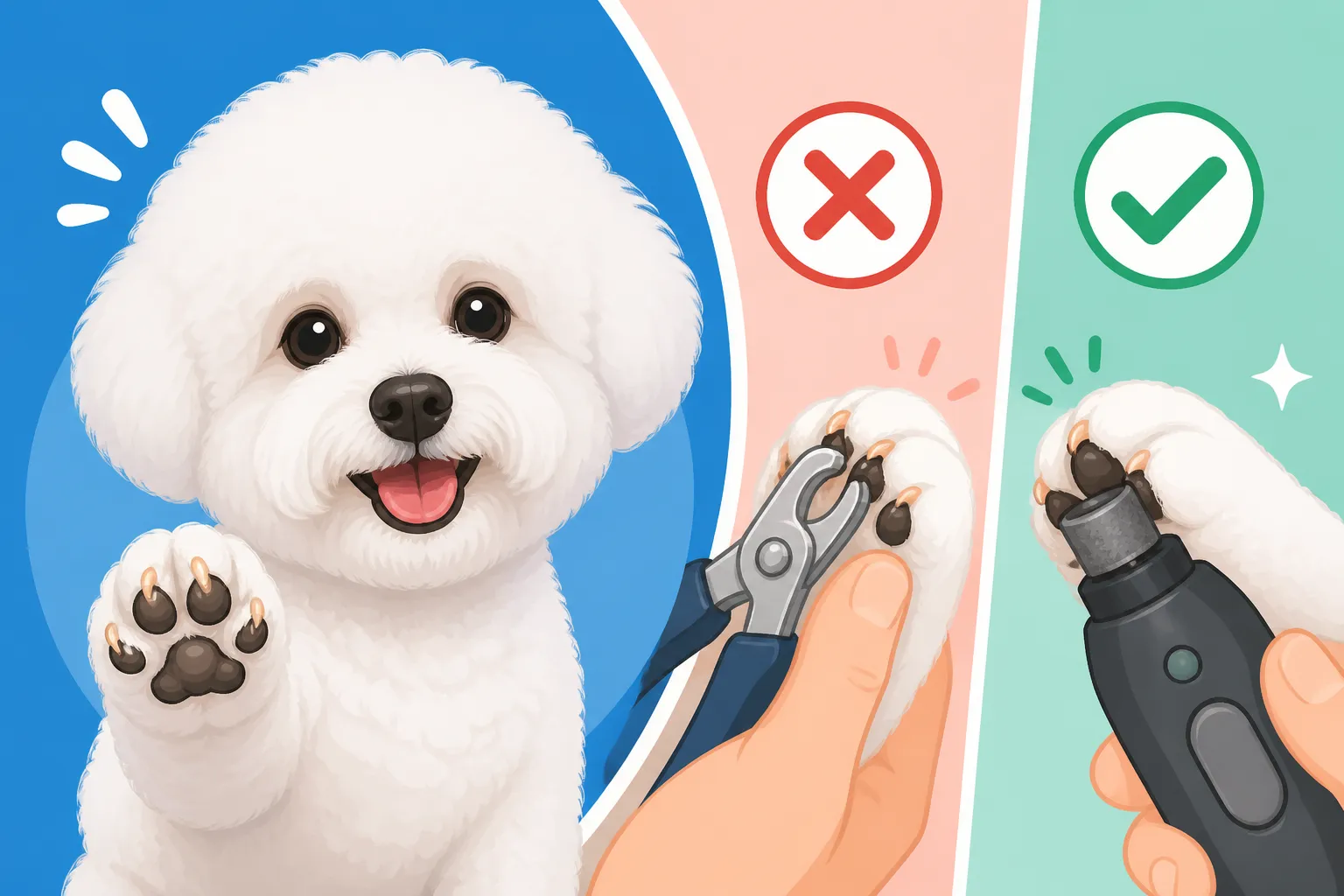
Unlike the sudden "snap" of clippers, a nail grinder works by slowly filing down the nail. It's a bit like a tiny, gentle sanding tool. This gradual removal of the nail tip means you're less likely to hit the quick accidentally. You can grind a tiny bit, observe the nail, and then grind a little more. As you get closer to the quick, you'll often see a small, dark dot appear in the center of the cut nail surface, which is your cue to stop. This visual feedback is invaluable, especially for those challenging white Bichon nails where the quick is often hard to discern from the outside.
This gentle process removes the anxiety of making a quick, decisive cut. Instead, it allows for a more controlled, layer-by-layer reduction of the nail. This method is not only safer but also significantly reduces the likelihood of causing pain or bleeding. For a dog that has had a bad experience with clippers, this gentle approach can be a game-changer, helping them to slowly rebuild positive associations with nail care. Over time, your Bichon may learn to tolerate the grinder, realizing it doesn't bring the sharp, sudden pain they might have experienced before.
Desensitization and Positive Association
The sound and vibration of a nail grinder can initially be startling for a Bichon. However, because it's a consistent, predictable sensation rather than a sudden, sharp one, it's often easier to desensitize your dog to it. The process is all about slow, positive introduction:
- Introduce the sound: Start by simply turning the grinder on (without touching your dog) in a different room while your Bichon is relaxed, perhaps eating a favorite treat or playing with a toy. Let them hear the sound casually, associating it with positive things.
- Introduce the vibration: Once they're okay with the sound, let them feel the vibration against your own finger first, then maybe briefly against their paw, still without grinding a nail. Praise and reward heavily for any acceptance.
- Touch the nail briefly: With the grinder on, briefly touch it to one nail for just a second, then immediately remove it and give a high-value treat. Repeat this for each nail, building up the duration very slowly. The goal is to keep each interaction positive and short.
Consistency is key here. By pairing the grinder with delicious treats and lots of praise, you're actively working to override any negative memories. Think of it as teaching your Bichon to Teaching a Bichon Frise to Accept Ear Treatment – it's about making a typically uncomfortable process feel safe and rewarding. Over time, this desensitization and positive reinforcement can transform nail care from a battle into a calm, cooperative activity. You can find excellent grinders on platforms like Chewy or Amazon, often with different noise levels and features to suit anxious dogs.
The "Quick Back" Advantage
One of the most significant long-term benefits of using a nail grinder is its ability to help "quick back" the nails. As mentioned, the quick grows with the nail. If your dog's nails are consistently kept too long, the quick will also be long, making it impossible to trim the nails as short as they should be without causing pain.
Regular, frequent grinding, even if you're only removing tiny amounts each time, encourages the quick to recede. Because you're taking off minute layers, the quick gradually shrinks back into the nail bed. This means that over several weeks or months of consistent grinding, you can achieve shorter, healthier nails without ever hitting the quick. Shorter nails are not just aesthetically pleasing; they're vital for your Bichon's comfort and long-term joint health. Nails that are too long can push up into the nail bed, cause splayed toes, and put unnatural pressure on paw joints, potentially contributing to discomfort as they age. A consistent grinding routine helps ensure your Bichon can walk, run, and play without this unnecessary strain. The Fourteen to Fifteen Years a Bichon Frise Lives is a long time, and keeping their nails healthy contributes greatly to their overall well-being throughout their life.
Choosing and Using a Nail Grinder for Your Bichon
Deciding to switch to a nail grinder is one thing; choosing the right one and mastering the technique is another. It's an investment in your Bichon's comfort and your own peace of mind, so it's worth taking the time to understand the options and best practices.
Key Features to Look For in a Grinder
When you're shopping for a nail grinder for your delicate Bichon, certain features will make a big difference in both your dog's comfort and your ease of use:
- Low Noise and Vibration: This is probably the most crucial feature for a small, potentially anxious breed like a Bichon. Look for models specifically marketed as "quiet" or "low-vibration." Many modern grinders use brushless motors that significantly reduce noise. Brands often highlight this feature. Checking user reviews on sites like Amazon or Chewy for feedback on noise levels can be incredibly helpful.
- Adjustable Speeds: Having multiple speed settings allows you to start with a very low, gentle speed to introduce your Bichon to the sensation, and then gradually increase it as they become more comfortable and you gain confidence.
- Good Battery Life and Cordless Design: A cordless grinder offers maximum flexibility and avoids the hazard of a power cord getting tangled. A decent battery life ensures you won't run out of power mid-trim.
- Safety Guard/Cap: Most grinders come with a small cap or guard that has different sized openings. This helps prevent accidentally catching fur in the grinding head, which can be painful and startling for your Bichon.
- Ergonomic Design: You'll be holding this tool for a few minutes at a time, possibly at awkward angles. A comfortable grip is essential.
Comparing features across different models, perhaps from trusted pet supply retailers, will help you find the perfect fit for your specific Bichon. Consider it part of your overall What a Home Grooming Kit Costs a Bichon Frise Owner investment, as a good grinder can save you money on professional trims in the long run.
Step-by-Step Grinding Technique
Once you have your grinder, the technique is all about patience and precision. Here's a basic approach:
- Preparation is Key: Gather your supplies: the charged grinder, high-value treats (like tiny pieces of cheese or cooked chicken), and styptic powder or a styptic pencil in case you accidentally quick them. Ensure your Bichon is calm and relaxed, perhaps after a short walk or a cuddle session.
- Positioning: Find a comfortable spot where you can hold your Bichon securely but gently. A grooming table can be helpful, but your lap or the floor works too. The key is to keep them still. If your Bichon is still getting used to being handled for grooming, practicing Teaching a Bichon Frise to Hold Still on a Table separately can be very beneficial.
- Hold the Paw: Gently grasp one of your Bichon's paws. Use your thumb and forefinger to push the fur back from the nail and isolate the specific nail you're working on. This prevents fur from getting caught in the grinder, which can be painful.
- Grind in Short Bursts: Turn the grinder on and, starting with the lowest speed, gently touch the grinding bit to the tip of the nail. Use short, 1-2 second bursts. Don't press hard; let the grinder do the work.
- Move the Grinder: Instead of holding the grinder in one spot, move it around the tip of the nail, shaping it gently. Think of it like a human nail file, rounding the edges.
- Check for the Quick: After a few short bursts, observe the tip of the nail. As you get closer to the quick, you'll see a small, greyish or pinkish dot appear in the center of the nail. This is your signal to stop on that particular nail. If you see it, move to the next nail.
- Reward, Reward, Reward: After each nail (or even after a few short touches), give your Bichon a treat and praise. Keep the experience positive! If they show signs of stress, take a break.
- Consistency: Aim for short, frequent sessions rather than long, drawn-out ones. A few nails every other day is often better than trying to do all of them in one go, especially at first. Consistency is what makes this successful.
The question of Whether a Bichon Frise Needs a Nail Grinder truly comes down to what makes both you and your dog most comfortable and safe during nail care. For many, the grinder provides that extra layer of confidence.
Maintaining Your Grinder and Your Dog's Nails
Just like any grooming tool, your nail grinder needs a little maintenance to perform its best. After each use, it's a good idea to wipe down the grinding head with a dry cloth or small brush to remove nail dust. If your grinder has interchangeable bits, replace them as they wear down to ensure efficient and smooth grinding. Keep it charged so it's always ready for a quick touch-up.
For your Bichon's nails, the key is consistency. Once you've achieved a good nail length, you'll want to maintain it with regular sessions, typically once or twice a week, depending on how quickly their nails grow and how much they naturally wear them down through activity. Establishing a routine helps keep the quick recessed, making future trims even easier. This consistent care, combined with other regular grooming like checking their ears (which may need cleaning every week – The Ears a Bichon Frise Needs Cleaned Every Week) and daily eye wiping (Whether a Bichon Frise Tolerates Daily Eye Wiping), contributes to their overall health and well-being. Regular home grooming also tends to make professional grooming appointments less stressful, as dogs become more accustomed to handling, much like how Home Brushing Makes Salon Visits Easier.
| Feature | Nail Clippers (Traditional) | Nail Grinder (Modern) |
|---|---|---|
| Method | Sharp, quick cut | Slow, abrasive filing |
| Risk of Quicking | Higher, especially with unclear quick | Lower, allows gradual approach to quick |
| Noise/Sensation | Sudden "snap," can be startling | Consistent hum/vibration, can be desensitized |
| Accuracy | Requires precision and confidence | Allows for more forgiving, incremental adjustments |
| Learning Curve | Can be steep and anxiety-inducing | Requires patience for desensitization, technique is simpler |
| Nail Finish | Can leave sharp edges | Smooths and rounds nail edges |
| Quick Recess | Difficult to achieve without quicking | Encourages quick to recede with consistent use |
| Best For | Dogs comfortable with nail trims, clear quicks, quick trims | Anxious dogs, dogs with dark nails, quicking history, precise shaping |
Common Challenges and Troubleshooting
Even with the best intentions and the right tools, introducing a new grooming routine can come with its own set of challenges. Bichon Frises, with their sensitive natures, can sometimes be particularly resistant. But don't despair! Most issues can be overcome with patience, understanding, and the right approach.
Noise and Vibration Sensitivity
It's not uncommon for a Bichon to initially react to the sound or vibration of a nail grinder, even if it's marketed as quiet. Their excellent hearing and sensitive paws mean they're often more attuned to these sensations than larger, more robust breeds. If your Bichon is still scared, here are some strategies:
- Further Desensitization: Go back to basics. Turn the grinder on in another room while they're happily occupied with a long-lasting chew. Gradually bring it closer over several days.
- Practice While Asleep (Carefully): Some owners find success by very gently touching the turned-off grinder to their dog's paw while they're deeply asleep, pairing it with a soft stroke. Once accustomed to the touch, you might try briefly turning it on for a split second, then off, rewarding immediately upon waking if they didn't react negatively. This is about building a neutral association without direct confrontation.
- Invest in a Quieter Model: If your current grinder is particularly loud, it might be worth upgrading. Technology improves, and newer models often boast significantly reduced noise levels. Check reviews from other small dog owners on retailer websites like Ollie or Chewy.
- Professional Introduction: Sometimes, a professional groomer or vet tech has specific techniques and a calm, confident demeanor that can help introduce the grinder more effectively. They might be able to get a few nails done, showing your Bichon that it's not so bad, which you can then build upon at home. This can be a smart approach if your Bichon is one of those who Objects to Its Feet Being Done at all.
Overheating and Nail Dust
When grinding, two minor issues can arise: the grinder bit can get warm from friction, and fine nail dust will be produced.
- Managing Heat: If you hold the grinder on one nail for too long, the friction can generate heat, which can be uncomfortable for your Bichon. The solution is simple: use short bursts. Grind for 1-2 seconds, then lift the grinder off for a second or two to let the nail and the bit cool, then repeat. This stop-and-start method is not only safer but also gives your dog a brief moment of reprieve and a chance for you to give a tiny treat.
- Controlling Nail Dust: Nail dust is a natural byproduct of grinding. It's usually harmless but can be a bit messy. Some people wear a mask if they're particularly sensitive, but generally, a quick wipe of the paw after each nail is sufficient. You can also do your grinding in an easy-to-clean area, like outdoors or on a tiled floor. A small towel placed under their paw can catch a lot of the dust.
When Professional Help is Needed
Despite your best efforts, there might be times when professional assistance is invaluable. Don't feel like a failure if you need to call in the experts – sometimes, it's the safest and most humane option for your Bichon.
- Extremely Overgrown Nails: If your Bichon's nails are severely overgrown, they might be painful, curled, or even growing into their paw pads. In these cases, a vet or professional groomer should be the first port of call. They have specialized tools, experience, and the ability to manage pain or sedation if necessary. They can often get the quick to recede over several visits, making at-home maintenance much easier down the line.
- Severe Anxiety or Aggression: If your Bichon exhibits extreme fear, panics, or becomes aggressive when you attempt nail care, it's a sign that they're truly distressed. Forcing the issue can damage your bond and make the problem worse. A positive reinforcement trainer, a veterinary behaviorist, or a groomer experienced with fearful dogs can offer tailored strategies. Sometimes, medication for anxiety might even be considered by your vet.
- Lack of Time or Confidence: Let's be real, life gets busy! If you simply don't have the time or the confidence to consistently grind your Bichon's nails, outsourcing this task to a professional groomer is a perfectly valid choice. They can maintain your Bichon's nails regularly, ensuring their comfort and health. Remember, What a Full Bichon Frise Groom Costs will usually include nail trimming as part of the package, and it might be a worthwhile expense for peace of mind. Regular maintenance prevents bigger, more costly problems down the road.
This article is for general informational purposes only and does not constitute professional advice. Laws, prices and regulations vary by location and change over time. Consult a qualified professional for guidance on your specific situation.