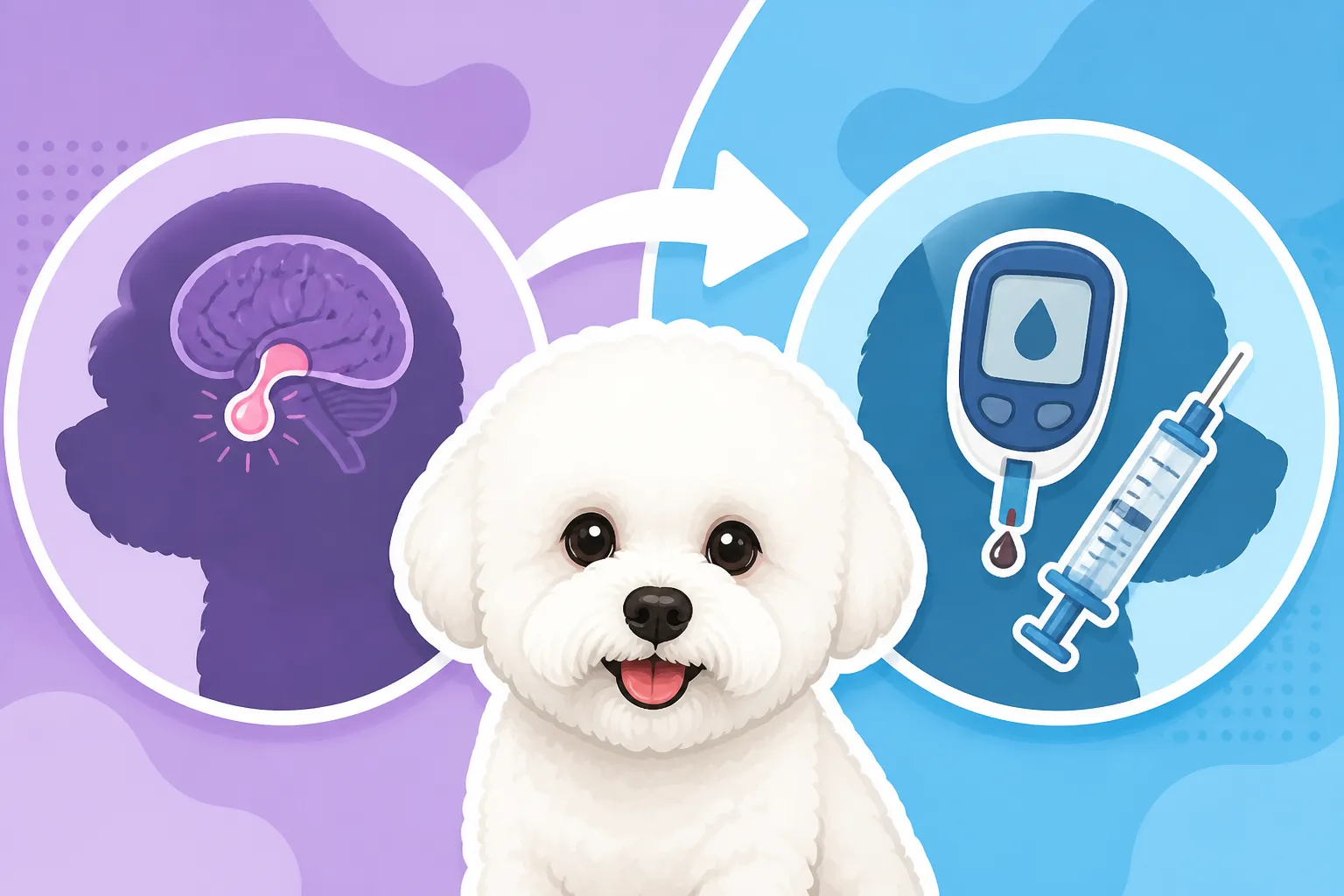
Whether a Bichon Frise’s Diabetes Follows Cushing’s
It’s incredibly disheartening when your beloved Bichon Frise starts showing signs of illness, especially when those symptoms point to complex endocrine disorders. Many owners worry if a diagnosis of Cushing's disease automatically means diabetes is on the horizon, or if these two serious conditions are inherently linked. This guide aims to clarify the relationship between Cushing's disease and diabetes in Bichon Frises, helping you understand why one can often lead to the other and what you can do to manage these challenges.
Understanding Cushing's Disease in Bichon Frises
Cushing's disease, or hyperadrenocorticism, is a condition where your Bichon Frise's body produces too much cortisol, often referred to as the "stress hormone." While cortisol is essential for normal bodily functions, too much of it can wreak havoc on nearly every system, leading to a host of clinical signs that can be confusing and alarming for owners. Imagine your dog's internal stress response being stuck in overdrive – that's essentially what Cushing's does.
There are two main forms of Cushing's that typically affect dogs. The most common, accounting for about 80-85% of cases, is pituitary-dependent hyperadrenocorticism (PDH). This occurs when a benign tumor on the pituitary gland (located at the base of the brain) overproduces a hormone called ACTH, which in turn stimulates the adrenal glands (located near the kidneys) to produce excessive cortisol. The other form is adrenal-dependent hyperadrenocorticism (ADH), where a tumor directly on one or both adrenal glands produces too much cortisol. Both types lead to the same problem: a chronic overdose of cortisol circulating throughout the body.
The symptoms of Cushing's disease can be quite insidious and often develop slowly, making them easy to dismiss as normal aging, particularly in a dog like a Bichon Frise who is past seven. You might notice your once energetic companion starting to drink water more frequently than before, leading to more frequent urination or even accidents in the house where they were once perfectly housetrained. This increased thirst and urination is a hallmark sign. Other classic indicators include a pot-bellied appearance, which comes from weakened abdominal muscles and a redistribution of fat, along with a thinning of the skin and hair loss, often symmetrical, on the body and flanks. Some Bichons might also experience muscle weakness, excessive panting, and a general lack of energy. Recognizing these subtle shifts early is crucial, as they are often the first clues that something deeper is amiss. Early detection and management are key to improving your dog’s quality of life and potentially delaying or preventing secondary complications. For more information on recognizing the condition, you can read about The Signs of Cushing's in a Bichon Frise.
The Intricate Link Between Cushing's Disease and Diabetes Mellitus
The connection between Cushing's disease and diabetes mellitus in Bichon Frises is a significant concern for many owners. While not every dog with Cushing's will develop diabetes, the risk is considerably elevated due to the direct impact of high cortisol levels on the body's metabolism and blood sugar regulation. Think of cortisol as a master regulator that, when out of balance, can throw the entire system into disarray, particularly concerning how the body uses sugar.
When there's an excess of cortisol, as seen in Cushing's disease, it creates a state in the body that veterinary professionals often refer to as "insulin resistance." Essentially, even though the pancreas is producing insulin—the hormone responsible for allowing glucose (sugar) to enter cells for energy—the body's cells don't respond to it effectively. It's like having a key (insulin) but the lock (the cell receptor) isn't working properly. This means that glucose stays circulating in the bloodstream instead of going into the cells where it's needed, leading to chronically high blood sugar levels. To try and compensate for this resistance, the pancreas works overtime, producing even more insulin to force the glucose into the cells. This compensatory mechanism can only last so long.
Over time, this constant overproduction of insulin can exhaust the pancreatic beta cells, which are responsible for producing insulin. Imagine a factory working 24/7 without a break; eventually, it's going to wear out. When these beta cells become fatigued or damaged, they can no longer produce enough insulin to meet the body's demands, especially in the face of ongoing insulin resistance caused by Cushing's. This leads directly to diabetes mellitus, where the body either doesn't produce enough insulin or can't effectively use the insulin it does produce, resulting in dangerously high blood glucose levels.
This progression explains why diabetes often follows Cushing's. The underlying hormonal imbalance from Cushing's sets the stage by creating insulin resistance, and if left unchecked, it can push a Bichon Frise's pancreatic function over the edge into full-blown diabetes. It's a classic example of how one complex health issue can cascade into another, making the overall management of your pet's health even more challenging. Early management of Cushing's can sometimes prevent or delay the onset of diabetes, highlighting the importance of regular veterinary check-ups and proactive care. Many owners consider pet insurance from providers like Healthy Paws to help manage the ongoing costs associated with such chronic conditions, especially if a Bichon Frise's diabetes follows Cushing's and treatment becomes multifaceted.
Recognizing Overlapping and Distinct Symptoms
When your Bichon Frise is dealing with a serious health issue, it can be incredibly stressful trying to decipher what's going on, especially when conditions like Cushing's and diabetes share some common symptoms. It's true that both conditions can lead to increased thirst and more frequent urination. You might find yourself refilling the water bowl constantly and taking your dog out more often, or even cleaning up indoor accidents from a previously perfectly housetrained dog. These are often the first red flags that something is amiss, but they don't immediately tell you if it's Cushing's, diabetes, or both.
However, there are also distinct signs for each condition that can help you and your veterinarian narrow down the diagnosis. Beyond the shared symptoms, a Bichon Frise with diabetes mellitus might start losing weight despite having a seemingly normal or even increased appetite. This is because their body can't effectively use the glucose from their food for energy, so it starts breaking down fat and muscle instead. You might also notice a sweet or fruity smell to their breath, which is due to ketones building up in their system, a byproduct of fat breakdown. Lethargy and weakness can also be more pronounced in diabetic dogs, as their cells are starved for energy. Additionally, some diabetic dogs might develop cataracts rapidly, leading to vision impairment or blindness. For more detail on managing diabetic pets, you may want to look into Managing an Insulin Dependent Bichon Frise.
Diagnosing these conditions requires a thorough approach from your veterinarian, combining clinical observations with specific tests. For suspected Cushing's, your vet will likely perform blood tests, including a complete blood count and chemistry panel, to look for elevated liver enzymes or changes in cholesterol. However, definitive diagnosis often relies on specialized endocrine tests like the ACTH stimulation test or the low-dose dexamethasone suppression test. These tests measure how your dog's adrenal glands respond to certain hormones, giving a clear picture of cortisol overproduction. Similarly, diagnosing diabetes involves blood tests to check blood glucose levels, which will be consistently high in diabetic dogs. Urine tests are also crucial to check for glucose in the urine, which is a strong indicator of diabetes, and to rule out urinary tract infections that can complicate symptoms. It's not uncommon for a Bichon Frise to have a urinary tract infection alongside diabetes, further mimicking the urgency of a dog with bladder stones. Understanding How a Vet Confirms Stones in a Bichon Frise might be helpful if urinary issues persist.
It’s truly a puzzle that requires patience and expertise to solve. Don't hesitate to bring up every single change you've noticed, no matter how small, to your vet. They are the best resource for interpreting these signs and guiding you through the diagnostic process. Catching either condition, or both, as early as possible significantly improves the prognosis and allows for more effective management, ultimately enhancing your Bichon's quality of life.
Navigating Treatment When Both Conditions Are Present
Dealing with a Bichon Frise diagnosed with both Cushing's disease and diabetes mellitus can feel like managing a complex balancing act, and it truly is. The good news is that these conditions are treatable, but it requires a dedicated and consistent effort from you, working closely with your veterinary team. The primary goal is always to improve your dog's quality of life, alleviate symptoms, and prevent further complications.
When both conditions are present, the treatment strategy often prioritizes managing the Cushing's disease first, as high cortisol levels directly contribute to insulin resistance. By reducing the excessive cortisol, it can make your dog's cells more responsive to insulin, which can, in some cases, lessen the severity of the diabetes or even eliminate the need for insulin therapy if the diabetes was mild and caught early. Medications like trilostane, often prescribed under brand names like Vetoryl, are commonly used to treat Cushing's by inhibiting the production of cortisol by the adrenal glands. However, starting trilostane requires careful monitoring because lowering cortisol too quickly or too much can also have adverse effects. You can learn more about Whether Trilostane Works on a Bichon Frise to manage the condition.
For Bichons where treating Cushing's alone isn't enough to control blood sugar, or if the diabetes is more severe, insulin therapy will be necessary. This means administering insulin injections, usually twice daily, along with a carefully controlled diet. The type of insulin, dosage, and feeding schedule will be tailored specifically to your Bichon Frise, and it often takes some trial and error to find the optimal regimen. Monitoring blood glucose levels at home or through regular vet visits (glucose curves) becomes a regular part of your routine. The challenges of simultaneous treatment arise because changes in cortisol levels can directly impact how much insulin your dog needs. This means frequent adjustments to both Cushing's medication and insulin doses might be required, making consistent communication with your vet paramount.
Dietary management is also critical. Your vet will likely recommend a prescription diet that is specially formulated for diabetic dogs, often higher in fiber to help regulate blood sugar, or a diet that supports both conditions. Sticking strictly to this diet, avoiding extra treats unless they are vet-approved, and feeding consistent meals are vital. Think of it as a strict nutritional plan designed to keep your Bichon Frise feeling their best.
It's a lot to take in, and the financial implications of managing two chronic conditions can also be substantial. Between the cost of medications, specialized foods, and frequent veterinary visits for blood work and monitoring, expenses can quickly add up. This is where having pet insurance, such as a policy from Healthy Paws, can be incredibly helpful. Policies from Healthy Paws can provide significant peace of mind by covering a substantial portion of these ongoing medical costs, allowing you to focus on providing the best possible care for your Bichon Frise without added financial strain. It truly takes a village – you, your vet, and potentially a supportive insurance plan – to help your Bichon thrive despite these diagnoses.
Key Differences Between Cushing's and Diabetes Symptoms
To help differentiate between Cushing's disease and diabetes in your Bichon Frise, and understand where their symptoms might overlap, here's a quick comparison. Remember, a definitive diagnosis always requires veterinary assessment and specific testing.
| Symptom Category | Cushing's Disease (Hyperadrenocorticism) | Diabetes Mellitus | Overlap/Distinction |
|---|---|---|---|
| Thirst & Urination | Increased thirst (polydipsia) and increased urination (polyuria) are very common and often severe. | Increased thirst (polydipsia) and increased urination (polyuria) are classic signs. | Overlap: Both conditions prominently feature excessive drinking and urination. This is often the first sign owners notice for either. |
| Appetite | Increased appetite (polyphagia) is common. Often ravenous. | Increased appetite (polyphagia) is common, but can vary. | Overlap: Both can lead to a noticeable increase in hunger. |
| Weight Changes | Pot-bellied appearance due to fat redistribution and weakened abdominal muscles. Weight gain is possible. | Weight loss despite an increased appetite, as the body cannot utilize glucose for energy. | Distinction: Cushing's often leads to a "pot belly," while diabetes typically causes unexplained weight loss. |
| Coat & Skin | Thinning skin, hair loss (alopecia), especially on the flanks, recurrent skin infections, poor wound healing. | Generally normal coat and skin, though some complications like skin infections can occur secondary to overall poor health. | Distinction: Significant skin and coat changes (thinning, hair loss) are highly characteristic of Cushing's. |
| Energy Levels | Lethargy, muscle weakness, reduced activity. | Lethargy, weakness, decreased energy. | Overlap: Both conditions can make your dog feel tired and less active. |
| Other Signs | Excessive panting, muscle wasting, calcinosis cutis (calcium deposits in skin), liver enlargement. | Sweet-smelling breath (ketosis), cataracts (can develop rapidly), recurrent urinary tract infections. | Distinction: Sweet breath and rapid cataract formation are strong indicators of diabetes. Pot belly and extensive hair loss lean towards Cushing's. |
Living with a Bichon Frise with Concurrent Conditions
Living with a Bichon Frise that has both Cushing's disease and diabetes mellitus is certainly a journey that requires commitment, vigilance, and a lot of love. It’s important to acknowledge that this isn't a simple fix; it's about ongoing management to maintain your dog's health and happiness for as long as possible. The initial period after diagnosis, especially when dosages for medications like trilostane and insulin are being fine-tuned, can feel overwhelming. You're learning a new routine of medication administration, potential glucose monitoring, and sticking to a strict feeding schedule. But please know, you're not alone, and with time, it becomes a routine that's second nature.
Regular veterinary check-ups are absolutely non-negotiable. For a dog with concurrent Cushing's and diabetes, these check-ups will be more frequent, especially in the beginning. Your veterinarian will need to perform periodic blood tests, including ACTH stimulation tests for Cushing's and glucose curves for diabetes, to ensure that medication dosages are correct and that both conditions are being adequately controlled. This consistent monitoring is crucial because an imbalance in one condition can quickly affect the other. For instance, if Cushing's is not well-controlled, the elevated cortisol can make it much harder to stabilize blood sugar levels, leading to fluctuations in insulin needs. Likewise, poorly managed diabetes can complicate the overall health picture. Consider yearly check-ups to track your Bichon's urinary health, even before stones appear, which you can read about in Whether a Bichon Frise Should Be Urine Tested Yearly.
Beyond medication and vet visits, daily care involves paying close attention to your Bichon Frise's appetite, thirst, urination habits, and overall demeanor. Any significant changes in these areas warrant a call to your vet. Maintaining a consistent routine is key, especially with feeding times and insulin injections, as this helps stabilize blood glucose levels. Exercise is also important, but it needs to be carefully managed to avoid sudden drops in blood sugar (hypoglycemia) in diabetic dogs. Your vet can help you create a safe exercise plan that works for your Bichon's specific needs and energy levels, which may be impacted by their Cushing's. You'll also want to make sure your Bichon is always well-hydrated, encouraging them to drink fresh water throughout the day. You can find more tips on Whether a Bichon Frise Should Be Encouraged to Drink to support their health.
This level of care can feel like a full-time job, and the financial aspect is a genuine concern for many. The recurring costs of medications, specialized diets, and diagnostic tests can put a strain on household budgets. This is precisely where comprehensive pet insurance from a reputable provider like Healthy Paws can be a lifesaver. Having a plan that helps cover a significant portion of these expenses means you don't have to make difficult choices between your pet's health and your finances. Healthy Paws can help ensure that your Bichon Frise receives all the necessary treatments and monitoring without you having to worry about every single bill. It empowers you to give your beloved companion the best possible chance at a comfortable and happy life, even with these complex health challenges.
While it's undoubtedly a demanding situation, remember that your Bichon Frise relies on you. With proper management, collaboration with your vet, and a loving home environment, many dogs with both Cushing's and diabetes can still enjoy a good quality of life. The bond you share will undoubtedly strengthen as you navigate these challenges together.
Disclaimer
This article is intended for informational purposes only and does not constitute veterinary advice. Always consult with a qualified veterinarian for any health concerns or before making any decisions about your pet's medical treatment.