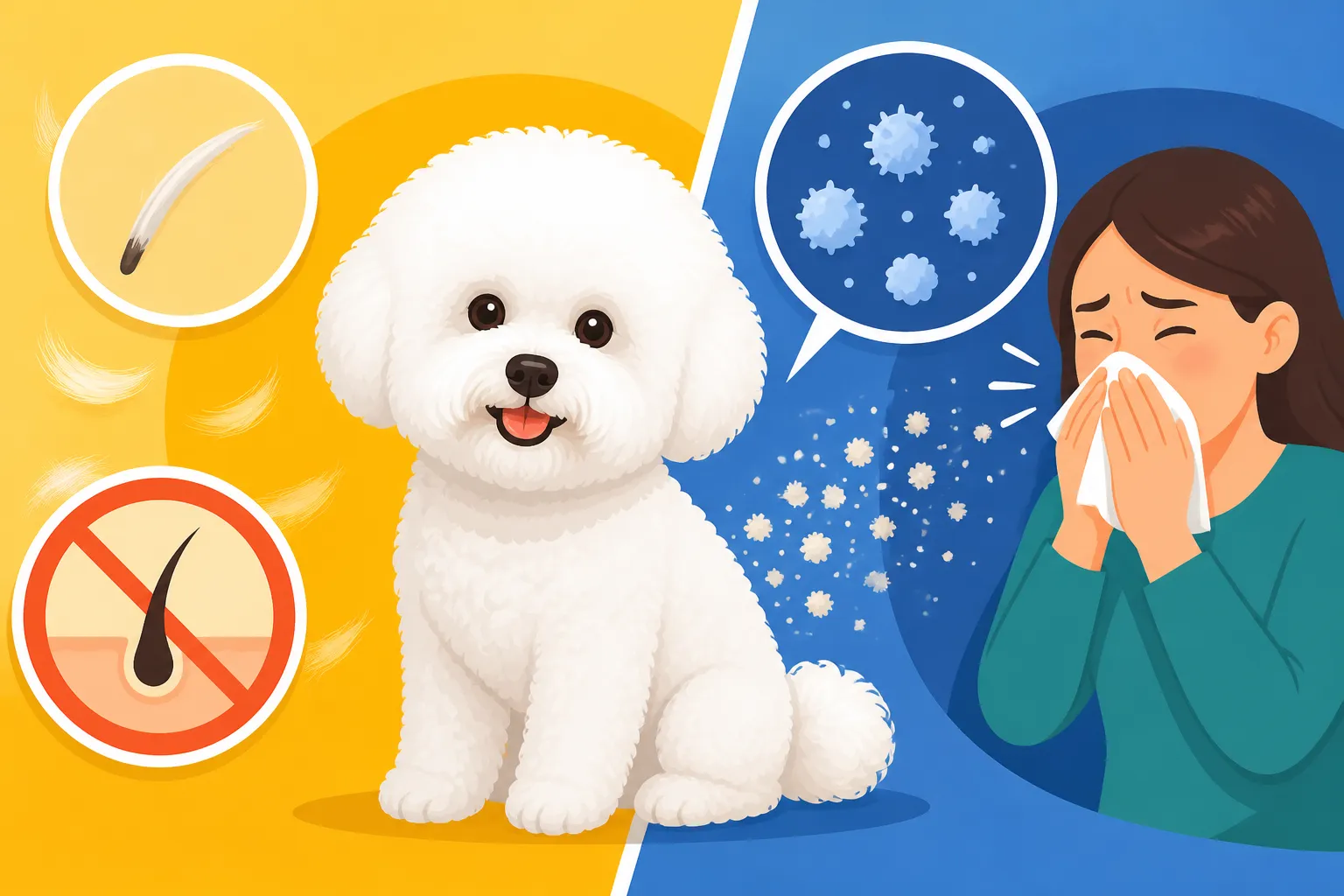
Whether Dander Rather Than Hair Is the Trigger
It's a common misconception that dog hair itself is the primary cause of allergies. Many people looking for a companion like a Bichon Frise, known for its often-touted "hypoallergenic" qualities, mistakenly believe that simply avoiding shedding breeds will solve all their allergy woes. The truth is more nuanced, and understanding what actually triggers those sneezes and itchy eyes is crucial for anyone hoping to share their home with a beloved furry friend. This guide will delve into the real culprits behind pet allergies, clarify what makes the Bichon Frise a good choice for some, and offer practical advice for managing allergens in your home.
Understanding the Real Allergy Triggers in Dogs
When someone says they're "allergic to dogs," what they're actually allergic to isn't typically the hair itself. It's usually specific proteins found in a dog's dander, saliva, and urine. These microscopic allergens become airborne or stick to surfaces, leading to allergic reactions in sensitive individuals. It's a fundamental difference that shifts how we approach managing allergies, especially when considering a breed like the Bichon Frise.
The True Culprit: Dander
Dander refers to tiny, microscopic flakes of skin that animals shed, similar to human dandruff. These flakes are the primary source of allergens for many people. Every dog, regardless of breed or coat type, produces dander because they all have skin. The proteins in this dander, specifically those like Can f 1 and Can f 2, are what trigger allergic reactions.
Imagine these tiny flakes like invisible dust motes, floating through the air, settling on furniture, carpets, and even your clothing. When an allergic person inhales them or touches a surface where they've landed and then touches their face, the immune system overreacts, causing symptoms like sneezing, runny nose, itchy eyes, skin rashes, or even asthma attacks. It’s not about the length or texture of the hair; it’s about these microscopic skin cells carrying the allergenic proteins. A dog with dry skin or certain skin conditions might even produce more dander, potentially exacerbating allergies, regardless of how much it sheds hair.
More Than Just Dander: Saliva and Urine
While dander gets most of the attention, it's important not to overlook saliva and urine as significant sources of allergens. Dogs constantly lick themselves, transferring allergenic proteins from their saliva onto their coats. As the saliva dries, these proteins become airborne or flake off with dander. When you pet a dog, you can easily pick up these proteins on your hands. If that same dog licks you, the proteins are directly transferred to your skin.
Similarly, proteins in a dog's urine can become airborne when the urine dries, especially if a dog has accidents indoors. This is particularly relevant for breeds that might be harder to housetrain or for older dogs experiencing incontinence. These proteins contribute to the overall allergen load in a home, making comprehensive cleaning strategies essential. So, while a dog might not be shedding visible hair, the act of licking its paws, grooming its coat, or even marking its territory can spread these potent allergens throughout your living space.
The Bichon Frise and the "Hypoallergenic" Label: What It Really Means
The Bichon Frise is frequently listed among "hypoallergenic" dog breeds, a term that can be both a blessing and a curse. It leads many people to believe these dogs are completely free of allergens, which isn't entirely accurate. The label stems from a specific characteristic of their coat, not a lack of allergen production.
The Bichon Frise Coat: Why it's Different
Bichon Frises have a unique double coat: a soft, dense undercoat and a coarser, curly outercoat. What sets them apart from many other breeds is that they don't "shed" in the traditional sense, where loose hairs fall out and scatter around your home. Instead, their curly hair tends to trap shed hair and dander within the coat itself. This means less loose hair and dander are released into the environment, which can significantly reduce the airborne allergen load. This is a huge relief for many allergy sufferers who find their symptoms greatly reduced when living with a Bichon Fron.
However, this non-shedding trait comes with a caveat: regular, diligent grooming is absolutely essential. If not brushed out frequently, the trapped hair and dander will quickly lead to mats, which can become painful and harbor even more allergens. This is why you often hear that a Bichon Frise is high-maintenance when it comes to grooming – it's not just for aesthetics, it's crucial for their health and for managing allergens. For more on this, you might find Why a Bichon Frise's Shed Hair Stays in the Coat an interesting read.
Does "Hypoallergenic" Mean Allergen-Free?
Absolutely not. This is perhaps the biggest misunderstanding surrounding so-called "hypoallergenic" breeds. No dog is 100% allergen-free. Since all dogs have skin, they all produce dander. All dogs have saliva and urine, which contain allergenic proteins. The term "hypoallergenic" simply means "less allergenic" or "low-allergy-inducing." It signifies that these breeds are less likely to trigger allergic reactions, or that the reactions they do cause are milder, due to their specific coat type and reduced shedding.
For an allergic person, living with a Bichon Frise might mean the difference between constant sneezing and itchy eyes, and only occasional, manageable symptoms. It's a spectrum, and individual sensitivity varies greatly. Some people with severe allergies might still react to a Bichon Frise, while others with mild allergies might find them perfectly tolerable. It's truly a matter of personal experience and diligent management. The claim that a Bichon Frise is truly hypoallergenic is a common misconception, and understanding this distinction is key to making an informed decision. You can learn more about this by reading Whether a Bichon Frise Is Truly Hypoallergenic.
Managing Allergies in a Home with a Bichon Frise
Bringing a Bichon Frise into an allergic household requires a proactive and consistent approach to allergen management. It’s a commitment, but one that can make living with your fluffy companion a joy rather than a constant battle against sniffles.
Environmental Control Strategies
The first line of defense is to reduce allergens in your home environment. This involves a multi-pronged attack:
- Frequent Cleaning: Vacuuming regularly with a HEPA-filtered vacuum cleaner is non-negotiable. Dander settles quickly, so focusing on carpets, rugs, and upholstered furniture is crucial. Dusting with a damp cloth also helps trap allergens rather than just spreading them around. Consider cleaning products available on platforms like Amazon that are designed for pet households.
- Air Filtration: Investing in high-quality HEPA air purifiers for the rooms where your Bichon Frise spends the most time, especially bedrooms, can significantly reduce airborne allergens. Running these constantly helps to filter out those microscopic dander particles before they have a chance to settle.
- Designated Dog-Free Zones: Establishing certain areas of the house, like bedrooms, as dog-free zones can provide a sanctuary for allergic family members. Keep the door closed, and prevent your Bichon from entering these spaces to keep allergen levels as low as possible there.
- Washing Bedding and Soft Furnishings: Regularly wash pet beds, throw blankets, and even your own bedding in hot water. These items are magnets for dander and need consistent cleaning. You can find specialized pet laundry detergents on Chewy that help neutralize odors and remove allergens.
Grooming Practices to Minimize Allergens
Since the Bichon Frise's coat traps dander, regular grooming is paramount to prevent allergen buildup and matting.
- Frequent Brushing: Brush your Bichon Frise daily, if possible, but at least every other day. This should be done outdoors if weather permits, or in an easily cleaned area. Use a slicker brush and a comb to get deep into the coat and remove trapped hair and dander. After brushing, you might notice your Bichon performing a Bichon Blitz and What It Means to shake off residual loose hair.
- Regular Bathing: Bathing your Bichon Frise every 1-2 weeks can help wash away dander and salivary allergens. Use a gentle, hypoallergenic shampoo designed for dogs. Be sure to rinse thoroughly to avoid skin irritation, which could lead to more dander. If your Bichon has sensitive skin, consider consulting your vet about a specific shampoo, or read Washing a Bichon Frise Whose Skin Is Inflamed for more guidance.
- Professional Grooming: Schedule regular appointments with a professional groomer, typically every 4-6 weeks. A professional groomer has the tools and expertise to thoroughly clean and trim your Bichon Frise's coat, removing a significant amount of trapped dander. They can also ensure proper drying, which is essential for maintaining coat health. For details on professional care, check out How Often a Bichon Frise Needs a Full Groom.
Personal Management for Allergic Individuals
While environmental controls and grooming help, individuals with allergies also need to take personal precautions.
- Hand Washing: Always wash your hands thoroughly with soap and water after petting your Bichon Frise. This prevents the accidental transfer of allergens to your eyes or nose.
- Avoid Touching Face: Try to avoid touching your face, especially your eyes and nose, after interacting with your dog or surfaces where allergens might be present.
- Medication: Over-the-counter antihistamines, nasal sprays, or eye drops can help manage mild allergy symptoms. For more severe allergies, a doctor might recommend prescription medications or allergy shots (immunotherapy). Always consult with a healthcare professional before starting any new medication.
- Allergy Testing: If you're unsure about the severity of your allergy or what specific allergens trigger your symptoms, allergy testing can provide valuable information. It helps confirm if dog dander is indeed the primary culprit and can guide your management strategy. Whether a Bichon Frise Needs Allergy Testing delves deeper into this topic.
Living with a Bichon Frise and Allergies: Realistic Expectations
Bringing any dog into your home when someone has allergies is a significant decision. With a Bichon Frise, the potential for a harmonious life is higher than with many other breeds, but it’s crucial to have realistic expectations.
Testing the Waters: Spending Time with a Bichon
Before making the commitment to adopt, spend as much time as possible with Bichon Frises in various settings. This could mean visiting a reputable breeder, spending time at a friend's house who owns a Bichon, or even fostering a Bichon Frise from a rescue organization. Pay attention to how your allergies react over extended periods, not just a quick pat. This real-world exposure is far more telling than any breed description.
Consider visiting a home that is not meticulously cleaned for allergens, to get a sense of what typical exposure might feel like. This might sound counterintuitive, but it helps gauge your baseline sensitivity. If even under these conditions, your symptoms are manageable, it bodes well for your future together.
Beyond the Breed: Individual Variation
It's important to remember that not all Bichon Frises are identical in terms of allergen production, and not all allergic people react the same way. There can be individual differences in how much dander a specific dog produces, even within the same breed. Factors like skin health – for example, if a dog suffers from The Atopic Skin a Bichon Frise Is Born With – can influence dander levels.
Moreover, allergies can change over time. Some people find their allergies lessen with consistent exposure, while others find them worsen. Pregnancy, illness, or even stress can impact allergic sensitivity. Therefore, while a Bichon Frise offers a promising option for many allergy sufferers, it's not a guaranteed solution. It requires ongoing vigilance and adaptation from the whole household. It’s about building a lifestyle where both you and your furry companion can thrive comfortably.
This table summarizes key differences and management strategies:
| Factor | Traditional Shedding Breeds | Bichon Frise | Allergy Management Implications |
|---|---|---|---|
| Primary Allergen Source | Dander, saliva, urine (same as all dogs) | Dander, saliva, urine (same as all dogs) | Focus on reducing contact with these proteins. |
| Hair Shedding | Significant, loose hair scattered widely | Minimal to no visible shedding; trapped in coat | Less airborne hair/dander from shedding, but dander still present. |
| Dander Release | Easily released into environment with loose hair | Trapped within curly coat; released during grooming | Requires diligent brushing and bathing to remove trapped dander. |
| Grooming Needs | Varies; often less frequent professional grooming | High; daily brushing, professional grooming every 4-6 weeks | Essential for allergen control and coat health. |
| "Hypoallergenic" Status | Generally not considered | Considered "hypoallergenic" (less allergenic) | Not allergen-free, but generally better tolerated by allergy sufferers. |
| Home Cleaning | Constant battle against hair and dander | Focus on surfaces, air purification, and regular deep cleaning | Less visible hair, but invisible dander still accumulates. |
Ultimately, choosing a Bichon Frise if you have allergies is a commitment to understanding the true nature of pet allergies and implementing a consistent, comprehensive management plan. But for many, the joy and companionship a Bichon brings make every effort worthwhile.
Disclaimer
This article is for general informational purposes only and does not constitute professional advice. Laws, prices and regulations vary by location and change over time. Consult a qualified professional for guidance on your specific situation.