Why a Bichon Frise Is Only Ever White
It’s a question many Bichon Frise owners, or those simply admiring these fluffy white clouds of joy, often ponder: why is every single Bichon Frise you see pure white? You might occasionally spot a tiny hint of cream on a puppy, or a slight apricot blush behind the ears on an older dog, but overwhelmingly, they are known for their pristine, snow-white coats. This isn't just a coincidence or a popular trend; it's deeply ingrained in their history, their genetic makeup, and the very definition of the breed itself. This guide will take you on a journey to understand exactly why your Bichon is, and always will be, a brilliant white wonder.
The Unmistakable White Coat: A Hallmark of the Bichon Frise
When you picture a Bichon Frise, one image immediately springs to mind: a fluffy, cheerful, utterly white dog. This isn't just an aesthetic preference; it's a fundamental characteristic that defines the breed. Unlike many breeds that come in a rainbow of colors, the Bichon Frise's pure white coat is as iconic as its merry disposition. It's what makes them instantly recognizable and sets them apart in the dog world.
Historical Roots and the "White Dog" Legacy
To understand why Bichons are exclusively white, we need to journey back in time to their origins. The Bichon Frise is part of the "Barbichon" family of dogs, which includes the Maltese, Bolognese, and Havanese. These small, charming dogs were popular companions, particularly among sailors and nobility, in the Mediterranean region centuries ago. Many of these ancestral breeds, especially the Maltese, were also predominantly white, or at least very light-colored.
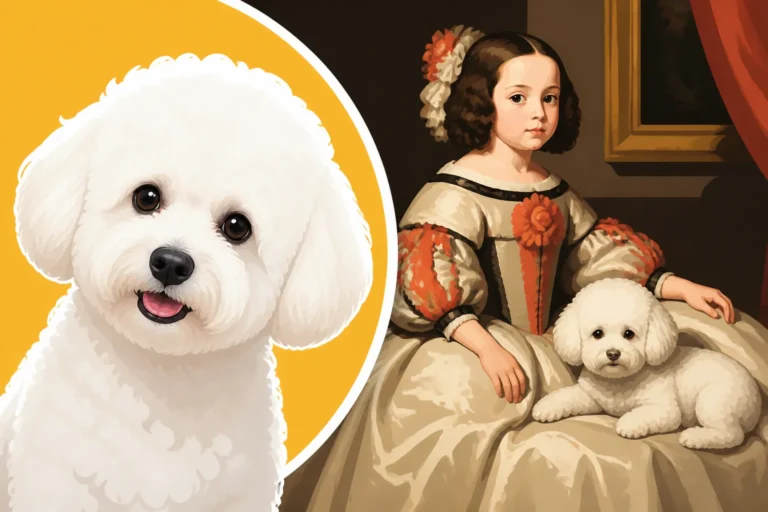
The early ancestors of the Bichon Frise were known as the "Tenerife dog" (after one of the Canary Islands, though their roots are widely believed to be Italian), and they quickly gained favor in aristocratic circles, particularly in France, during the Renaissance. During this period, small, elegant white dogs were highly prized symbols of wealth and status. Imagine a noblewoman or king, adorned in luxurious silks, with a small, immaculate white dog nestled in their arms – it was the epitome of sophistication. This strong preference for white coats among their human companions likely played a significant role in selectively breeding for this trait over generations. The whiteness became synonymous with purity, luxury, and a delightful companion, cementing its place as the breed's defining feature.
The Importance of Breed Standards
Every recognized dog breed has a "breed standard" – a detailed description of the ideal specimen of that breed, covering everything from temperament to physical characteristics like height, weight, coat texture, and, of course, color. These standards are developed by parent clubs (like the Bichon Frise Club of America) and recognized by major kennel clubs (like the American Kennel Club or The Kennel Club in the UK). They serve as a blueprint for breeders aiming to produce dogs that embody the essence of the breed and for judges evaluating dogs in the show ring.
For the Bichon Frise, the breed standard is very clear and uncompromising regarding coat color: it must be white. Any other color, or even significant patches of color, is considered a fault, and in the show ring, it would lead to disqualification. This strict adherence to a single color isn't arbitrary; it reflects the historical purity and aesthetic ideal that breeders have strived to maintain for centuries. It's a testament to their dedication to preserving the breed's unique identity. This means that while some breeds tolerate a variety of colors and markings, the Bichon Frise's identity is intrinsically linked to its dazzling white coat, making it a non-negotiable aspect of its breed standard.
Genetics 101: Understanding Coat Color in Dogs
Understanding why a Bichon Frise is always white involves a fascinating peek into the world of canine genetics. Dog coat color is controlled by a complex interplay of genes, each responsible for producing or modifying pigments. While it might seem overly scientific, grasping the basics helps demystify why certain colors appear and others don't in specific breeds.
The Basic Canine Color Genes
To put it simply, all dog coat colors stem from two basic pigments: eumelanin (which produces black or brown colors) and phaeomelanin (which produces red or yellow colors). Various genes then act upon these pigments, diluting them, suppressing them, or allowing them to be expressed in different patterns.
Think of it like a paint-by-numbers kit, but with genetic instructions. You have your base colors (black/brown and red/yellow), and then other genes tell those colors where to go, how dark or light they should be, or even if they should show up at all. Key genes often discussed in dog coat color include:
- E Locus (Extension): Determines if eumelanin (black/brown) or phaeomelanin (red/yellow) can be expressed. If a dog is "ee" at this locus, it can only produce red/yellow pigment, regardless of other genes.
- K Locus (Dominant Black): A really interesting one! A dominant K gene will mask the expression of the A Locus, often resulting in solid black.
- A Locus (Agouti): Influences patterns like sable, fawn, tan points, and recessive black.
- B Locus (Brown): Determines if eumelanin is black (dominant B) or brown (recessive bb).
- D Locus (Dilution): Dilutes black to blue, and brown to lilac.
- S Locus (Spotting): Responsible for white markings, piebald, and extreme white.
For a Bichon Frise to be entirely white, a specific combination of these genetic instructions must be present, essentially telling all other colors to "turn off" or be completely masked.
The White Gene: A Deep Dive into the Specifics
The pure white coat of the Bichon Frise isn't due to a lack of pigment cells (which would be albinism, a different genetic condition often associated with red eyes). Instead, it's typically the result of the extreme piebald gene, sometimes referred to as the "white spotting" gene, at the S Locus (often S/sw or sw/sw genotypes). This gene, in its most extreme form, prevents pigment cells from migrating into the hair follicles across the entire body.
What does this mean? Imagine pigment cells trying to reach the skin and hair to deposit color. With the extreme white spotting gene, these cells are largely inhibited from doing so. The underlying skin of a white Bichon is usually pigmented (pink or dark, often spotted), which is normal, proving they are not true albinos. Their eyes are dark, not red, and their nose and paw pads are black, indicating the presence of pigment cells elsewhere in the body, just not in the coat.
Another gene that contributes to a white appearance, or masks other colors, is the "E" locus (extension). If a dog inherits two copies of the recessive 'e' allele (ee), it will appear fawn or yellow, regardless of what other color genes it carries. While this can result in a light coat, it's not the pure, crisp white of a Bichon, and it usually means the dog could still genetically carry other colors. The true Bichon white is a deliberate genetic combination, primarily driven by the extensive white spotting gene, meticulously selected and reinforced over generations to achieve that iconic, flawless snowy appearance. This genetic consistency is a cornerstone of the breed's identity.
Why "Cream" or "Apricot" Markings Aren't Quite the Standard
It can be a little confusing when you sometimes see a Bichon puppy with faint patches of color, or an older dog with a subtle, almost imperceptible tint. While the breed standard demands pure white, there are some acceptable nuances and, more commonly, a temporary "fading puppy phenomenon" that can lead to these observations. However, significant patches of any other color would still be considered outside the breed's strict definition.
The Fading Puppy Phenomenon
It's actually quite common for Bichon Frise puppies to be born with tiny patches of cream, apricot, or even light buff. These are often seen around their ears, on their paws, or along their spine. New owners might get a little worried, wondering if their pristine little fluffball isn't quite as "purebred white" as they expected. But fear not! This is a well-known characteristic in the breed, charmingly referred to as the "fading puppy" phenomenon.
What happens is that as the puppy matures and their adult coat begins to grow in, these lighter colored hairs gradually disappear. The creamy or apricot hues fade away, replaced by the characteristic brilliant white. This usually occurs over the first few months of life, often by the time they are six to twelve months old, though sometimes it can take a bit longer. The reason behind this fading is not fully understood, but it's believed to be linked to the interaction of various genes that control pigment expression and the growth cycle of puppy hair versus adult hair. It’s a temporary developmental stage, and nearly all purebred Bichons born with these subtle marks will eventually achieve that desired all-white coat. So, if your little Bichon has a touch of butterscotch on its ears, enjoy the temporary sweetness, as it's likely to vanish soon!
Acceptable Nuances vs. Disqualifying Colors
While the breed standard calls for "pure white," it does acknowledge very slight allowances that are distinct from disqualifying colors. The American Kennel Club (AKC) standard, for instance, permits "no more than 10% shading of cream, buff, or apricot around the ears or on the body." This means a tiny whisper of color, almost like a faint blush, might be present, particularly on the ears or perhaps around the muzzle. This subtle "biscuiting" is typically seen in an underlying layer of the coat and isn't a vibrant, distinct patch of color. It's often so minimal that it's unnoticeable to the casual observer and wouldn't be penalized in the show ring.
However, anything beyond this very minimal allowance, such as distinct patches of cream, fawn, gray, or any other color, would be considered a serious fault and lead to disqualification for a show dog. The idea is that the dog should appear completely white. A noticeable patch of, say, light brown on the back or a distinct gray mask would fundamentally alter the breed's signature look. Responsible breeders meticulously work to produce puppies that meet this strict white standard, understanding that maintaining the breed's classic appearance is key to its identity and heritage. So, while a hint of color might be a charming puppy quirk, a true adult Bichon Frise should always dazzle in pristine white.
The Health Implications of a White Coat (or lack thereof)
When we talk about white coats in dogs, it's natural for some concerns to surface regarding associated health issues. Many people are familiar with the link between certain white coat genes and conditions like deafness in other breeds. It’s important to understand these distinctions specifically for the Bichon Frise.
Debunking Myths: White Coats and Health Problems
It's a common misconception that all white dogs are inherently prone to health issues, particularly deafness or skin sensitivities. This is largely due to the association of certain dominant white or merle genes (found in breeds like Dalmatians, Boxers, or Great Danes) with these conditions. These genes affect not just coat color but also pigment cells in the inner ear or skin. In these breeds, the complete lack of pigment in certain areas can lead to sensorineural deafness or increased risk of skin cancer.
However, the white coat of a Bichon Frise typically comes from a different genetic mechanism: the extreme piebald gene or other modifier genes that simply mask all other colors. As mentioned earlier, Bichons are not albinos; they have normal pigment in their eyes (dark), noses (black), and often spotted skin underneath their white fur. This genetic basis for their white coat does not carry the same inherent risks for deafness or specific white-coat-related skin issues that are seen in some other breeds. Therefore, a Bichon's pure white coat, in and of itself, is not a cause for alarm regarding these specific health concerns. Owners often ask Whether a Bichon Frise Gets Cancer, and while no breed is immune, it's not specifically linked to their white coat.
The Unique Health Considerations of Bichons
While the white coat itself isn't a direct health risk, Bichon Frises do have their own set of breed-specific health concerns, which are important for any owner to be aware of. These are not tied to their white coloring but rather to their genetic lineage as a small breed.
For example, Bichons are predisposed to certain urinary tract issues. They are famously susceptible to bladder stones, particularly calcium oxalate stones. Owners often find themselves asking Why a Bichon Frise Tops the Stone Risk List. This can manifest as straining to urinate, frequent urination, or even blood in the urine, and can be a recurring and costly problem. Diet plays a crucial role in prevention and management once stones have occurred.
Another common concern is allergies and skin issues. Many Bichons suffer from environmental allergies (atopy) or food sensitivities, leading to itchy skin, ear infections, and paw licking. You might find yourself wondering What Atopic Dermatitis Does to a Bichon Frise as they scratch and rub their faces. Their dense double coat can also make these issues harder to spot until they become quite advanced. Managing a Bichon Frise's Skin Without Steroids is a common challenge for owners.
Beyond that, like many small breeds, Bichons can be prone to patellar luxation (slipping kneecaps), Slipping Kneecaps in a Bichon Frise, and dental disease, Dental Disease in a Bichon Frise. They can also inherit certain eye conditions, The Eyes a Bichon Frise Inherits. Being aware of these breed-specific predispositions and regular veterinary check-ups are far more important for a Bichon's overall health than worrying about their beautiful white coat.
Maintaining That Signature White Glow
The pure white coat of a Bichon Frise is undeniably gorgeous, but let's be realistic: maintaining that pristine, cloud-like appearance is a commitment. It's not a wash-and-wear kind of coat; it requires dedication, the right tools, and a consistent routine. Any owner will tell you, a white dog quickly shows every speck of dirt, every grass stain, and every tear mark.
The Daily Grooming Challenge
Keeping a Bichon Frise truly white isn't just about occasional baths; it's a daily ritual. Their double coat, consisting of a soft undercoat and coarser guard hairs, is designed to stand off the body, creating that signature powder puff look. However, this non-shedding (or very low-shedding) coat also means that any loose hair gets trapped, quickly leading to mats if not brushed regularly. Mats, besides being uncomfortable and painful for your dog, also trap dirt and cause discoloration.
Imagine your Bichon frolicking in the garden after a light rain, or enthusiastically greeting you with muddy paws – that brilliant white quickly turns various shades of brown and green. Even routine activities like eating can lead to food staining around the mouth. The biggest culprits for persistent discoloration are often tear stains and saliva stains. The hair around their eyes and on their beard can turn reddish-brown from natural secretions, which can be incredibly frustrating for owners striving for that pure white look. Daily brushing is essential not just for preventing mats, but for removing surface dirt before it sets into the coat, which makes it easier to keep them looking fresh.
Products and Practices for a Bright White Bichon
Achieving and maintaining that dazzling white requires a multi-pronged approach, focusing on bathing, brushing, and addressing specific staining issues.
For bathing, you can't just use any shampoo. Whitening shampoos are formulated with optical brighteners or gentle blue/purple pigments that counteract yellowing and enhance the perception of white. Brands like Bio-Groom or Chris Christensen offer popular whitening shampoos designed for white-coated breeds. Remember, it's crucial to rinse thoroughly to avoid skin irritation and dulling the coat. A good quality conditioner is also vital to keep the coat healthy and prevent tangles. You can often find these specialized products at pet supply retailers like Chewy.
When it comes to brushing, invest in a good slicker brush and a metal comb. Which Brush Suits a Bichon Frise is a common question. Line brushing, where you part the hair and brush layer by layer down to the skin, is the most effective way to prevent mats. This needs to be done several times a week, if not daily, especially in areas prone to matting like behind the ears, armpits, and groin.
Addressing tear stains and beard stains is a constant battle. Regular wiping of the eyes and beard with a damp cloth or specialized tear stain wipes can help prevent the accumulation of pigment. Some owners also choose to trim the hair very short around the eyes and mouth to minimize the surface area for staining. Ensuring your Bichon drinks filtered water from a clean bowl, as impurities in tap water can sometimes contribute to staining, is another small but helpful step. For more stubborn stains, some products claim to remove them, but always research ingredients carefully and consult your vet before using anything around your dog's eyes. You'll find a wide array of options when researching The Tear Stains Under a Bichon Frise's Eyes.
Remember, while specific products can help, consistency in grooming is truly the secret to a bright white Bichon.
Table: Bichon Frise Coat Color Guidelines
| Characteristic | Breed Standard (Ideal) | Minor Acceptable Nuances | Disqualifying/Serious Faults |
|---|---|---|---|
| Primary Coat Color | Pure White | Any color other than white, clearly visible | |
| Markings/Shading | None | Up to 10% cream, buff, or apricot shading (typically on ears or body) | Distinct patches of cream, apricot, fawn, grey, black |
| Pigmentation of Skin | Dark (black) or Pink (often mottled) | Normal | Albinism (lack of all pigment, red eyes) |
| Nose Color | Solid Black | Normal | Liver, pink, or Dudley nose |
| Eye Color | Dark (dark brown/black) | Normal | Blue, amber, or light colored eyes |
| Paw Pad Color | Black | Normal | Pink, light colored |
| Genetic Basis | Extreme Piebald (S Locus) | Genetic modifiers for subtle shading | Other color genes expressed |
| Show Ring Status | Excellent | Acceptable | Disqualified |
The Broader Context: Why the White Matters for Breeders and Enthusiasts
Beyond aesthetics and genetics, the pure white coat of the Bichon Frise holds significant meaning for those dedicated to the breed. It's a cornerstone of their identity, influencing breeding decisions, show ring evaluations, and the overall perception of this charming little dog.
Preserving the Breed's Identity
The pure white coat is not just a preference; it is a fundamental aspect of the Bichon Frise's historical and aesthetic integrity. When you look at old paintings or read descriptions of the breed through history, the "white dog" is a constant. This consistency in color, over centuries, has allowed the breed to develop a distinct and instantly recognizable visual identity. For many, the very essence of a Bichon Frise is embodied in its fluffy, snow-white appearance.
Breed clubs and dedicated enthusiasts see the strict adherence to the white standard as crucial for preserving the breed as it was intended. Allowing a wide range of colors could, over time, dilute the distinctiveness of the Bichon Frise, potentially blurring the lines with other small white-ish breeds like the Maltese or even some Poodle crosses. It's a way of honoring their heritage and ensuring that future generations of Bichons continue to look, and largely behave, as their ancestors did. This commitment to a singular appearance is a hallmark of many historical breeds, and for the Bichon Frise, white is paramount. This deep commitment contributes to the longevity of the breed, a factor discussed in articles like The Fourteen to Fifteen Years a Bichon Frise Lives.
Impact on Showing and Breeding
For anyone involved in showing Bichon Frises, coat color is non-negotiable. As discussed, even minor deviations beyond the allowed slight shading can result in a dog being disqualified from the show ring. Judges are specifically looking for that pristine, uniformly white coat that epitomizes the breed standard. This rigorous standard drives breeding practices.
Reputable breeders are not just aiming to produce healthy puppies with good temperaments; they are also striving for puppies that conform to the breed standard in every way, including color. They will carefully select breeding pairs whose lineage consistently produces pure white offspring, often tracking the fading puppy phenomenon to ensure that any temporary color disappears as expected. Breeders are intensely aware of Whether an Untested Bichon Frise Litter Is Worth Buying and know that thorough health and conformation testing, including color adherence, is part of responsible breeding.
The emphasis on white influences the entire breeding program, from genetic selection to puppy evaluation. While health, temperament, and conformation are always top priorities, the visual hallmark of the breed—its white coat—remains a critical factor. This dedication ensures that the Bichon Frise continues to shine as a truly unique and beautiful breed, forever associated with its cloud-like, brilliant white appearance.
Disclaimer
This article is for general informational purposes only and does not constitute professional advice. Laws, prices and regulations vary by location and change over time. Consult a qualified professional for guidance on your specific situation.