How Long Brushing a Bichon Frise Takes
If you've ever found yourself staring at your adorable, fluffy Bichon Frise, brush in hand, and wondered if you'll ever truly conquer their magnificent, yet sometimes demanding, coat, you're not alone. Many Bichon owners grapple with the seemingly endless task of keeping their little cloud free of tangles and mats. This guide is here to give you realistic expectations on just how long brushing a Bichon Frise really takes, and how to make it a manageable and even enjoyable part of your routine.
Understanding the Bichon Frise Coat: Why It Needs So Much Attention
The Bichon Frise coat is a thing of beauty, a true hallmark of the breed, but it's also wonderfully unique in a way that demands regular, diligent care. It's not like brushing a dog with a short, smooth coat where a quick once-over suffices. Oh no, a Bichon's coat requires a much more thoughtful approach.
The Unique Double Coat Structure
What makes a Bichon's coat so special, and such a time commitment, is its distinctive double-layer structure. Unlike many breeds, the Bichon Frise has a soft, dense undercoat that's quite fine, almost like cotton wool. This undercoat is covered by a coarser, curly outer coat. When these two layers intertwine, and especially when loose hair from the undercoat gets caught up, it's a perfect storm for matting. This isn't a shedding breed in the traditional sense where hair falls out all over your furniture; instead, the shed hair gets trapped within that dense coat, creating knots and tangles. You might find it helpful to read about Whether a Bichon Frise Has an Undercoat to fully grasp this unique aspect.
This curly outer coat, combined with the dense undercoat, means that simply skimming a brush over the top won't do much. You need to penetrate both layers to ensure you're removing any developing tangles and loose hair. Imagine trying to comb through a tightly coiled spring with just your fingers – it's going to catch. That's a bit like what happens if you don't use the right tools and technique with a Bichon's coat.
Why Mats Form So Easily
Mats aren't just cosmetic issues; they can be incredibly painful for your Bichon. They pull on the skin, restrict movement, and can hide skin infections or parasites. Because of their coat type, Bichons are particularly prone to matting in certain areas. Friction points like behind the ears, under the armpits, around the collar area, and on their legs and tail are prime real estate for mats to form. Even something as simple as a harness can contribute to matting if not properly fitted and managed. You can learn more about this by looking at Whether a Harness Mats a Bichon Frise.
A common misconception is that mats only happen if you don't brush enough. While frequency is crucial, the type of brushing is equally important. A quick surface brush might make the top layer look neat, but underneath, the undercoat can be compacting and tangling, forming what groomers call "felted" mats. These are incredibly difficult, if not impossible, to brush out without causing significant discomfort to your dog, and often require a professional shave-down. It's far better to prevent them with consistent, thorough brushing than to try and tackle them once they've set in. The curly nature of their coat also means that loose hairs quickly intertwine, creating little knots that, if left unattended, snowball into large, painful mats. Understanding Whether Loose Hair Trapped in the Coat Causes Mats can give you even more insight into this process.
Key Factors That Influence Your Bichon Frise's Brushing Time
When trying to figure out how long you'll spend brushing your Bichon, it's not a one-size-fits-all answer. Several factors play a significant role, and being aware of them can help you manage your expectations and even streamline the process.
Coat Condition and Length
This is probably the biggest variable. A Bichon Frise with a pristine, well-maintained coat that's been brushed daily will take far less time to brush than one with even a few minor tangles. If your Bichon's coat is longer, say kept in a full "powder puff" style, you can expect to spend more time on it. More hair simply means more surface area to cover and more potential for tangles. On the other hand, if your Bichon has a shorter "pet trim," your daily or every-other-day brushing might be a bit quicker.
Think about it like this: a lightly tangled coat might just need a few minutes of careful detangling, while a truly matted coat could require hours of patient work – or, more likely, a trip to the professional groomer for a humane shave. The goal of regular brushing is to never get to that "truly matted" stage. If you're wondering about the texture, Whether a Bichon Frise Coat Is Curly or Wavy is a great read that can help you understand its unique characteristics.
Brushing Tools and Technique
Using the right tools is paramount. You wouldn't try to sculpt clay with a screwdriver, and you shouldn't try to brush a Bichon with the wrong kind of brush. A good quality slicker brush, with angled pins that can reach down to the skin, and a sturdy metal comb are non-negotiable. Pin brushes might be fine for a quick surface fluff, but they won't tackle the undercoat effectively.
The technique also matters immensely. You can't just brush over the top. You need to use a technique called "line brushing" or "sectioning." This involves parting the coat horizontally or vertically, holding the unbrushed hair out of the way, and brushing small sections from the skin outwards. This ensures you're getting all the way to the root of the hair. Neglecting this technique is the main reason many owners believe their Bichon is "brushed" when in reality, the hidden undercoat is slowly felting. For guidance on tools, check out Which Brush Suits a Bichon Frise and Whether a Comb Should Follow the Brush.
| Grooming Tool | Purpose | Frequency of Use (ideal) |
|---|---|---|
| Slicker Brush | Detangles, removes loose undercoat, fluffs coat | Daily to Every Other Day |
| Metal Comb | Checks for missed tangles, ensures thoroughness, fine detailing | After slicker brushing |
| Dematting Tool | Safely cuts through small mats (use with extreme caution) | As needed (rarely if groomed) |
| Scissors (blunt-tip) | Trimming hair around eyes, paws, sanitary areas | As needed (weekly/bi-weekly) |
| Force Dryer | Quickly dries coat, helps straighten and fluff, prevents matting | After every bath |
Frequency of Brushing
The more often you brush, the less time each individual session will take. It's simple math: preventing small tangles takes minutes, dealing with large mats takes hours or professional intervention. Most Bichon Frise owners find that daily brushing is ideal for maintaining a pristine, mat-free coat, especially if it's kept long. If your dog has a very short puppy cut, you might get away with every other day, but daily is still best practice.
Consider a scenario: you skipped brushing for a couple of days, and now your Bichon has a few minor tangles under his armpits. That might add an extra 5-10 minutes to your routine. But if you skip a whole week, those minor tangles could have become stubborn mats, potentially adding 30-60 minutes of careful, patient work, or even requiring a trip to the groomer. Consistency is your best friend when it comes to managing a Bichon's coat.
A Step-by-Step Brushing Routine and Realistic Timeframes
Developing a consistent routine is key to managing your Bichon's beautiful coat without losing your mind (or your patience!). Here's a step-by-step approach to brushing, along with realistic timeframes you can expect. Remember, these times are for maintenance brushing – dealing with significant matting will take much longer, or require professional help.
Gathering Your Tools and Prepping Your Bichon
Before you even touch a brush to your dog, gather all your necessary tools. This typically includes a high-quality slicker brush (like those available on Amazon or Chewy), a sturdy metal comb with both wide and fine teeth, a detangling spray (optional but highly recommended, especially for longer coats), and maybe a few small, high-value treats to reward good behavior. You'll also want a designated, comfortable spot for brushing, ideally a non-slip surface like a grooming table or a mat on the floor, so your Bichon feels secure.
Start by giving your Bichon a gentle once-over with your hands, feeling for any obvious knots or mats. Pay special attention to those friction areas: behind the ears, armpits, groin, and under the tail. If you find a small tangle, a quick spritz of detangling spray can help. Once your tools are ready and your Bichon is calm and ready to cooperate (or at least tolerate), you're set. This preparatory stage usually takes about 1-2 minutes.
The Art of Line Brushing: Section by Section
Now for the main event: line brushing. This is where the real work happens, but also where you prevent those pesky mats. Start by laying your Bichon on their side or having them stand comfortably. Choose a starting point, perhaps a leg or their side, and part the hair horizontally with your fingers. Hold the upper section of hair up and out of the way. With your slicker brush, gently brush the exposed section of hair, working from the skin outwards, in small strokes. Once that section is tangle-free, drop a small amount of the held-up hair into the brushed section and repeat, creating a "line" as you work your way up. This ensures you're getting down to the skin and through all layers of the coat.
Work systematically around your Bichon's entire body: legs, chest, belly, back, tail, and finally the head and ears. The head and ears often require extra patience, as they can be sensitive areas. For the face, use a smaller slicker or the fine-toothed end of your comb very gently. For more detail on this technique, consider looking up Whether Line Brushing Is Necessary on a Bichon Frise.
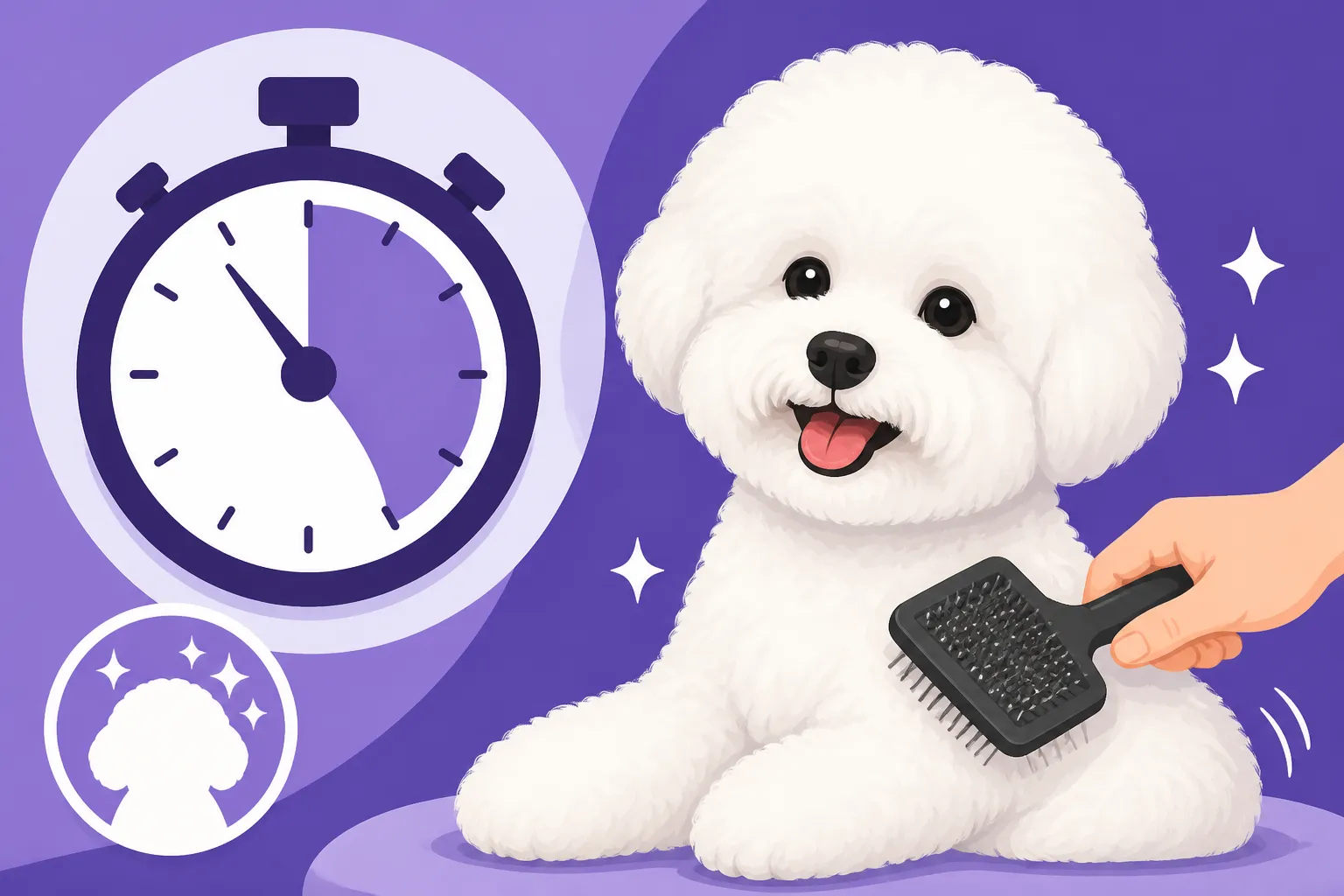
For a daily maintenance brush on a Bichon with a medium-length coat, this section-by-section work typically takes:
- Small Puppy (under 6 months): 5-10 minutes (shorter coat, less undercoat development)
- Adult (medium length pet trim): 10-20 minutes
- Adult (full, long show coat): 20-45 minutes, or even longer for perfect presentation
Remember, consistency here reduces overall time. If you skip days, you'll likely be dealing with more significant tangles.
The Comb Test and Finishing Touches
After you've gone over your entire Bichon with the slicker brush using the line brushing method, it's time for the "comb test." This step is crucial and often overlooked. Take your metal comb and try to glide it through the entire coat, from skin to tip, in every area you just brushed. If the comb snags or gets stuck, it means there's a tangle you missed. Go back to that spot with your slicker brush and carefully work it out, then repeat the comb test. The comb is your ultimate indicator of a truly tangle-free coat.
Once the comb glides smoothly through every part of their coat, you're nearly done! Give your Bichon a final fluff with the slicker brush, paying attention to their signature round head and tail. You can also use this time to quickly trim any stray hairs around their paws or sanitary areas with blunt-tipped scissors if needed. A final treat and praise for their cooperation will help reinforce a positive association with brushing. This comb test and finishing stage usually adds another 3-5 minutes to your session.
Total Realistic Brushing Time (Daily Maintenance):
- Puppy: 8-15 minutes
- Adult (Pet Trim): 15-25 minutes
- Adult (Full Coat): 25-50 minutes
These times are for daily or every-other-day brushing of a relatively tangle-free coat. If you stretch it to three or more days, expect the time to increase significantly as you contend with more substantial tangles.
Tips for Efficient and Enjoyable Brushing Sessions
Brushing doesn't have to be a dreaded chore. With the right approach, you can make it a positive bonding experience for both you and your Bichon, and even reduce the overall time spent wrestling with knots.
Establish a Consistent Schedule and Routine
Dogs thrive on routine, and your Bichon is no exception. Try to brush your dog at the same time each day, or every other day, as appropriate for their coat length and lifestyle. Maybe it's after their morning walk, or while you're watching your favorite show in the evening. A consistent schedule helps your Bichon understand what to expect and can reduce resistance. If you're tackling tangles, remember that Whether a Matted Bichon Frise Must Be Shaved is a real possibility if neglected, so prevention is key.
Make the brushing area a positive one. You could have a special blanket they lie on, or a particular treat reserved only for grooming time. The more consistent you are, the less likely they are to fight it, and the quicker you'll get through the session. This is a great opportunity for some quiet one-on-one time with your furry friend.
Reward Good Behavior and Make it Positive
Positive reinforcement is powerful. Always reward your Bichon with praise, gentle scratches in their favorite spots, or a small, high-value treat during and after brushing. If they're particularly cooperative in a tricky area like their paws or tail, offer an extra special reward. The goal is for them to associate brushing with pleasant experiences, not just restraint.
If your Bichon is a bit fidgety, break the session into smaller chunks. Do five minutes, give them a break and a reward, then come back for another five. Gradually increase the duration as they become more comfortable. A gentle, reassuring voice can go a long way. Never make brushing a punishment or a source of fear. This positive approach can make a huge difference in their willingness to cooperate, ultimately making the sessions smoother and faster. Think about how much easier it is when your dog is relaxed versus when they're squirming!
Invest in Quality Tools and Detangling Sprays
While it might seem like an extra expense, investing in high-quality grooming tools from reputable brands will save you time and frustration in the long run. A cheap slicker brush with flimsy pins won't effectively penetrate the dense Bichon coat, leaving tangles behind. A well-made metal comb won't bend or break and will give you an accurate read on your dog's coat condition. Brands like Chris Christensen or similar professional-grade tools, often found on sites like Amazon or Chewy, are worth the investment.
Detangling sprays are also a game-changer. A good spray can help lubricate the hair, making it easier for the brush to glide through tangles without pulling and causing discomfort. This is especially helpful if your Bichon's coat is prone to static or if you're dealing with a slightly damp coat (remember, Whether a Damp Bichon Frise Mats Faster is a real concern!). Using these tools properly, as discussed in Whether a Slicker Reaches a Bichon Frise's Skin, ensures you’re being effective.
Consider Professional Grooming as a Complement
Even with diligent home brushing, regular professional grooming is often necessary for a Bichon Frise, especially if you want to maintain a specific cut like the classic "powder puff." Professional groomers have specialized equipment, such as high-velocity dryers that help straighten the curly coat and make brushing much more effective, and sharp clippers and scissors for precision trims. They can also spot skin issues or developing mats that you might miss.
Think of your home brushing as daily maintenance, and professional grooming as a more comprehensive "deep clean" and styling session. A good professional groomer can give your Bichon a fresh start, making your daily brushing tasks much easier. They can also offer advice on how to handle specific coat challenges your dog might have. Many Bichon owners find that getting a professional groom every 4-6 weeks, coupled with daily home brushing, is the perfect balance for keeping their dog looking and feeling great. This collaboration between home care and professional care makes all the difference in managing this high-maintenance but incredibly rewarding coat. And remember, Whether Home Brushing Makes Salon Visits Easier is definitely true – a well-maintained coat makes the groomer's job easier, which can sometimes even influence the cost.
Disclaimer
This article is for general informational purposes only and does not constitute professional advice. Laws, prices and regulations vary by location and change over time. Consult a qualified professional for guidance on your specific situation.